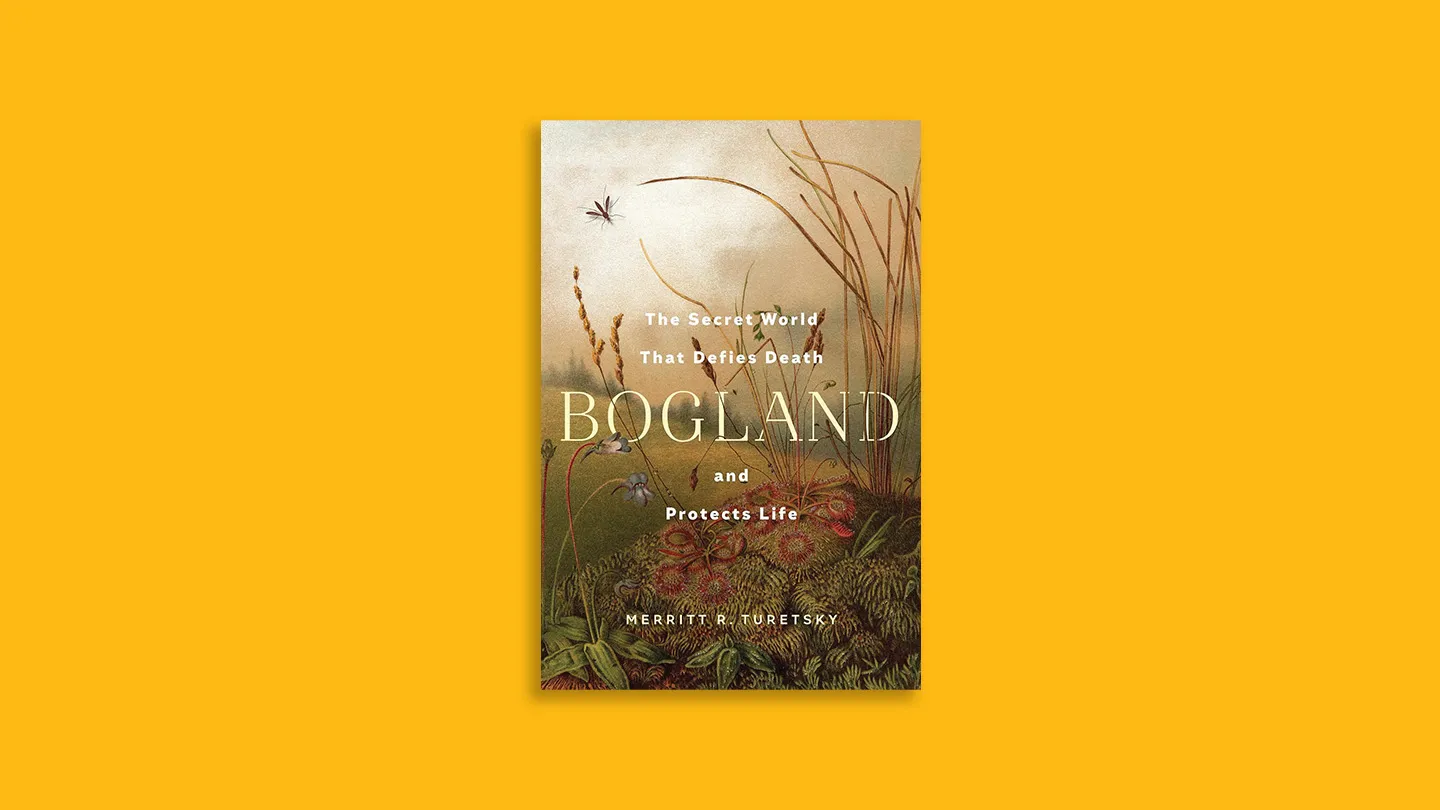
The release of Merritt R. Turetsky’s new book, Bogland, published by W.W. Norton & Company, offers a timely examination of one of the planet’s most misunderstood and critical ecosystems. As an ecosystem ecologist at the University of Colorado Boulder, Turetsky provides a synthesis of the biological, geological, and atmospheric importance of boglands—a category encompassing bogs, fens, swamps, and marshes. While these environments are often perceived as desolate, water-logged expanses, Turetsky argues they are essential buffers that perform the heavy lifting of global carbon sequestration.
Defining the Bogland Ecosystem
Boglands occupy a unique liminal space between terrestrial and aquatic environments. Defined by their inability to fully drain, these areas are characterized by persistent water saturation, which creates an oxygen-starved, or anaerobic, soil environment. This lack of oxygen is the defining feature of the ecosystem: it inhibits the microbial activity that typically breaks down organic matter.
Consequently, plant material accumulates in layers rather than decomposing, resulting in the formation of peat. This process distinguishes boglands from other ecosystems, as they function as massive, long-term carbon sinks. Turetsky categorizes these spaces into distinct types, primarily bogs and fens. Bogs are characterized by a reliance on atmospheric precipitation for their water supply, resulting in low-nutrient, acidic conditions that favor specialized vegetation like sphagnum moss and carnivorous plants, such as sundews and pitcher plants. Fens, conversely, receive water from groundwater and surface streams, providing a higher nutrient load that supports a broader diversity of plant life.
A Chronology of Carbon Storage
The development of peatlands is a process spanning millennia. These landscapes began forming following the retreat of the last glacial periods, as rising water tables and specific climatic conditions allowed for the accumulation of organic matter. Throughout the Holocene epoch, these systems have acted as a cooling mechanism for the planet by sequestering carbon dioxide from the atmosphere.
While peatlands cover only approximately 3 percent of the Earth’s total land surface, they hold an estimated 30 percent of the world’s soil carbon. This ratio is significantly higher than that of forest biomass, which occupies a much larger land footprint. Over thousands of years, these bogs have served as a stable repository for carbon, preventing it from re-entering the atmosphere as greenhouse gas emissions.
The Modern Threat to Peatlands
Despite their environmental utility, boglands are currently facing unprecedented pressure from anthropogenic activity and climate change. Historically, these areas were viewed as "wastelands" to be drained for agricultural expansion, forestry, or urban development. Large-scale drainage projects, particularly in Southeast Asia and parts of Europe, have significantly altered the hydrology of these regions.
Recent scientific assessments indicate that once drained, peatlands transition from being carbon sinks to carbon sources. The introduction of oxygen into the peat profile triggers rapid decomposition, releasing centuries of stored carbon back into the atmosphere. Furthermore, climate change has exacerbated the risk of wildfires in peat-rich areas. Because peat is highly combustible, fires can burn for weeks or even months, often smoldering underground and releasing vast quantities of carbon that are difficult to suppress.
Scientific Implications and Climate Modeling
The implications of peatland degradation are significant for international climate policy. As nations work to meet the targets set by the Paris Agreement, the preservation of existing peatlands has become a priority for carbon offset strategies. Research teams, such as those Turetsky encountered during her fieldwork in Brunei, are currently exploring restoration techniques, including the re-wetting of degraded peat swamps to prevent further carbon loss.
However, the science of peatland management is complex. Experts note that different warming periods and variations in ice-age cycles have historically influenced bog development, making it challenging to predict exactly how current rapid warming will affect these systems in the coming century. The interplay between increased temperatures, shifting precipitation patterns, and permafrost degradation—specifically in Arctic boglands—remains a focal point of current climate research.
Fieldwork and the Reality of Research
Turetsky’s work provides a rare, firsthand account of the logistical challenges associated with ecosystem research. Her descriptions of fieldwork in Nova Scotia and Brunei underscore the physical rigor required to study these environments. Navigating waist-deep water, managing insect swarms, and conducting research in remote locations are not merely anecdotes but illustrate the difficulty of monitoring ecosystems that are inherently resistant to human intrusion.
The potential for physical danger—such as becoming disoriented in terrain that appears uniform—highlights the deceptive nature of boglands. These experiences emphasize that while peatlands are ecologically resilient in a geological sense, they are sensitive to the specific hydrological conditions that sustain them. A minor shift in the water table can be the difference between a thriving, carbon-sequestering landscape and a dry, fire-prone hazard.
Broader Impact and Future Outlook
The release of Bogland arrives at a time when public interest in natural climate solutions is growing. Turetsky’s narrative encourages a shift in perception: moving away from viewing bogs as "muck" and toward recognizing them as critical infrastructure for planetary health.
For policymakers and conservationists, the message is clear: the protection of peatlands is not merely about preserving biodiversity, but about maintaining the stability of the global carbon cycle. As the world continues to grapple with the realities of a changing climate, the preservation of these 3 percent of the Earth’s land surface could prove to be one of the most effective tools in mitigating the worst impacts of rising temperatures.
Turetsky’s call to action is supported by a growing body of evidence that suggests peatland restoration is highly cost-effective compared to technological carbon-capture solutions. By allowing these ecosystems to function as they have for millennia—trapping carbon through the slow, steady growth of moss and the prevention of decay—humanity may find a natural ally in the struggle against atmospheric warming.
In the final chapters of her book, Turetsky provides practical resources for the public, including a list of accessible bogs that feature boardwalks and educational infrastructure. This effort to connect the general public with these landscapes serves a dual purpose: it promotes scientific literacy regarding wetlands and fosters a stewardship mindset. As research continues to quantify the exact volume of carbon trapped beneath the surface of the world’s peatlands, the work of ecologists like Turetsky will remain essential in bridging the gap between complex climate data and public understanding.
Ultimately, the study of boglands reminds us that the most significant environmental impacts often occur in the places we are most inclined to overlook. Whether in the northern reaches of Canada or the tropical swamps of Southeast Asia, these water-logged spaces are not simply remnants of the past, but vital components of a future-proof planet.