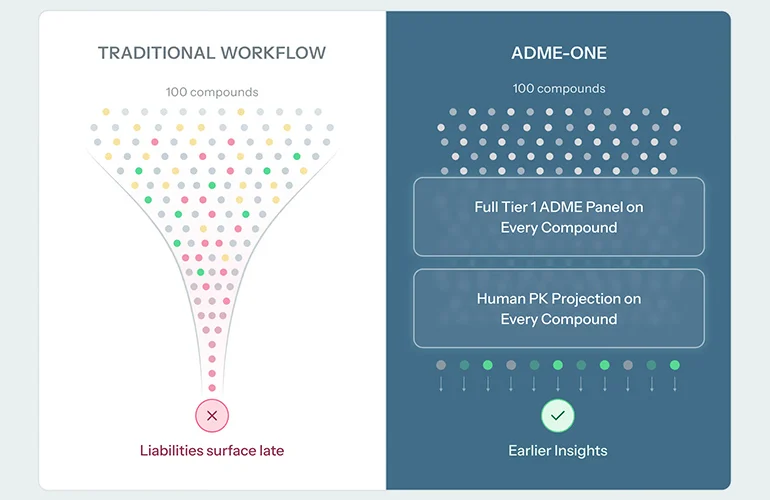
A significant shift is underway in the landscape of small-molecule drug discovery, as a new collaborative platform seeks to revolutionize how pharmaceutical companies approach Absorption, Distribution, Metabolism, and Excretion (ADME) profiling. Historically, comprehensive ADME assessment has been relegated to the later stages of drug development, primarily serving as a lead-optimization step where substantial resources are expended only after a promising lead series has been identified. This traditional "screening-funnel" approach, while understandable from a cost-containment perspective, has often led to the costly attrition of drug candidates due to unforeseen pharmacokinetic or toxicity issues late in the development pipeline. Now, a powerful consortium comprising Ginkgo Datapoints, Tangible Scientific, and Inductive Bio is challenging this paradigm with the launch of ADME-One, an innovative platform leveraging artificial intelligence (AI), advanced automation, and streamlined compound logistics to integrate critical ADME and pharmacokinetic (PK) insights much earlier in the drug discovery process – specifically, at the hit identification stage.
The ADME-One platform represents a concerted effort to provide medicinal chemists with an unprecedented early read on a compound’s potential, encompassing not just its potency but also its ADME profile, projected human pharmacokinetics (PK), and even an initial estimate of its therapeutic dose. This proactive approach aims to circumvent the months of synthesis cycles and significant investment typically committed to compounds that may ultimately prove unsuitable due to suboptimal ADME properties. By front-loading these crucial evaluations, the platform endeavors to steer drug development programs toward more viable candidates from the outset, thereby optimizing resource allocation and accelerating the discovery timeline.
The Foundational Shift in Drug Discovery
For decades, the pharmaceutical industry has grappled with high failure rates and escalating costs in drug development. A substantial portion of preclinical and early clinical failures can be attributed to unfavorable ADME properties or unexpected toxicity, which often become apparent only after considerable time and financial outlay. Studies have consistently shown that ADME-related issues contribute to approximately 50% of drug candidate failures in preclinical development and a significant percentage in clinical trials. This grim reality has underscored the urgent need for more predictive and efficient methods to evaluate drug-like properties early on.
The traditional model of drug discovery typically involves several sequential stages: target identification and validation, hit identification, lead generation, lead optimization, and preclinical development, followed by clinical trials. Within this sequence, ADME profiling usually begins in earnest during the lead optimization phase, after compounds have demonstrated initial activity against a biological target. This late-stage assessment often means that substantial synthetic chemistry efforts have already been invested in compounds that may possess excellent target potency but suffer from poor solubility, rapid metabolism, or unfavorable distribution, rendering them ineffective or unsafe in vivo. The economic implications are profound, as the cost of developing a new drug can run into billions of dollars, with failures in later stages being exponentially more expensive than those caught early.
The advent of ADME-One marks a strategic pivot, driven by advancements in laboratory automation, high-throughput screening technologies, and sophisticated AI/machine learning (ML) algorithms. These technological leaps have made it feasible to generate and analyze complex ADME data for a much larger number of compounds, at an earlier stage, and at a fraction of the historical cost.
Deconstructing the ADME-One Platform: A Collaborative Synergy
The ADME-One platform is a testament to the power of interdisciplinary collaboration, integrating specialized expertise from its three founding partners:
-
Ginkgo Datapoints: At the core of the platform’s experimental capabilities are Ginkgo’s automated Tier 1 assays. Conducted in their state-of-the-art robotic laboratories in Boston, these assays provide rapid and reliable measurements for five critical ADME parameters:
- Microsomal stability: Evaluates how quickly a compound is metabolized by liver enzymes, a key determinant of its half-life in the body.
- Cell permeability: Assesses a compound’s ability to cross biological membranes, essential for absorption and distribution to target tissues.
- Kinetic solubility: Measures how much of a compound can dissolve in a given solvent over time, impacting bioavailability.
- CYP inhibition: Identifies potential drug-drug interactions by measuring a compound’s ability to inhibit cytochrome P450 enzymes, a major class of drug-metabolizing enzymes.
- Plasma protein binding: Determines the extent to which a compound binds to proteins in the blood, influencing its free concentration and availability to exert pharmacological effects.
The fully automated nature of Ginkgo’s assays ensures high throughput, reproducibility, and consistent data quality, which are paramount for early-stage screening.
-
Tangible Scientific: Efficient compound management is the often-overlooked backbone of high-throughput drug discovery. Tangible Scientific brings its expertise in this domain, providing a seamless workflow for handling physical samples. Their services encompass meticulous intake, precise plating for assays, and real-time tracking of each compound order. This meticulous logistical management ensures that samples are processed accurately and efficiently, minimizing errors and delays that can plague traditional manual workflows. The tight integration of compound logistics with automated assays is crucial for the platform’s promise of rapid turnaround times and reliable results.
-
Inductive Bio: The intelligence layer of ADME-One is powered by Inductive Bio’s Compass platform, which leverages advanced AI and machine learning to transform individual ADME readouts into a cohesive, predictive human pharmacokinetic (PK) projection. This is where the platform truly distinguishes itself. Instead of merely presenting raw assay data, Inductive Bio’s algorithms integrate these disparate data points to estimate how a compound will behave in the human body – its absorption, distribution, metabolism, and excretion profile – and even predict an initial human dose. This capability allows drug discovery teams to rank compounds not just by their potency, but by their holistic drug-like qualities, offering a more nuanced and clinically relevant perspective much earlier. Alex Taylor, Ph.D., head of medicinal chemistry at Inductive Bio, highlights the guiding question behind the platform: "Could we pull together all the assays needed to get your first projection of human PK at a price point where you’d now be doing this on most, if not all, of the compounds coming through?" This question underscores the platform’s commitment to making comprehensive early ADME/PK assessment both feasible and economically attractive.
The Imperative of Early PK and Dose Context
A central tenet of modern medicinal chemistry is the pursuit of drug candidates that can achieve optimal human doses. As Dr. Taylor succinctly puts it, "Experienced medicinal chemists will tell you up front that dose is ultimately the thing you want to optimize for." The rationale for this focus is multi-faceted and supported by a growing body of evidence:
-
Safety and Toxicity: High daily doses are frequently associated with increased risk of adverse drug reactions. For instance, research led by FDA-affiliated scientists published in Hepatology identified a "rule-of-two," linking high daily doses, particularly when combined with high lipophilicity (fat-solubility), to a significantly elevated risk of drug-induced liver injury (DILI). While acknowledging that many high-dose drugs are safe, this work highlights a crucial risk signal that can be identified early. Another registry study found that drugs dosed at 50 mg per day or more carried higher rates of liver failure, transplant, and death compared to those dosed below 10 mg. Identifying potential high-dose liabilities early allows chemists to design compounds with improved intrinsic properties that require lower doses, enhancing patient safety and reducing the likelihood of late-stage clinical failures.
-
Formulation and Adherence: Lower doses are generally easier to formulate into patient-friendly dosage forms and often lead to simpler dosing regimens. Simpler regimens, in turn, are strongly associated with better patient adherence, which is critical for therapeutic efficacy in real-world settings. A drug, no matter how potent or safe, is ineffective if patients do not take it as prescribed.
-
Holistic Property Balance: The complexity of drug action means that a compound’s suitability is rarely determined by a single exceptional property. Instead, it’s the delicate balance of potency, ADME, and safety that defines success. Dr. Taylor aptly notes that "sometimes compounds you think aren’t good enough to go forward, because they don’t meet your criteria for potency or metabolic stability, actually have a balance of all the properties such that they could go forward." The classic examples of triazole antifungals, fluconazole and itraconazole, illustrate this point. Fluconazole is small, polar, weakly plasma protein-bound, and renally cleared, while itraconazole is highly lipophilic, extensively protein-bound, broadly distributed, and hepatically metabolized. Despite their seemingly irreconcilable individual ADME profiles, both became widely used oral antifungals because their overall pharmacokinetic profiles supported effective dosing. ADME-One’s ability to integrate individual assay readouts into a comprehensive human PK projection helps reveal these crucial balances, preventing the premature dismissal of potentially valuable drug candidates.
Economic Imperatives and Geopolitical Shifts
The launch of ADME-One is also a direct response to prevailing economic pressures and evolving geopolitical realities in the pharmaceutical sector. The mantra across both the tech and pharma worlds is to "stay lean, be cost-competitive, be cost-conscious," as articulated by Dr. Taylor. This pressure has long justified the traditional screening-funnel approach, which aimed to conserve expensive resources by applying comprehensive testing only to a select few lead compounds. However, this strategy often proved to be a false economy when promising candidates failed later due to unforeseen ADME issues.
The economic landscape has shifted, primarily due to advancements in laboratory automation. The ability to run high volumes of compounds through assays using robotics on a weekly basis, with rapid, automated turnaround, has dramatically altered the cost-benefit equation. What was once prohibitively expensive and time-consuming for early-stage screening is now economically viable.
The ADME-One platform’s pricing strategy is designed to be highly competitive, positioned below industry standards and specifically aiming to undercut offshore Contract Research Organizations (CROs). This aggressive pricing, coupled with its fully U.S.-based workflow, addresses another significant industry trend: the increasing demand for data sovereignty and the movement of preclinical work back onshore. The BIOSECURE Act, for instance, reflects a growing regulatory push in the U.S. to reduce reliance on foreign entities for critical pharmaceutical research and manufacturing. By offering a high-quality, cost-effective, and domestically located service with rapid results (days instead of weeks), ADME-One is strategically positioned to meet these evolving needs, providing a compelling alternative to traditional outsourcing models.
The Consortium Model and Data Security: Building a Virtuous Cycle
A crucial element of Inductive Bio’s contribution, and a key differentiator for the ADME-One platform’s long-term value, lies in its unique consortium model for AI/ML development. This model addresses the inherent challenge of improving shared machine learning models using proprietary customer chemistry without compromising data confidentiality.
Inductive Bio has established a robust legal framework that allows its partners to securely pool their data without any single partner gaining visibility into another’s compounds. This pooled, anonymized data forms the basis for training Inductive Bio’s "global models." These global models benefit from a continually expanding breadth of chemical matter, leading to more generalized and powerful predictive capabilities. When a specific customer contributes their own experimental results, Inductive Bio fine-tunes a "local model" on top of the global one using that customer’s unique data. Dr. Taylor explains that this approach typically delivers a "strong performance gain" for the individual customer, as their predictions become more accurate and tailored to their specific chemical space.
Recognizing the paramount importance of data security in the competitive pharmaceutical industry, Inductive Bio has invested substantial engineering effort to ensure that the pooled data is impossible to reverse-engineer. This means that a customer cannot deduce the chemical structures or properties of other consortium members’ compounds by analyzing similarities or patterns within the shared model. This commitment to stringent data protection is vital for fostering trust and encouraging broad industry participation, which in turn fuels the continuous improvement of the predictive models.
This dynamic creates what Dr. Taylor describes as a "virtuous cycle" or "flywheel effect." As more participants contribute data, the chemical matter underpinning the global models expands, making the predictions more robust and broadly applicable for everyone. Within each individual drug discovery program, this translates into a daily loop: chemists design new molecules on the Inductive platform, immediately seeing predicted ADME parameters and a visualization of how these translate into a human PK curve. Selected compounds then proceed through synthesis and into the ADME-One platform for experimental validation. The experimental results, in turn, feedback into the Inductive models, refining their predictive accuracy for future compound designs. This iterative learning process ensures that the platform continuously improves, offering increasingly precise guidance to drug developers.
AI as a Prioritization Tool, Not a Replacement for Science
Despite the advanced AI and automation at the heart of ADME-One, Dr. Taylor remains steadfast in framing AI’s role in drug discovery as a sophisticated prioritization tool, firmly grounded in empirical science. "Drug discovery is science at the end of the day, and science is not engineering," he asserts. This perspective underscores a critical distinction: while AI can significantly enhance efficiency and guide decision-making, it does not replace the fundamental need for experimental validation.
The intricate biological systems involved in drug action and human physiology are too complex to be fully modeled or predicted by algorithms alone. There remains "so much that needs to happen empirically." AI provides the "best guess" of a compound’s behavior, but ultimately, that guess must be "reduced to practice, synthesize[d], and test[ed]."
In this context, the true utility of prediction lies in its ability to inform resource allocation. Drug synthesis is inherently time-consuming and expensive, and discovery teams operate under finite budgets. The ability to accurately predict parameters that feed into these critical decisions is "incredibly useful" because it allows teams to prioritize which "expensive, slow compounds deserve to be made first." By minimizing the synthesis of compounds with unfavorable ADME/PK profiles, ADME-One aims to maximize the return on investment for drug discovery programs, accelerating the journey from concept to clinic and ultimately bringing safer, more effective medicines to patients faster.
The ADME-One platform represents a significant leap forward in addressing long-standing challenges in pharmaceutical R&D. By integrating cutting-edge AI, automation, and a robust data-sharing model, Ginkgo Datapoints, Tangible Scientific, and Inductive Bio are not merely optimizing an existing process; they are fundamentally reshaping the early stages of small-molecule drug discovery, promising to make it more efficient, cost-effective, and ultimately, more successful.