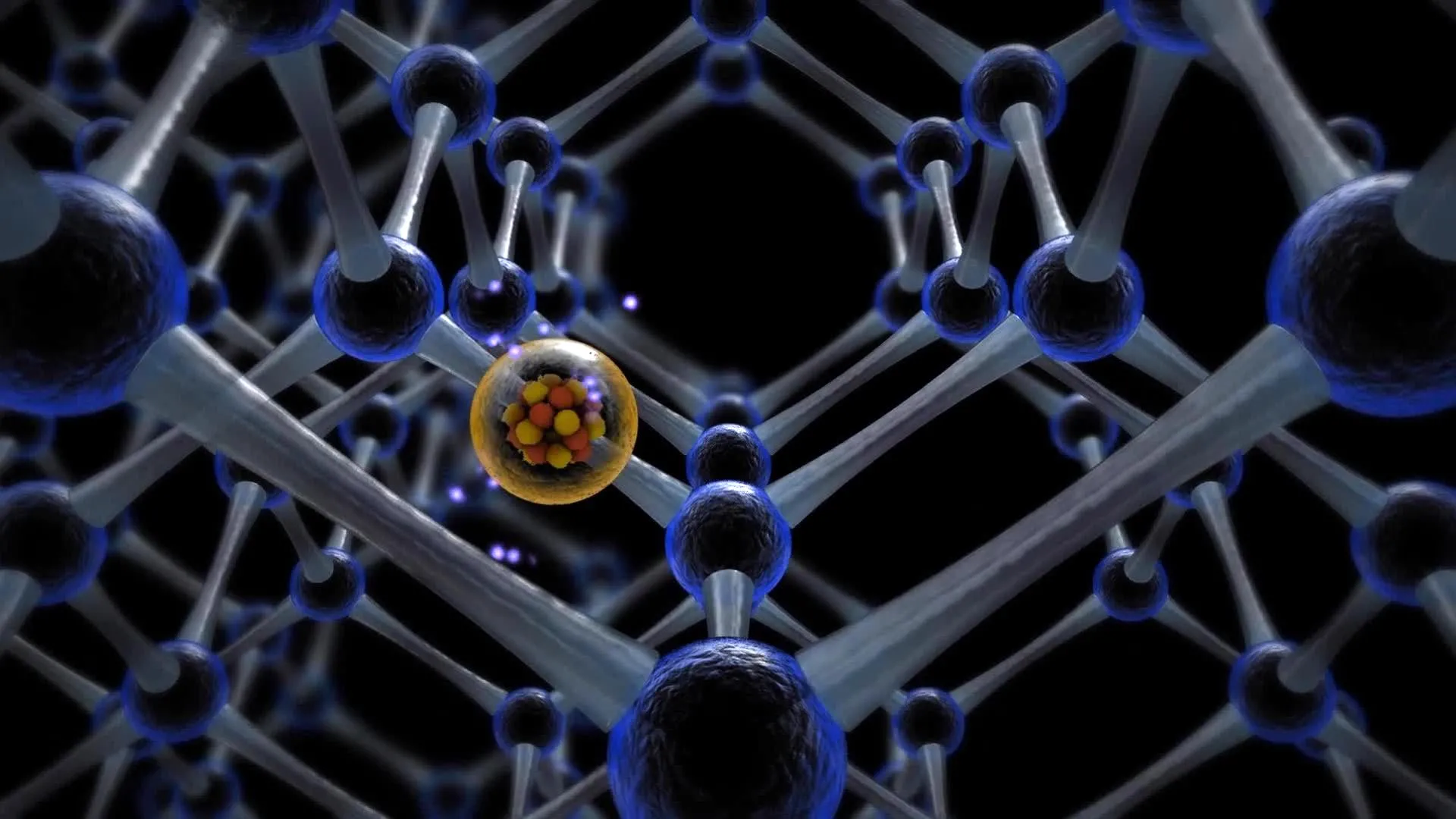
Researchers at the Harvard John A. Paulson School of Engineering and Applied Sciences (SEAS) have successfully demonstrated a novel mechanism to safeguard delicate quantum information using mechanical vibrations, operating at the scale of microscopic sound waves. This breakthrough, achieved within the laboratory of Marko Lončar, the Tiantsai Lin Professor of Electrical Engineering at Harvard, introduces a promising pathway toward the construction of highly compact quantum networks integrated directly onto semiconductor chips. Furthermore, the development lays a foundational framework for hybrid quantum architectures capable of bridging disparate types of qubits—the fundamental building blocks of quantum computing—into unified, functional systems.
The findings, which represent a significant step forward in the field of solid-state quantum physics, were formally published in the peer-reviewed journal Nature Physics. The experimental work was spearheaded by Eliza Cornell, a recent Ph.D. graduate from the Lončar research group who now serves as a postdoctoral researcher at Boston University, alongside Zhujing Xu, a former postdoctoral scholar within the same laboratory. The collaborative research effort also included significant contributions from an international roster of co-authors, underscoring the broad-based academic interest in resolving one of quantum engineering’s most persistent bottlenecks: the fragility of quantum states in integrated environments.
The Mechanical Paradigm: Harnessing Phonons for Quantum Transport
To understand the magnitude of the Harvard team’s achievement, it is necessary to examine the prevailing methodologies in quantum network architecture. A prominent approach to quantum networking utilizes the electron spin associated with specific atomic impurities—such as silicon-vacancy centers—embedded within a diamond lattice to store quantum information. In these systems, information must be transported between stationary qubit nodes to facilitate processing and communication across a network.
Traditionally, this transport function has been assigned to photons, or particles of light. However, photons present distinct geometric limitations when scaling down to micro- and nanoscale dimensions due to their relatively long wavelengths. Enter phonons: quantized packets of mechanical vibration that travel through a solid material.
The Lončar laboratory has spent years investigating the physics of phononic systems, culminating in the development of specialized structures known as phononic cavities. These microscopic traps confine mechanical vibrations, allowing them to interact intensely with the electron spin housed inside a diamond qubit. Phonons offer critical advantages over optical photons in chip-scale applications. Because sound waves travel much slower and possess significantly shorter wavelengths than light waves at equivalent frequencies, engineers can design substantially smaller components and pack them with higher density onto a single microchip.
Additionally, phonons exhibit a natural versatility: they interact readily with both solid-state spins and electromagnetic fields. This dual interaction capability makes them exceptionally attractive for hybrid quantum technologies, where engineers seek to combine disparate qubit modalities—such as superconducting circuits, trapped ions, and solid-state spins—into a single, cohesive processing ecosystem.
The Coherence Crisis: Balancing Interaction and Isolation
Despite their clear structural and functional advantages, utilizing phonons to manage quantum information introduces a severe engineering paradox centered on quantum coherence.
Qubits are notoriously sensitive to their external environment. Any stray magnetic field, thermal fluctuation, or structural defect can disrupt a qubit’s quantum state, causing decoherence—the premature loss of stored information. For a quantum system to perform useful computations or reliable data storage, its coherence time must be sufficiently long to maintain the integrity of the superposition states.
Historically, physicists have protected quantum memories from environmental interference by employing external microwave pulses. These pulses decouple the vulnerable memory elements from surrounding noise sources, shielding the quantum state during critical operational windows. However, this conventional decoupling strategy fails when applied to qubits physically integrated inside phononic cavities.
The core of the problem lies in a conflicting set of physical requirements. To ensure efficient communication between nodes, a qubit must maintain a strong, active interaction with phonons. Yet, that exact same strong coupling exposes the qubit to mechanical noise originating from the surrounding environment, drastically shortening its coherence time. Prior to the Harvard team’s intervention, achieving both robust phonon-mediated interaction and extended quantum memory within a single, monolithic device remained an elusive goal for experimental physicists.
Dressed States: All-Mechanical Coherence Protection
To circumvent this persistent limitation, the SEAS research team devised an innovative protocol they designate as "all-mechanical coherence protection" applied to a silicon-vacancy spin in diamond.
Instead of relying on external microwave radiation to decouple the system, the researchers continuously applied a mechanical driving field composed of phonons. This continuous acoustic intervention fundamentally alters the nature of the qubit, transforming it into a specialized quantum configuration known as a "dressed" state. In quantum mechanics, a dressed state describes a system that is continuously interacting with an external field—effectively "wearing" the field as a protective cloak.
By continuously driving the system with sound waves, the researchers rendered the silicon-vacancy spin significantly less vulnerable to low-frequency noise originating from the local environment. Crucially, because this protective field is mechanical in nature, it is fully compatible with the phononic cavities already designed to route information between stationary nodes in quantum networks.
This establishes a powerful dual function for phonons within the architecture. Rather than forcing engineers to choose between communication and isolation, phonons can simultaneously serve as the transport medium moving quantum data across the chip and as the shielding mechanism protecting that data from environmental disruption.
"We are solving two problems," explained Eliza Cornell regarding the dual objective of the research. "We want the spin to have strong interaction with phonons, and we want the spin to have a long coherence time. Our paper demonstrates a method of extending the coherence time that is compatible with the silicon-vacancy center being in a cavity."
Experimental Results and Performance Metrics
In practical laboratory tests, the SEAS team successfully quantified the efficacy of their all-mechanical protection scheme. By implementing continuous-wave mechanical noise suppression, the researchers extended the coherence time of the silicon-vacancy spin by roughly a factor of three compared to unprotected baselines.
While a threefold increase represents a major empirical milestone, the broader implication extends far beyond the immediate numerical metric. The experiment provides definitive proof-of-concept that continuous acoustic driving can be successfully deployed to manage and mitigate decoherence in real, physical quantum devices. It validates the theoretical models predicting that microscopic sound waves can serve as active management tools in quantum hardware, moving phononics from a theoretical transport mechanism to an active participant in quantum state preservation.
The study, titled "All-mechanical coherence protection and fast control of a spin qubit," reflects a broad collaborative effort. Co-authors alongside Cornell and Xu include Zhaoyou Wang, Hana K. Warner, Eliana Mann, Michael Haas, Smarak Maity, Graham Joe, Liang Jiang, Peter Rabl, and Benjamin Pingault, bringing together expertise in quantum optics, nanophotonics, materials science, and theoretical physics.
Institutional Support and Funding
The advancement of such complex quantum architectures requires sustained financial and infrastructural backing. The research conducted at Harvard SEAS was supported by a coalition of federal agencies and national research initiatives.
Primary financial backing was provided by the National Science Foundation under grant number EEC-1941583. Additional support came from the Air Force Office of Scientific Research through award numbers FA9550-23-1-0333 and FA9550-23-1-0338. Furthermore, the project received significant resources from Q-NEXT, a U.S. Department of Energy Office of Science National Quantum Information Science Research Center, operating under award number DE-FOA-0002253.
Experimental fabrication and characterization were performed, in part, at the Harvard Center for Nanoscale Systems (CNS), a facility belonging to the National Nanotechnology Infrastructure Network, supported by National Science Foundation award ECS-0335765. This centralized infrastructure allows academic researchers to access advanced cleanroom tools necessary for etching nanoscale phononic structures into diamond and other wide-bandgap semiconductor materials.
Broader Implications and Commercial Pathways
The successful demonstration of all-mechanical coherence protection carries far-reaching implications for the future of quantum information science. As the global scientific community races to transition from room-sized, dilution-refrigerator-dependent quantum computers to scalable, modular architectures, the ability to pack components tightly onto semiconductor chips becomes paramount.
Optical interconnects, while effective for long-distance telecommunications, suffer from diffraction limits and bulky alignment requirements when scaled down to the nanometer regime. Phononic networks offer a viable alternative for intra-chip and short-range inter-chip communication, enabling high-density integration akin to classical microelectronics. By proving that sound waves can simultaneously route data and shield qubits from decoherence, the Harvard team has eliminated a major roadblock standing in the way of acoustic quantum computing.
Recognizing the commercial potential of these integrated quantum technologies, the Harvard Office of Technology Development (OTD) has initiated efforts to secure intellectual property protection. OTD is actively pursuing patent coverage for the innovations arising from the Lončar laboratory, laying the groundwork for potential commercialization partnerships, technology licensing, or spin-out ventures aimed at bringing chip-scale quantum networks to the industrial market.
As research progresses, the integration of phononic cavities with advanced qubit control mechanisms will likely accelerate the development of hybrid quantum systems. By mastering the manipulation of microscopic sound waves, physicists are unlocking new dimensions in the control of matter at the quantum scale, bringing the promise of dense, resilient, and scalable quantum networks closer to operational reality.