Aging has long been viewed as an inevitable, unidirectional trajectory characterized by the gradual accumulation of cellular damage, the thinning of hair, the development of wrinkles, and the creeping fog of cognitive impairment. For centuries, the quest to reverse these markers of senescence remained the domain of folklore and alchemy. However, a groundbreaking collaborative study involving researchers from Xi’an Jiaotong-Liverpool University, Stanford University, Shanghai Jiao Tong University, and the University of Chinese Academy of Sciences has introduced a rigorous scientific framework to the possibility of biological rejuvenation. By focusing on the dietary intake of plasmalogens—lipids abundant in the sea squirt—scientists have identified a potential pathway to mitigate, and perhaps even reverse, the physiological and cognitive ravages of aging.
The Biological Mechanism: Understanding Plasmalogens
At the center of this research is the plasmalogen, a specialized class of phospholipid that plays a critical role in the structural integrity of cell membranes. Unlike standard phospholipids, plasmalogens possess a unique vinyl-ether bond at the sn-1 position, which confers upon them antioxidant properties, protecting other lipids and proteins from oxidative stress.
In the human body, these molecules are not evenly distributed; they are found in the highest concentrations within the myelin sheaths of neurons, the heart, and the immune system. Scientific literature over the past two decades has established a clear correlation: as human beings age, the systemic levels of plasmalogens begin to wane. This depletion is not merely a bystander effect of aging but is intimately linked to the pathophysiology of neurodegenerative conditions. Specifically, diminished plasmalogen levels have been consistently documented in the brains of patients suffering from Alzheimer’s disease, Parkinson’s disease, and other forms of dementia. The hypothesis driving the current research suggests that by replenishing these essential fats, one might fortify the brain against the structural decay that leads to cognitive failure.
The Marine Connection: From Asian Delicacy to Therapeutic Agent
The source of the supplement used in the study—the Ascidiacea, or sea squirt—is a marine organism long utilized in traditional diets. Known as meongge in Korea and hoya in Japan, these organisms are often consumed raw, providing a direct dietary source of the target lipids. While the culinary tradition of eating sea squirts is well-established, its therapeutic potential remained largely anecdotal until the research team undertook a controlled investigation.
The chronology of the study began with the identification of the plasmalogen deficiency in aged models. By sourcing purified plasmalogens from these marine animals, the researchers designed an experimental protocol to test the efficacy of supplementation in aged mice. Over a period of several weeks, the test group received dietary plasmalogens, while a control group maintained a standard diet. The objective was to observe whether the systemic increase in these lipids could permeate the blood-brain barrier and induce observable biological change.
Cognitive and Physical Restoration in Laboratory Models
The experimental results, published as a significant development in neurobiology, provided evidence of reversal in age-related degradation. The primary metric for cognitive assessment was the Morris water maze, a standard psychological test used to evaluate spatial learning and memory.
In this test, mice are placed in a circular pool containing a submerged, invisible platform. Younger mice, utilizing intact spatial memory, quickly learn to navigate to the platform to escape the water. Aged mice, however, typically exhibit a diminished capacity to retain this spatial map, resulting in longer latency periods—the time taken to locate the platform. The study found that after just five days of supplementation, the aged mice receiving plasmalogens exhibited performance metrics comparable to those of significantly younger subjects. They displayed improved recall, faster navigation times, and an increased success rate in locating the target, suggesting a stabilization or restoration of hippocampal function.
Beyond cognition, the physical manifestations of the treatment were equally noteworthy. Professor Lei Fu, the corresponding author of the study, noted that the treated mice displayed signs of systemic rejuvenation. "Aged mice fed with the plasmalogens grew new black hair that was thicker and glossier than those in the control group," Fu stated. This suggests that the impact of plasmalogens may extend to the hair follicle cycle and skin health, further supporting the theory that these lipids act as a fundamental building block for cellular repair.
Cellular Rejuvenation: The Synaptic Architecture
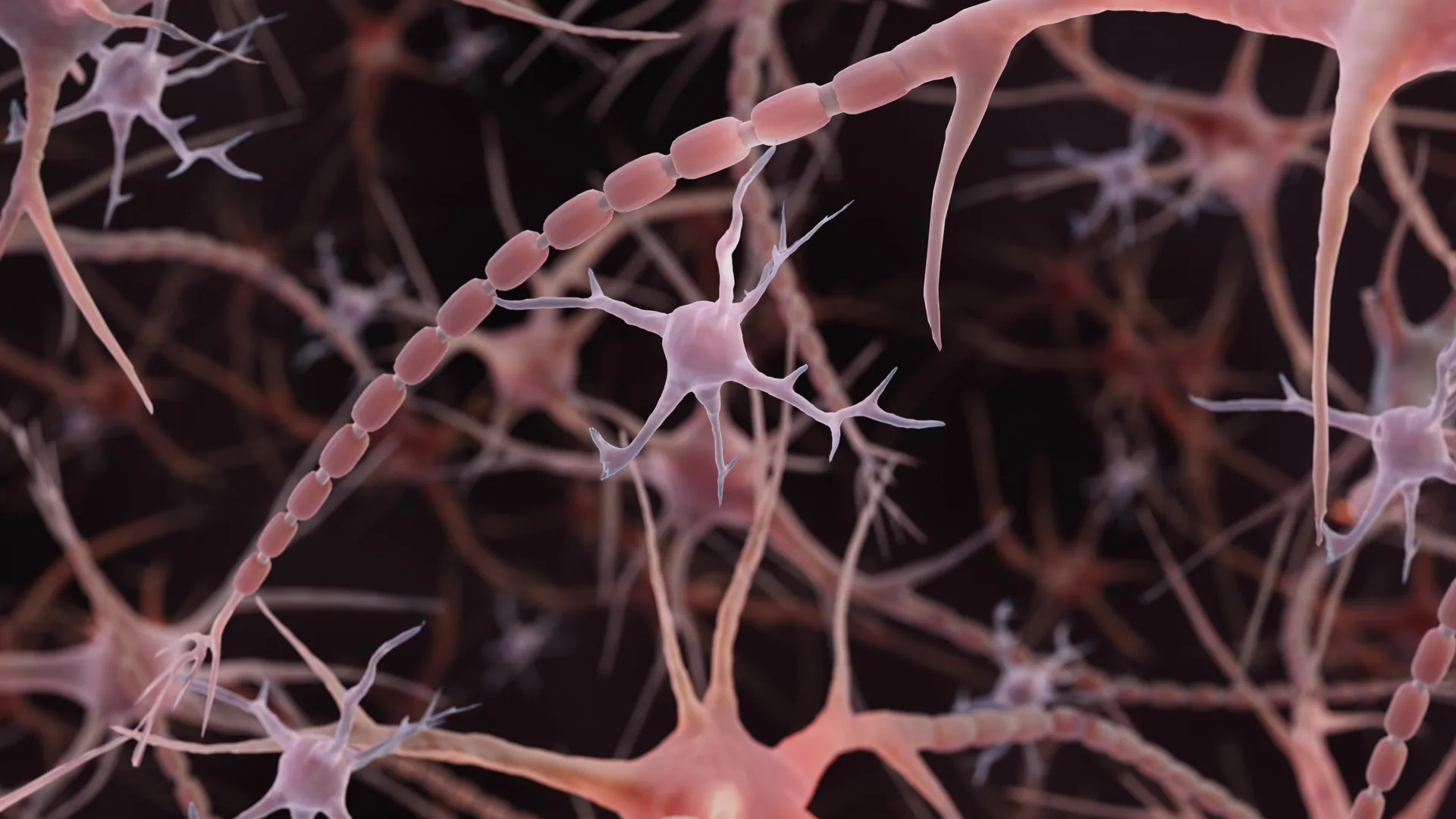
To understand why the mice performed better, the researchers performed a post-mortem analysis of the brain tissue. They observed that the treated mice possessed a significantly higher density of synapses. Furthermore, these synapses demonstrated improved structural integrity compared to the untreated cohort.
Synaptic plasticity—the brain’s ability to forge new connections—is the cornerstone of learning and memory. As an organism ages, these connections become frayed and less responsive. The research suggests that plasmalogens facilitate the production of brain-derived neurotrophic factors, which stimulate the growth and development of neurons. This process of neuroregeneration provides a biological explanation for the cognitive improvements observed during the water maze trials.
Additionally, the research team identified a secondary benefit: a profound reduction in neuroinflammation. Chronic, low-grade inflammation is a hallmark of the aging brain, often referred to as "inflammaging." By lowering the activation of immune pathways that damage nerve cells, the plasmalogens likely created a more hospitable environment for synaptic maintenance.
The Gut-Brain Axis: A Systemic Pathway
A pivotal aspect of the research involves the gut-brain axis, a complex communication network linking the enteric nervous system with the central nervous system. Professor Fu emphasized that the benefits of plasmalogen intake may be mediated by the gut microbiome. Emerging data indicates that dietary plasmalogens can shift the composition of gut bacteria, which in turn influences systemic metabolic signals that impact brain health. This implies that the treatment is not merely a localized brain intervention but a systemic recalibration of the body’s internal signaling networks.
Implications for Human Longevity and Clinical Translation
The findings present a compelling case for further research, though the transition from murine models to human clinical trials requires caution. The human brain is exponentially more complex than that of a rodent, and the etiology of human Alzheimer’s involves a myriad of genetic and environmental factors that cannot be perfectly replicated in a laboratory setting.
However, the scientific community is taking notice. The potential for a dietary, non-invasive intervention to stall or reverse cognitive decline is of immense public health interest, particularly as the global population continues to age. If human clinical trials replicate even a fraction of the success observed in the mice, the economic and social implications would be transformative. A reduction in the prevalence of dementia-related diseases would alleviate significant burdens on healthcare systems worldwide.
Professor Fu’s personal commitment to the protocol—incorporating daily plasmalogen supplementation—highlights the optimism shared by the research team. Nevertheless, rigorous clinical trials must now determine the optimal dosage, bioavailability in humans, and the long-term safety profile of these supplements. Scientists are also looking to standardize the extraction process, ensuring that any potential therapeutic product remains consistent and free of marine contaminants.
Conclusion: A New Horizon in Gerontology
The intersection of marine biology and neuro-gerontology has yielded a promising, if early-stage, breakthrough. By identifying the specific role of plasmalogens in maintaining synaptic health and suppressing neuroinflammation, researchers have opened a new chapter in the study of aging. While a "fountain of youth" remains elusive, the ability to potentially preserve the structural and cognitive foundations of the brain through dietary intervention represents a paradigm shift.
As the scientific community prepares for the next phase of human-centric studies, the sea squirt—an unassuming creature of the tide—finds itself at the forefront of a major medical inquiry. Whether or not these findings will lead to a universal anti-aging treatment, they have indisputably deepened our understanding of the delicate molecular balance that sustains the aging human mind. The path forward will be dictated by clinical data, but for the first time, the possibility of reversing cognitive decline has moved from the realm of the hypothetical to the center of serious, evidence-based discourse.