The integration of artificial intelligence into the pharmaceutical industry has reached a critical inflection point, moving beyond theoretical experimentation into the realm of high-stakes financial validation. A recent collaborative analysis conducted by the Tufts Center for the Study of Drug Development (CSDD) and Medable, a prominent clinical trial platform provider, has provided one of the most comprehensive looks to date at the economic potential of AI-driven agents in oncology trials. The study reveals that implementing a specialized Clinical Monitoring Agent could generate an 82x return on investment (ROI) for phase 3 trials and a 64x ROI for phase 2. In terms of expected net present value (eNPV), this translates to approximately $21 million in added financial value for phase 3 studies and $7.5 million for phase 2.
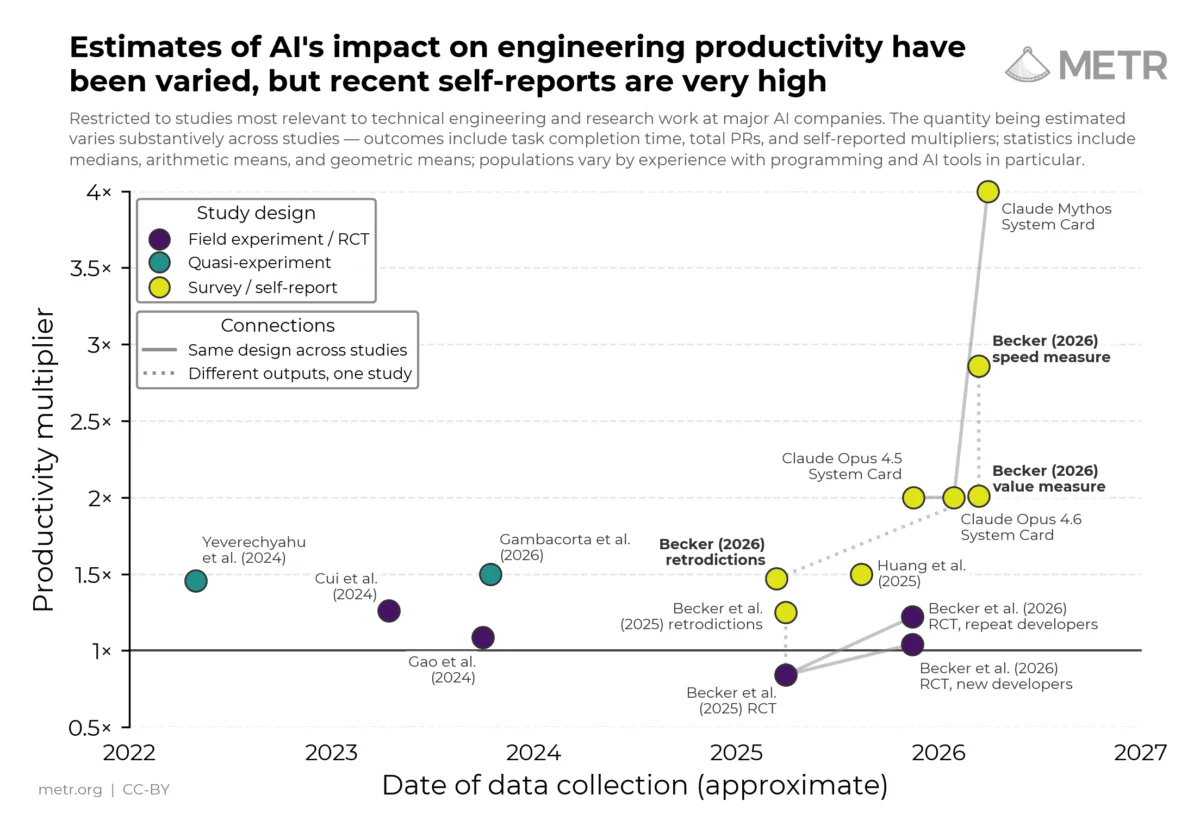
This report arrives at a time when the enterprise landscape is undergoing a significant shift in how AI is utilized. While early adoption was characterized by simple generative tools and chatbot interfaces, the current trend favors "agentic" workflows—systems capable of performing complex, multi-step tasks across disparate software ecosystems. According to recent market data, including a July report from McKinsey, nearly 93% of surveyed organizations have exceeded their initial AI budgets, reflecting both the high cost of implementation and the aggressive pursuit of long-term efficiency gains. Simultaneously, industry data from late 2025 indicated that software developers were saving an average of one to two hours daily through the use of these agents, suggesting that the clinical trial sector is following a broader, proven trajectory of digital transformation.
The Evolution of Clinical Trial Efficiency
The quest to quantify the value of AI in clinical research is not new, but it has historically been hindered by a lack of granular data. Previous Tufts CSDD analysis in 2025 reviewed 36 distinct AI/ML use cases within the industry, identifying an average 18% reduction in overall cycle time. The most pronounced gains were observed in patient monitoring and enrollment assessment—two areas traditionally prone to manual bottlenecks.
Ken Getz, executive director of the Tufts CSDD, noted that the industry has long been aware of the benefits of AI in a pilot capacity, but the lack of hard data prevented widespread capital allocation. "We’ve known for some time that companies have been piloting AI enablement tools, but what they’ve often been lacking is any kind of quantification of the actual ROI, the value proposition," Getz stated. The study was designed to bridge this gap, providing executives with the empirical evidence required to justify large-scale technological investment.
The implications for sponsors with large oncology portfolios are substantial. Dr. Pamela Tenaerts, Chief Medical Officer at Medable, projected that for a sponsor managing 20 active indications, the incremental portfolio eNPV could rise by as much as $226 million. For larger organizations overseeing 50 active indications, the projected value creation swells to $565 million. These figures, while modeled, demonstrate the compounding effect of marginal efficiency gains when scaled across a global research program.
Technical Architecture and Configuration
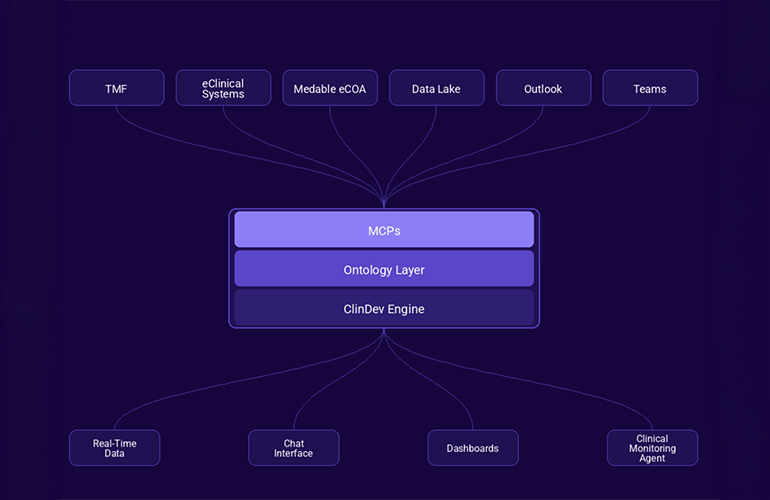
The deployment of these agents is not a "plug-and-play" endeavor. Medable utilizes a architecture that relies on prebuilt monitoring and trial master file (TMF) agents, which serve as the foundation. These agents are equipped with approximately 40 native connectors that interface with critical systems such as Medidata Rave, Oracle InForm, Veeva EDC, and various data lakes like Snowflake and Databricks.
However, the "last mile" of implementation remains highly specialized. Dr. Tenaerts noted that even with robust pre-built architecture, most implementations require roughly 20% customization to align with a sponsor’s unique internal protocols and legacy system requirements. This nuance is vital: clinical trial systems are notoriously siloed, and the agent must be able to harmonize data from EDC, CTMS, and safety databases to provide a coherent picture. In live demonstrations, these agents have shown the capacity to flag site-specific anomalies—such as inconsistent reporting of concomitant medications and adverse events—faster than traditional, manual review cycles would allow.
Addressing the Data Complexity Crisis
The urgency for such technology is driven by the ballooning complexity of modern protocols. A joint analysis by Tufts CSDD and TransCelerate, covering 105 protocols across 15 major sponsors, found that the average phase 3 oncology trial now requires the collection of 5.9 million data points. This represents a nearly six-fold increase from the 929,000 data points recorded in 2012.
The human cognitive load associated with this data density is immense. Clinical Research Associates (CRAs) are currently tasked with wrangling information from disparate systems to ensure regulatory compliance and patient safety. By automating the identification of trends and deviations, AI agents allow human professionals to pivot from "data wrangling" to high-level strategic decision-making. As Getz points out, the goal is not to replace the human, but to elevate the focus of the human from tactical tasks—such as checking for missing fields—to critical decisions, such as whether a trial design needs to be amended or if a specific site requires immediate intervention.

Failure Rates and the Search for Signal
The financial pressure to adopt these tools is exacerbated by the historically high failure rate of oncology drug candidates. Despite three decades of effort, the cumulative failure rate for small-molecule cancer drugs remains stubbornly high, hovering around 95% from phase 1 through phase 3. While phase 3 success rates have shown modest improvement—a 2026 analysis of 824 oncology trials conducted between 2007 and 2023 showed a success rate of 43.4%—the economic burden of failed trials remains a primary inhibitor of innovation.
Agents are being positioned as a potential "early warning system." By identifying subtle deviations in patient safety or enrollment velocity, agents can surface signals of a failing study design or site performance issue weeks or months before a human monitor might notice. This temporal advantage is critical; in clinical trials, where one cannot simply re-run a study without significant capital and time, catching an error early can be the difference between a successful drug launch and a total write-off.
The Human-in-the-Loop Constraint
Despite the excitement surrounding autonomous technology, the current deployment model remains strictly "human-in-the-loop." Industry leaders are careful to distinguish between "autonomous" research and "assistive" monitoring. Currently, most Medable agents operate on a "recommend-and-review" basis. While an agent may automatically draft and send a query to a site for a missing data field, it does not bypass human oversight.
Venu Mallarapu, chief transformation and AI officer at eClinical Solutions, confirmed that the broader industry follows this trend. "There’s nobody that is running fully autonomous agents that not only process the data but also make decisions without human involvement," Mallarapu observed. The consensus is that the technology is currently designed to augment the professional, not to replace the professional’s critical judgment.
Furthermore, there is a systemic risk to consider: as AI increases the volume and speed of queries sent to clinical sites, there is a risk of creating a new "bottleneck" at the site level. Dr. Tenaerts emphasized that the ecosystem must be viewed holistically; if the agent generates a high volume of queries, the sites must be equipped to manage that influx efficiently.

Broader Implications and Future Outlook
The partnership between Tufts and Medable serves as a bellwether for the future of pharmaceutical R&D. By formalizing the ROI of AI through established financial metrics, the study provides a roadmap for other firms to evaluate their own digital transformations.
While the current focus is heavily concentrated on oncology, the scalability of these agents to other therapeutic areas is the next logical step. The model is essentially a framework for processing complex, high-velocity data, which is applicable across all phases of drug development. However, the industry remains in the early stages of this transition. As organizations move from pilot programs to full-scale enterprise integration, the focus will likely shift from merely proving the "ROI of an agent" to refining the "architecture of the clinical trial" itself—moving toward a future where trials are designed with machine-readable, AI-ready data flows from the outset.
In conclusion, the collaboration underscores a fundamental change in the economics of drug development. By quantifying the value of AI-driven efficiencies, the industry is moving closer to a model where trial failures are mitigated by data-driven precision rather than mere trial-and-error. As the technology matures and the "human-in-the-loop" workflows become more seamless, the potential to reduce both the cost and the timeline of bringing life-saving therapies to market appears to be reaching a point of tangible, scalable reality.