The landscape of modern pharmacology shifted fundamentally in May 2026, when the U.S. Food and Drug Administration (FDA) granted approval to vepdegestrant, marketed as Veppanu. As the first-ever Proteolysis Targeting Chimera (PROTAC) to reach the clinic, its approval serves as a definitive validation of targeted protein degradation (TPD) as a therapeutic modality. However, the path to commercialization for this class of drugs remains fraught with technical hurdles. While the scientific community celebrates the success of vepdegestrant, pharmaceutical developers are increasingly focused on a singular, persistent obstacle: the daunting challenge of achieving sufficient oral bioavailability in molecules that defy traditional drug-design conventions.
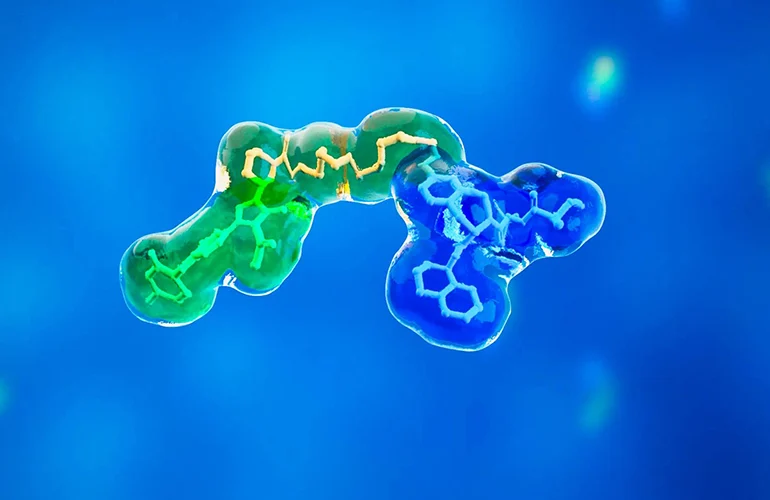
PROTACs operate on a sophisticated, event-driven mechanism of action. Unlike conventional small-molecule inhibitors that function via stoichiometric binding—requiring a one-to-one ratio of drug to target—PROTACs act as catalytic "chemical knockdowns." Composed of a target-binding warhead, an E3 ligase recruiter, and a flexible chemical linker, they hijack the body’s endogenous ubiquitin-proteasome system. Once the PROTAC brings the target protein into proximity with an E3 ligase, the target is tagged for degradation. This catalytic nature allows these molecules to achieve profound therapeutic effects at significantly lower concentrations than traditional drugs, potentially unlocking the treatment of proteins previously labeled "undruggable."
Despite these benefits, the physical properties of PROTACs often place them in a category known as "beyond-Rule-of-Five" (bRo5) chemical space. Traditional medicinal chemistry, governed by Lipinski’s Rule of Five, favors molecules with low molecular weights, limited hydrogen-bond donors, and specific lipophilicity profiles. PROTACs, by design, frequently exceed 700 Daltons, feature high polar surface areas, and contain an abundance of rotatable bonds. These characteristics historically correlate with poor solubility, limited membrane permeability, and erratic systemic exposure, rendering the transition from a potent laboratory compound to a viable oral pill one of the most difficult engineering tasks in current drug development.
A Chronology of Development and the Rise of TPD
The emergence of PROTACs follows a decade-long evolution in biotechnology. Early research in the 2000s established the basic proof-of-concept, but it was not until the mid-2010s that the development of more optimized E3 ligase recruiters—such as those targeting Cereblon (CRBN) and Von Hippel-Lindau (VHL)—allowed for the creation of clinically relevant compounds. By 2020, several candidates had entered Phase 1 trials, leading to a surge in private and public investment. The 2026 approval of vepdegestrant acts as the definitive anchor point, proving that the regulatory framework can accommodate these complex, non-traditional molecules.
However, the industry has learned that the biology of a degrader is only half the battle. Throughout the early 2020s, developers faced repeated setbacks where compounds showed exceptional degradation activity in cellular assays but failed to demonstrate sufficient exposure in animal models, or worse, failed to maintain bioavailability in human subjects. This realization has forced a transition toward a "developability-first" mindset, where pharmacokinetics and DMPK (Drug Metabolism and Pharmacokinetics) profiling are integrated into the earliest stages of chemical synthesis.
Supporting Data and the Shift in Design Philosophy
The primary metrics of success for oral PROTACs are no longer limited to binding affinity or degradation potency. Instead, current research focuses on the "solvent-exposed hydrogen-bond donor" (eHBD) count. A landmark 2024 analysis published in the Journal of Medicinal Chemistry suggested that limiting eHBDs to two or fewer is a critical threshold for improving the intestinal permeability of bRo5 molecules. This insight has changed how medicinal chemists approach linker design.
Where developers once utilized standard polyethylene glycol (PEG) linkers, which are highly polar and often facilitate poor permeability, the industry is shifting toward rigid, hydrophobic, or conformationally restricted linkers. For example, replacing PEG chains with 1,4-disubstituted phenyl rings has been shown in various preclinical studies to enhance cellular uptake by reducing the molecule’s overall polar surface area. Furthermore, the strategic placement of nitrogen atoms within the linker can help balance the molecule’s solubility against its ability to traverse lipid bilayers.
The importance of the E3 ligase choice cannot be overstated. Current data indicate that CRBN-recruiting degraders are often more amenable to oral optimization than those utilizing other E3 ligases. This is primarily because CRBN ligands are smaller and allow for a more compact total molecular design. The success of vepdegestrant, which utilizes a CRBN-recruiting mechanism, underscores this trend. Developers are now performing rigorous, head-to-head comparisons of E3 ligase recruiters during the lead optimization phase to ensure that the final candidate is as physically compact as the biology allows.
Official Perspectives on the Formulation Gap
While pharmaceutical companies are generally guarded regarding proprietary data, the consensus among industry experts—including those from research organizations like WuXi AppTec—is that oral bioavailability for PROTACs must be treated as a holistic, cross-functional challenge. According to Tao Xiong, a Director in the DMPK department at WuXi AppTec, the industry has shifted away from viewing oral delivery as a simple "formulation fix."
"Solving the oral exposure problem requires an integrated approach that begins with the molecular structure itself," Xiong noted in recent industry discussions. "We are seeing that even minor changes in the linker or the E3 ligase can have cascading effects on metabolic stability and cellular permeability. When you are working in the bRo5 space, you cannot optimize for one property at the expense of another. You must balance the degradation efficiency with the pharmacokinetics from day one."
The issue of the "food effect" has also gained prominence in clinical protocols. Because many PROTACs have solubility limits in the gastrointestinal tract, the composition of the intestinal environment can drastically alter drug absorption. Clinical data from the vepdegestrant trial highlighted the necessity of dosing with food to achieve consistent systemic exposure. This discovery has led to a new standard in drug development: researchers now utilize biorelevant media—such as fasted- and fed-state simulated intestinal fluids—early in the preclinical phase to predict how a molecule will perform in a human digestive system.
Broader Implications and Future Outlook
The implications of these challenges extend beyond individual drug programs. As the pharmaceutical industry invests heavily in TPD, the ability to deliver these drugs orally will determine their market viability. Injectable or infused biologics are often expensive and logistically difficult for patients, whereas oral pills provide the accessibility required for widespread adoption in chronic disease settings, such as oncology or inflammatory conditions.
However, if design modifications fail to yield an orally bioavailable molecule, developers are increasingly exploring alternative strategies. Prodrug technology—where a molecule is chemically masked to improve its properties and only becomes active upon metabolism—is seeing a resurgence. By attaching lipophilic groups to a degrader, developers have shown that they can successfully shield the molecule from the aqueous environment of the gut until it reaches the systemic circulation. Additionally, the field of "molecular glues" has emerged as a parallel path. By avoiding the three-part structure of a PROTAC in favor of a simpler, more "drug-like" architecture, molecular glues offer an alternative for targets where the size and complexity of a traditional PROTAC are insurmountable obstacles.
The journey of the PROTAC modality is a testament to the power of modern molecular design, yet it also serves as a reminder of the limitations of classical chemical rules. The industry is currently in a phase of rapid learning. By marrying structural biology with sophisticated DMPK profiling and innovative chemistry, the next generation of degraders will likely be more efficient and more orally accessible. As the dust settles on the landmark approval of 2026, the focus has shifted from "can we degrade this protein?" to "can we deliver this degrader effectively to the patient?" The answer to that question will define the next decade of pharmaceutical innovation.