

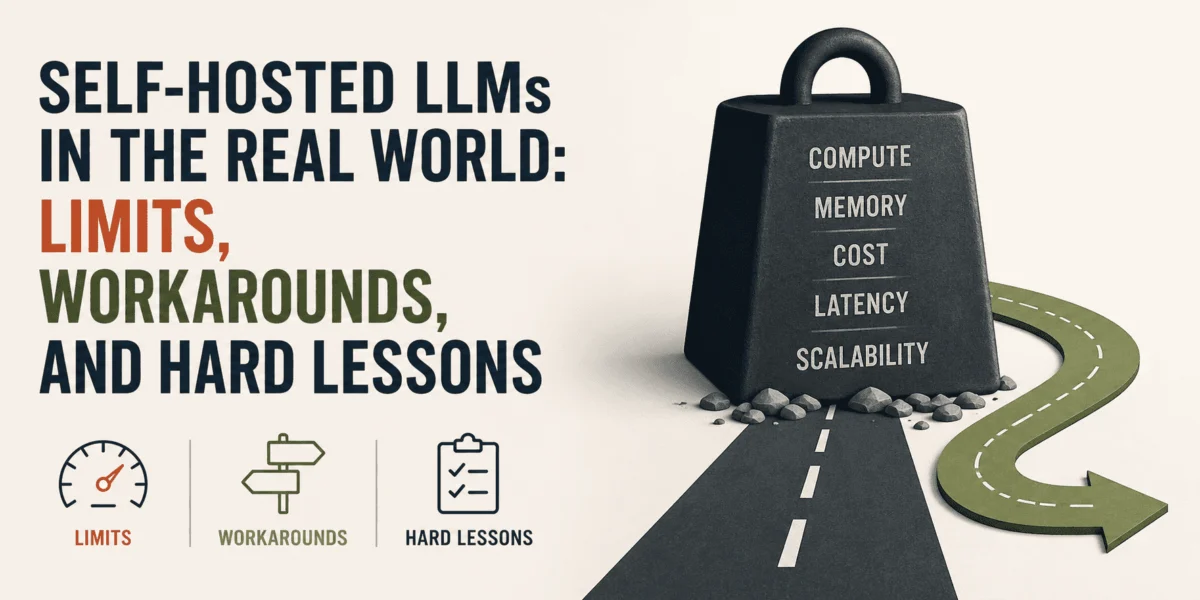
The allure of running one’s own large language model (LLM) has emerged as a significant trend, often paralleled with the contemporary entrepreneurial spirit of "just start your own business." The promise is compelling: eliminate API costs, retain full control over sensitive data within private servers, and achieve complete customization of the model. However, the practicalities of implementing this vision frequently collide with an array of unforeseen challenges, from prohibitive hardware demands and performance compromises to intricate prompt engineering and the complexities of fine-tuning. This article delves into the operational realities of self-hosting LLMs, moving beyond theoretical benchmarks and hype to uncover the friction points often overlooked in introductory guides.
The Genesis of Local AI Enthusiasm: A Brief Chronology
The journey towards widespread interest in self-hosted LLMs began to accelerate in the mid-2020s, following an initial wave of powerful, proprietary models offered by tech giants like OpenAI and Google. While these API-driven services demonstrated unprecedented capabilities, they also introduced concerns regarding data privacy, vendor lock-in, and escalating operational costs for heavy users. This environment fostered a growing demand for open-source alternatives.
The release of models like Meta’s LLaMA (and subsequent iterations) and Mistral AI’s offerings marked a turning point, providing developers and enterprises with powerful, pre-trained models that could theoretically be deployed on local infrastructure. Concurrently, the open-source community rapidly developed sophisticated tooling such as Ollama and vLLM, which significantly lowered the technical barrier to entry for running these models. Suddenly, the dream of "AI on your own terms" seemed within reach, driving a wave of experimentation and adoption across various sectors. The primary motivations were clear: enhanced data sovereignty, the potential for long-term cost savings, and the ability to tailor AI behavior precisely to specific organizational needs.
The Unseen Infrastructure Demands: A Harsh Hardware Reality Check
The casual assumption that a "beefy GPU" is readily available often masks the true financial and logistical burden of self-hosting. For comfortable operation, a 7-billion parameter (7B) model typically necessitates at least 16GB of Video RAM (VRAM). As organizations scale towards more capable 13B or particularly demanding 70B parameter models, the hardware requirements escalate dramatically, often necessitating multi-GPU configurations. A 13B model might demand 24-32GB of VRAM, while a 70B model can easily consume 80GB or more, pushing the need for enterprise-grade cards like NVIDIA A100s or H100s. These specialized GPUs come with price tags ranging from tens of thousands to well over a hundred thousand dollars, representing a significant capital expenditure.
The distinction between an LLM that "runs" and one that "runs well" is substantial. Performance metrics, often measured in tokens per second (t/s), highlight this gap. A poorly provisioned setup might yield only a few t/s, while an optimized system could achieve dozens or even hundreds. This disparity directly impacts user experience and application responsiveness. Beyond the initial purchase, the total cost of ownership (TCO) extends to power consumption, which can be substantial for multiple high-end GPUs, and robust cooling solutions to prevent thermal throttling. "Many organizations underestimate the sustained investment required," comments a hypothetical CIO from a mid-sized tech firm. "The initial excitement of running a model locally quickly gives way to the sobering reality of operational expenses and maintenance." Early infrastructure decisions are foundational, and rectifying them later proves both costly and time-consuming.
Quantization: The Double-Edged Sword of Performance Optimization
Quantization stands as the most prevalent workaround for hardware limitations, but it introduces a critical trade-off. This process involves reducing the precision of a model’s weights—for instance, compressing from FP16 (16-bit floating point) to INT4 (4-bit integer) representation. While this makes the model smaller and faster, the inherent precision of its internal calculations inevitably diminishes.
For general applications like basic chat or summarization, lower quantization levels often prove acceptable. However, its limitations become pronounced in tasks requiring high fidelity, such as complex reasoning, generating structured output (e.g., JSON schemas), or adhering to intricate instruction sets. A model performing flawlessly at FP16 might begin to hallucinate more frequently or produce malformed JSON at Q4. Empirical studies suggest that while quantization can yield significant speedups (e.g., 2x to 4x faster inference), it can also lead to a noticeable degradation in accuracy, sometimes up to 10-20% for tasks requiring nuanced understanding or precise output.
"Quantization isn’t a magic bullet; it’s a strategic compromise," explains a hypothetical data scientist specializing in NLP. "We rigorously test our specific use cases across various quantization levels, often performing hundreds of thousands of evaluations, to identify the optimal balance between speed and reliability. What works for a casual chatbot won’t necessarily suffice for a legal document summarizer." The practical approach necessitates extensive, use-case-specific testing to determine the acceptable level of compromise before committing to a particular quantization strategy.
Navigating the Context Window Labyrinth: The Invisible Memory Ceiling
One of the most frequently underestimated aspects of self-hosted LLMs is the rapid consumption of context windows in real-world workflows, particularly when using tools like Ollama. A seemingly generous 4K token context window can vanish remarkably quickly. In a retrieval-augmented generation (RAG) pipeline, for instance, the context must accommodate a system prompt, multiple retrieved chunks of information, an ongoing conversation history, and the user’s current query. Each element contributes to the token count, causing the window to fill far faster than anticipated.
While longer context models are emerging, their computational demands are substantial. Under standard attention mechanisms, memory usage scales approximately quadratically with context length. This means doubling the context window can more than quadruple the memory requirements, pushing hardware to its limits. Running a 32K context window at full attention on local hardware represents a significant computational burden, often requiring specialized hardware or optimized software.
The practical solutions revolve around meticulous context management: aggressive chunking of retrieved documents, intelligent trimming of conversation history, and highly selective inclusion of information into the prompt. While less elegant than an unlimited memory pool, this "prompt discipline" often inadvertently improves output quality by forcing concise and relevant input.
Latency: The Feedback Loop Killer
Self-hosted models typically exhibit higher latency compared to their API-based counterparts, a factor whose importance is frequently underestimated. When an inference takes 10-15 seconds for even a modest response, the iterative development cycle—testing prompts, refining output formats, debugging complex chains—becomes significantly protracted. Each step is padded with waiting, hindering productivity and innovation.
While streaming responses can improve the user-facing experience by providing output incrementally, they do not reduce the total time to completion. For background processing or batch tasks, latency is less critical. However, for any interactive application, it transforms into a significant usability barrier, impacting user engagement and satisfaction. "In a world of instant gratification, a 10-second wait for an AI response feels like an eternity," notes a hypothetical product manager. "Our user retention metrics suffer significantly if the interaction isn’t fluid."
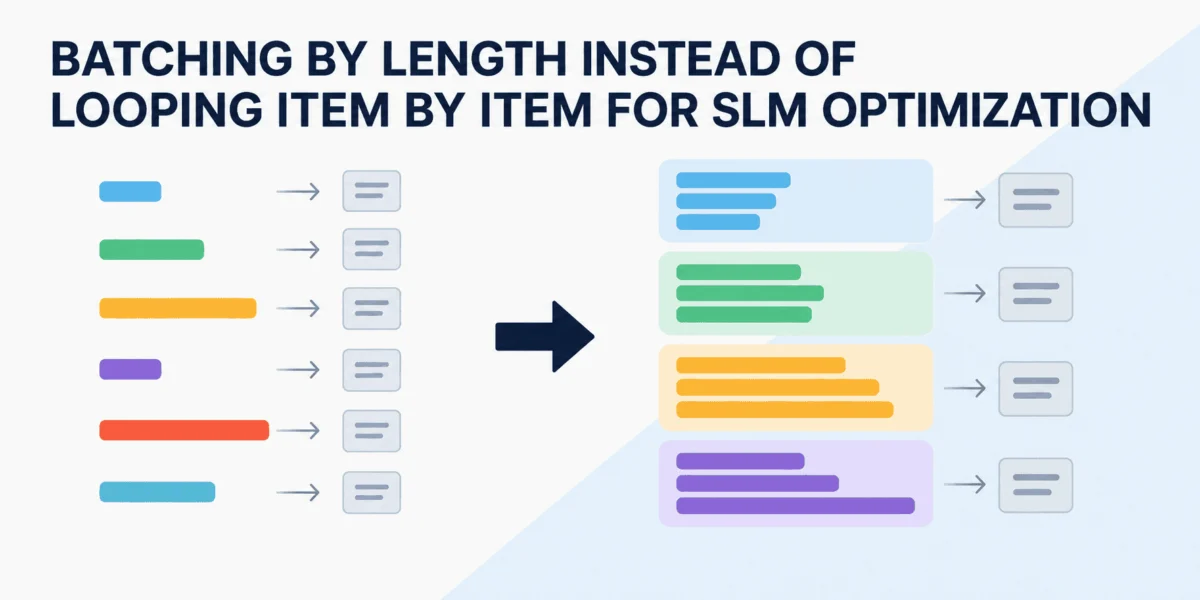
Addressing latency demands investment: superior hardware, optimized serving frameworks like vLLM or Ollama configured for peak performance, and strategic batching of requests where workflows permit. This operational overhead is an inherent cost of owning the full AI stack.
Prompt Behavior Drifts Between Models: A Template-Specific Challenge
A common pitfall for those transitioning from hosted to self-hosted LLMs is the critical importance of prompt templates, which are inherently model-specific. A system prompt perfectly tuned for a hosted frontier model may yield incoherent or irrelevant output from a locally deployed Mistral or LLaMA fine-tune. This is not indicative of a model failure, but rather a mismatch in expected instruction format. Different model families are trained on distinct datasets and instruction formats, and they respond accordingly.
Every model family possesses its own specific instruction structure—for example, LLaMA models fine-tuned with the Alpaca format expect one pattern, while chat-tuned models expect another. Using an incorrect template leads the model to interpret malformed input, resulting in confused or suboptimal responses rather than a genuine lack of capability. While most modern serving frameworks aim to handle these discrepancies automatically, manual verification is crucial. Inconsistent or strangely off outputs are often the first indicators that the prompt template needs adjustment.
Fine-Tuning: A Journey from Vision to Validation
The concept of fine-tuning appeals to most self-hosters aiming for domain specificity. The base model serves general purposes well, but a particular domain, stylistic tone, or task structure often benefits immensely from a model trained on proprietary data. The vision is clear: a specialized model for financial analytics versus one for coding Three.js animations. This vision underpins the belief that the future of AI lies in niche-specific, resource-efficient models rather than monolithic, general-purpose behemoths.
In practice, fine-tuning, even with efficient techniques like LoRA (Low-Rank Adaptation) or QLoRA (Quantized LoRA), is a demanding endeavor. It necessitates exceptionally clean and well-formatted training data, significant computational resources, meticulous hyperparameter tuning, and a robust evaluation setup. Initial attempts frequently result in models that are "confidently wrong" within the specific domain, often performing worse than the original base model. "The biggest hurdle isn’t the algorithm, it’s the data," states a hypothetical MLOps engineer. "Curating hundreds of high-quality, relevant examples with meticulous annotation is far more impactful than throwing thousands of noisy, unfiltered samples at the model." Data quality invariably trumps data quantity, a hard-won lesson for many. The process involves tedious work, with no viable shortcuts.
Strategic Implications and the Future Landscape
The decision to self-host an LLM presents a complex strategic calculus for enterprises and individual developers alike. While the tooling has matured considerably, exemplified by the robustness of Ollama, vLLM, and the broader open-model ecosystem, the underlying challenges remain significant.
For enterprises, the TCO analysis must extend beyond initial hardware purchases to include ongoing operational costs: power, cooling, maintenance, and the salaries of specialized personnel required to manage the AI stack. This often reveals that the perceived cost savings over API usage may be illusory, or at least significantly deferred, offset by increased capital expenditure and operational overhead. The trade-off becomes one of absolute control and data sovereignty versus the operational simplicity and scalability offered by cloud-based APIs.
For individual developers, the learning curve is steep, demanding proficiency not only in prompt engineering and model selection but also in infrastructure management, GPU optimization, and data pipeline development. Yet, for those willing to embrace the complexity, self-hosting offers unparalleled customization and an intimate understanding of AI’s inner workings.
The broader AI ecosystem is likely to evolve towards a hybrid model. Sensitive data processing and highly specialized tasks might gravitate towards on-premise or edge deployments, leveraging smaller, fine-tuned models. Meanwhile, general-purpose applications requiring immense scale and minimal operational burden may continue to rely on cloud-based API services. The trend towards specialized, fewer-parameter models designed for specific niches is a promising development, enabling more efficient resource allocation and potentially democratizing advanced AI capabilities further.
In conclusion, self-hosting an LLM is a testament to both the rapid advancements in AI and the enduring complexities of deploying cutting-edge technology. It is simultaneously more feasible and more demanding than initial perceptions suggest. Approaching it with the expectation of a frictionless drop-in replacement for a hosted API will inevitably lead to frustration. However, for those prepared to invest patience, embrace iterative development, and understand that the "hard lessons" are an integral part of the process, self-hosting offers profound rewards in control, customization, and long-term strategic advantage. The journey into local AI is not a bypass of challenges, but rather an engagement with them, forging a deeper understanding and mastery of this transformative technology.












Leave a Reply