

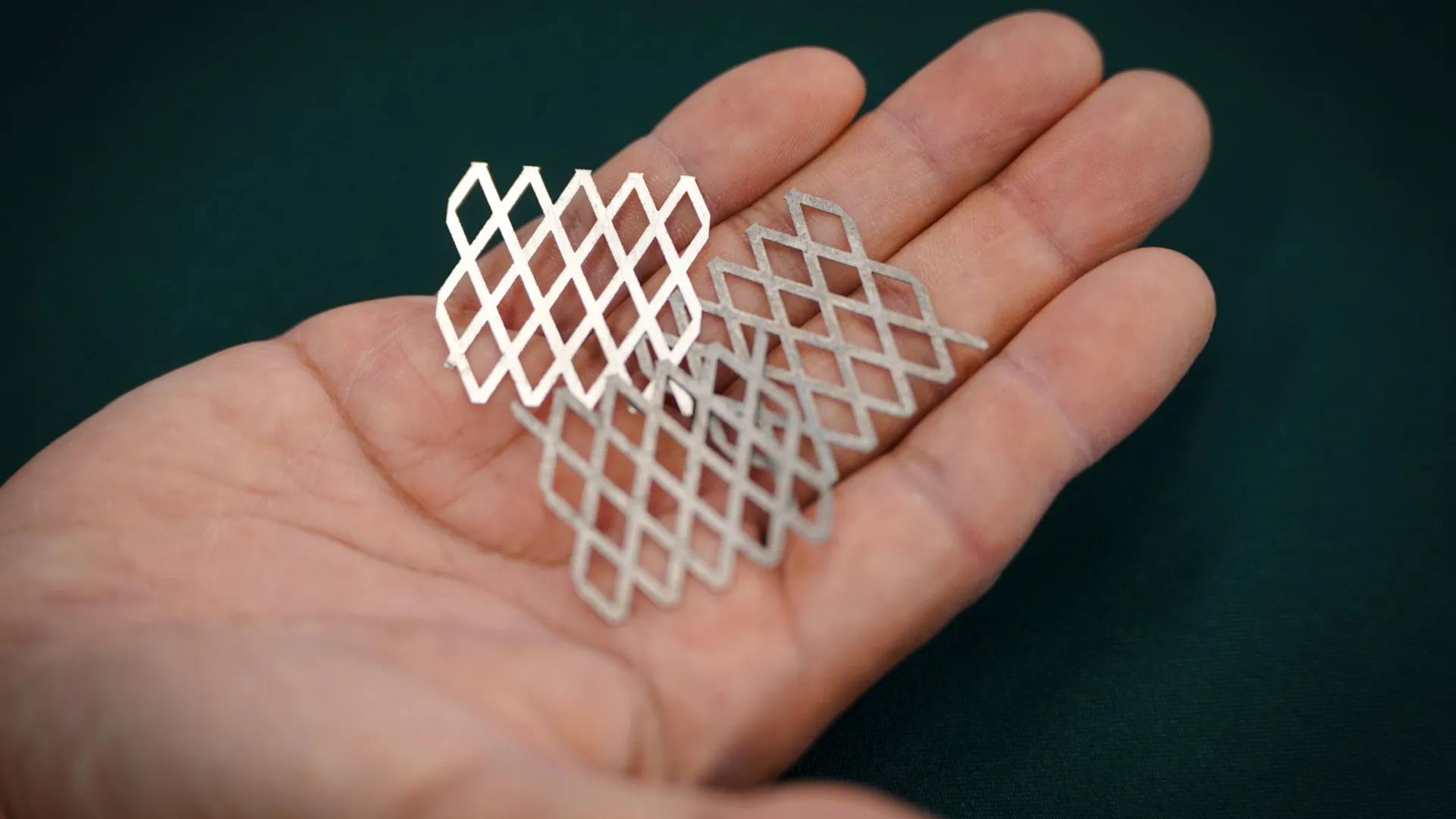
A research team at the University of Hong Kong (HKU) has announced a significant material science breakthrough that addresses one of the most persistent obstacles in the global transition to renewable energy: the high cost and low durability of seawater electrolyzers. Led by Professor Mingxin Huang of the Department of Mechanical Engineering, the team has engineered a specialized stainless steel, designated as SS-H2, designed specifically for hydrogen production in harsh electrochemical environments. This new alloy demonstrates unprecedented resistance to corrosion, potentially allowing for the direct use of seawater as a feedstock for green hydrogen, thereby bypassing the need for expensive desalination processes and high-cost structural materials like titanium.
The discovery, recently detailed in the journal Materials Today, represents the culmination of nearly six years of intensive research. By utilizing a "sequential dual-passivation" strategy, the HKU team has created a material that maintains its structural integrity at the high electrical potentials required for water oxidation—a threshold where conventional stainless steel typically fails. As the world seeks to scale up green hydrogen production to meet Net Zero 2050 targets, this development provides a more economical and sustainable pathway for industrial-scale clean energy infrastructure.
The Economic Challenge of Green Hydrogen Production
Green hydrogen is produced through electrolysis, a process that uses electricity—ideally from renewable sources like wind or solar—to split water molecules into hydrogen and oxygen. While the technology is proven, the economics of large-scale production remain challenging. Currently, most industrial electrolyzers require highly purified fresh water. Using seawater is a more sustainable and abundant alternative, particularly for offshore wind farms, but the chemical composition of seawater is notoriously destructive to equipment.
Saltwater contains chloride ions that cause pitting and rapid corrosion in metal components. To combat this, current high-performance electrolyzers, such as Proton Exchange Membrane (PEM) systems, rely heavily on titanium-based structural components coated with precious metals like platinum or gold. These materials are prohibitively expensive.
According to data cited by the HKU research team, a 10-megawatt PEM electrolysis system can cost approximately HK$17.8 million. Crucially, structural components account for roughly 53% of that total expenditure. The introduction of SS-H2 could fundamentally alter this cost structure. The team estimates that replacing expensive titanium-based parts with this new stainless steel could reduce structural material costs by approximately 40 times, significantly lowering the barrier to entry for commercial green hydrogen projects.
Overcoming the Limitations of Conventional Metallurgy
The primary reason ordinary stainless steel cannot be used in seawater electrolysis is the phenomenon of transpassive corrosion. For over a century, stainless steel has relied on chromium to provide corrosion resistance. When exposed to oxygen, the chromium within the steel forms a thin, invisible layer of chromium oxide (Cr2O3) on the surface. This "passive film" shields the underlying metal from environmental degradation.
However, this protection has a physical limit. In the context of water electrolysis, high electrical potentials are required to drive the oxygen evolution reaction (OER). Conventional stainless steels, including high-performance "super" alloys like 254SMO, typically experience a breakdown of their protective chromium layer at around 1000 millivolts (mV) versus a saturated calomel electrode (SCE). At this stage, the stable chromium oxide is further oxidized into soluble Cr(VI) species, leading to rapid material failure. Because water oxidation requires potentials in the range of 1600 mV, standard stainless steel is effectively useless as a structural material for these systems.
The Science of Sequential Dual-Passivation
The HKU team’s breakthrough lies in a "sequential dual-passivation" mechanism that adds a second line of defense to the metal’s surface. Unlike traditional alloys that rely solely on chromium, SS-H2 incorporates manganese (Mn) in a way that contradicts long-standing metallurgical assumptions.
In traditional corrosion science, manganese is often viewed as an impurity that weakens the corrosion resistance of stainless steel. However, Dr. Kaiping Yu, the study’s first author, discovered that under specific high-potential conditions, manganese can form a secondary protective layer.
The process functions in two stages:
- Initial Protection: At lower potentials, the steel is protected by the standard chromium-based (Cr2O3) passive film.
- Secondary Shielding: As the electrical potential rises toward 720 mV, a manganese-based oxide layer begins to form on top of the chromium layer.
This dual-layer architecture remains stable up to an ultra-high potential of 1700 mV. By creating this "second shield," the SS-H2 alloy survives the punishing electrochemical environment of seawater electrolysis, performing on par with titanium and expensive coated alloys but at a fraction of the cost.
A Six-Year Chronology of Innovation
The development of SS-H2 is part of Professor Huang’s broader "Super Steel" Project, which has consistently produced high-performance materials for various industrial and societal needs. The timeline of this research highlights a steady progression of metallurgical innovation at HKU:
- 2017: The team successfully developed the first "Super Steel," achieving a breakthrough in the trade-off between strength and ductility.
- 2020: Further refinements led to an ultra-strong and ultra-tough variant of the Super Steel, aimed at automotive and aerospace applications.
- 2021: In response to the global pandemic, the team produced the world’s first anti-COVID-19 stainless steel, capable of inactivating viruses on its surface.
- 2023: The discovery of SS-H2 was officially reported in Materials Today, marking the transition of the Super Steel project into the renewable energy sector.
The transition from a laboratory discovery to a viable industrial product took nearly six years of rigorous testing. The team had to move beyond observing the material’s properties to understanding the atomic-level mechanisms that allowed manganese to provide such robust protection.
Industrialization and Global Patents
The HKU research has already moved into the phase of industrial application. Recognizing the commercial potential of a low-cost, corrosion-resistant steel, the team has filed for patents in multiple jurisdictions. As of the latest project updates, two patents have already been granted.
The scalability of the material has also been demonstrated. Working with a manufacturing partner in Mainland China, the HKU team has overseen the production of several tons of SS-H2-based wire. This material is being processed into various forms required for electrolyzer construction, such as wire meshes and metal foams.
"From experimental materials to real products… there are still challenging tasks at hand," Professor Huang noted. "Currently, we have made a big step toward industrialization. We are moving forward in applying the more economical SS-H2 in hydrogen production from renewable sources."
Strategic Implications for the Global Energy Transition
The timing of this breakthrough is critical as international pressure mounts to decarbonize heavy industry, shipping, and aviation—sectors where liquid hydrogen is seen as a primary alternative to fossil fuels. The International Energy Agency (IEA) has repeatedly stressed that the "hydrogen economy" cannot rely on fresh water alone, as many of the best regions for solar and wind power are water-stressed.
Direct seawater electrolysis is the logical solution to this geographical mismatch. However, the 2025 Nature Reviews Materials analysis confirms that corrosion remains the "Achilles’ heel" of the technology. By providing a structural material that is both cheap and durable, the HKU team addresses the "capital expenditure" (CAPEX) side of the green hydrogen equation.
Furthermore, the SS-H2 discovery complements other recent advancements in the field. While some researchers focus on developing better catalysts (such as NiFe-based coatings) to improve the efficiency of the reaction, the HKU team’s focus on the underlying structural alloy ensures that the "skeleton" of the electrolyzer can survive the process. This holistic approach to material design—changing the alloy itself rather than just applying a coating—offers a more robust solution for long-term industrial operations.
Conclusion and Future Outlook
While SS-H2 represents a major leap forward, the path to global adoption involves further engineering hurdles. Integrating new materials into existing PEM or alkaline electrolyzer designs requires extensive long-term durability testing under fluctuating loads typical of renewable energy sources.
Nevertheless, the HKU breakthrough has redefined the boundaries of what stainless steel can achieve. By challenging the metallurgical dogma regarding manganese and corrosion, Professor Huang’s team has provided a blueprint for high-potential-resistant alloys. If SS-H2 can be successfully integrated into the next generation of electrolyzers, it could significantly accelerate the timeline for affordable, large-scale green hydrogen production, making the dream of a carbon-neutral energy grid a more attainable reality.














Leave a Reply