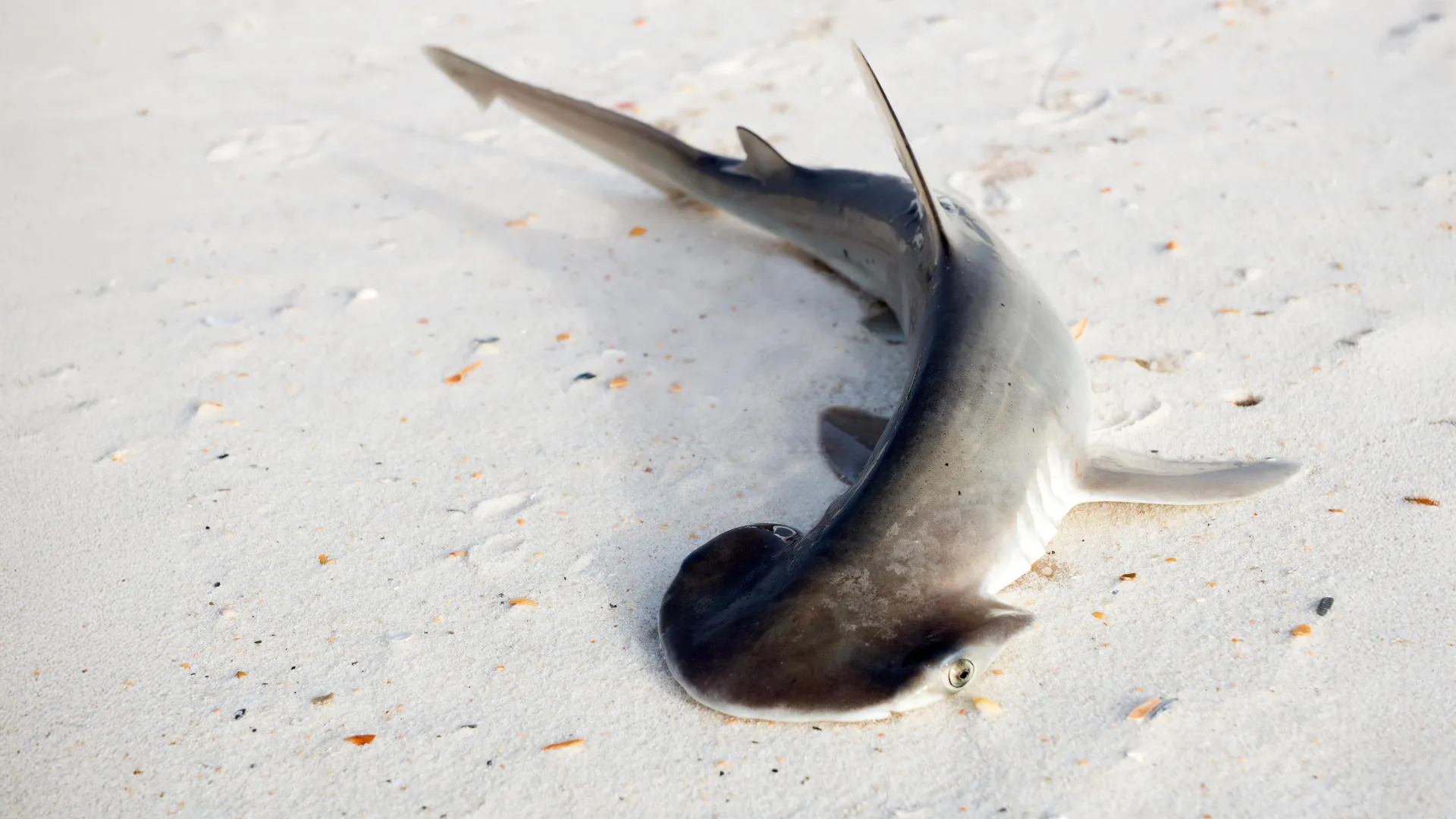
A recent investigation into the biology of the bonnethead shark (Sphyrna tiburo) has overturned long-standing scientific assumptions regarding the evolution of their distinctive head shapes. Conducted by researchers at the University of Miami Rosenstiel School of Marine, Atmospheric, and Earth Science, the study suggests that the physical divergence between male and female bonnetheads is not a byproduct of sexual maturity or dietary specialization, as previously theorized. Instead, the research highlights a complex, growth-related developmental trajectory that continues to baffle marine biologists and evolutionary ecologists alike.
Challenging the Maturity Hypothesis
For years, the prevailing scientific consensus posited that the bonnethead’s unique cephalofoil—the shovel-shaped head characteristic of the hammerhead family—underwent a significant morphological shift in males specifically upon reaching sexual maturity. It was widely believed that males developed a pronounced, pointed snout as a secondary sexual characteristic, potentially linked to mating behaviors or dominance displays.
However, the findings published in the journal Integrative Organismal Biology paint a different picture. By analyzing the growth patterns of 144 bonnethead sharks across Florida, the research team discovered that the pointed head shape is actually a juvenile trait shared by both sexes. As the sharks age, the cephalofoil gradually rounds out; notably, this rounding process is significantly more pronounced in females than in males. Consequently, the "pointed" look seen in adult males is not a newly acquired feature of maturity, but rather the retention of a juvenile trait that females outgrow.
Chronology of the Investigation
The research project, titled "A Head of the Curve: Bonnethead Shark (Sphyrna tiburo) Cephalofoil Morphology and Trophic Ecology," was carried out over a precise twelve-month window from May 2022 to May 2023. The data collection phase was divided between two primary locations: Biscayne Bay on the Atlantic coast and the Tampa Bay region on the Gulf of Mexico.
In Biscayne Bay, the team employed research longlines to capture 105 specimens, ensuring a robust sample size for statistical analysis. Meanwhile, the Tampa Bay cohort of 39 sharks was collected primarily through scientific gillnets. Upon capture, each shark underwent a standardized processing protocol: length and mass measurements were recorded, muscle tissue was extracted for isotopic analysis, and high-resolution photographs were taken of the cephalofoil. Using specialized grid boards and ImageJ software, researchers were able to quantify the curvature of the sharks’ heads with millimeter-level precision, minimizing handling stress and ensuring the animals could be returned to the water safely.
Investigating the Dietary Link
A secondary objective of the study was to determine whether external environmental factors, specifically diet, drove the morphological differences between the sexes. Given that the bonnethead is a generalist predator, it was hypothesized that males and females might occupy different ecological niches or forage for distinct prey items, leading to divergent selective pressures on their head shapes.
The researchers utilized stable isotope analysis—examining carbon and nitrogen signatures in muscle tissue—to reconstruct the long-term dietary habits of the sampled sharks. This method provides a "chemical diary" of the animal’s consumption patterns, offering a broader perspective than stomach content analysis, which only reveals the most recent meal.
The data confirmed that the Biscayne Bay and Tampa Bay populations operate within distinct food webs. The isotopic signatures of the two groups showed negligible overlap, suggesting that even within the same species, bonnetheads are highly sensitive to the local environmental conditions of their respective bays. However, when the researchers analyzed the data by sex within each bay, they found no evidence of niche partitioning. Males and females were consuming the same prey and utilizing the same local resources. This finding effectively debunked the theory that the difference in head shape was a functional adaptation to different feeding strategies.
Perspectives from the Research Team
Lead author Kathy Liu, who conducted the study as part of her master’s thesis at the Rosenstiel School, emphasized the significance of the findings in redefining our understanding of shark development. "Our findings show that the pointed head shape is not a feature that develops in males when they reach maturity," Liu stated. "Younger males and females both had more pointed heads, but the head became rounder as the sharks matured. That change was much greater in females."
Catherine Macdonald, a co-author and director of the Shark Research and Conservation Program at the Rosenstiel School, noted that the study serves as a critical diagnostic step for future research. "By examining body shape and diet in the same animals, we were able to assess whether diet and morphological changes co-occur," Macdonald explained. "Our results suggest there is another cause behind the differences in head shape between male and female bonnetheads. This study helps narrow the drivers of a biological trait that has puzzled scientists for decades."
Implications for Marine Biology and Conservation
The bonnethead is the only shark species known to exhibit such distinct sexual dimorphism in head shape, making it a unique subject for evolutionary study. While the study effectively ruled out diet as a primary driver, it opened new avenues of inquiry regarding the potential advantages of a pointed cephalofoil.
One emerging hypothesis is that the pointed shape may offer a hydrodynamic advantage for younger, smaller sharks, perhaps related to energy efficiency during swimming or maneuverability in shallow, seagrass-dominated habitats. As females grow larger—often increasing in size significantly to accommodate gestation and the demands of reproduction—the hydrodynamic benefits of a pointed snout may be superseded by other biological imperatives, leading to the observed rounding of the head.
Beyond the fundamental biology, the study carries implications for the management and conservation of shark populations. The isotopic differences identified between the Biscayne Bay and Tampa Bay populations underscore the importance of regional ecological knowledge. Management strategies that treat all bonnethead populations as a single, homogenous group may overlook subtle, location-specific biological needs. Furthermore, the photographic analysis technique developed for this study provides a non-invasive tool for researchers to conduct similar studies across the species’ entire range, from the Atlantic to the Gulf and beyond.
Future Research Directions
The scientific community is now looking toward developmental biology and biomechanics to solve the mystery of the cephalofoil. Future studies will likely focus on swimming performance testing, comparing the drag coefficients and maneuverability of juvenile sharks versus adult females. Additionally, there is a need to study embryonic development to pinpoint the exact stage at which the morphological divergence begins to manifest.
As the scientific team noted, the ability to combine morphological data with ecological tracking provides a powerful template for future marine research. By understanding why these traits evolve, biologists can gain better insight into how these small, shovel-headed predators adapt to changing ocean conditions. The study highlights that in the world of marine biology, the most "obvious" explanations—such as diet or sexual maturation—are often the starting points for much deeper, more complex questions.
The collaborative nature of this work, involving researchers from the University of Miami, Minorities in Shark Science, the University of California, Merced, and Havenworth Coastal Conservation, highlights the necessity of multi-disciplinary efforts in modern marine science. Supported by the Tampa Bay Environmental Restoration Fund, the Disney Conservation Fund, and the Maxwell/Hanrahan Foundation, this research marks a significant step forward in our understanding of one of the ocean’s most enigmatic and specialized creatures. As researchers continue to monitor these populations, the data gathered will undoubtedly inform broader conservation policies, ensuring that the diverse ecological needs of the bonnethead are recognized and protected in the face of ongoing environmental change.