

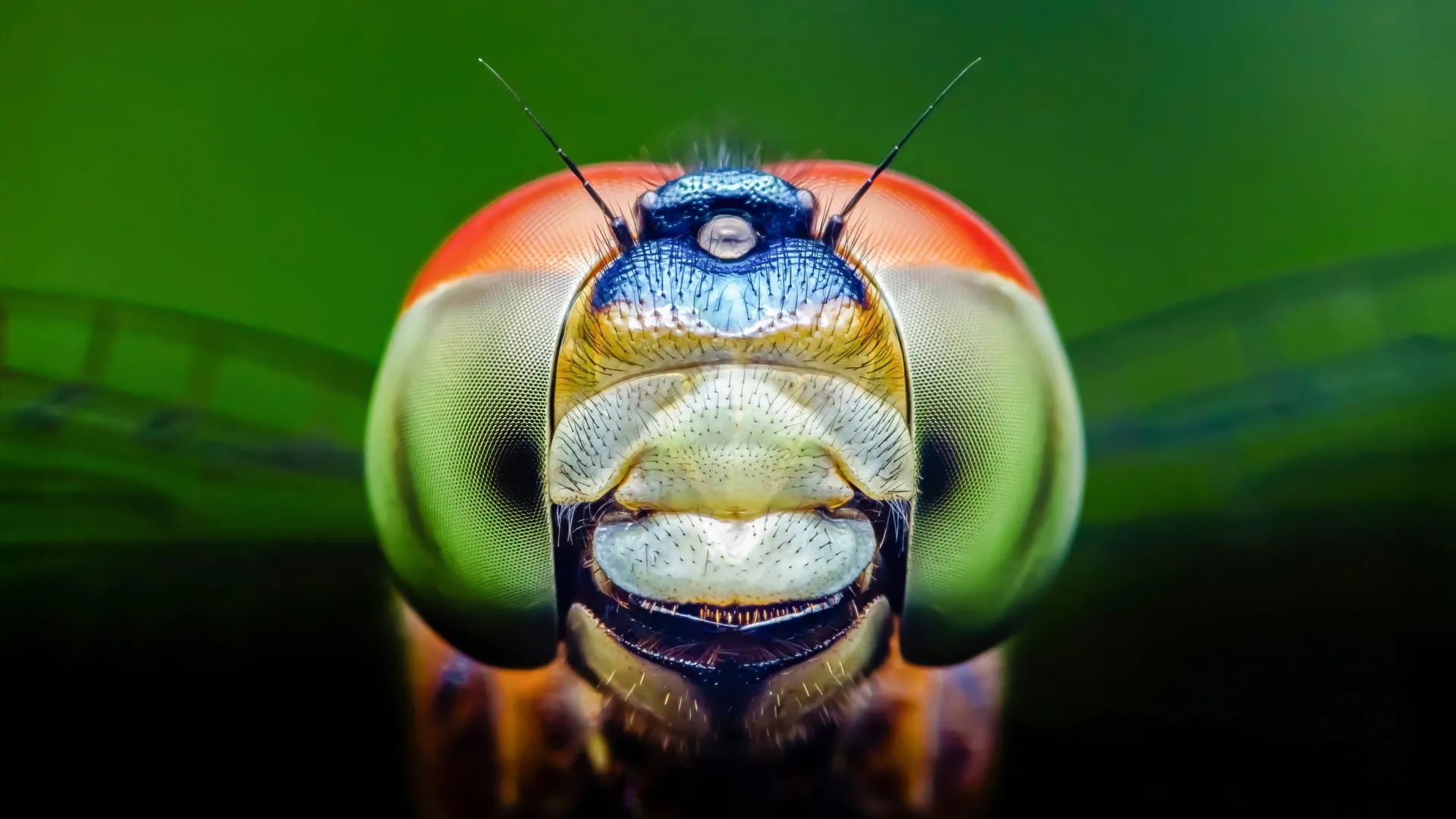
Researchers at Osaka Metropolitan University (OMU) have made a groundbreaking discovery in parallel evolution, revealing that dragonflies possess a red light detection mechanism remarkably similar to that of mammals, including humans. This unexpected convergence in biological design, identified through the study of a specific opsin protein in dragonflies, carries significant implications far beyond entomology, particularly for the advancement of medical technologies such as optogenetics. The findings, published in the journal Cellular and Molecular Life Sciences, suggest a shared evolutionary path for sensing red light across vastly different species and offer a potent new tool for deep-tissue biological research.
The Mystery of Dragonfly Red Vision
For decades, scientists have recognized that dragonflies exhibit a unique ability among insects to perceive red light. While human color vision is a symphony orchestrated by three primary types of opsin proteins, each tuned to blue, green, and red wavelengths, the precise molecular machinery behind a dragonfly’s red sensitivity remained an enigma. Opsin proteins are the light-capturing molecules within photoreceptor cells of the eye; their specific structure dictates the wavelengths of light they can absorb and thus, the colors an organism can perceive. The discovery of a specific opsin in dragonflies that responds to light at approximately 720 nanometers (nm) by a research team at OMU, led by Professors Mitsumasa Koyanagi and Akihisa Terakita of the Graduate School of Science, has now illuminated this aspect of insect vision. This wavelength extends beyond the visible red spectrum for most humans, suggesting dragonflies possess a more nuanced perception of red hues than previously understood.
Professor Terakita remarked on the significance of this finding, stating, "This is one of the most red-sensitive visual pigments ever found. Dragonflies can likely see deeper into red light than most insects." This heightened sensitivity suggests a crucial role for red light perception in the dragonfly’s life cycle.
Evolutionary Convergence: A Shared Strategy for Sensing Red
The most astonishing aspect of the OMU research is the revelation of a striking parallel evolution between dragonflies and mammals. First author Ryu Sato, a graduate student under Professor Koyanagi, elaborated on this point: "Surprisingly, the mechanism by which dragonfly red opsin detects red light is identical to that of red opsin in mammals, including humans. This is an unexpected result, suggesting that the same evolutionary process occurred independently in distantly related lineages." This discovery underscores a fundamental principle in evolutionary biology: convergent evolution, where unrelated organisms independently evolve similar traits or solutions to similar environmental challenges. In this case, both insects and mammals, separated by hundreds of millions of years of independent evolution, have arrived at the same sophisticated molecular solution for perceiving red light.
This finding challenges conventional understanding of evolutionary pathways. While insects and mammals are distantly related, their independent development of a similar opsin mechanism for red light detection highlights the powerful selective pressures that can drive similar biological innovations. The implications extend to understanding the broader evolutionary history of vision and the fundamental constraints and opportunities that guide molecular evolution.
The Ecological Significance of Deep Red Vision in Dragonflies
The researchers hypothesize that this specialized red vision is not merely a biological curiosity but serves a vital ecological function for dragonflies, particularly in their mating rituals. Dragonflies, like many insects, rely on visual cues for species recognition and mate selection. The team investigated the role of reflectance, the phenomenon of light bouncing off surfaces, in how dragonflies perceive each other. Their measurements revealed distinct differences in how male and female dragonflies reflect red and near-infrared light. This suggests that males may utilize these subtle, yet significant, variations in red light reflection to swiftly identify potential mates while in flight, a critical advantage in their dynamic aerial environment. The ability to detect deeper red wavelengths could provide them with a more precise and effective means of distinguishing between sexes, thus enhancing their reproductive success.
Engineering Dragonfly Vision for Biomedical Innovation
Beyond its ecological and evolutionary significance, the OMU team’s research has unveiled a crucial detail with profound implications for technological applications. They identified a single amino acid position within the dragonfly opsin protein that plays a pivotal role in determining its light sensitivity. By strategically modifying this specific site, the researchers were able to precisely shift the protein’s absorption spectrum, extending its sensitivity towards longer wavelengths and bringing it closer to the infrared range.
This molecular engineering feat culminated in the creation of a novel, engineered opsin variant. This modified protein demonstrated a remarkable ability to respond to even longer wavelengths, extending into the near-infrared spectrum. The team successfully validated this engineered opsin by showing that cells incorporating this modified protein could be activated by near-infrared light. This achievement marks a significant step towards harnessing dragonfly vision for practical applications.
Optogenetics: A New Frontier in Light-Activated Therapies
The potential applications of this engineered near-infrared-sensitive opsin are particularly exciting for the field of optogenetics. Optogenetics is a revolutionary scientific discipline that employs light-sensitive proteins, such as opsins, to control and study the activity of specific cells within living organisms. The ability to activate cells with light offers unprecedented precision in understanding neural circuits, manipulating cellular functions, and developing targeted therapies.
The advantage of using near-infrared light, as facilitated by the engineered dragonfly opsin, lies in its superior tissue penetration. Longer wavelengths of light can travel deeper into biological tissues compared to visible light. This means that researchers could potentially activate and study cells located deep within the body, which are currently inaccessible with existing optogenetic tools that rely on visible light.
Professor Koyanagi highlighted the transformative potential: "In this study, we succeeded in shifting the sensitivity of a modified near-infrared opsin from Gomphidae dragonflies even further toward longer wavelengths and confirmed that the modified near-infrared opsin can induce cellular responses in response to near-infrared light. These findings demonstrate this opsin as a promising optogenetic tool capable of detecting light even deep within living organisms."
This breakthrough could pave the way for revolutionary advancements in various medical fields. For instance, in neuroscience, it could allow for the precise control of deep brain structures implicated in neurological disorders such as Parkinson’s disease or epilepsy. In regenerative medicine, it might enable researchers to guide the growth and differentiation of cells in deep tissues for therapeutic purposes. Furthermore, the ability to non-invasively activate cells with near-infrared light could lead to new diagnostic tools and targeted drug delivery systems.
Background and Timeline of the Research
The research into dragonfly vision and opsin function at Osaka Metropolitan University has been an ongoing endeavor. While the specific publication date for this particular study is recent, the foundational work in understanding insect opsins and the principles of parallel evolution has been building for years. Professor Koyanagi and Professor Terakita have a well-established track record in the field of photoreceptor research.
The initial steps likely involved identifying candidate opsin genes in dragonfly species known for their red sensitivity. This would have been followed by molecular cloning and expression of these genes in laboratory settings to study their biochemical properties. The identification of the key amino acid residue responsible for the red shift in sensitivity would have been a crucial turning point, allowing for the subsequent engineering of the opsin. The validation of the engineered opsin’s functionality in cellular assays, demonstrating its response to near-infrared light and its ability to trigger cellular activity, represents the culmination of this rigorous scientific process. The entire research trajectory, from initial hypothesis to published findings, likely spanned several years, involving meticulous experimentation, data analysis, and peer review.
Broader Impact and Future Directions
The discovery of parallel evolution in red light detection between dragonflies and mammals is a testament to the power of natural selection to converge on optimal solutions. It reinforces the idea that the principles of molecular biology and evolution are universal, transcending the vast diversity of life on Earth. This fundamental insight into evolutionary biology is enriched by its immediate practical applications.
The development of an opsin sensitive to near-infrared light opens up new avenues for non-invasive biomedical interventions. The ability to activate cellular processes deep within tissues with light could revolutionize treatments for a wide range of diseases, from neurological conditions to cancer. Beyond optogenetics, this engineered protein could also find applications in advanced imaging techniques, biosensors, and even in developing new forms of light-activated materials.
Future research stemming from this discovery could focus on further refining the wavelength sensitivity of these engineered opsins, potentially extending them into the infrared spectrum. Investigating the long-term stability and biocompatibility of these proteins within living organisms will be crucial for their translation into clinical applications. Furthermore, exploring other species for novel opsin variants could uncover even more sophisticated light-sensing mechanisms, further expanding the toolkit available to scientists and medical professionals. The humble dragonfly, through its unique evolutionary journey, has provided a remarkable gift to science, promising to illuminate new possibilities in both our understanding of life and our ability to heal it.

















Leave a Reply