

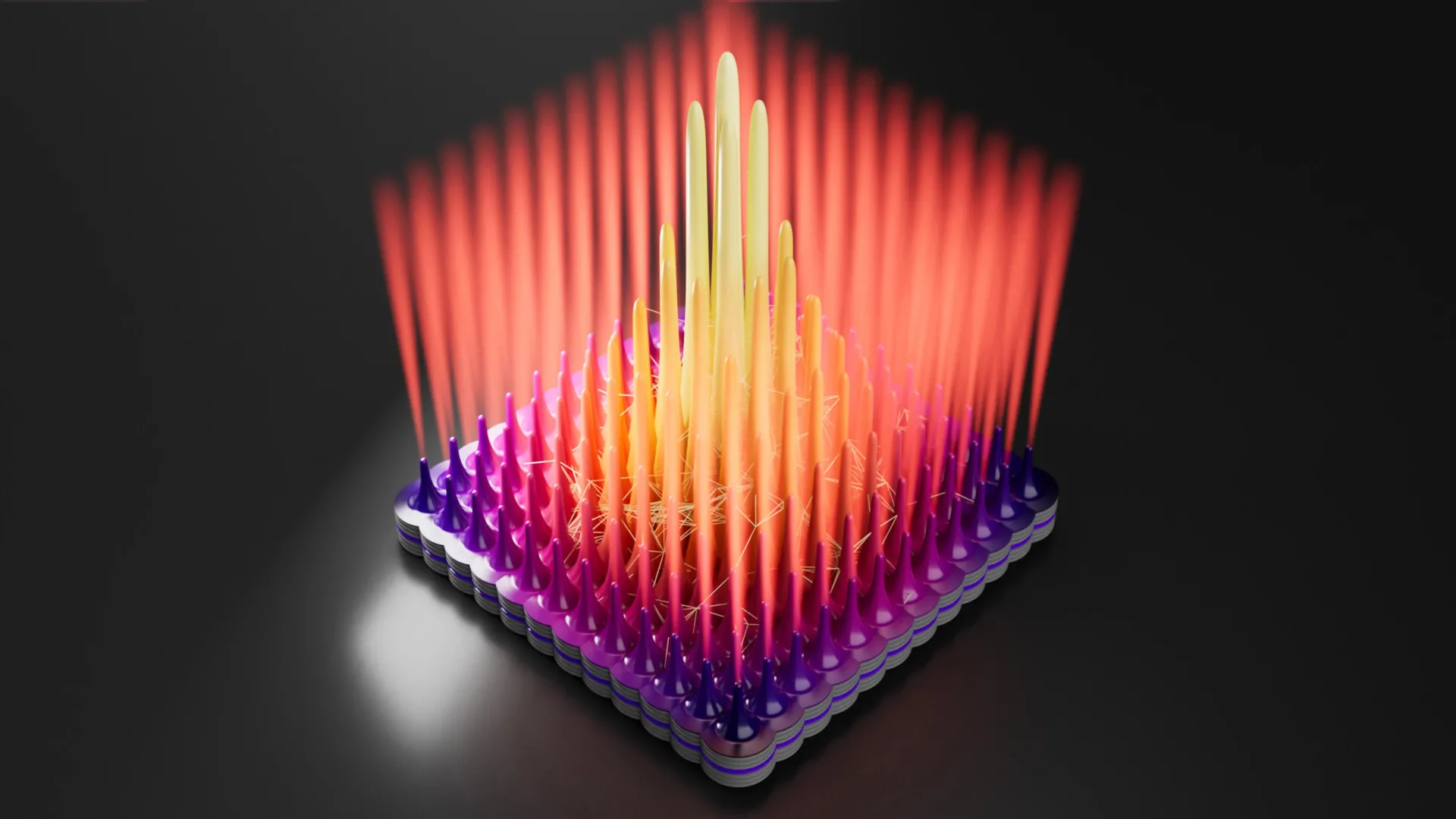
The field of statistical physics has reached a transformative milestone as researchers at the University of Würzburg, in collaboration with the Würzburg-Dresden Cluster of Excellence ct.qmat, have successfully provided the first experimental evidence that the Kardar-Parisi-Zhang (KPZ) equation governs growth processes in two-dimensional quantum systems. This discovery, published in a recent study, validates a theoretical framework that has remained one of the most significant challenges in condensed matter physics for nearly four decades. By utilizing a highly controlled semiconductor environment and the unique properties of light-matter hybrids known as polaritons, the team has demonstrated that the mathematical laws governing the growth of a coffee stain or the spread of a forest fire also apply to the evolution of quantum fluids in two dimensions.
The Genesis of a Universal Theory
To understand the magnitude of this achievement, one must look back to 1986, when physicists Mehran Kardar, Giorgio Parisi, and Yi-Cheng Zhang introduced the KPZ equation. Their goal was to describe the temporal and spatial evolution of surfaces as they grow over time. While classical physics often deals with systems in equilibrium—states where energy is balanced and predictable—most of the natural world exists in a state of non-equilibrium. Growth, by its very nature, is a non-equilibrium process. Whether it is the accumulation of snow on a roof, the jagged edge of a burning piece of paper, or the expansion of a bacterial colony, these processes are defined by randomness and non-linear dynamics.
The KPZ theory proposed that many seemingly unrelated growth processes belong to the same "universality class." This means that despite their vastly different physical compositions, they follow the same underlying statistical patterns. For decades, the KPZ equation was successfully applied to one-dimensional systems, such as the growth of a line of atoms. However, proving its validity in two-dimensional systems—surfaces rather than lines—proved to be an immense mathematical and experimental hurdle. The complexity of measuring fluctuations across a surface in both space and time, particularly at the microscopic level, required a level of technological precision that did not exist until recently.
The Challenge of Measuring Non-Equilibrium Growth
"When surfaces grow—whether crystals, bacteria, or flame fronts—the process is always nonlinear and random," explains Siddhartha Dam, a postdoctoral researcher at the University of Würzburg’s Chair of Technical Physics and a key member of the research team. In the realm of physics, these systems are notoriously difficult to track because they do not settle into a steady state.
The primary difficulty lies in the timescale. Non-equilibrium processes in quantum materials often unfold over picoseconds—trillionths of a second. To verify the KPZ model, researchers needed to engineer a system that could not only simulate this growth but also allow for the simultaneous measurement of its evolution across both spatial dimensions and through time. This required a level of control over a quantum system that could effectively "freeze" and analyze the randomness as it occurred.
The Würzburg team overcame this by turning to the world of ultracold quantum gases and semiconductor engineering. Their breakthrough was made possible through the use of the Würzburg-Dresden Cluster of Excellence ct.qmat, a research initiative dedicated to discovering new states of matter and understanding the complex interactions within quantum materials.
Engineering the Quantum Laboratory: Polaritons and GaAs
The experiment centered on a semiconductor material made of gallium arsenide (GaAs), a compound widely used in high-frequency electronics and optoelectronics. To prepare the sample, the researchers cooled the material to -269.15 degrees Celsius (approximately 4 Kelvin), bringing it to the brink of absolute zero. At these extreme temperatures, the thermal noise that usually masks quantum effects is silenced, allowing researchers to observe the fundamental behavior of particles.
Under these conditions, the team used a high-precision laser to continuously stimulate the GaAs semiconductor. This stimulation created "polaritons," which are hybrid particles consisting of part light (photons) and part matter (excitons). Polaritons are unique because they exist only briefly before the photons escape the material. Because they are constantly being created by the laser and disappearing as light, they exist in a permanent state of non-equilibrium.
"We can precisely track where the polaritons are in the material," says Dam. "When we pump the system with light, polaritons are created—they grow. Using advanced experimental techniques, we were able to quantify both the spatial and temporal evolution of this growing quantum system and found that it follows the KPZ model."
The setup utilized a complex structure of mirror layers, known as Bragg reflectors, which were engineered to trap photons inside a central "quantum film." Within this thin layer, the photons interacted with the excitons in the gallium arsenide to form the polariton fluid. The ability to monitor how this fluid expanded and fluctuated across the two-dimensional surface of the film provided the data necessary to confirm the KPZ predictions.
A Chronology of Discovery: From 1986 to 2024
The path to this experimental proof has been a decades-long journey involving theoretical breakthroughs and incremental experimental successes:
- 1986: Kardar, Parisi, and Zhang publish their seminal paper, defining the KPZ equation for surface growth.
- 2015: Sebastian Diehl, a professor at the University of Cologne, proposes a theoretical framework for testing KPZ behavior in driven-dissipative quantum systems, specifically those involving polaritons.
- 2021: Giorgio Parisi is awarded the Nobel Prize in Physics for his contributions to the theory of complex systems, bringing renewed global attention to the importance of the KPZ equation.
- 2022: A research group in Paris achieves the first experimental confirmation of KPZ universality in a one-dimensional quantum system.
- 2024: The Würzburg team successfully extends this proof to two dimensions, completing a vital piece of the universality puzzle.
The leap from 1D to 2D is significant because 2D systems represent the "critical dimension" for many physical models. While 1D growth is relatively straightforward to model, 2D growth introduces complex topological constraints and spatial correlations that are much more representative of real-world materials and biological systems.
The Role of Molecular Beam Epitaxy
The success of the experiment was as much a feat of engineering as it was of physics. The material used had to be near-perfect, as any structural defect would introduce "noise" that could be mistaken for KPZ fluctuations. To achieve this, the team used a process called Molecular Beam Epitaxy (MBE).
Simon Widmann, a doctoral researcher who conducted the experiments alongside Siddhartha Dam, highlights the importance of this technique. "By precisely controlling the thickness of individual material layers using molecular beam epitaxy, we were able to tune their optical properties and hence fabricate the necessary highly reflective mirrors under ultra-high vacuum conditions," Widmann explains.
MBE allows scientists to grow materials atom by atom, creating incredibly pure crystals with specific electronic properties. By fine-tuning the laser excitation with micrometer precision, the researchers could ensure that the growth of the polariton "surface" was driven purely by the dynamics described by the KPZ equation, rather than by imperfections in the semiconductor itself.
Analysis of Implications and Future Applications
The confirmation of KPZ universality in two dimensions has far-reaching implications across several scientific disciplines. While the experiment was conducted in a specialized quantum lab, the mathematical rules it validated apply to a vast array of phenomena.
1. Material Science and Nano-Engineering:
Understanding the fundamental laws of surface growth allows engineers to better predict how thin films and nanostructures will form. This is critical for the development of the next generation of semiconductors, where even atomic-level irregularities can impact performance.
2. Complexity and Machine Learning:
The KPZ equation has recently found applications in the field of machine learning, specifically in understanding the behavior of stochastic gradient descent—the algorithm used to train neural networks. The way "errors" grow and settle in high-dimensional landscapes mirrors the growth processes described by KPZ, potentially leading to more efficient AI training models.
3. Biological and Ecological Modeling:
From the way tumors expand to how forests recover after a fire, the KPZ equation provides a universal language for non-equilibrium expansion. Proving its validity in 2D systems strengthens its utility as a predictive tool in biology and ecology.
4. Quantum Computing and Simulation:
The ability to control a non-equilibrium quantum system with such precision opens the door to new types of quantum simulators. These simulators could be used to solve complex problems in thermodynamics and chemistry that are currently beyond the reach of classical computers.
Official Responses and Academic Significance
The research community has hailed the Würzburg findings as a "missing piece" in the study of universality. Sebastian Diehl, whose theoretical work in 2015 laid the groundwork for this experiment, expressed his satisfaction with the results. "The experimental demonstration of KPZ universality in two-dimensional material systems highlights just how fundamental this equation is for real non-equilibrium systems," Diehl noted.
The Würzburg-Dresden Cluster of Excellence ct.qmat (Complexity and Topology in Quantum Matter) has once again demonstrated its position at the forefront of international physics. Since its inception in 2019, the cluster has focused on the intersection of quantum physics and materials science, aiming to discover materials that can revolutionize information technology and energy efficiency.
This latest achievement reinforces the idea that the laws of physics are truly universal. The same mathematical patterns that define the ragged edge of a growing crystal in a laboratory in Germany are the same patterns that govern the largest structures in the universe and the smallest components of our digital world. By mastering the two-dimensional growth of polaritons, the Würzburg team has not only solved a 38-year-old mystery but has also provided a new lens through which we can view the chaotic, growing, and ever-changing world around us.














Leave a Reply