Leaf through a textbook, watch a wellness influencer, or listen in at the gym, and it can feel as though the human body has already been mapped to exhaustion. Every muscle named, every nerve traced. Everything understood and readily available. Most people recognize at least a few anatomical terms – “traps,” “glutes,” “biceps.” After centuries of dissection, microscopy, and medical imaging, it seems reasonable to assume the work is done. Surely anatomy, as a discipline, must be complete? It isn’t. Not even close.
The enduring image of a fully cataloged human anatomy, a seemingly closed book of biological knowledge, has been cultivated over centuries of scientific endeavor. Landmark publications, such as Andreas Vesalius’s De Humani Corporis Fabrica in 1543, which revolutionized anatomical study by basing its findings on direct human dissection rather than ancient texts, cemented the idea of a definitive understanding. Vesalius courageously challenged long-held errors, particularly those attributed to the ancient Greek physician Galen, whose anatomical descriptions were largely derived from animal dissections. Vesalius’s meticulous illustrations and detailed observations laid the groundwork for anatomy as a rigorously evidence-based science.
Three centuries later, Henry Gray’s Gray’s Anatomy, first published in 1858, further reinforced this perception of comprehensive mapping. Its detailed descriptions and clear diagrams presented the human body as a system that had been thoroughly indexed, organized, and explained, leading many to believe that the fundamental structures and their relationships were fully understood. This impression of certainty, however, is a simplification. Textbooks, by their nature, present an idealized, generalized version of the human body—a stable, universal model that belies the inherent complexity and variability of biological reality.
The Illusion of Completeness: A History of Anatomical Discovery
The foundations of classical anatomical topography, the study of the relative locations of anatomical structures, were laid under challenging and ethically fraught circumstances. For much of history, obtaining human cadavers for dissection was a significant hurdle. The practice of grave robbing, often carried out by individuals known as “resurrectionists” or “body snatchers,” became a grim necessity for anatomists. These individuals would exhume recently buried bodies, disproportionately targeting the poor, the institutionalized, and those without the means to protect their loved ones’ graves. The bodies were then sold to medical institutions and individual anatomists for dissection and teaching.
The working conditions for these early anatomists were far from ideal, presenting considerable limitations to their studies. Poor lighting, the frequent use of malnourished or diseased bodies, and the natural post-mortem changes that altered tissue structures all impacted the accuracy and scope of their observations. Furthermore, sample sizes were often small and opportunistic, and demographic information about the individuals dissected was largely absent, with researchers relying on superficial observations for any inferential data. The bodies of women, in particular, were often dissected but rarely included in formal reports, leading to a significant gender bias in the foundational anatomical knowledge.
Despite these formidable challenges, early anatomists produced work of extraordinary technical skill and remarkable observational acuity. Their findings formed the bedrock of what became known as classical anatomical topography. However, the "anatomical norm" that emerged from these studies was inevitably constructed from a narrow, socially stratified, and often unrepresentative sample. This raises a crucial question: was the anatomy we believed we understood ever truly complete, or was it merely a historically contingent approximation? This question holds significant scientific and ethical weight.
A Slowdown and a Renaissance: Redefining Anatomical Knowledge
Throughout much of the 20th century, anatomical investigation experienced a dramatic slowdown. By the 1960s, the publication rate of cadaveric studies had significantly diminished worldwide. The prevailing assumption was that the human body had been exhaustively mapped, its secrets largely revealed. Medical education continued, but it increasingly focused on imparting established knowledge rather than actively generating new anatomical observations. This apparent stability masked a deeper issue: much of the existing anatomical knowledge had been inherited and accepted rather than continuously tested and validated.

However, the last few decades have witnessed a significant resurgence in anatomical study, often referred to as a renaissance. This revival has been fueled by several key advancements:
- Improved Imaging Techniques: Sophisticated technologies like Magnetic Resonance Imaging (MRI), Computed Tomography (CT) scans, and high-resolution ultrasound have allowed for non-invasive visualization of internal structures with unprecedented detail. These tools enable researchers to study anatomy in living individuals, observe dynamic processes, and identify variations that might have been missed in static dissections.
- Renewed Cadaveric Research: While imaging has advanced, cadaveric dissection remains an indispensable tool for detailed anatomical exploration. Modern dissection techniques, coupled with advanced preservation methods and ethical sourcing of bodies, allow for more thorough and systematic investigations.
- Growing Awareness of Anatomical Variation: A critical shift in modern anatomy has been the widespread recognition that anatomical variation is not the exception, but the rule.
These developments have spurred a re-examination of structures that were once overlooked or poorly described. Far from being a completed discipline, anatomy is actively rediscovering the vastness of its own incomplete map of the human body.
Beyond the ‘Standard’ Human Body: Embracing Variability
One of the most profound paradigm shifts in contemporary anatomy is the understanding that human anatomy exists along a spectrum, with variation being a fundamental characteristic rather than a deviation from a norm. Textbooks typically present a generalized, "typical" body for teaching purposes. However, in reality, human anatomy is shaped by multiple interacting factors.
- Sex and Gender Differences: Significant anatomical differences exist between males and females, not only in reproductive organs but also in skeletal structure, muscle mass distribution, and hormonal influences on tissue development.
- Lifespan Development and Aging: The body undergoes continuous transformation from conception through childhood, adolescence, adulthood, and old age. These developmental and aging processes lead to substantial anatomical changes in bone density, organ size, tissue elasticity, and overall body composition.
- Population and Environmental Influences: Genetic predispositions and environmental factors, including diet, lifestyle, climate, and exposure to pathogens, all contribute to observable anatomical variations across different human populations.
Beyond these broad patterns lies an immense spectrum of individual variation. Blood vessels may follow unique pathways, muscles can be absent, duplicated, or have different insertion points, and even the intricate folding patterns of the brain vary from person to person. Therefore, the "standard" anatomy depicted in textbooks should be viewed not as a universal blueprint, but as a simplified reference point within a wide and complex biological range.
Implications of Anatomical Diversity
The recognition of anatomical diversity carries profound implications that extend far beyond the confines of the operating theater. Subtle differences in the alignment of joints, for instance, can significantly influence an individual’s susceptibility to conditions like osteoarthritis. Variations in vascular anatomy—the arrangement of arteries and veins—can affect an individual’s risk of stroke or aneurysm formation. Understanding these anatomical differences is therefore not only crucial for surgical precision but also fundamental to accurate diagnosis, the interpretation of medical imaging, the field of biomechanics, and the study of disease pathogenesis.
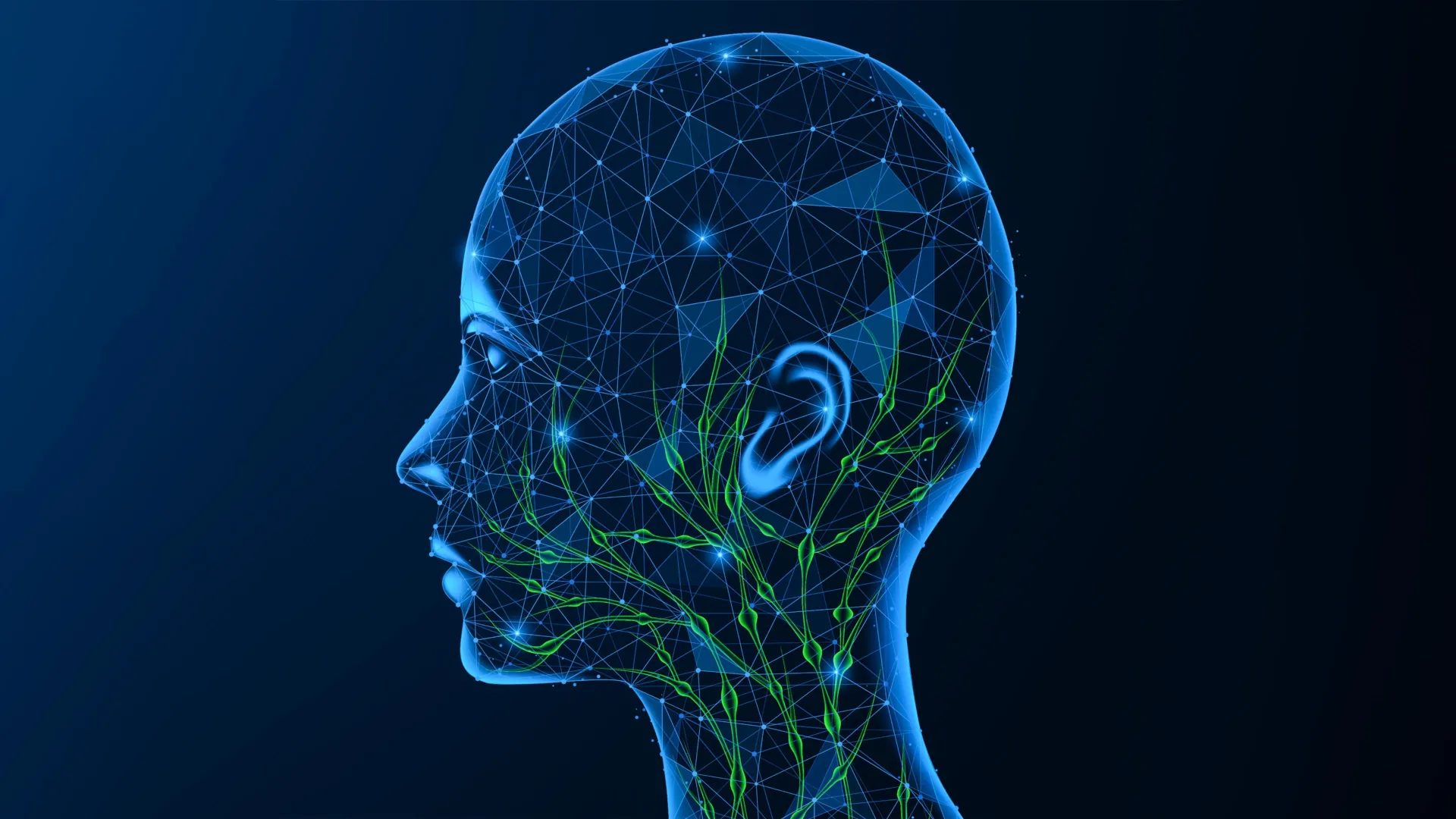
The ongoing exploration of the human body continues to yield new insights. Structures that were previously unrecognized or poorly understood are now being brought into sharper focus. Examples include the identification of previously overlooked lymphatic vessels surrounding the brain, which play a vital role in immune surveillance and waste removal, and the detailed re-examination of ligaments in the knee, revealing their complex roles in joint stability. Familiar tissues are being understood in entirely new ways, and the map of the human body is a dynamic, ever-evolving document.
Empowering Individuals Through Knowledge
As our understanding of human anatomy expands, it becomes increasingly important for the public to have a greater awareness of their own bodies. A deeper comprehension of anatomy empowers individuals to advocate more effectively for their own health, engage more confidently with healthcare providers, and make informed decisions about their well-being. However, it is crucial to remember that the canonical anatomy presented in educational materials is a valuable teaching model, not an infallible, perfect representation of biological reality. The more closely and rigorously we study the human body, the more we realize the vast expanse of what remains to be discovered. The journey of anatomical exploration is far from over; indeed, it is entering an exciting new phase of discovery.