The pharmaceutical landscape is undergoing a profound transformation, and Danish drugmaking giant Novo is aggressively positioning itself for a future that extends well beyond its flagship Wegovy and Ozempic franchises. Under the stewardship of CEO Maziar Mike Doustdar, the company recently rolled out a comprehensive five-year commercial strategy during its high-stakes Capital Markets Day. Designed to reassure skittish investors and chart a sustainable course through the remainder of the decade, the roadmap outlines bold ambitions to launch multiple blockbusters, diversify its therapeutic pipeline, and scale manufacturing capacities. However, despite these ambitious projections, market reception has been decidedly cool, underscoring the severe pressures facing the company as it attempts to reverse a dramatic slump in its valuation.
The Strategic Blueprint for 2030
At the core of Novo’s new long-term strategy is a commitment to launch more than five multi-blockbuster products by 2030, supported by an overarching corporate target to generate upwards of DKr150bn ($23bn) in annual sales from these emerging platforms. Leadership intends to demonstrate to Wall Street and European bourses alike that the company’s revenue engine is not indefinitely tethered to semaglutide alone.
While the injectable formulations of semaglutide—marketed globally as Wegovy for chronic weight management and Ozempic for type 2 diabetes—remained formidable commercial powerhouses, generating approximately $7.8bn in global sales during the second quarter alone, Novo finds itself steadily losing ground to primary rival Eli Lilly in the fiercely competitive cardiometabolic arena. Lilly’s competing tirzepatide portfolio, encompassing both Mounjaro and Zepbound, achieved nearly $15bn in sales over the same three-month period, highlighting a widening performance gap that has alarmed long-term shareholders.
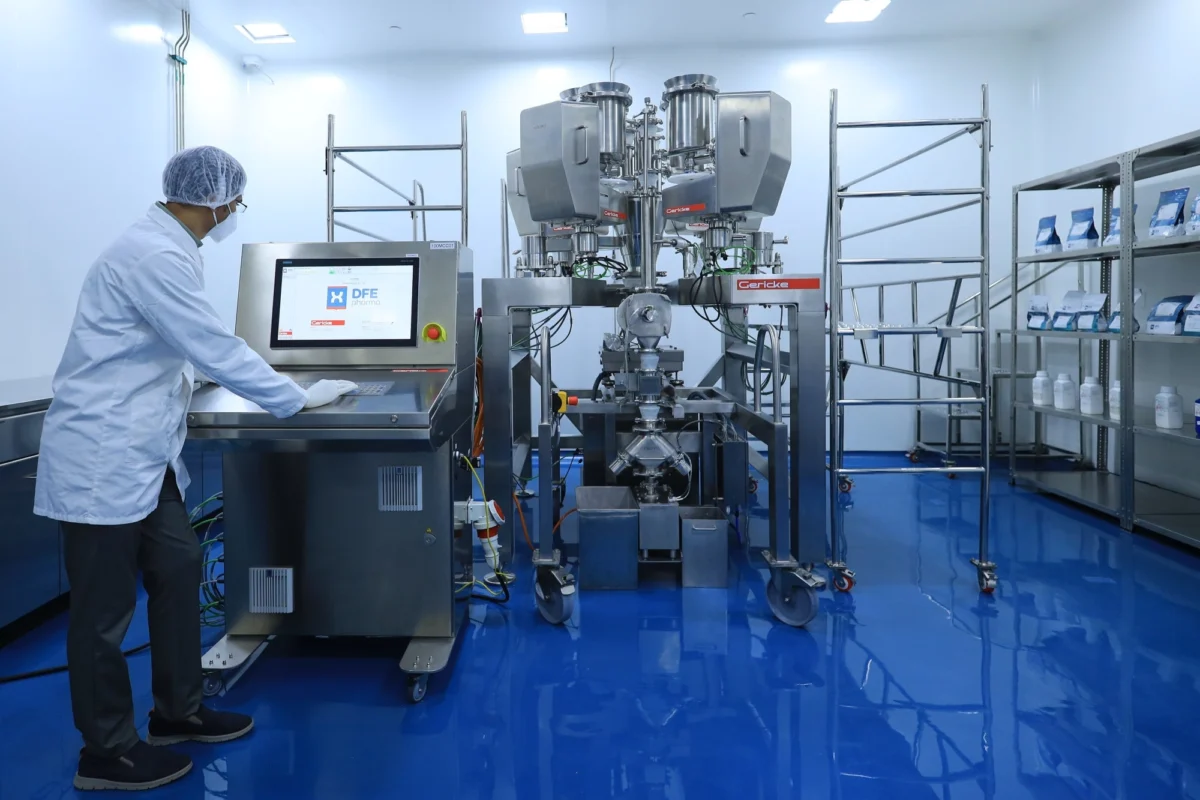
To bridge this gap and reignite growth, the 2030 strategic framework aims to deliver a compound annual growth rate (CAGR) for the 2026–2030 period that aligns with industry peers. A critical pillar of this commercial expansion involves aggressively scaling manufacturing and supply chain capabilities to support the rollout of oral Wegovy, an innovative pill-based iteration of the drug that secured US regulatory approval in December 2025. Management has set an aggressive target to expand patient access within five years, aiming to serve ten times the volume of individuals with obesity who currently rely on the injectable format.
Clinical Milestones and Pipeline Diversification
Coinciding with the Capital Markets event, Novo delivered a much-needed clinical victory with the release of top-line data from the Phase III REIMAGINE 5 clinical trial (NCT06534411). The study evaluated CagriSema—a next-generation combination of the long-acting amylin analogue cagrilintide and semaglutide, heavily touted as the natural successor to Wegovy—against Eli Lilly’s tirzepatide.
Although the trial specifically benchmarked CagriSema against the lower dose tier of Lilly’s product, the candidate demonstrated superior weight-loss efficacy in overweight and obese adults. Given that previous early- and mid-stage readouts for CagriSema had occasionally underperformed against lofty market expectations, this clinical validation provides a vital morale and strategic boost for Novo’s R&D division. Nevertheless, independent analysts note that rigorous scrutiny will persist until direct head-to-head trials evaluate CagriSema against the highest therapeutic doses of tirzepatide.
Beyond obesity, the diversification initiative seeks to populate the company’s late-stage pipeline with more than five Phase III clinical programmes dedicated to obesity and diabetes, alongside an equal number of Phase III programmes spanning entirely different therapeutic indications by the turn of the decade. Prominent among these expansion frontiers is metabolic dysfunction-associated steatohepatitis (MASH), a progressive liver disease with immense commercial potential. To accelerate its footprint in this sector, Novo completed a $5.2bn acquisition of MASH specialist Akero Therapeutics. During recent earnings calls, CEO Doustdar emphasized that targeted bolt-on acquisitions will remain a cornerstone of the company’s capital allocation strategy to continuously refresh and expand its therapeutic offerings.
Market Volatility and Investor Skepticism
Despite the exhaustive detail provided during the capital markets presentation, financial markets responded with immediate skepticism. Shares in the Copenhagen-headquartered company dropped approximately 5% at market open following the announcement, extending a prolonged downward trajectory. The company’s share price has tumbled by more than 70% from its historical peak in mid-2024, a stunning reversal of fortune for an enterprise that was previously crowned the most valuable publicly traded corporation in Europe.
Equity analysts have been quick to dissect the viability of the new targets. In a detailed research note distributed to clients, analysts at Citi observed that the Capital Markets Day offered little catalytic evidence to alter a fundamentally cautious investment stance. They noted that the projected mid-single-digit top-line growth ambition for the 2026–2030 timeframe largely mirrors broader market consensus. Furthermore, while management reaffirmed its primary focus on disciplined bolt-on mergers and acquisitions, the refusal to completely rule out large-scale transformational transactions introduced an element of perceived risk regarding capital deployment.
Compounding the negative market sentiment was the disclosure that Novo has shed roughly 13,000 personnel over the past year as part of a sweeping internal restructuring designed to streamline operations and enhance organizational agility.
Recent Corporate Rebranding and Strategic Partnerships
The unveiling of the 2030 strategy caps an exceptionally turbulent and active promotional fortnight for the drugmaker. On September 14, the organization executed a high-profile corporate rebrand. While retaining its formal legal identity as Novo Nordisk, the enterprise formally dropped the latter half of its moniker for all operational, marketing, and day-to-day communications, transitioning simply to "Novo."
In tandem with the rebrand, leadership announced a series of high-tech and scientific collaborations designed to future-proof its R&D infrastructure. Among these is a strategic partnership with artificial intelligence pioneer Anthropic, aimed at leveraging advanced machine learning models to optimize drug discovery pathways and clinical trial designs. Additionally, Novo struck a lucrative alliance with macrocycle therapy specialist Orbis Medicines. Valued at up to $1.4bn, the Orbis partnership is engineered to feed Novo’s pipeline with novel oral macrocycle candidates, reinforcing its long-term bet on alternative drug delivery mechanisms.
Outlook and Industry Implications
As Novo navigates the remainder of the decade, the stakes for CEO Maziar Mike Doustdar and his executive team could not be higher. The convergence of patent cliffs for older generations of therapies, fierce commercial competition from Eli Lilly in the high-growth cardiometabolic sector, and a profound shift in market sentiment necessitate flawless execution of the five-year roadmap.
While the recent clinical success of CagriSema and the commercial scaling of oral Wegovy provide tangible pathways toward recovery, the lingering skepticism from institutional investors highlights the difficult road ahead. To reclaim its former market dominance, Novo must prove that its leaner corporate structure, diversified therapeutic pipeline, and aggressive technological integrations can successfully transition the company from a single-franchise powerhouse into a multi-pillar pharmaceutical leader.