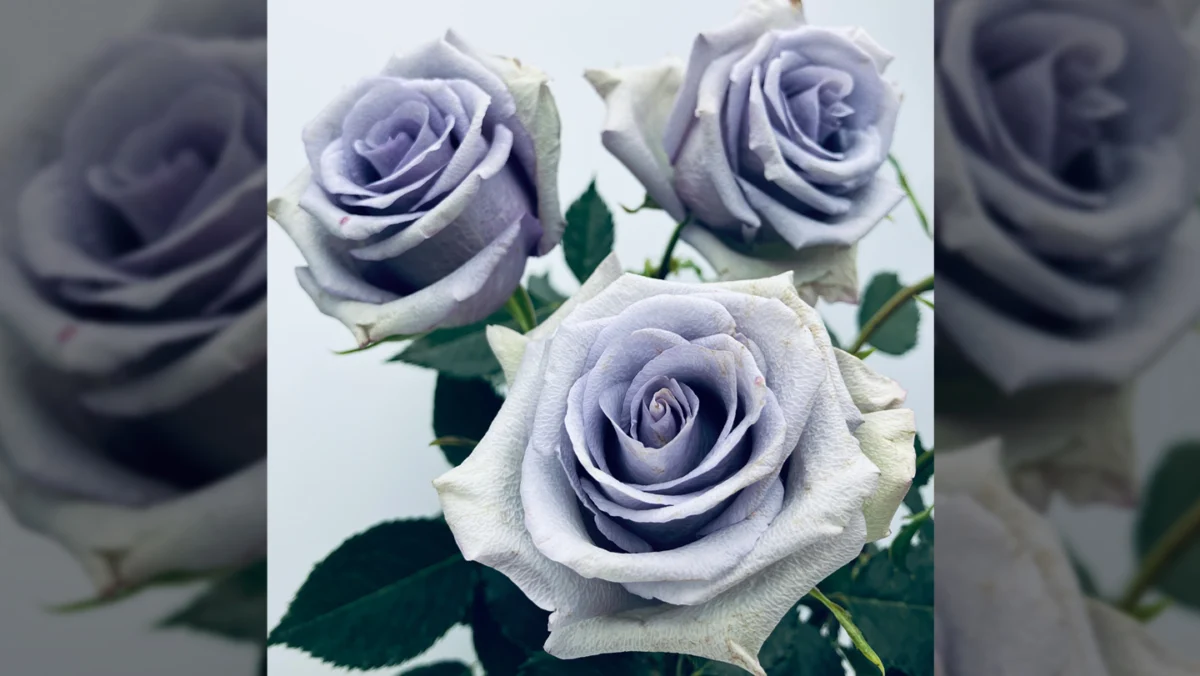
The pursuit of the "true blue" rose has long been considered the holy grail of horticulture, a botanical quest that has frustrated breeders for centuries. For as long as poets have written about romance, the rose has been synonymous with the color red. While nature provides a vibrant spectrum of colors in the floral kingdom—from the deep indigo of irises to the azure petals of gentians—the genus Rosa lacks the genetic machinery to produce the specific pigments required to achieve a genuine blue hue. However, a breakthrough announced by researchers at the Suntory Global Innovation Center in Kyoto, Japan, has finally bridged this biological divide, moving beyond simple pigment manipulation to a sophisticated "helper molecule" strategy that has yielded a stable, violet-blue rose.
The Genetic Architecture of Floral Color
To understand why this achievement is so significant, one must look at the biochemical constraints of plant physiology. Most flowers derive their color from a class of water-soluble vacuolar pigments known as anthocyanins. The specific color perceived by the human eye is determined by the molecular structure of these pigments, which is in turn influenced by the pH levels within the plant cells and the presence of co-pigments.
In the case of roses, the plant’s biosynthetic pathway is evolutionarily optimized to produce cyanidin and pelargonidin, which result in the familiar red, pink, and orange tones. Historically, the challenge was twofold: first, the plant lacks the gene to produce delphinidin, the foundational blue pigment found in many naturally blue flowers. Second, even when delphinidin is introduced through genetic engineering—as Suntory first demonstrated in 2004—the resulting color is often a muted, purplish shade rather than a crisp, vivid blue. This occurs because the delphinidin molecules in a rose petal are inherently unstable and prone to degradation or discoloration due to the local cellular environment.
A Chronology of the Blue Rose Quest
The timeline of this innovation spans over two decades of meticulous genetic research.
- 2004: The First Milestone: The Suntory team achieved the first major breakthrough by inserting a gene from the pansy (Viola wittrockiana) into a rose, enabling the production of delphinidin. While this made the rose "bluer" than its ancestors, it failed to reach a true blue, resulting in a dark violet or mauve hue that disappointed the commercial market.
- 2005–2020: The Period of Stagnation: Researchers realized that pigment alone was insufficient. During this time, investigations turned toward the role of "co-pigmentation." Studies into species like Torenia (wishbone flowers) and Gentiana (gentians) revealed that these plants possess auxiliary molecules that act as chemical stabilizers for blue pigments.
- 2021–2025: The Helper Molecule Strategy: The team began an intensive program to identify the specific genes responsible for these stabilizing molecules. By cross-referencing genomic data from multiple blue-flowering species, they identified the biosynthetic pathways for flavone C-glycosides.
- August 2026: At the 32nd International Horticultural Congress in Kyoto, the Suntory team unveiled the final results of their multi-gene integration project, confirming that they had successfully engineered a rose that maintains a consistent violet-blue hue across multiple generations.
The Mechanics of the Breakthrough: The "Helper" Strategy
The recent success hinges on the introduction of four distinct genes sourced from three different plant species. By expanding the genetic toolkit of the rose, the researchers essentially rewired the plant’s internal chemistry.
The strategy involved three key components. First, they maintained the expression of the delphinidin-producing enzyme. Second, they introduced a gene from the Canterbury bell (Campanula medium) to enhance the synthesis of multiple blue pigments. Finally, they integrated two genes from the wishbone flower (Torenia x hybrida) and one from the clustered gentian (Gentiana triflora). These specific genes catalyze the production of colorless flavone C-glycosides, such as isoorientin.
In the petal cells of the new rose, these helper molecules form complexes with the blue pigment malvidin. This molecular "stacking" protects the pigment from the acidic environment of the petal vacuole, which would otherwise turn the pigment red or purple. The data presented by the researchers indicates a direct correlation between the concentration of these helper molecules and the intensity of the blue hue: the higher the concentration of isoorientin, the more the rose shifts away from the violet spectrum and toward a deeper, more saturated blue.
Field Performance and Stability
A critical hurdle in any genetic engineering project is the long-term stability of the trait. A laboratory success is meaningless if the plant cannot maintain its color under natural, fluctuating environmental conditions. To validate their findings, the Suntory researchers conducted longitudinal trials. The transgenic roses were grown in controlled greenhouses in Japan for a period of seven years, during which they consistently produced violet-blue flowers.
Furthermore, to ensure the robustness of the genetic modification, the plants were subjected to three years of open-field cultivation in Colombia, a region known for its significant rose production and variable light and temperature conditions. The plants demonstrated high phenotypic stability, with the blue coloration remaining consistent despite different soil and atmospheric variables. This performance suggests that the genetic modification is not merely a transient effect but is deeply integrated into the plant’s developmental cycle.
Implications for the Floriculture Industry
The implications of this development are profound, both from a commercial and an ecological perspective. The global floriculture market, valued at tens of billions of dollars annually, has long relied on dyeing white roses to meet consumer demand for non-traditional colors. The ability to grow these flowers naturally represents a paradigm shift in supply chain logistics, potentially reducing the chemical waste associated with artificial dyes and improving the overall quality and longevity of the product.
However, the introduction of genetically modified organisms (GMOs) into the ornamental plant market is not without its complexities. Regulatory frameworks in various nations regarding the import and cultivation of transgenic plants remain stringent. While the Suntory roses have demonstrated success in controlled environments, the transition to commercial retail will require extensive biosafety assessments, including studies on cross-pollination risks and the environmental impact of the inserted genes on native flora.
Future Directions and Research
The research team has signaled that their work is not yet finished. While the current flowers are classified as "violet-blue" on standard horticultural color charts, the team’s objective remains the attainment of a "true" or "royal" blue. This will likely involve further fine-tuning the levels of co-pigment expression and potentially exploring additional genes that could shift the pH levels within the petal vacuoles to be slightly more alkaline, which would further stabilize the blue color.
Furthermore, the "helper molecule" strategy provides a blueprint for other plant scientists. If researchers can successfully introduce this biochemical stabilization process to other flowers that currently lack blue varieties, such as lilies or sunflowers, it could lead to a massive expansion of the floral color palette.
As the scientific community reflects on the achievement, the broader consensus is that this development is a triumph of synthetic biology. By moving beyond the simplistic view that a single gene can "turn a plant blue," the Suntory team has embraced the complexity of plant metabolic networks. The success of the "helper molecule" strategy serves as a potent reminder that the most challenging problems in nature are rarely solved by a single tool, but rather by understanding and manipulating the delicate, interconnected systems that define life at the molecular level. For now, the world of horticulture watches closely, as the prospect of a naturally blue rose moves from the pages of fiction into the reality of the garden center.