Researchers at the Harvard John A. Paulson School of Engineering and Applied Sciences (SEAS) have successfully demonstrated an innovative methodology for safeguarding delicate quantum information by utilizing mechanical vibrations, or microscopic sound waves. Developed within the laboratory of Marko Lončar, the Tiantsai Lin Professor of Electrical Engineering, this breakthrough promises to accelerate the realization of compact, highly integrated quantum networks constructed directly onto semiconductor chips. Furthermore, the technique paves the way for advanced hybrid quantum systems capable of seamlessly bridging disparate varieties of quantum bits, or qubits, which form the computational bedrock of quantum information science.
The experimental findings, which represent a significant leap forward in solid-state quantum physics, were published in the peer-reviewed journal Nature Physics. The rigorous experiments were spearheaded by Eliza Cornell, a recent Ph.D. graduate from the Lončar research group who now serves as a postdoctoral researcher at Boston University, alongside Zhujing Xu, a former postdoctoral scholar within the same lab. This collaborative achievement underscores Harvard’s ongoing leadership in nanoscale engineering, photonics, and quantum information processing.
The Chronology of the Breakthrough
The foundational work leading to this recent milestone spans several years of intensive investigation into phononic and photonic systems within academic cleanrooms and specialized laboratories. For nearly a decade, the Lončar lab has been at the forefront of exploring how mechanical vibrations can be harnessed to manipulate quantum states at the microscopic scale.
Historically, quantum networking architectures have heavily relied on optical photons—particles of light—to transmit data between stationary nodes. While light travels at high speeds and is effective for long-distance transmissions, it poses severe scaling challenges when integrated onto microchips due to diffraction limits and the bulky optics required to steer beams. Recognizing these limitations, the Harvard team pivoted toward phonons, the quantized packets of mechanical energy that ripple through solid materials.
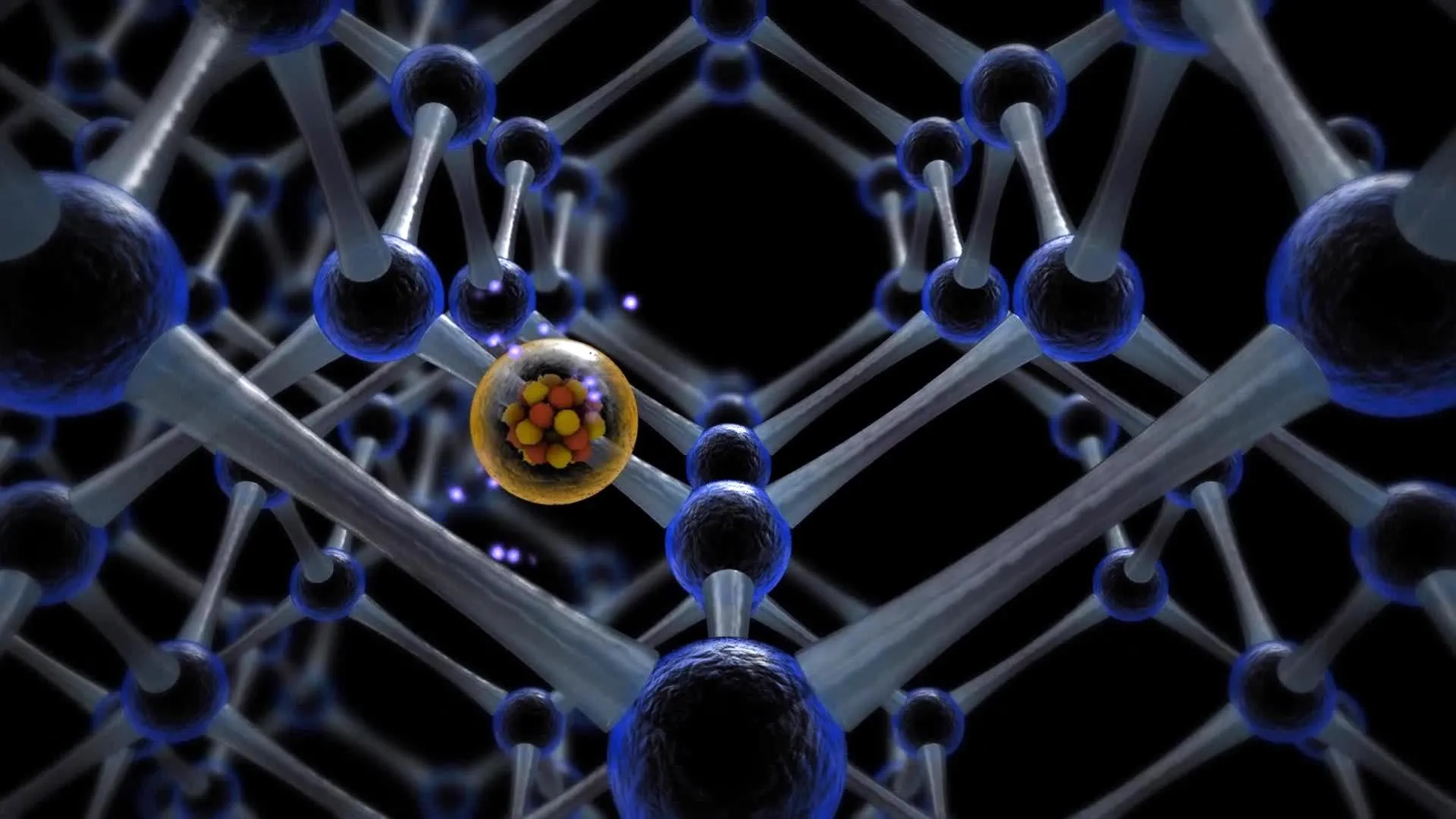
Over the past five years, the research group focused heavily on designing and fabricating phononic crystals and cavities—microscopic structures engineered to trap mechanical vibrations with high precision. By confining phonons within these cavities, the researchers aimed to force them into interacting strongly with solid-state spins, specifically diamond vacancy centers, which serve as exceptionally stable qubit candidates.
The critical turning point occurred when the team confronted the persistent trade-off between strong phonon-qubit interactions and long-term quantum coherence. In earlier trials, introducing mechanical fields invariably degraded the quantum memory of the system, introducing thermal and environmental noise that randomized the qubit states. To overcome this, the team conceptualized and tested an all-mechanical coherence protection scheme. By continuously driving the system with a specific mechanical frequency, they successfully transitioned the silicon-vacancy spin into a "dressed" state, culminating in the triumphant experiments published in Nature Physics.
Leveraging Sound over Light in Quantum Architectures
The decision to utilize phonons rather than photons in chip-scale quantum networks is rooted in fundamental physics. At equivalent frequencies, mechanical sound waves possess significantly shorter wavelengths than electromagnetic light waves. This physical attribute provides a transformative advantage for hardware engineering: it enables the construction of remarkably miniaturized components that can be densely packed onto a single microchip without suffering from destructive optical crosstalk.
In addition to spatial efficiency, phonons exhibit a unique versatility that light lacks. Sound waves interact readily with both solid-state spins, such as those found in diamond crystal lattices, and localized electromagnetic fields. This dual interaction capability makes phonons ideal mediators for hybrid quantum architectures. In a hybrid system, different physical platforms—such as superconducting circuits, trapped ions, and spin-based qubits—can be linked together, leveraging the individual strengths of each technology while mitigating their respective weaknesses.
However, integrating mechanical vibrations into quantum devices has historically introduced a formidable obstacle: environmental decoherence. Qubits are notoriously fragile entities. Even minute thermal fluctuations, electromagnetic interference, or mechanical stress from the surrounding environment can cause a qubit to lose its stored information, a process known as decoherence. In conventional quantum systems, researchers combat this noise by applying precise microwave pulses that decouple the qubit from external disturbances. Unfortunately, these standard microwave decoupling techniques are fundamentally incompatible with qubits embedded directly inside phononic cavities, rendering previous designs mutually exclusive.
The Innovation of "Dressed" Qubits and Continuous Noise Suppression
To resolve this persistent incompatibility, the SEAS research team engineered a method termed "all-mechanical coherence protection." Rather than intermittently pulsing the system with external microwaves, the researchers continuously applied a mechanical driving field composed of phonons directly to the silicon-vacancy spin in the diamond substrate.
This continuous mechanical actuation fundamentally alters the quantum mechanical nature of the system, transforming the target qubit into a "dressed" qubit. In quantum mechanics, a "dressed" state describes a particle that is continuously interacting with an external field, effectively "wearing" the energy field as part of its redefined identity. In this engineered state, the silicon-vacancy spin becomes substantially less susceptible to low-frequency electrical, magnetic, and thermal noise emanating from its immediate surroundings.
Crucially, because this protective field is mechanical in nature, it is natively compatible with the phononic cavities required to route quantum information across a chip. This dual-purpose mechanism transforms phonons from a potential source of disruption into an active defense system. Phonons can simultaneously transport quantum data between disparate nodes across a network while erecting an acoustic shield that preserves the integrity of that data against environmental interference.
"We are solving two problems," explained Eliza Cornell, co-lead author of the study. "We want the spin to have strong interaction with phonons, and we want the spin to have a long coherence time. Our paper demonstrates a method of extending the coherence time that is compatible with the silicon-vacancy center being in a cavity."
Quantitative Results and Extended Coherence
In empirical trials, the implementation of continuous-wave mechanical noise suppression yielded profound quantitative improvements. The research team successfully extended the quantum coherence time of the silicon-vacancy spin by approximately a factor of three.
While a threefold extension represents a major stepping stone, the broader implication lies in the proof-of-concept itself. By demonstrating that continuous mechanical driving can successfully suppress noise in a real-world solid-state device, the Harvard team has validated a completely new paradigm for quantum control. This technique suggests that microscopic sound waves can transition from theoretical nuisances—often responsible for thermal decoherence in quantum processors—into indispensable engineering tools for constructing reliable, fault-tolerant quantum hardware.
The research collaboration brought together a multidisciplinary cohort of physicists and engineers. Alongside Cornell and Zhujing Xu, the study "All-mechanical coherence protection and fast control of a spin qubit" was co-authored by Zhaoyou Wang, Hana K. Warner, Eliana Mann, Michael Haas, Smarak Maity, Graham Joe, Liang Jiang, Peter Rabl, and Benjamin Pingault.
Institutional Support and Funding
The rapid advancement of this quantum research has been underwritten by substantial investments from federal agencies and national research initiatives. Financial backing for the project was provided by the National Science Foundation under grant number EEC-1941583, as well as the Air Force Office of Scientific Research under award numbers FA9550-23-1-0333 and FA9550-23-1-0338. Additional support was furnished by Q-NEXT, a U.S. Department of Energy Office of Science National Quantum Information Science Research Center, operating under award number DE-FOA-0002253.
Experimental fabrication and testing phases were conducted in part at the Harvard Center for Nanoscale Systems, an institution affiliated with the National Nanotechnology Infrastructure Network and supported by National Science Foundation award ECS-0335765. This centralized infrastructure provided the advanced cleanroom capabilities necessary to pattern sub-micron phononic structures into diamond membranes with atomic precision.
Commercialization Pathways and Broader Implications
As academic milestones transition toward technological applications, the discoveries made within the Lončar laboratory are already drawing attention from the commercial sector. Recognizing the economic and strategic value of scalable quantum interconnects, the Harvard Office of Technology Development has initiated active steps to secure patent protection for the intellectual property arising from this research. The university is simultaneously exploring commercialization pathways, seeking industry partnerships to translate these laboratory demonstrations into manufacturable, market-ready quantum components.
The implications of this research extend far beyond academic physics laboratories. As the global technology sector races to build practical quantum computers and secure communication networks, scalability remains the ultimate bottleneck. Present-day quantum processors often require massive dilution refrigerators and complex, room-sized webs of coaxial cables and optical fibers to control a limited number of qubits.
By shrinking quantum interconnects to the microchip scale through phononic engineering, manufacturers could eventually mass-produce quantum processors using semiconductor fabrication techniques similar to those employed in the traditional microelectronics industry. The ability to protect quantum memory using acoustic fields eliminates the need for bulky microwave decoupling hardware inside cryogenic chambers, drastically reducing the thermal load and footprint of quantum systems.
Ultimately, Harvard’s successful integration of phononic cavities and all-mechanical coherence protection marks a decisive step toward modular quantum computing architectures. By allowing sound waves to both transport and protect fragile quantum states, researchers have unlocked a versatile design philosophy that will likely guide the development of the next generation of ultra-compact, highly reliable quantum networks.