The pharmaceutical landscape is undergoing a structural realignment, anchored by the resurgence of oral solid dosage (OSD) platforms and the commercial triumphs of novel oral therapeutics. As the healthcare sector absorbs the market dynamics of 2025 and looks toward 2032, drug sponsors and contract development and manufacturing organizations (CDMOs) find themselves at the center of a complex operational web. Navigating this environment requires balancing surging production volumes, particularly in metabolic and oncological sectors, with persistent challenges in packaging availability, stringent regulatory standards, patient-centric design innovations, and corporate sustainability mandates.
Main Facts and Market Catalysts
The primary driver behind the current OSD renaissance is a mixture of shifting patient preferences, manufacturing economics, and landmark pharmaceutical approvals. According to market data from mid-2026, the introduction of oral glucagon-like peptide-1 (GLP-1) receptor agonists has fundamentally transformed market expectations for oral medications. Data released by Novo Nordisk in June 2026 indicated that US prescriptions for its semaglutide tablets crossed the three-million threshold in just over five months. This milestone positioned the oral launch as one of the fastest commercial accelerations by volume in United States pharmaceutical history.
Crucially, market analytics revealed that more than 80% of these prescriptions were issued to patients who were entirely new to GLP-1 receptor therapies. This adoption rate highlights a core advantage of OSD formulations: overcoming the physiological and psychological barriers associated with parenteral administration. Needle aversion, which epidemiological studies estimate affects between 20% and 30% of young adults, has historically limited the reach of injectable therapies. By eliminating needles, oral therapies reduce administration burdens, mitigate long-term treatment fatigue, and lower overall healthcare spending by simplifying logistics and patient training.
Broader industry analyses corroborate this shift toward oral formats. A GlobalData report published in early 2026 revealed that regulatory approvals for OSD products grew by approximately 24% throughout 2025. Conversely, approvals for injectable drugs experienced a 17% decline during the same period. While complex biologics and certain macromolecular compounds will continue to rely on sterile injectable delivery systems, the market valuation for small molecule OSD products is on a steep upward trajectory. Industry projections estimate that currently marketed OSD products will generate $675.2bn globally by 2032, expanding at a compound annual growth rate (CAGR) of 8.1% between 2025 and 2032.
Chronology and Regulatory Evolution
The acceleration of oral solid dosage manufacturing did not occur in a vacuum; it represents the culmination of years of targeted pharmaceutical research, advanced chemical engineering, and shifting regulatory priorities.
Between 2020 and 2024, the pharmaceutical industry grappled with supply chain vulnerabilities exposed by global health crises and geopolitical instability. During this period, sterile injectable lines experienced acute bottlenecks, prompting many drug sponsors to reevaluate their development pipelines. Solid dosage forms consistently maintained the highest share of pharmaceutical outsourcing throughout this five-year window, supported by mature infrastructure that allowed for rapid commercialization and flexible scaling.
By 2025, this reliance on external manufacturing partners deepened. Data from GlobalData indicates that 43% of outsourced new molecular entities (NMEs) and 42% of outsourced non-NMEs were OSD products. Furthermore, the proportion of outsourced non-NMEs utilizing solid dosage forms increased in 2025 compared to the preceding five-year average, while outsourcing for alternative delivery methods contracted.
The structural turning point arrived in early 2026 with the commercial launch of oral GLP-1 receptor agonists. This event forced CDMOs and brand owners to pivot quickly from clinical-stage manufacturing to high-volume commercial execution. Concurrently, the orphan drug sector intensified its demand for specialized OSD capabilities. By August 2026, database metrics confirmed that just under half (47.8%) of all Orphan Designated Drugs (ODDs) marketed in the United States were administered orally. Because orphan drug approvals typically follow accelerated regulatory pathways, CDMOs servicing this niche faced compressed timelines, rigorous scheduling demands, and the necessity for rapid production line changeovers.
Supporting Data and Manufacturing Dynamics
When evaluating the operational differences between OSD products and injectables, distinct manufacturing and economic profiles emerge. Solid oral formulations are generally less capital-intensive and less expensive to produce than sterile injectables, which demand specialized cleanroom environments and complex, costly primary packaging formats like pre-filled syringes or multi-component auto-injectors.
The established nature of OSD infrastructure provides pharmaceutical sponsors with a distinct commercial advantage. Because the supply chain for solid dose manufacturing is broader and more mature than its injectable counterpart, widespread systemic shortages are historically less frequent. However, the sheer volume demanded by blockbuster launches such as oral anti-obesity medications threatens to strain specific secondary and tertiary supply chains.
Jeff Benedict, Chief Commercial Officer at Sharp, noted that while brand owners continue to invest in proprietary packaging infrastructure, CDMOs remain essential partners for managing demand fluctuations, providing overflow capacity, and mitigating supply chain risk. According to Benedict, the operational success of major CDMOs hinges on their ability to balance the ballooning packaging requirements of oral GLP-1 therapies with pre-existing commitments to traditional small molecule portfolios and diverse client bases.
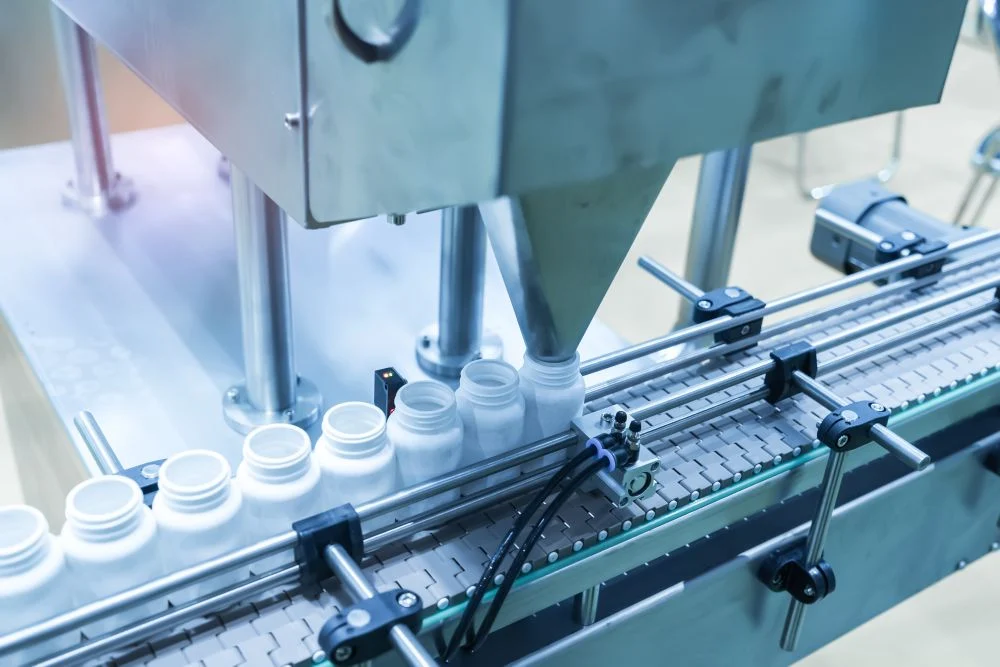
Component availability represents a critical vulnerability in this growth phase. The rapid scale-up of oral metabolic therapies has intensified competition for key packaging materials and machinery. Industry stakeholders are monitoring potential tightness in the supply of high-demand items, including:
- Pharmaceutical-grade glass and plastic bottles
- Specialized closures and child-resistant caps
- Moisture-absorbing desiccants
- Blister packaging films and forming foils
- Regulatory-compliant product labels and folding cartons
- Mid- to high-speed bottling and cartoning equipment
Official Responses and Industry Perspectives
As manufacturing ecosystems adapt to these pressures, industry leaders emphasize that operational flexibility and robust quality systems are non-negotiable prerequisites for modern CDMOs. Managing the duality of massive commercial blockbusters alongside low-volume, high-complexity orphan drugs requires agile facility design.
CDMOs are increasingly deploying modular capacity, flexible line architectures, and advanced automation to bridge this operational gap. These technological investments enable facilities to process variable, low-volume batches required for personalized medicine and rare diseases while retaining the high throughput necessary for blockbuster metabolic drugs.
Industry experts stress that this operational flexibility must be anchored by a robust Pharmaceutical Quality System (PQS). A standardized, high-integrity PQS ensures regulatory compliance and process validation across diverse product lines, regardless of production scale or geographic jurisdiction. By matching adaptable equipment modules to specific product volumes, service providers can support drug sponsors seamlessly from early-stage clinical trials through full commercialization.
Broader Impact, Patient-Centricity, and Sustainability
Beyond sheer volume and supply chain resilience, the evolution of OSD packaging is heavily influenced by two intersecting imperatives: patient-centric design and environmental sustainability.
Patient adherence remains a formidable hurdle in long-term pharmacological treatment, particularly for chronic conditions like obesity, diabetes, and cardiovascular disease. To combat non-compliance, packaging engineers are embedding intuitive features directly into commercial packs. Calendarized blister packs, dose-titration configurations, clear visual dose identification, and senior-friendly yet child-resistant opening mechanisms are becoming standard expectations rather than value-added luxuries. Design teams emphasize that integrating these patient-centric considerations as early as Phase II clinical development prevents costly redesigns and ensures optimal commercial readiness once regulatory approval is secured.
Simultaneously, the pharmaceutical industry faces mounting pressure to reduce its environmental footprint. OSD packaging inherently offers certain sustainability advantages over assembled injectable devices, which often contain electronics, multiple plastics, and needles that complicate recycling streams. Bottles and closures present more straightforward recycling opportunities, provided adequate municipal and commercial collection infrastructure exists.
Nevertheless, significant challenges remain. Meaningful sustainability gains in pharmaceutical packaging are frequently constrained by stringent regulatory requirements regarding moisture barrier performance, oxygen transmission rates, product stability, tamper evidence, and shelf-life preservation. Consequently, sweeping material substitutions are rare. Instead, industry participants are advancing sustainability through targeted material reduction—such as down-gauging bottle walls and minimizing carton dimensions—alongside structured technical evaluations of alternative barrier films, foil structures, and paper-based secondary packaging.
Furthermore, many organizations are exploring digital alternatives to traditional paper package inserts, transitioning product information to QR code-based formats to reduce paper consumption and weight during transport. Localized sourcing and manufacturing strategies are also being deployed to shorten supply chains and lower the carbon emissions associated with global freight.
Looking ahead, the trajectory of the oral solid dosage segment points toward sustained, strategic expansion. As therapeutic pipelines in oncology, metabolic diseases, and rare disorders increasingly favor oral delivery, the packaging sector will continue to serve as a critical differentiator for drug sponsors. Navigating this future will demand a delicate equilibrium between patient safety, regulatory compliance, environmental stewardship, and supply chain resilience. In this increasingly complex operating environment, the most successful pharmaceutical sponsors and CDMOs will be those capable of streamlining complexity, accelerating time-to-market, and safeguarding the continuous, reliable delivery of essential medications to patients worldwide.