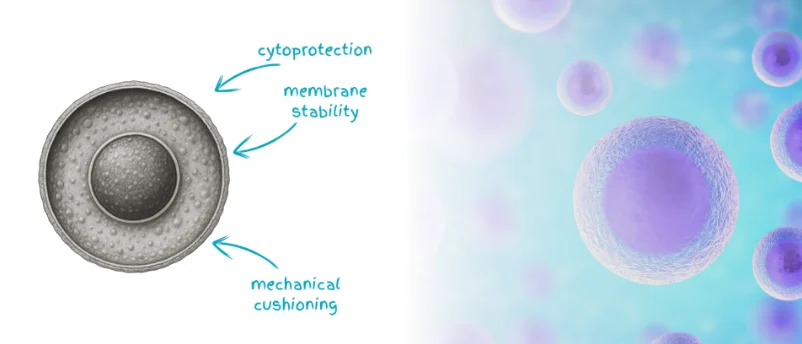
Researchers at Syracuse University have announced the discovery of a remarkable new single-celled organism that shatters conventional biological assumptions regarding the thermal boundaries of complex life. The newly identified organism, formally named the fire amoeba or Incendiamoeba cascadensis, is capable of reproducing via division at a sweltering 63 degrees Celsius. Furthermore, this resilient eukaryote can remain actively motile at temperatures climbing up to 64 degrees Celsius.
This groundbreaking finding establishes a new upper-temperature limit for eukaryotic life on Earth. By demonstrating that a complex, nucleus-possessing cell can thrive in environments previously thought exclusive to simple, single-celled bacteria and archaea, the discovery forces a significant reassessment of cellular heat tolerance. The isolation of I. cascadensis not only broadens our theoretical understanding of Earth’s biosphere but also reshapes the criteria astrobiologists use when searching for habitable environments beyond our solar system.
Understanding the Thermal Limits of Life on Earth
For decades, the study of biological extremophiles focused almost exclusively on prokaryotic organisms—simple cells lacking a distinct nucleus. Single-celled bacteria and archaea have long held the crown for surviving Earth’s most punishing environments, ranging from the freezing expanse of Antarctic ice to the searing hydrothermal vents lining the deep ocean floor.
Until recently, the absolute upper limit for any biological organism was attributed to Methanopyrus kandleri, an archaeon capable of surviving at a blistering 122 degrees Celsius. However, as scientific inquiry shifted toward complex lifeforms—or eukaryotes, which include everything from amoebas to humans—a distinct threshold appeared to emerge.
Prior to this discovery, no known eukaryote was documented replicating at temperatures exceeding 60 degrees Celsius. This stark discrepancy created a massive blind spot in evolutionary biology. While the thermal adaptation mechanisms of bacteria and archaea were thoroughly documented, the bulk of eukaryotic diversity in extreme heat remained entirely unexplored. The assumption that eukaryotic cellular machinery, complex membrane trafficking, and multi-step mitosis were simply too fragile to withstand extreme heat went largely unchallenged, until researchers turned their attention to the bubbling geothermal springs of California.
Chronology of the Discovery at Lassen Volcanic National Park
The discovery of Incendiamoeba cascadensis is the culmination of targeted fieldwork and advanced cellular analysis conducted by a team of microbiologists and geneticists at Syracuse University.
The initial phase of the research involved sampling mineral-rich, high-temperature thermal springs within Lassen Volcanic National Park in California. Recognizing that geothermal environments harbor unique microbial mats, the team hypothesized that undiscovered eukaryotic extremophiles might be evading detection due to their microscopic size and the technical challenges of culturing them in laboratory settings.
Upon isolating target amoeboid strains from the hot spring samples, the team subjected the organisms to rigorous thermal tolerance testing. Utilizing ultrastructure expansion microscopy—a cutting-edge visualization technique that physically magnifies cells to examine internal architecture—the researchers observed the physical division of the amoeba at 63 degrees Celsius.
To confirm that these observations were not anomalous, the team employed high-temperature live-cell microscopy alongside precise cell centroid tracking. These methods verified that the organisms were not merely surviving in a dormant or encysted state, but were actively motile and functional at 64 degrees Celsius. Following the physiological confirmation, the team utilized advanced long-read sequencing technologies to assemble two distinct genomes for the organism, setting the stage for an in-depth molecular analysis of its heat-defying capabilities.
Deciphering the Genetic Blueprint of Incendiamoeba cascadensis
To uncover the biological secrets enabling I. cascadensis to withstand such extreme heat, the researchers performed a comprehensive genomic and transcriptomic analysis. By comparing the genetic makeup of the fire amoeba with more moderate, mesophilic amoebae, the team identified a specialized suite of upregulated genes. These genetic assets are heavily involved in crucial survival mechanisms, including DNA stabilization, proteostasis—the maintenance of protein health within the cell—and environmental sensing.

Further insights emerged from comparative RNA sequencing experiments, which analyzed the organism’s gene expression when grown at a relatively mild 48 degrees Celsius versus a punishing 61 degrees Celsius. The data revealed a striking physiological shift under thermal stress: pathways dedicated to proteome maintenance, DNA repair, and complex membrane trafficking were significantly upregulated. Conversely, standard energy generation and biosynthesis pathways were downregulated, indicating that the cell redirects its precious metabolic resources toward cellular defense and preservation during periods of extreme heat.
To predict the structural characteristics of the proteins produced by these genes, the researchers utilized AlphaFold2, an advanced artificial intelligence tool for protein structure prediction. The computational analysis revealed that the proteins of I. cascadensis possess distinct biophysical properties designed to prevent thermal denaturation. Most notably, the proteins exhibited a marked enrichment of positively charged surface residues.
This specific structural adaptation mirrors strategies previously observed in thermophilic bacteria and archaea. The convergence of these protein-stabilizing mechanisms across entirely different domains of life suggests that nature has repeatedly utilized similar biochemical solutions to combat the destabilizing effects of high temperatures.
Global Distribution and Expert Insights
The implications of finding a heat-resistant eukaryote extend far beyond a single geothermal pool in California. Following their initial genetic sequencing, the Syracuse University team cross-referenced the genetic signatures of Incendiamoeba with global microbial databases.
The search yielded matching sequences from notable geothermal regions around the world, including the Taupō Volcanic Zone in New Zealand and Yellowstone National Park in Wyoming. This geographical distribution strongly indicates that I. cascadensis and its close relatives are not isolated biological anomalies, but rather members of a widespread, globally distributed family of thermophilic eukaryotes that have simply eluded discovery until now.
Lead author Beryl Rappaport emphasized the broader significance of the findings during discussions surrounding the publication. The research team noted that uncovering the survival strategies utilized by I. cascadensis provides a foundational roadmap for understanding how complex biological systems can endure extreme environments. By sharing these adaptive tools across diverse evolutionary lineages, nature demonstrates a remarkable capacity for physiological innovation.
Furthermore, the researchers expressed hope that the formal description and publication of Incendiamoeba cascadensis will serve as a catalyst for the broader scientific community, encouraging other investigators to actively search for high-temperature eukaryotes in underexplored thermal habitats across the globe.
Broader Impacts on Astrobiology and the Search for Extraterrestrial Life
Beyond its immediate contributions to evolutionary biology and microbiology, the discovery of a eukaryote surviving at 64 degrees Celsius carries profound implications for the field of astrobiology.
For decades, the search for extraterrestrial life within our solar system—such as on the subsurface oceans of icy moons like Europa and Enceladus, or within the ancient hydrothermal systems of Mars—has been heavily guided by the physiological limits of known terrestrial organisms. Because complex, multicellular, and eukaryotic life was believed to require moderate temperatures, astrobiological models often restricted the definition of a "habitable zone" based on these narrower thermal constraints.
The validation of Incendiamoeba cascadensis expands the environmental parameters under which complex life can theoretically persist. If eukaryotic cells can evolve specialized mechanisms to maintain proteostasis, repair damaged DNA, and manage membrane trafficking at temperatures previously restricted to prokaryotes, the physiological window for complex life widens considerably.
This shift alters how scientists evaluate potential habitats on distant worlds. Environments previously dismissed as too thermally volatile or chemically extreme to support complex biological structures may now warrant renewed investigation. As researchers continue to probe the limits of life on Earth, discoveries like the fire amoeba serve as a powerful reminder of nature’s resilience, continually redefining the boundaries of what is biologically possible.