For centuries, artists and scientists alike have marveled at the ethereal, brilliant whites captured in masterpieces like Katsushika Hokusai’s iconic nineteenth-century woodblock print, The Great Wave off Kanagawa. A close inspection of the legendary artwork reveals that the striking whites of the churning sea foam, the pristine snow capping Mount Fuji, and the billowing clouds contain no white pigment whatsoever. Instead, this remarkable optical brilliance is generated entirely through light scattering off the exposed, textured fibers of traditional Japanese washi paper.
This sophisticated optical phenomenon, known scientifically as structural whiteness, bypasses the need for chemical colorants. Rather than relying on a pigment to absorb and reflect specific wavelengths of light, structural whiteness emerges organically from the intricate interaction between a material’s microscopic physical architecture and incoming light waves. Nature has long utilized this elegant strategy across diverse ecosystems. Sea spray, atmospheric clouds, and freshly fallen snow all appear intensely white because their complex, porous microstructures scatter visible light with near-total efficiency. Similar marvels of natural engineering appear inside various plant tissues and within the microscopic, foamy protective nests crafted by certain species of amphibians. Often composed largely of trapped air and common organic matrices, these natural structures achieve dazzling brightness without a single drop of pigment.
Inspired by these evolutionary blueprints, an international research collective has engineered a breakthrough manufacturing platform designed to replicate natural light-scattering and liquid-repelling mechanisms. Led by Professor Easan Sivaniah of the Institute for Integrated Cell-Material Sciences (iCeMS) at Kyoto University, the multidisciplinary team worked in close collaboration with researchers from Tokyo Metropolitan University and China’s Donghua University. Their primary objective was to tackle two of the most persistent and problematic material science challenges of the modern industrial era: replacing the ubiquitous white opacifier titanium dioxide and eliminating the environmental threat posed by per- and polyfluoroalkyl substances, commonly known as PFAS.
The Impending Regulatory Crisis of Titanium Dioxide and PFAS
To understand the profound significance of the international team’s development, one must examine the heavy reliance of modern manufacturing on two controversial classes of chemical additives. For decades, industrial white packaging, commercial polymer films, and architectural coatings have depended heavily on titanium dioxide (TiO2) to provide essential brightness, opacity, and UV resistance. However, the regulatory landscape surrounding this foundational compound has shifted dramatically in recent years. Safety evaluations regarding the potential genotoxicity of fine titanium dioxide particles prompted the European Union to officially ban TiO2 as a food additive, sparking widespread anxiety among global consumer goods manufacturers who now face an urgent deadline to find viable, non-toxic alternatives for packaging and pharmaceuticals.
Concurrently, industries rely extensively on PFAS—a vast family of synthetic fluorinated chemicals engineered to impart superior water-, oil-, and stain-repellent properties to textiles, paper goods, and industrial surfaces. Often dubbed "forever chemicals" due to their extraordinary chemical stability, PFAS compounds do not break down easily in natural environments. Instead, they accumulate in soil, water systems, and living organisms, leading to mounting regulatory crackdowns and public health concerns worldwide. The dual pressure of phasing out both titanium dioxide and PFAS has catalyzed an unprecedented global race to discover sustainable, high-performance replacements that do not compromise commercial viability.
A Biomimetic Breakthrough Rooted in Physics
Rather than searching for new chemical substitutes that might carry unforeseen environmental risks, the Kyoto University-led team chose a fundamentally different path: they abandoned added chemicals altogether in favor of structural engineering. By combining principles of biomimetic optics with surface science, the researchers sought to replicate the light-scattering efficiency of natural foams and the self-cleaning, water-repellent properties observed on biological surfaces such as lotus leaves and flower petals.
"A key challenge faced by biomimetic science is realizing environmentally friendly material designs inspired by nature at the scale and cost of existing materials," noted Associate Professor Taiki Yanagishima of Tokyo Metropolitan University, highlighting the historical difficulty of translating complex biological phenomena into industrial-scale manufacturing processes.
Overcoming this hurdle required a manufacturing technique that could simultaneously generate internal optical complexity and external surface texture without relying on hazardous additives or complex multi-step assembly lines. The resulting innovation, developed through years of meticulous experimentation across the partner institutions, bridges the gap between fundamental polymer physics and scalable industrial engineering.
Light, Solvents, and the Mechanics of Deep Foam Photolithography
The newly developed manufacturing process—formally christened Deep Foam Photolithography (DFP)—relies on a surprisingly straightforward yet brilliantly controlled sequence of physical and chemical transformations. The workflow begins when a standard base polymer film is exposed to precise doses of light. Photons initiate a controlled scission of the polymer chains, breaking the high-molecular-weight material down into smaller, highly reactive molecular fragments localized within targeted zones.
Following this initial optical exposure, the material is treated with a mild, environmentally benign solvent. The solvent interacts selectively with the fragmented polymer regions, causing the material to swell dramatically as solvent molecules penetrate the matrix. As the polymer expands, it undergoes a phase separation that locks in an intricate, highly porous open-cell network throughout its volume.
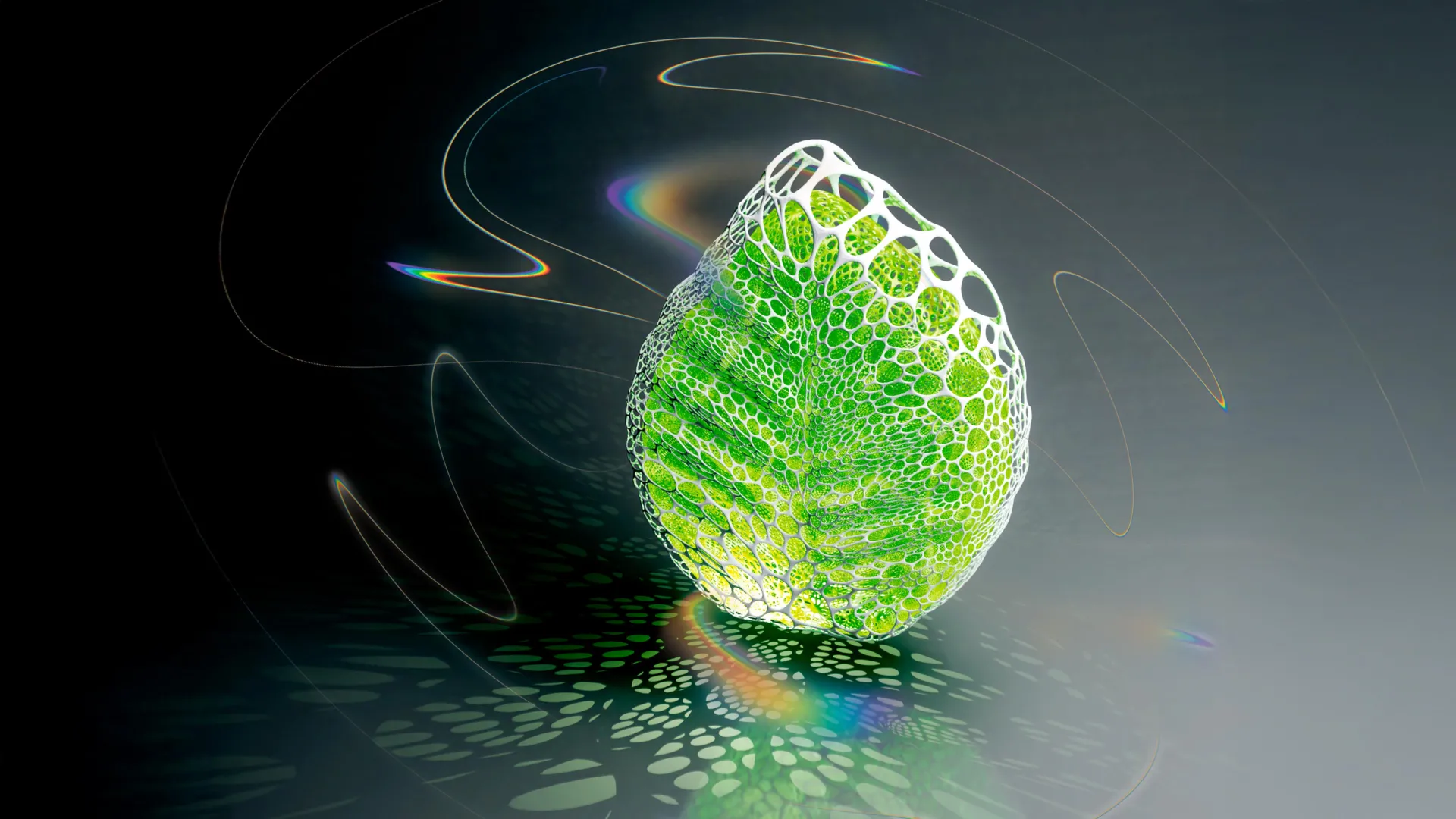
This single, elegant transformation endows the material with dual, high-performance functionalities derived entirely from its internal and external architecture. Deep within the substrate, the newly formed microscopic pore network scatters visible light with astonishing efficiency, rendering the material intensely white without the addition of a single speck of pigment. Simultaneously, at the outermost boundary, the rapid expansion creates a highly irregular, microscopic surface roughness that traps air pockets and violently repels water and other liquids, perfectly mimicking the celebrated superhydrophobic properties of natural botanical surfaces.
Expanding Horizons: From Polymer Films to Advanced Fabrics
While proving the concept on basic polymer sheets represented a major milestone, the research team recognized that true industrial utility required broader material compatibility. In a crucial partnership with textile scientists at Donghua University—widely recognized as a global leader in textile engineering—the researchers tested and successfully adapted the DFP process for woven and non-woven fabrics.
This expansion beyond rigid films opens up vast commercial possibilities across multiple industrial sectors. Furthermore, the DFP methodology possesses a distinct economic advantage: it does not require the synthesis or commercialization of entirely novel, proprietary specialty chemicals. By demonstrating that the technique functions seamlessly with several commercially available, off-the-shelf polymers, the research team has drastically lowered the barrier to eventual commercial adoption.
Performance Metrics and Ultrahigh Resolution
Beyond eliminating toxic additives, the DFP platform offers exceptional technical performance that rivals or exceeds traditional manufacturing methods. Empirical testing revealed that the printable materials platform is capable of achieving ultrahigh-resolution imaging of up to 20,000 dots per inch (DPI). This level of precision allows for incredibly sharp, detailed printing directly onto the structurally whitened substrates without degrading their optical or fluid-repellent properties.
By integrating structural whiteness and advanced water-management capabilities directly into the core fabric or film, the technology achieves what material scientists have long sought: multifunctionality without chemical compromise. The elimination of titanium dioxide removes the opacity-related weight penalties often associated with mineral-loaded plastics, while the absence of PFAS guarantees a fully fluorine-free lifecycle.
Implications for Sustainable Industrial Manufacturing
The implications of Deep Foam Photolithography extend far beyond the immediate replacement of banned food additives and persistent water repellents. By shifting the paradigm from chemical formulation to structural architecture, this technology points toward a more sustainable future for material science.
Traditional manufacturing has long relied on a subtractive or additive chemical mindset: mining raw minerals for pigments, synthesizing complex organic molecules for surface treatments, and blending diverse additives into polymer matrices, often at the expense of recyclability and environmental safety. The DFP approach demonstrates that physical geometry can successfully substitute for heavy chemical loading. By engineering the microscopic architecture of ordinary polymers to manipulate light and fluids on demand, manufacturers can produce lighter, safer, and more easily recyclable goods.
As regulatory bodies around the globe tighten restrictions on industrial chemicals and corporations race to meet ambitious corporate sustainability targets, innovations that harness the principles of structural physics will likely assume a central role in commercial production. Although further scaling studies and pilot manufacturing trials remain ahead before consumer products reach store shelves, the work spearheaded by Professor Sivaniah, Associate Professor Yanagishima, and their international colleagues provides a compelling blueprint. By looking backward at the timeless optical strategies perfected by nature—and forward through the lens of advanced polymer photolithography—science has taken a decisive step toward closing the gap between artificial manufacturing and the elegant efficiency of the natural world.