The landscape of modern pharmacology is currently undergoing a paradigm shift, one defined by a departure from the rigid structural modeling that has dominated the field since the advent of AI-driven biology. While the breakthrough of AlphaFold provided a digital map for the vast majority of stable human proteins, a persistent "blind spot" remains: the proteins that defy static structural analysis. Seattle-based biotechnology firm Talus Bio has unveiled a novel computational platform, Ptarmigan-1, which effectively bypasses the traditional necessity of predicting a protein’s 3D structure, offering a high-speed alternative for identifying drug candidates against previously "undruggable" targets.
The Structural Biology Bottleneck
For years, the gold standard in computer-aided drug design (CADD) has involved determining the 3D geometry of a protein and then "docking" virtual small molecules into the binding pockets of that shape. This approach works exceptionally well for enzymes and receptors that possess rigid, well-defined active sites. However, this methodology fails when confronted with the complexity of transcription factors—the master regulators of gene expression.
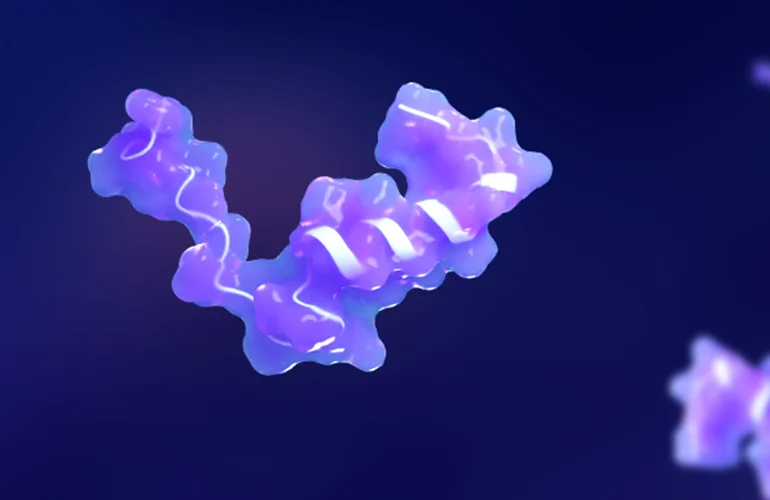
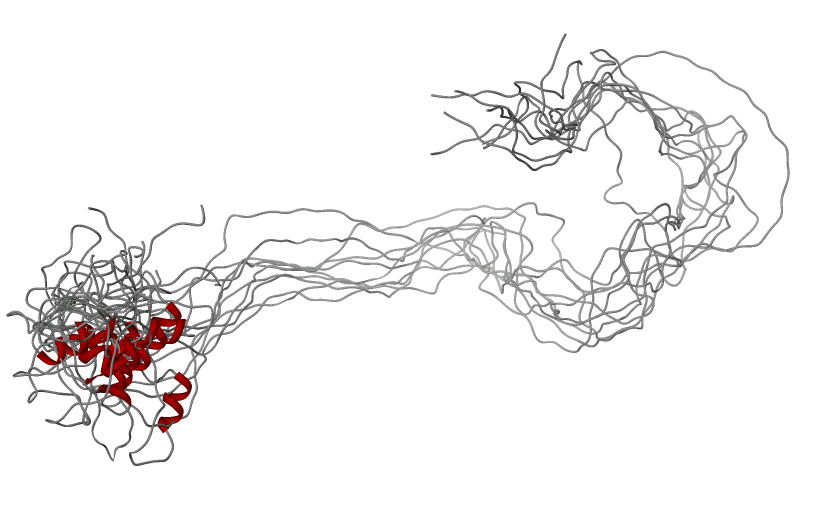
Transcription factors are often characterized by high levels of intrinsic disorder. Because they frequently change shape to interact with DNA and other proteins, they do not possess a single, static "pocket" for a drug to lock into. Lindsay Pino, Chief Technology Officer at Talus Bio, colorfully illustrates this challenge by describing these proteins as a "plate of spaghetti." Traditional folding models attempt to calculate the position of every amino acid, but for these floppy, dynamic structures, such models produce incoherent data that is fundamentally unsuitable for medicinal chemistry.
The clinical implications of this limitation are profound. According to recent data released by Talus Bio, approximately 87% of the 20,431 proteins in the human proteome remain without an approved small-molecule drug or a validated ligand. This statistic highlights a massive untapped frontier in therapeutics, particularly in oncology, where many drivers of cancer are precisely these elusive transcription factors.
Evolution of the Screening Process: A Chronological Overview
The journey to Ptarmigan-1 represents a multi-year effort to reconcile the mismatch between current computational tools and biological reality. Historically, the process of screening a library of compounds against a protein target was a physical, bench-top endeavor. With the introduction of high-throughput screening (HTS) in the late 20th century, researchers could test thousands of compounds, but the cost and time remained prohibitive.
In the early 2020s, the rise of structural AI promised to revolutionize this. The 2024 Nobel Prize in Chemistry, awarded to pioneers of protein structure prediction, cemented the utility of AI in biology. Yet, by 2026, the industry faced a "compute wall." As companies attempted to use structural AI to screen billions of compounds, the energy and financial costs of simulating those interactions became unsustainable. A standard virtual screen of one million compounds against a single target could take months and cost upwards of $1 million in compute resources.
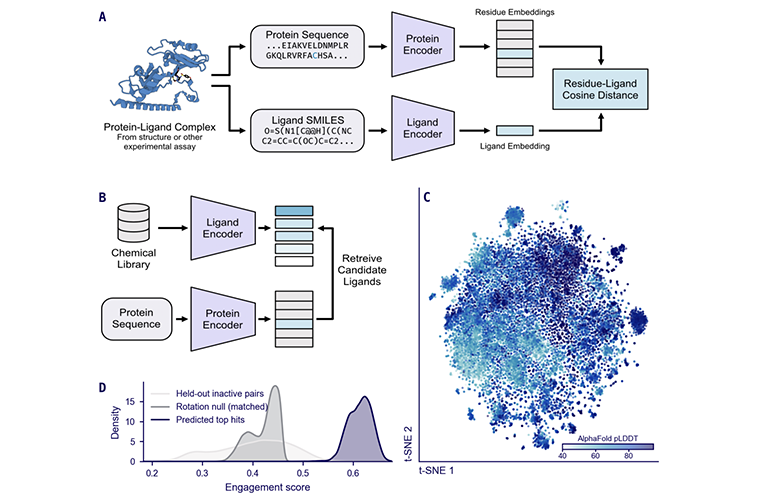
Talus Bio’s development timeline reflects an pivot away from structural prediction. By leveraging internal mass spectrometry data—which records how compounds actually bind to proteins in a living cellular environment—the company shifted its focus from "what does the protein look like?" to "how does the protein interact?" This data-driven, structure-agnostic approach culminated in the release of Ptarmigan-1 in late 2026, moving the industry toward a functional rather than a geometric understanding of drug-protein interaction.
The Computational Advantage: Speed and Efficiency
The primary value proposition of Ptarmigan-1 is its unprecedented speed. In benchmarks conducted by Talus Bio, the model demonstrated a 5,000-fold increase in throughput compared to existing structural models such as Boltz-2. While a structural model might require roughly 54 seconds to process a single compound-protein interaction, Ptarmigan-1 completes the task in approximately 10 milliseconds.
This leap in performance is not merely an incremental gain; it changes the scale at which discovery is possible. By utilizing a single Nvidia H100 GPU, the team reported that they could perform a comprehensive screen of 3.4 billion compounds across the entire human proteome in under 24 hours. For researchers, this represents the difference between a project that requires years of dedicated supercomputing time and one that can be accomplished in a single workday.

Furthermore, the economic impact of this efficiency cannot be overstated. By reducing the reliance on massive, power-hungry structural simulations, companies can significantly lower the barrier to entry for early-stage drug discovery. This allows for a more "exploratory" approach, where researchers can test wider chemical spaces without the prohibitive costs previously associated with virtual screening.
Validation and Retrospective Analysis
To prove the efficacy of a model that ignores 3D structure, Talus Bio conducted a rigorous retrospective study using STAT6, a transcription factor known for its role in immune signaling and cancer. The team compared Ptarmigan-1’s performance against standard docking methods and the Boltz-2 structural model.
The results were statistically significant. Ptarmigan-1 achieved an Area Under the Curve (AUC) of 0.94 in identifying inhibitors from a known set of Pfizer patents. In contrast, both the docking baseline and the structural model scored 0.58, which is effectively indistinguishable from random selection. This validation suggests that for proteins with disordered regions, the functional data captured by Ptarmigan-1 is significantly more predictive than the geometric data provided by structural models.
However, the authors of the study maintain a nuanced perspective. They do not advocate for the total abandonment of structural modeling. Instead, they propose a complementary workflow: Ptarmigan-1 acts as a "filter" that narrows down a library of billions to a manageable set of high-probability candidates. Once this "shortlist" is generated, structural models can then be applied to refine the candidates and provide insights into the specific binding mechanisms.
Implications for the Future of Drug Discovery
The emergence of structure-free screening tools like Ptarmigan-1 has significant implications for the broader pharmaceutical industry. First, it democratizes access to "undruggable" targets. By lowering the computational cost of discovery, smaller biotech firms and academic labs can pursue high-value targets that were previously the sole domain of large, well-funded pharmaceutical companies.
Second, the success of this model underscores a broader trend in AI: the move toward multimodal data. By incorporating mass spectrometry, which captures the nuance of cellular binding, alongside machine learning, the industry is moving closer to a "systems biology" approach. This acknowledges that a drug’s success depends not just on its shape, but on its environment, its solubility, and its ability to traverse the complex interior of a cell.
Finally, the work by Talus Bio serves as a reality check for the field of AI in medicine. While structural prediction remains a critical tool for drug design, it is not a panacea. The "plate of spaghetti" problem is a reminder that biology is inherently chaotic and dynamic. As the industry looks toward the next generation of therapeutics, the ability to synthesize disparate data sources—rather than relying on a single, rigid methodology—will likely determine which companies succeed in bringing the next wave of life-saving medicines to market.
As CEO Alex Federation noted, the industry has been aware of these high-value, "undruggable" targets for decades. The limiting factor was never the lack of potential targets, but the lack of the right tools. With the deployment of Ptarmigan-1, the computational gatekeeping that has long surrounded transcription factors appears to be lifting, potentially ushering in a new era of targeted therapies for diseases that have thus far remained out of reach for traditional small-molecule medicine.