The Life and Death of a Stellar System
To understand the magnitude of this discovery, one must first consider the life cycle of a typical star like our own sun. Throughout the main sequence of its life, a star exists in a delicate gravitational balance, fusing hydrogen into helium. Once that fuel is exhausted, the star undergoes a dramatic transformation, expanding into a red giant and eventually shedding its outer layers. What remains is a white dwarf—a dense, compact core roughly the size of Earth but containing the mass of a star.
For decades, the standard paradigm in planetary science held that planets were exclusively the products of the protoplanetary disks that form alongside young stars. Once a star reached its white dwarf phase, any existing planets were presumed to be either vaporized, cast into deep space, or swallowed by the expanding red giant. However, recent observations of "polluted" white dwarfs have forced a reassessment of this narrative. Astronomers have frequently observed white dwarf atmospheres contaminated with heavy elements such as silicon, iron, and magnesium. These elements, which should have long since sunk into the dense core of the star, serve as a geochemical fingerprint of rocky debris—shattered remnants of planets that were consumed by the star during its transition.
Chronology of a Discovery
The journey to identifying this "phoenix" world began nearly three decades ago. In 1999, the Hubble Space Telescope directed its lens toward the white dwarf HS 0209+0832. At the time, astronomers noted an anomalous chemical signature in the star’s light spectrum, a "mysterious mix" of elements that defied conventional classification. For years, the data remained an enigma, awaiting advancements in stellar atmosphere modeling and spectroscopic analysis.
It was not until the recent re-evaluation by astronomer Jamie Williams of the University of Warwick and his colleagues that the pieces of the puzzle began to align. By applying modern chemical abundance models to the legacy Hubble data, the team discovered that the star was not just polluted, but uniquely enriched with niobium. Niobium is a refractory metal, highly resistant to heat and corrosion, and its presence in such high concentrations is unprecedented in the study of stellar atmospheres.
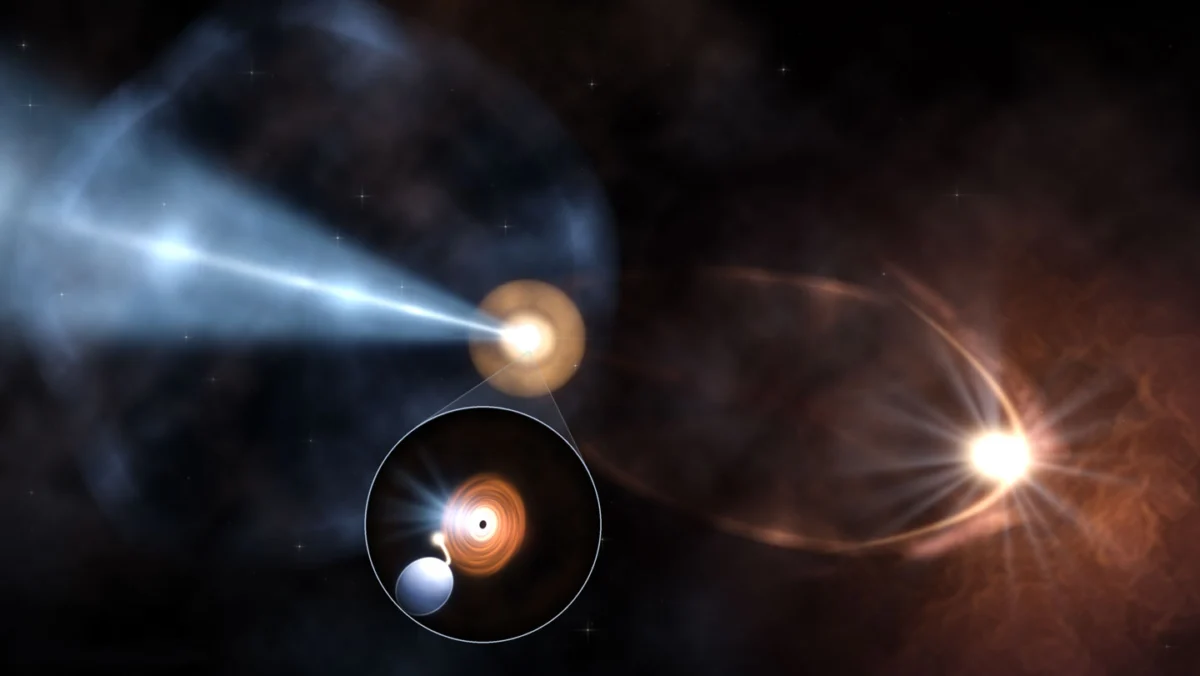
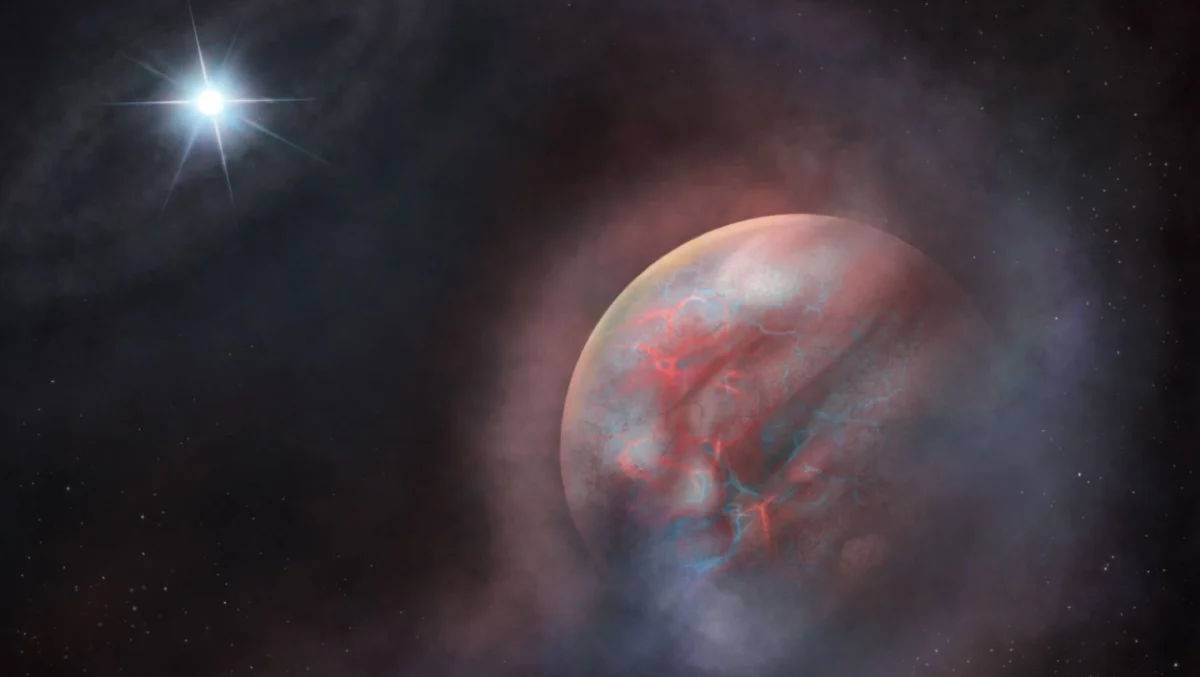
The investigative timeline moved from the archives to the present with the deployment of the Transiting Exoplanet Survey Satellite (TESS). By monitoring the luminosity of HS 0209+0832, researchers identified a periodic variation in brightness occurring every 4.4 days. This rhythm is inconsistent with the rotation of a white dwarf, which typically spins at a much higher frequency. Instead, the data points to an orbiting body—a gas giant situated roughly 6 million kilometers from the white dwarf—whose presence is being detected through its gravitational influence and the gradual atmospheric stripping it undergoes as it orbits the dense, dying star.
The Mechanics of Rebirth: The S-Process
The inclusion of niobium provides the most compelling evidence for the "second-generation" theory. Niobium is primarily synthesized through the slow neutron-capture process, or s-process. This nuclear mechanism occurs within the interiors of certain red giant stars as they approach the end of their lifespan. As the star sheds its outer envelopes, it releases a cocktail of heavy elements into the surrounding space.
According to the team’s hypothesis, this ejected material did not merely drift away into the interstellar medium. Instead, it coalesced in the aftermath of the stellar death, forming a new, second-generation planet. The planet currently orbiting HS 0209+0832 is effectively consuming the "ashes" of its predecessor. As the planet orbits in close proximity to the white dwarf, the star sips away at the planet’s atmosphere, depositing a fresh, distinctive layer of s-process elements—including the observed niobium—onto the surface of the white dwarf.
Scientific Reception and Validation
The scientific community has reacted with cautious optimism, acknowledging that while the evidence is compelling, the classification of the object as a planet requires further verification. Zifan Lin, a planetary scientist at Washington University in St. Louis who was not involved in the research, described the study as a pivot point for the field.
"Before this, the concept of second-generation planet formation was largely a matter of theoretical speculation," Lin noted. "By providing an empirical target that matches both chemical and orbital data, the Warwick team has shifted the conversation from ‘if’ this is possible to ‘how’ it happens."
The implications for the study of exoplanets are vast. If planetary formation can occur around white dwarfs, it implies that the death of a star is not necessarily the end of its system’s utility. Some researchers have already begun to posit that white dwarfs could serve as viable, if unconventional, habitats for life. Because white dwarfs are long-lived and relatively stable, a planet orbiting at the correct distance could theoretically maintain a steady environment for billions of years, providing an immense window of time for complex chemistry to develop.
Broader Impact on Stellar Evolution
This discovery forces a reconsideration of the long-term future of our own solar system. In approximately 5 billion years, the sun will exhaust its hydrogen fuel and enter its own red giant phase, likely engulfing Mercury, Venus, and perhaps Earth. The fate of the outer planets remains a subject of intense debate.
The existence of the phoenix world suggests that the solar system may not be a static structure, but a dynamic one capable of recycling its own mass. While it is currently impossible to predict whether the remnants of our system will coalesce into a new world, the discovery of HS 0209+0832 serves as a proof of concept. The universe, it seems, possesses a mechanism to build anew from the remnants of the old.
Future Research Directions
The next phase of investigation will focus on confirming the composition of the orbiting body. Astronomers hope to use the James Webb Space Telescope (JWST) to obtain more precise spectroscopic readings of the white dwarf’s atmosphere, which may reveal further evidence of s-process elements that were previously below the threshold of detection.
Additionally, search protocols for other white dwarfs are being updated. If this phenomenon is not an anomaly, there should be a population of "polluted" stars exhibiting similar periodic transits and chemical signatures. Mapping these systems will allow researchers to build a statistical model of how common these second-generation planets truly are.
As the study concludes, the authors emphasize that while the term "phoenix world" is a poetic metaphor, the underlying physics is rooted in the fundamental laws of stellar evolution. The transition from a main-sequence star to a white dwarf involves a violent redistribution of matter; this discovery proves that some of that matter finds a way to reform, orbit, and persist, defying the finality of the stellar grave. For the astronomical community, the hunt is now on to determine just how many of these reborn worlds are waiting to be found in the cosmic graveyard.