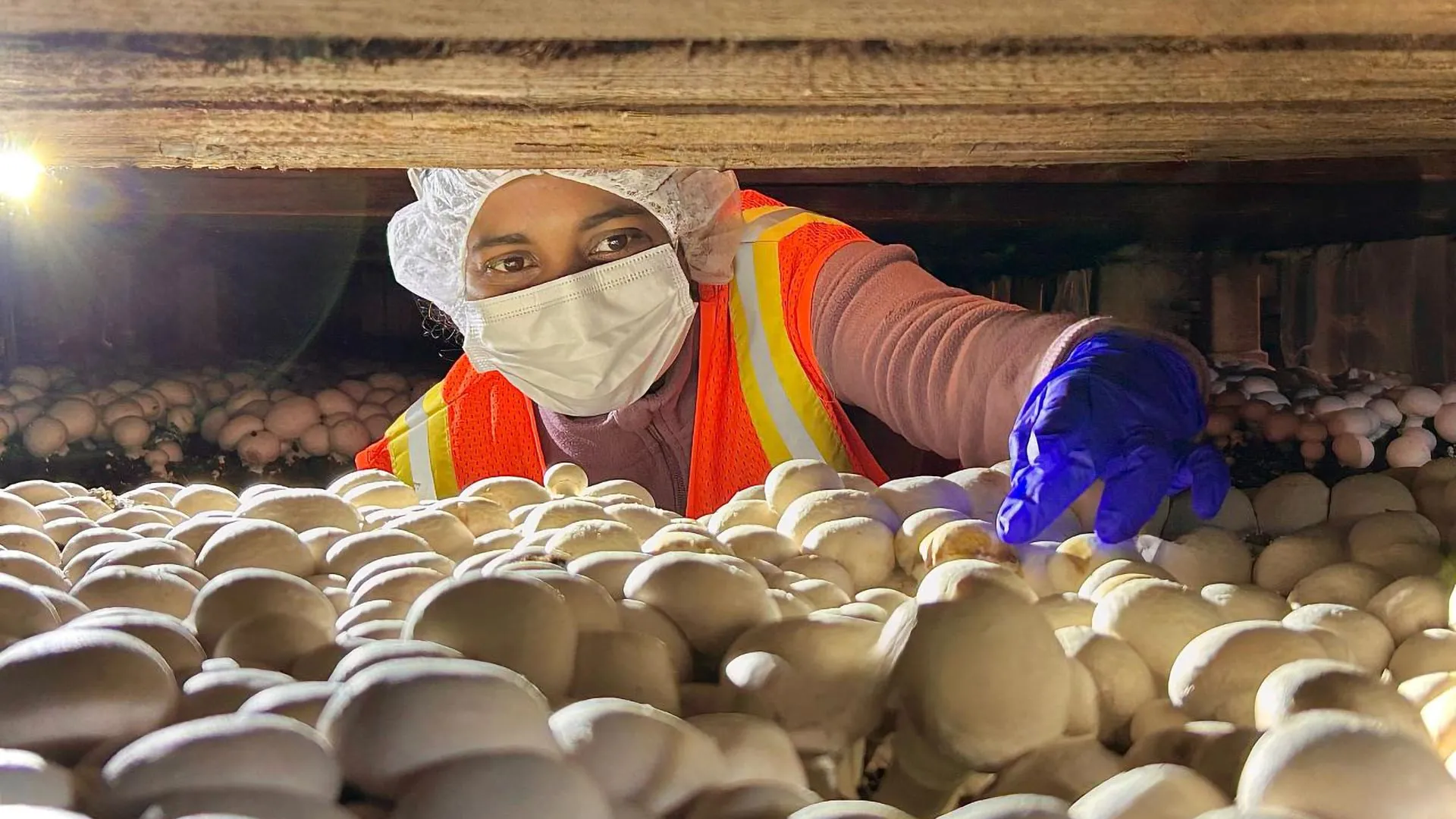
For more than 100 years, the commercial mushroom industry has waged a costly and often frustrating battle against bacterial blotch, a persistent disease that renders white button mushrooms unsellable and diminishes the economic viability of one of the United States’ most essential specialty crops. Recent research from the University of Florida’s Institute of Food and Agricultural Sciences (UF/IFAS) has fundamentally rewritten the scientific understanding of this pathogen, revealing that the disease is not the result of a single, isolated microbe, but rather a complex, diverse consortium of harmful bacteria. This breakthrough, which identifies more than 17 distinct pathogenic species, provides a critical explanation for why conventional treatment methods have historically yielded inconsistent and often disappointing results for growers.
The Economic and Nutritional Stakes
White button mushrooms (Agaricus bisporus) occupy a unique position in the American agricultural landscape. Beyond their culinary versatility, they are increasingly championed for their role in the "food is medicine" movement. Packed with essential vitamins, fiber, and antioxidants, these fungi are a dietary staple for health-conscious consumers. However, their physical fragility makes them highly susceptible to environmental stressors.
The economic impact of bacterial blotch is substantial. Because the disease often manifests as unsightly brown or yellow lesions on the mushroom caps, affected produce is frequently discarded at the retail level or, worse, rejected upon arrival at grocery stores. This "delayed symptom" phenomenon—where mushrooms appear pristine at the point of harvest but develop lesions during transit—creates a volatile environment for farmers, who face unpredictable financial losses that ripple through the supply chain. Estimates suggest that losses attributed to blotch and related quality issues can account for significant percentages of annual harvests, threatening the profit margins of small-scale farms and large industrial operations alike.
A Century of Scientific Misconception
The history of bacterial blotch management has been defined by a singular focus. For decades, plant pathologists operated under the assumption that a solitary bacterial pathogen was responsible for the disease. Consequently, industry-standard sanitation protocols and chemical treatments were developed to neutralize that specific, primary suspect.
However, the persistent failure of these treatments to curb outbreaks led researchers at UF/IFAS to pivot toward a more holistic, genomic approach. The investigative team, led by doctoral student Sameerika Mudiyanselage and supervised by faculty members Samuel Martins and Romina Gazis, sought to characterize the entire microbial community—the "microbiome"—associated with diseased mushroom tissue. By collecting samples from various production facilities across the southern United States, the team aimed to determine if the "single-pathogen" theory was perhaps an oversimplification of a more intricate ecological problem.
Genomic Breakthrough: Beyond the Single Pathogen
The research team employed a multi-faceted methodology to untangle the microbial web. By integrating state-of-the-art DNA sequencing with chemical profiling and traditional culture-based laboratory assays, the researchers were able to look past the dominant, known pathogens.
The results were transformative. The study identified at least 17 different species of pathogenic bacteria residing on the damaged mushroom surfaces. While the two historical "culprits" were indeed present, they were accompanied by a diverse array of other bacterial actors that had previously been overlooked. This discovery suggests that the disease process is likely synergistic; instead of one bacterium causing damage, a collection of microorganisms may be working in tandem to colonize the mushroom’s surface, compromise its cellular structure, and trigger the characteristic browning symptoms.
The implications of this finding are profound. If a grower applies a treatment designed to eradicate one specific bacterium, the remaining 16-plus species may remain unchecked, allowing the disease to progress unabated. This provides a scientific basis for the inconsistent field results reported by the industry for the past century. The "shotgun" approach of trying to kill a single entity has proven insufficient because the target is, in reality, a shifting and diverse microbial community.
Collaborative Efforts and Industry Response
The UF/IFAS study is part of a larger, $7 million initiative funded by the U.S. Department of Agriculture (USDA), involving a consortium of institutions including Penn State University and the University of Delaware. This collaborative effort reflects the gravity of the situation; the U.S. mushroom industry, which produces hundreds of millions of pounds of mushrooms annually, requires a unified strategy to combat systemic disease.
Industry stakeholders have expressed cautious optimism regarding these findings. Representatives from major mushroom trade associations have noted that understanding the "who" and "how" of the disease is the first step toward developing next-generation diagnostic tools. If growers can quickly identify which combination of bacteria is present in their specific facility, they may eventually be able to deploy targeted, site-specific management strategies rather than relying on broad-spectrum, and potentially ineffective, chemical applications.
Future Directions: Toward Sustainable Management
Building on the momentum of this discovery, the UF/IFAS team has already transitioned into a follow-up phase of research, focusing on sustainable and biological interventions. The shift away from heavy chemical reliance is not merely an environmental goal but an economic necessity, as consumers and retailers demand more natural, pesticide-free produce.
Current investigations are testing the efficacy of plant-based essential oils, which possess natural antimicrobial properties, as well as the introduction of beneficial microorganisms. These "good" bacteria, or probiotics for the mushroom environment, could theoretically outcompete the harmful pathogens for space and resources, effectively suppressing the disease before it begins.
"Our goal is to provide growers with practical, science-based solutions that strengthen the entire farming system," noted Samuel Martins. The researchers are now focused on testing these biological agents under real-world, commercial growing conditions—which are characterized by high humidity and precise temperature controls that can either favor the mushroom or, inadvertently, the pathogens.
Long-term Implications for Mushroom Cultivation
The paradigm shift from viewing bacterial blotch as a singular infection to a complex microbial interaction marks a turning point in plant pathology. It underscores the reality that in modern, indoor agriculture, the "microbial environment" is as critical as the physical conditions of temperature and light.
As the research matures, the development of sophisticated diagnostic kits could allow farmers to monitor the microbial health of their crops in real-time. By catching the early signs of a pathogen shift, growers could implement preventative measures—such as adjusting humidity or applying targeted bio-controls—before visible damage occurs. This would drastically reduce waste, improve product shelf life, and stabilize the supply chain for one of the most nutrient-dense foods available.
Furthermore, this research serves as a broader case study in agricultural resilience. The century-long struggle with bacterial blotch highlights the importance of re-evaluating long-held scientific assumptions through the lens of modern technology. As the global population grows and the demand for high-quality, sustainable protein sources like mushrooms increases, the ability to protect crops from such "hidden" microbial threats will become a cornerstone of food security.
The path forward, as outlined by the UF/IFAS team, is not just about finding a new "killer" for a known disease, but about understanding the ecology of the farm itself. By managing the microbial community as a whole, the industry stands to move beyond the reactive, symptomatic treatments of the past and into an era of proactive, sustainable, and highly efficient mushroom production. The findings are expected to serve as a blueprint for other specialty crop researchers, proving that when it comes to plant disease, the smallest organisms often hold the keys to the largest problems.