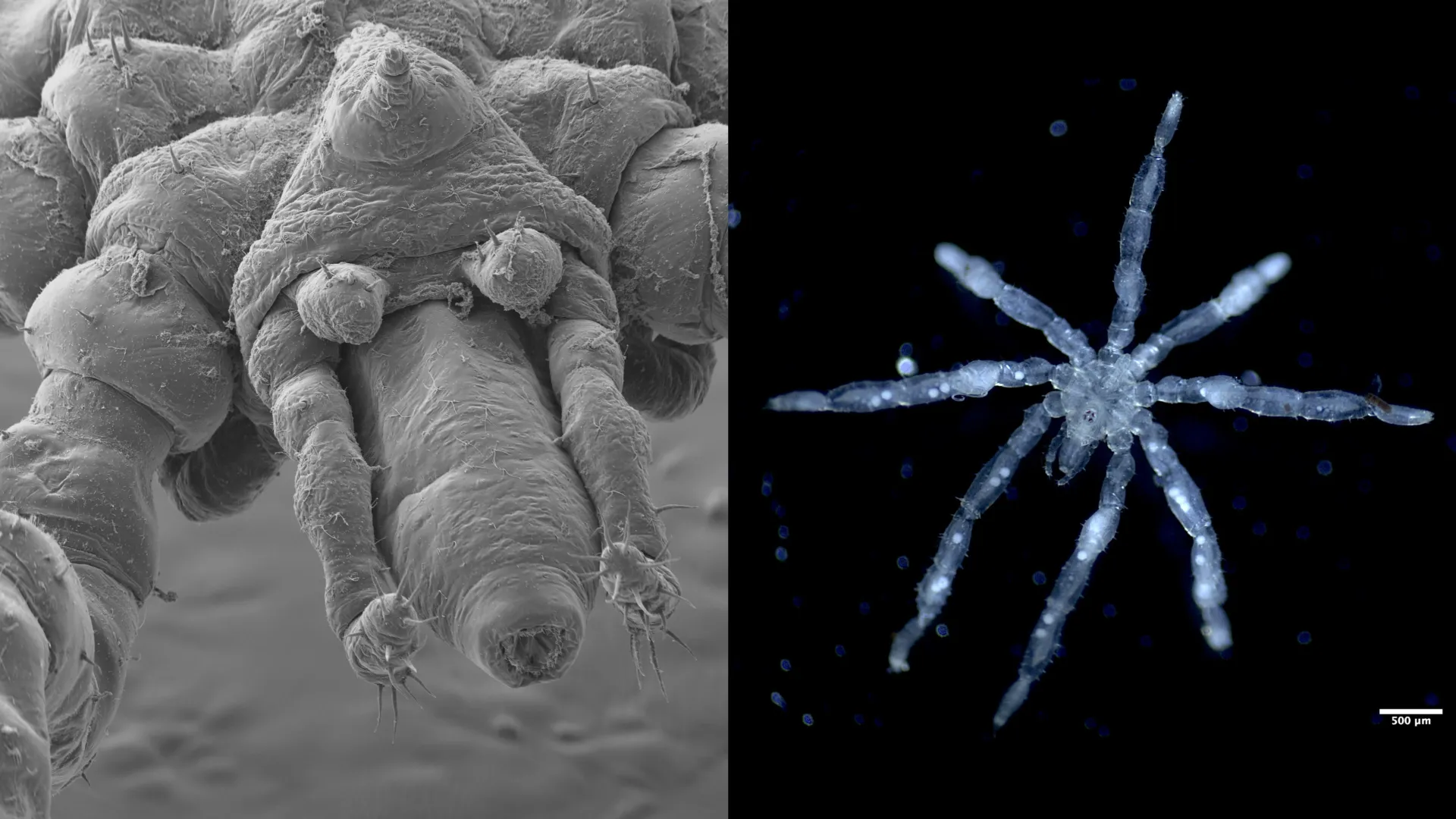
If you happen to be swimming in the waters of the Salish Sea after dark and find yourself imagining tiny, spindly legs navigating the currents near your skin, there is now a verified biological basis for that apprehension. Researchers from the University of British Columbia (UBC) have officially identified and cataloged two previously unknown species of sea spiders—a discovery that marks the first time such an addition has been made to the Salish Sea’s taxonomic record in nearly a century.
The findings, published in the peer-reviewed journal Organisms Diversity & Evolution, represent a significant milestone in marine biology. By synthesizing high-resolution physical morphology with modern genetic barcoding, the research team has begun to resolve long-standing gaps in the understanding of Pycnogonida, the class of arthropods to which sea spiders belong.
A Century-Long Gap in Marine Taxonomy
The last formal description of a new sea spider species within the Salish Sea occurred almost 100 years ago, reflecting a broader scientific trend of "taxonomic neglect" regarding marine invertebrates. Because these creatures are often small, cryptic, and inhabit niche environments, they have frequently been overlooked in large-scale biodiversity surveys.
Cormac Toler-Scott, the lead author of the study and a graduate of the UBC zoology program, initiated this research to address the lack of baseline data. "I was interested in how sea spiders are impacted by climate change and human disturbance, because marine invertebrates in the Salish Sea are particularly at-risk, and I couldn’t find anything," Toler-Scott explained. "That’s largely because people don’t know much about what species exist here and what their lifestyle is."
This lack of fundamental knowledge creates a significant bottleneck for conservation efforts. Marine ecologists argue that without a comprehensive catalog of species, it is impossible to accurately measure the impact of environmental stressors—such as ocean acidification or rising sea temperatures—on regional biodiversity. Identifying these species is the first step toward effective habitat management.
The Evolutionary History of the Pycnogonida
Sea spiders are not true spiders, though they share a distant evolutionary lineage with arachnids, scorpions, and the ancient horseshoe crab. Emerging roughly 500 million years ago, these animals have remained strictly marine, occupying a unique evolutionary branch.
Physiologically, they are among the most peculiar organisms in the ocean. Their anatomy is often described as "reduced," with some species possessing up to 12 legs, a central sucking proboscis, and a body so slender that many of their internal organs, including their ovaries, actually extend into their legs. Furthermore, sea spiders lack a traditional respiratory system; instead, they respire directly through their thin exoskeletons via gas diffusion.
Their reproductive cycle is equally distinctive. In most sea spider species, the burden of parental care falls entirely upon the male. After a female deposits eggs through specialized pores in her legs, the male gathers them using appendages known as "ovigers," which he then secures to his own body with a secreted glue until the offspring are ready to hatch.
Detailed Analysis of the New Species
The research team conducted their fieldwork between September 2023 and August 2024, deploying scuba-assisted sampling techniques at depths of up to 18 meters. The sites selected for this study included the diverse coastal waters around Quadra Island, Vancouver, Bamfield, and Victoria.
Callipallene pilosuspedes: The Hairy-Footed Predator
The first species identified, Callipallene pilosuspedes, derives its name from the Latin words for "hairy feet." This nomenclature reflects the prominent, long, curved spines that adorn the distal segments of its legs.
Beyond its hirsute appearance, the species exhibits a set of striking morphological features:
- Visual System: The specimen features distinctive red eyes, a rare trait that provides potential advantages in specific lighting conditions within the benthic zone.
- Feeding Apparatus: The proboscis is relatively short and equipped with specialized claws. This allows the spider to grasp prey items before initiating the feeding process.
- The Sarlacc-like Mouth: The mouth itself is triangular, comprised of three distinct lips and surrounded by sensory tendrils. This specialized structure is optimized for piercing and extracting nutrients from sessile marine organisms.
- Self-Grooming Behavior: Microscopy revealed that the species uses its highly agile ovigers—the same limbs used for egg transport—to manipulate comb-like spines on its body. This serves as a vital grooming mechanism to keep its sensory apparatus clear of sediment.
Tanystylum kiixin: An Ecosystem in Miniature
The second species, Tanystylum kiixin, was named in honor of the ancient Indigenous village site of Kiixin, located on the west coast of Vancouver Island. The name refers to the phonetic representation of the sound of waves crashing against the shoreline.
Unlike its hairy-footed counterpart, Tanystylum kiixin possesses significantly shorter and less flexible ovigers. This biological limitation appears to prevent the creature from grooming itself effectively. Researchers observed that specimens were frequently coated in layers of dirt, detritus, and an array of microscopic parasites. Toler-Scott characterized this state as "an ecosystem within an ecosystem," highlighting the complex, symbiotic, or parasitic relationships that these small arthropods facilitate on their own bodies.
Methodological Rigor: Integrating Genetics and Imagery
The study’s credibility is anchored in its dual-track methodology. While previous generations of taxonomists relied solely on physical characteristics—which can be misleading due to phenotypic plasticity—the UBC team utilized molecular DNA sequencing to confirm the distinctiveness of these two species.
The researchers generated genetic sequences for several previously unsequenced taxa, contributing a massive influx of data to public genetic databases. This approach is essential for modern taxonomy, as it allows scientists to distinguish between species that may appear identical to the naked eye but are genetically distinct. The team also created a standardized identification guide, which will serve as a vital resource for other marine biologists working in the Pacific Northwest.
Broader Environmental Implications
The identification of these two species suggests that the Salish Sea, while well-studied in terms of larger megafauna, remains a frontier for invertebrate taxonomy. Toler-Scott noted that the limited scope of his field season was likely only the tip of the iceberg.
"I only had one field season, but there’s definitely more diversity out there that we haven’t documented," he stated.
The discovery carries significant implications for regional marine policy. In recent years, the Salish Sea has faced increasing pressure from industrial runoff, shipping traffic, and the cascading effects of climate change. Marine invertebrates serve as "canaries in the coal mine" for ecosystem health; their survival is often inextricably linked to the health of the entire food web. If these species are sensitive to environmental shifts, their disappearance could signal broader systemic collapses before they become apparent in more charismatic species like salmon or orcas.
Furthermore, the research underscores the necessity of continuous, long-term monitoring. Taxonomy is often viewed as a "completed" science, but the discovery of Callipallene pilosuspedes and Tanystylum kiixin proves that even in well-traveled waters, significant portions of the biodiversity remain hidden in plain sight.
Future Directions for Research
The project, funded by the National Sciences and Engineering Research Council of Canada (NSERC), sets the stage for a new wave of invertebrate research in British Columbia. Future studies will likely focus on:
- Distribution Mapping: Determining the range and population density of these newly identified species to assess their conservation status.
- Climate Sensitivity: Testing how these specific species respond to ocean temperature fluctuations and acidification levels.
- Trophic Interaction: Investigating the specific role these spiders play in the nutrient cycling of the Salish Sea, particularly as they act as both predators and hosts for other microorganisms.
As the scientific community continues to map the hidden life of the Salish Sea, the narrative of these sea spiders serves as a reminder of the complexity of the ocean’s smallest residents. While the public’s attention is often captured by the larger, more visible aspects of marine life, the resilience and diversity of organisms like Callipallene pilosuspedes provide the essential foundation upon which the entire marine ecosystem rests. The work done by the UBC team has not only corrected a century-old omission in the scientific record but has also provided a essential framework for the next generation of marine conservationists to continue the vital task of cataloging the planet’s hidden biodiversity.