Gilead Sciences and Vir Biotechnology have significantly expanded their strategic research and development alliance through a newly finalized licensing agreement focused on the discovery, engineering, and commercialization of next-generation T-cell engager (TCE) therapies for solid tumors. Under the terms of the agreement, Gilead will commit an upfront payment of $90 million, which comprises $65 million in cash and a $25 million equity investment in Vir. Additionally, Vir is eligible to receive up to $45 million in near-term preclinical milestone payments, alongside a staggering $1.74 billion in subsequent development, regulatory, and commercial milestones.
This major transaction marks Gilead’s second major institutional bet on the burgeoning TCE modality within a single calendar year, closely following its $2.2 billion buyout of autoimmune-focused Ouro Medicines in March. Through the latest pact, Gilead secures an exclusive, worldwide license to develop and commercialize three dual-masked TCE candidates directed at solid tumor-associated antigens. Gilead will assume full operational responsibility for the clinical development, manufacturing, and commercialization of any resulting therapeutics, while Vir will leverage its proprietary technology platforms to deliver the candidate molecules.
The Chronology of a Growing Biotech Alliance
The partnership between Gilead and Vir is built upon a solid foundation of prior scientific and clinical cooperation. Their working relationship originated in 2021, when the two companies first joined forces to evaluate the potential synergistic effects of combining their respective investigational pipeline drugs for chronic hepatitis B virus (HBV). That early research initiative allowed both organizations to establish a collaborative framework, test operational compatibilities, and build mutual trust in managing complex, cross-functional R&D projects.
As the therapeutic landscape shifted toward targeted oncology and immunology, the scope of their dialogue expanded. Vir’s internal advancements in protein engineering and artificial intelligence caught the attention of Gilead’s corporate development and oncology research divisions. The transition from infectious disease research into oncology marks a significant strategic pivot for both entities, demonstrating how foundational corporate partnerships can evolve over time into high-value, multi-modal therapeutics collaborations.
Cutting-Edge Technologies: PRO-XTEN and dAIsY
At the heart of the newly minted agreement are Vir’s proprietary technology platforms, which aim to overcome some of the persistent pharmacological hurdles that have historically limited the efficacy of TCEs in solid tumors. The primary technical bottleneck for traditional TCEs has been systemic toxicity, often driven by cytokine release syndrome (CRS) and off-target activation before the therapeutic agent reaches the primary tumor site or its metastatic lesions.
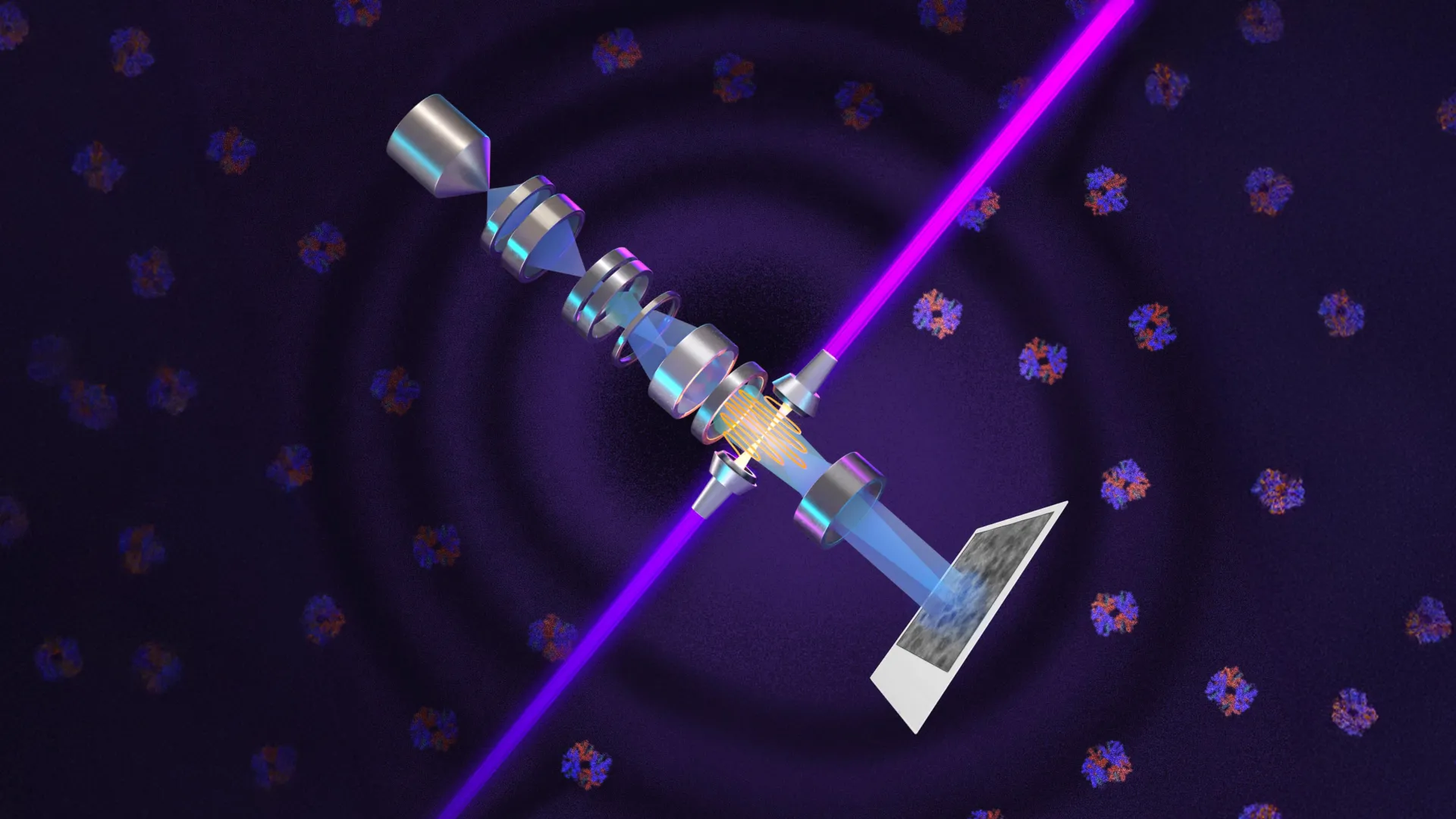
To mitigate these limitations, Vir utilizes its PRO-XTEN technology. This platform is specifically engineered to extend the circulating half-life of a TCE molecule in the bloodstream while simultaneously acting as a molecular shield to prevent premature activation. The therapeutic molecule remains inert as it circulates through the body and is designed to activate selectively only when it encounters the unique chemical environment of the tumor microenvironment. Vir hypothesizes that this targeted activation will translate into an improved toxicity profile, allowing for higher, more consistent dosing schedules compared to legacy solid tumor-focused immunotherapies.
Complementing the PRO-XTEN platform is Vir’s artificial intelligence (AI)-enabled dAIsY platform. This proprietary system allows scientists to rapidly design, screen, and optimize TCE candidates across multiple structural and functional parameters simultaneously. By combining computational biology with robust protein engineering, Vir can accelerate the generation of differentiated drug candidates, reducing the timeline from initial concept to preclinical validation.
Official Statements and Industry Perspectives
Corporate leadership from both organizations emphasized the transformative potential of the collaboration for the future of cancer immunotherapy. Marianne De Backer, President and Chief Executive Officer of Vir Biotechnology, underscored the strategic significance of the agreement during investor announcements regarding the partnership.
"We believe TCEs have a powerful role to play in the future of immunotherapy to treat cancer," stated De Backer. "This collaboration with Gilead provides an opportunity to generate multiple differentiated candidates aimed at difficult-to-address solid tumours and to expand the potential impact of our science, while also advancing our own clinical oncology portfolio."
While Gilead executives did not issue extensive standalone commentary at the exact hour of the signing, the sheer financial magnitude of the $1.74 billion milestone structure and the $90 million upfront capital allocation signal a deep corporate conviction in the clinical viability of Vir’s technological platforms. The deal also aligns with Gilead’s broader corporate strategy to aggressively diversify its oncology portfolio beyond its established leadership in antibody-drug conjugates (ADCs) and cell therapies.
Broader Industry Context: The Ascendance of TCEs
The transaction between Gilead and Vir is emblematic of a broader, highly competitive wave of mergers, acquisitions, and licensing deals sweeping across the global pharmaceutical sector as major players race to secure promising TCE assets. While T-cell engagers initially achieved monumental clinical and commercial validation within hematological malignancies—specifically in relapsed and refractory multiple myeloma and various forms of leukemia—the current pharmaceutical frontier focuses on translating this success into solid tumor indications.
The clinical validation of TCEs in blood cancers has catalyzed significant capital allocation across the industry. Over the past twelve months, major pharmaceutical companies have committed billions of dollars to secure early- and mid-stage TCE assets. Notable transactions include GSK’s licensing partnership with Chimagen for multiple myeloma therapies, Bristol Myers Squibb’s (BMS) discovery collaboration with Oxford BioTherapeutics, and UCB’s multi-billion-dollar acquisition strategies in the autoimmune space.
Furthermore, Vir itself has actively expanded its network of pharmaceutical partners. In addition to its sprawling alliance with Gilead, Vir recently established a high-profile co-development and commercialization agreement with Astellas Pharma for VIR-5500, a clinical-stage TCE currently undergoing Phase I evaluation for the treatment of advanced prostate cancer.
Autoimmunity and Beyond: A Diversifying Modality
Although oncology remains the primary focal point of the Gilead-Vir agreement, the pharmaceutical industry is increasingly applying TCE technology to immunology and autoimmune diseases. Companies such as Sanofi and Boehringer Ingelheim have actively carved out positions in this emerging subsector. Sanofi executed a strategic licensing agreement with Kali Therapeutics to acquire rights to novel assets, while Boehringer Ingelheim forged a pact with CDR-Life to secure trispecific, autoimmune-focused TCE candidates.
For Gilead, the dual-pronged approach of targeting both autoimmune diseases—through the acquisition of Ouro Medicines—and solid tumors—through the expanded partnership with Vir—illustrates a comprehensive institutional strategy. By establishing dominant intellectual property positions across multiple disease modalities, Gilead aims to future-proof its revenue streams against impending patent cliffs on older legacy products.
Market Implications and Analytical Outlook
Market analysts tracking the oncology sector view the Gilead-Vir partnership as a bellwether for the maturation of protein-engineering technologies. According to recent market intelligence reports from GlobalData, the parent company of Pharmaceutical Technology, the clinical landscape for TCEs is projected to undergo rapid expansion, fundamentally reshaping treatment paradigms in oncology and immunology alike. GlobalData analysts have specifically highlighted that novel T-cell engagers are poised to disrupt existing standards of care in relapsed and refractory multiple myeloma, with projected global sales anticipated to reach multi-billion-dollar milestones by the end of the decade.
However, translating the success of TCEs from liquid tumors to solid tumors remains a formidable scientific challenge. Solid tumors present physical and biological barriers, including dense extracellular matrices, immunosuppressive microenvironments, and a lack of highly specific tumor-associated antigens that do not also appear on healthy tissues. Consequently, platforms like Vir’s PRO-XTEN—which relies on dual-masking and localized activation—are viewed by translational researchers as crucial technological innovations necessary to overcome these barriers.
As the collaboration progresses from the preclinical discovery phase toward investigational new drug (IND) enabling studies and eventual human clinical trials, the scientific community will closely monitor the performance of Vir’s engineered candidates. Success in this endeavor could not only validate the utility of AI-driven protein engineering in oncology drug discovery but also cement Gilead’s status as a dominant force in the next generation of cancer immunotherapy.