In a finding that fundamentally challenges forty years of prevailing scientific consensus, researchers at the University of Warwick have revealed that a widely studied class of high-temperature superconductors possesses a deeply complex, non-uniform internal architecture. Long assumed by the global physics and chemistry communities to feature a homogeneous crystal structure throughout their entire bulk, these critical materials instead harbor a sophisticated mosaic of distinct atomic arrangements. The breakthrough, achieved through an advanced three-dimensional imaging technique akin to a medical computed tomography (CT) scan, exposes hidden structural anomalies that may actively impede electrical performance and force a comprehensive re-evaluation of decades of theoretical models.
The discovery, detailed in a study published in the peer-reviewed journal Physical Review Letters, was led by scientists within the Department of Chemistry at the University of Warwick working in close collaboration with the European Synchrotron Radiation Facility (ESRF) located in Grenoble, France. The investigation centered specifically on cuprates—complex copper oxide compounds that exhibit superconductivity at unusually high temperatures, relative to traditional metallic superconductors, though still requiring cryogenic cooling. The implications of this research extend far beyond academic curiosity, offering fresh pathways to understanding why certain materials underperform and potentially illuminating routes toward engineering superior superconductors for next-generation energy grids, ultra-powerful electromagnets, advanced medical diagnostic hardware, and fault-tolerant quantum computing architectures.
The Chronology of a Four-Decade Scientific Paradigm
To fully comprehend the magnitude of the Warwick team’s findings, it is necessary to examine the historical trajectory of high-temperature superconductivity research. Superconductivity itself—the phenomenon wherein electrical current flows through a material with zero electrical resistance and complete expulsion of magnetic fields—was first discovered by Dutch physicist Heike Kamerlingh Onnes in 1911 when he cooled mercury to roughly 4 kelvins (-269 degrees Celsius). For decades, practical applications were severely limited because superconductivity only manifested at temperatures near absolute zero, requiring expensive and cumbersome liquid helium refrigeration.
The paradigm shifted dramatically in 1986 when physicists Georg Bednorz and K. Alex Müller, working at the IBM Zurich Research Laboratory, discovered superconductivity in a lanthanum barium copper oxide ceramic at a comparatively balmy 35 kelvins. This breakthrough earned them the Nobel Prize in Physics in 1987 and sparked a global scientific gold rush. Researchers rapidly identified other cuprate families with critical temperatures surpassing the boiling point of liquid nitrogen (77 kelvins or -196 degrees Celsius), opening the door to far more accessible industrial and technological applications.
Throughout this rapid acceleration of research spanning the late 1980s, the 1990s, and into the twenty-first century, the foundational theoretical framework adopted by experimentalists and theorists alike relied upon a simplifying assumption: that cuprate crystals were internally uniform. When bulk measurements—such as electrical resistivity, magnetic susceptibility, and heat capacity—were recorded, they were interpreted under the premise that every microscopic domain of the crystal shared an identical atomic lattice structure. While minor chemical doping and local defects were acknowledged, the macro-structure was universally modeled as homogeneous.
This forty-year consensus remained largely unchallenged because traditional characterization tools lacked the spatial resolution required to peer deep inside bulky single crystals non-destructively. Standard laboratory X-ray diffraction and surface-probe microscopies could analyze surface topographies or provide averaged structural data across large volumes, but they could not construct a localized, three-dimensional internal map of atomic displacements. The Warwick-led study marks the definitive end of this long-standing uniformity hypothesis, establishing that the interior of these materials is structurally heterogeneous on a scale that directly impacts their macroscopic physical properties.
Advanced 3D Imaging and the Technical Breakthrough
The ability to peer beneath the surface of these cuprate crystals was made possible by recent technological leaps in high-energy X-ray science, specifically utilizing a €150 million major upgrade completed at the European Synchrotron Radiation Facility (ESRF). Known as the ESRF-Extremely Brilliant Source (ESRF-EBS), this facility produces X-ray beams of unprecedented brilliance and coherence, enabling researchers to probe matter with spatial resolutions previously thought unachievable.
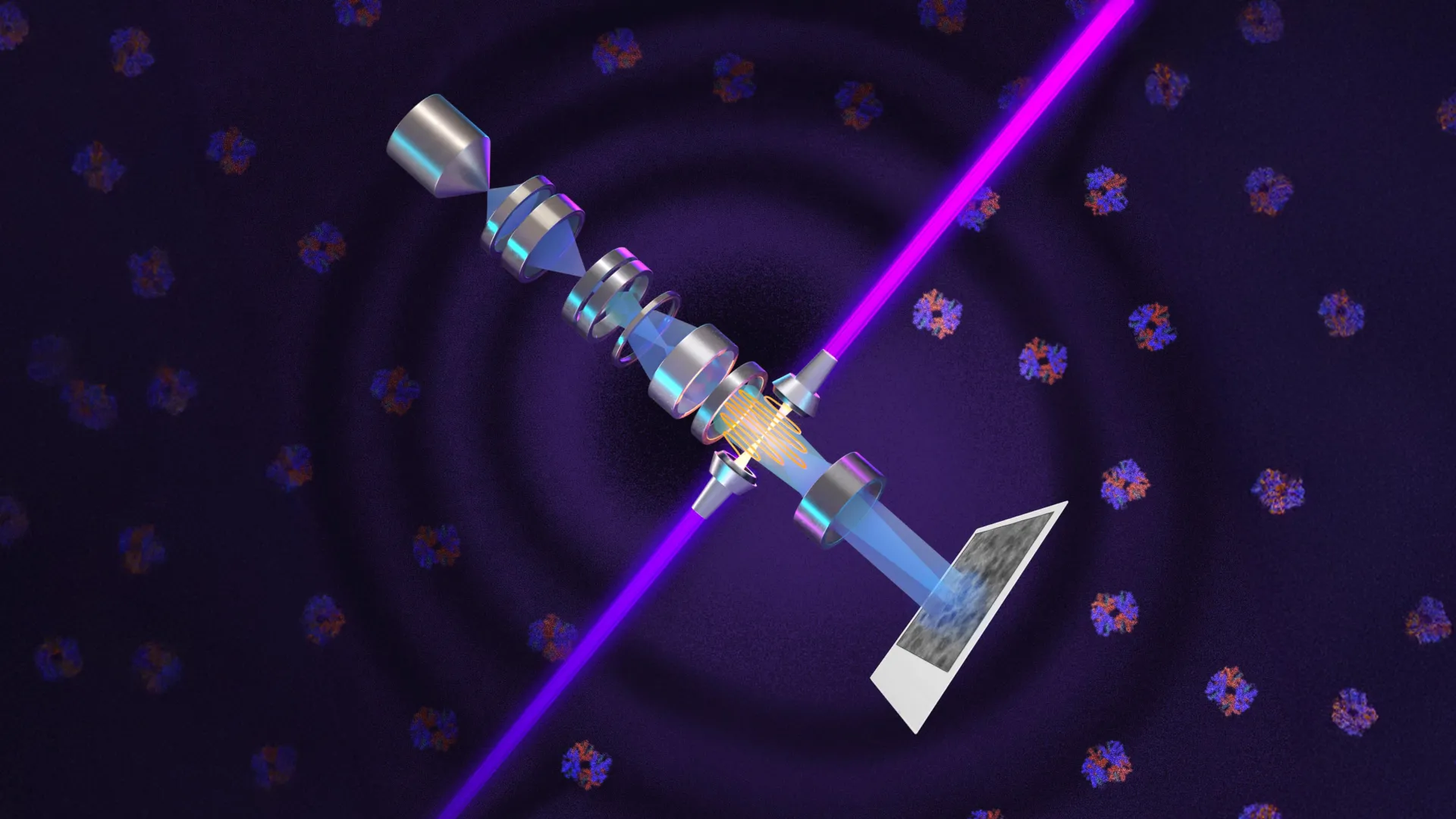
Using scanning three-dimensional X-ray diffraction, the research team directed these intense, highly focused X-ray beams through the superconductor samples. By rotating the crystal and recording the diffraction patterns of the scattered X-rays at various angles—the exact mathematical and computational principle underlying medical CT scanners used in hospitals—the scientists reconstructed a volumetric map of the material’s interior. Instead of visualizing biological tissues, bones, or blood vessels, however, the algorithm mapped the precise three-dimensional coordinates of atomic positions and lattice distortions deep within the crystalline matrix.
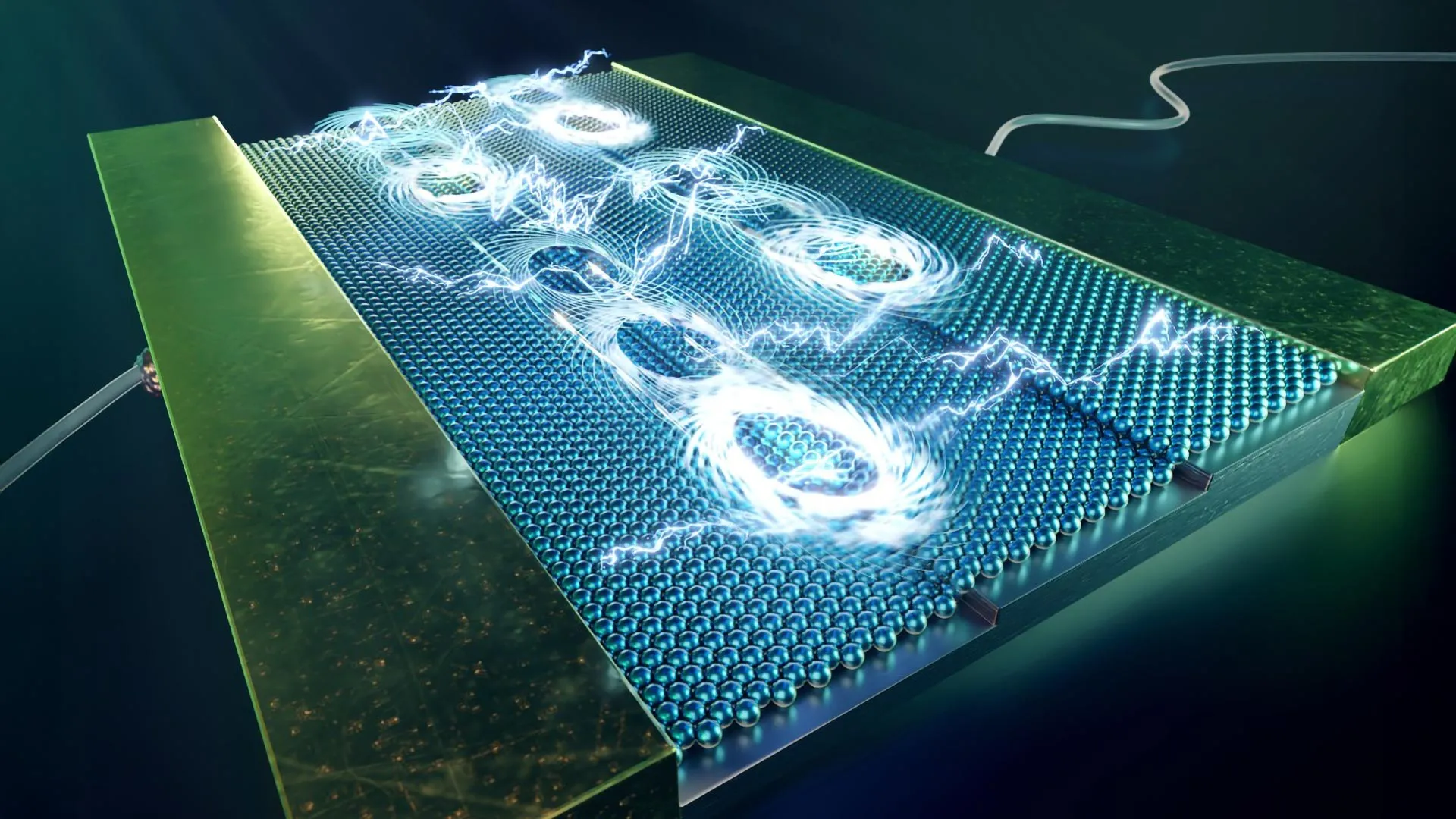
The resulting data revealed a startling internal landscape. Far from possessing a single, uniform crystal structure, the cuprates analyzed by the Warwick team displayed a intricate patchwork quilt of regions containing two slightly different atomic arrangements. Even more surprising to the researchers was the physical nature of the boundaries dividing these distinct micro-regions.
In conventional materials science, phase boundaries or grain boundaries are typically narrow interfaces spanning just a few atoms or nanometers. In these high-temperature superconductors, however, the transition zones separating the different atomic arrangements were found to be hundreds of times wider than anticipated. These excessively broad boundary regions do not merely act as passive dividing lines; their spatial extent is so vast that they effectively constitute distinct structural phases in their own right.
Official Responses and Expert Analysis
Professor Mark Senn, who spearheaded the investigation within the University of Warwick’s Department of Chemistry, emphasized the profound theoretical implications of the discovery during interviews following the publication of the paper.
"For forty years, the working assumption has been that these materials are the same all the way through, and nearly all the theory is built on that picture," Professor Senn stated. "We’ve shown it doesn’t hold. The crystal is fundamentally patchworked and textured, with unusually wide boundary regions that likely work against superconductivity rather than just sitting alongside it."
Senn elaborated on how this structural complexity changes the interpretation of historical experimental data. For decades, discrepancies between theoretical predictions and experimental bulk measurements have puzzled condensed matter physicists. Theorists frequently had to introduce complex mathematical parameters to account for why real-world superconductors failed to achieve the theoretical maximum critical current densities or transition temperatures predicted by idealized models. The revelation that internal structural boundaries actively disrupt the superconducting state offers a tangible, physical mechanism for these performance bottlenecks.
"This might explain why some materials perform better than others and means some existing bulk measurements will need to be reinterpreted and future theoretical models built that incorporate this structural complexity," Senn added.
Independent materials scientists not directly involved in the study have echoed these sentiments, noting that the findings establish a new methodological standard for characterizing quantum materials. While the initial study focused on specific copper-based superconductors, leading researchers believe that similar hidden structural patchworks may be pervasive across other classes of unconventional superconductors, including iron-based pnictides and hydride materials subjected to extreme pressures to achieve superconductivity at room temperature.
Broader Impact, Material Science Implications, and Future Technologies
The validation of internal structural complexity in cuprates carries far-reaching consequences for both fundamental physics and industrial engineering. By demonstrating that internal boundaries actively interfere with the seamless flow of Cooper pairs—the bound pairs of electrons responsible for superconductivity—the research provides a concrete target for material synthesis and manufacturing optimization.
Currently, commercial application of high-temperature superconductors remains constrained by manufacturing challenges. Synthesizing long, flexible wires of cuprate ceramics (such as Yttrium Barium Copper Oxide, or YBCO) capable of carrying massive currents without energy loss is notoriously difficult due to grain boundaries and microscopic defects that act as barriers to current flow. If metallurgists and materials engineers can learn to control, minimize, or eliminate the newly discovered wide boundary regions during the crystal growth process, the resulting materials could exhibit substantially higher critical current densities and improved mechanical reliability.
The economic and technological stakes are immense. Zero-resistance power transmission grids could eliminate the estimated 5% to 10% of electrical energy lost to thermal dissipation during transmission over long-distance power lines. In the medical sector, ultra-high-field magnetic resonance imaging (MRI) machines enabled by superior superconducting magnets could provide unprecedented diagnostic clarity at lower operational costs. Furthermore, the burgeoning field of quantum computing relies heavily on superconducting circuits (such as Josephson junctions) to build qubits that are exceptionally sensitive to external electromagnetic noise; understanding and engineering out atomic-scale structural variations could dramatically improve qubit coherence times and scaling potential.
Ultimately, the Warwick study underscores a vital lesson for modern materials science: microscopic perfection cannot be assumed simply because macroscopic measurements appear consistent. As next-generation synchrotron facilities and advanced electron microscopy continue to push the boundaries of spatial and temporal resolution, researchers are equipped to look inside materials with unprecedented clarity. By bridging the gap between atomic-scale structural anomalies and macroscopic quantum phenomena, this discovery paves the way for a rigorous, empirically grounded renaissance in the engineering of high-temperature superconductors.