A groundbreaking scientific study has unveiled a profound genetic connection between the critically endangered Old Irish Goat and its ancestors who roamed Ireland approximately 3,000 years ago during the Late Bronze Age. This remarkable finding, led by a collaborative effort between University College Dublin and Queen’s University Belfast, with contributions from international researchers, provides compelling evidence that the Old Irish Goat represents an unbroken lineage, a living testament to Ireland’s ancient agricultural heritage stretching back millennia. The research, meticulously detailed in the prestigious Journal of Archaeological Science, offers an unprecedented perspective on the island’s long and complex farming history and significantly bolsters the urgent case for conserving this rare native breed.
Unearthing Ancient Herds: The Oldest Goat Remains in Ireland
The pivotal discoveries that underpin this study stem from the scientific examination of ancient goat remains. Researchers meticulously analyzed bone fragments unearthed from two key archaeological sites: Haughey’s Fort in County Armagh, a significant hillfort dating back to approximately 1100-900 BCE (Before Common Era), and skeletal evidence recovered from the medieval settlement of Carrickfergus in County Antrim. Employing a sophisticated suite of scientific techniques, including radiocarbon dating, advanced genetic analysis, and protein testing, the research team successfully confirmed that the specimens from Haughey’s Fort constitute the oldest goat remains ever identified on the island of Ireland. This chronological marker is crucial, establishing a direct link to a period of significant early human settlement and agricultural development.
When the genomes of these ancient animals were meticulously compared with a comprehensive database of modern goat breeds from across the globe, a striking revelation emerged: the closest genetic match to these Bronze Age and medieval Irish goats was the Old Irish Goat, a breed currently facing critical endangerment. This congruence across thousands of years underscores the unique genetic integrity of the Old Irish Goat.
"By integrating genetics, proteomics, and archaeological science, we have been afforded a remarkable glimpse into the animals that inhabited our lands hundreds and thousands of years ago," stated Assistant Professor Kevin Daly, a co-lead author from the School of Agriculture and Food Science at University College Dublin. "This research illuminates how their descendants likely continue to live among us today, forming an integral part of our biocultural heritage."
A Legacy in Folklore and Farming: The Enduring Spirit of the Wild Irish Goat
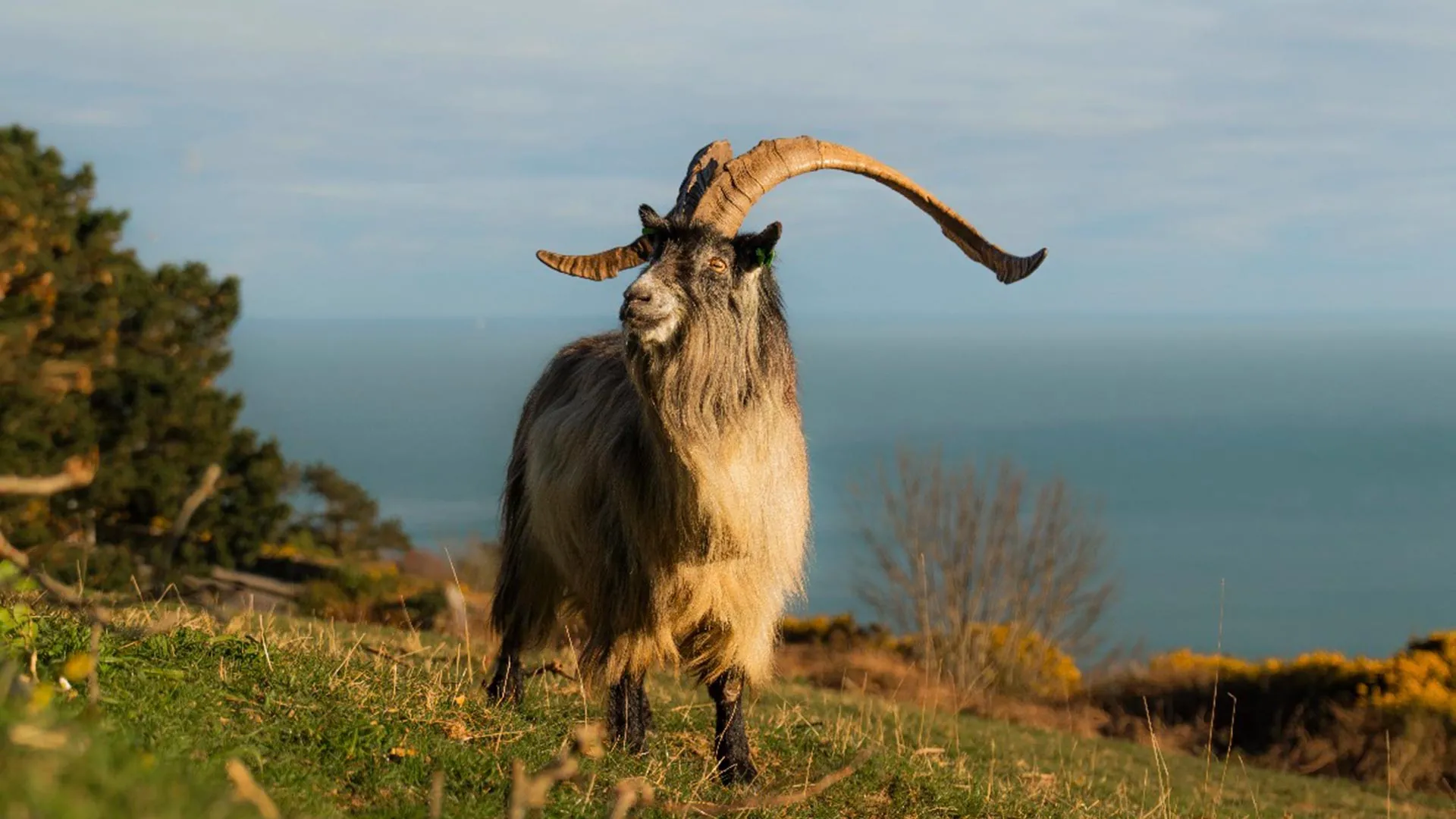
Historically referred to in Gaelic as ‘an Gabhar Fiáin,’ meaning ‘the wild goat,’ the Old Irish Goat occupies a distinctive and cherished place within the fabric of Irish folklore and cultural identity. Today, these resilient animals persist in small, semi-wild or feral herds across the Irish landscape. For generations, they have been a potent symbol of resilience, embodying the spirit of rural life and the tenacity required to thrive in challenging environments. Their value was historically rooted in their hardiness, their exceptional ability to graze on marginal lands unsuitable for other livestock, and the nutrient-dense milk they provided, which was a vital resource for smallholder farmers and rural communities.
While cattle often command a more prominent role in Ireland’s grand mythological narratives, goats have historically found their place in the more localized traditions, community customs, and seasonal practices that shape the rhythm of rural life. One of the most enduring and widely recognized cultural connections to the goat is the Puck Fair, held annually in Killorglin, County Kerry. This festival, widely considered one of Ireland’s oldest, has a tradition deeply intertwined with the goat.
Each August, the lore dictates that a wild goat is captured from the surrounding mountains and ceremonially crowned "King Puck," presiding over three days of vibrant festivities. While the precise origins of the Puck Fair remain a subject of historical debate, its enduring popularity clearly reflects the goat’s profound and multifaceted ties to Ireland’s natural landscape, its agricultural past, and its very community identity.
"Despite the passage of thousands of years, the dramatic shifts in agricultural practices, and the recent significant decline in their numbers, these goats have remarkably retained a strong genetic connection to their ancient ancestors and to the island’s agricultural legacy," observed Dr. Jolijn Erven, another co-lead author of the study.
Overcoming Challenges in the Archaeological Record: The Case of the Elusive Goat
Professor Eileen Murphy, a co-lead author from Queen’s University Belfast, highlighted a persistent challenge in archaeological research that has historically led to the underrepresentation of goats. "Goats tend to be overlooked in archaeological contexts compared to sheep," she explained. "This is primarily because their skeletal remains are notoriously difficult to distinguish from those of sheep, making definitive identification a significant hurdle."
She further elaborated on the prevailing academic assumption: "There has long been an assumption that sheep would have been more economically important than goats in ancient Ireland. However, historical sources suggest that herds of goats may have been quite significant, potentially maintained to supply a burgeoning trade in skins, particularly from coastal ports such as Carrickfergus." The current study, through its advanced analytical methods, directly challenges these long-held assumptions by providing concrete genetic evidence of goat presence and continuity.
Precision Science: Protein Fingerprinting and Genetic Analysis Illuminate the Past
To ensure the accuracy of their findings and to definitively identify the species of the ancient remains, the researchers employed a cutting-edge technique known as protein fingerprinting, or ZooMS (Zooarchaeology by Mass Spectrometry). This method allows scientists to identify species by analyzing minute traces of preserved collagen found in even the smallest bone fragments. This initial step was crucial in differentiating goat bones from those of other similar species.
Following successful species identification, the team proceeded to extract and sequence ancient DNA (aDNA) from the confirmed goat remains. This genetic material was then rigorously compared with the genomes of hundreds of modern goat breeds sourced from diverse geographical regions around the world. The comprehensive analysis yielded unambiguous results: both the prehistoric specimens from the Late Bronze Age and the medieval remains from Carrickfergus exhibited their closest genetic affinity to the Old Irish Goat of today. This finding points to a striking and continuous presence of distinct goat populations on the island for well over three millennia, a testament to their enduring adaptation to the Irish environment.
A Modern Genetic Bottleneck: Concerns for the Future of the Old Irish Goat
While the study celebrates the deep historical roots of the Old Irish Goat, it also casts a light on more recent and concerning developments regarding the breed’s genetic diversity. The research revealed that medieval goats, as evidenced by the Carrickfergus remains, displayed a considerably broader range of genetic variation compared to their modern counterparts. In stark contrast, contemporary Old Irish Goats exhibit clear and significant signs of inbreeding.
Scientists attribute this pattern of reduced genetic diversity to a sharp and dramatic population decline that the breed has experienced in recent decades. This indicates that the current genetic bottleneck is a relatively recent phenomenon, rather than a long-standing characteristic of Irish goat populations throughout history. The implications of this inbreeding are significant, potentially impacting the breed’s long-term health, resilience, and adaptability.
"This research represents a monumental milestone for the Old Irish Goat, offering powerful scientific validation for what local communities and dedicated conservationists have long believed and championed – that the Old Irish Goat is a living, breathing piece of our ancient heritage," stated Sinead Keane, a representative from The Old Irish Goat Society. "Furthermore, it underscores the critical urgency of protecting this critically endangered breed. Within its genetic makeup lies a living record of Ireland’s ancient past."
Keane further emphasized the transformative impact of scientific advancements: "The progress in biomolecular and genetic analysis is incredibly exciting. It has now opened up a new avenue for revisiting Ireland’s archaeological and archaeogenetic records, which may, in time, reveal that Ireland’s early goat history is even more extensive and richer than we currently understand."
The scientific community also acknowledges the profound contributions of Dr. Judith Findlater from Queen’s University Belfast, a co-lead author who sadly passed away before the publication of this significant study. Portions of the groundbreaking research were conducted as part of her doctoral work, focusing specifically on the animal remains from Medieval Carrickfergus, laying a crucial foundation for the broader findings.
Implications for Conservation and Heritage
The scientific validation of the Old Irish Goat’s ancient lineage carries significant implications beyond academic interest. It provides a robust scientific basis for conservation efforts, strengthening the argument for increased funding and support for initiatives aimed at preserving the breed. The Old Irish Goat is not merely an animal; it is a living genetic archive, a tangible link to the practices and resilience of early agricultural societies in Ireland.
The findings also prompt a re-evaluation of historical assumptions about the relative importance of different livestock species in ancient Ireland. The genetic evidence suggests that goats played a more significant and continuous role than previously acknowledged, particularly in the context of trade and resource utilization.
As scientific methodologies continue to advance, the potential for further discoveries regarding Ireland’s animal heritage is immense. This study serves as a powerful precedent, demonstrating the invaluable insights that can be gained by combining traditional archaeological practices with cutting-edge biomolecular techniques. The Old Irish Goat, once a common sight on the Irish landscape, now stands as a poignant symbol of both a rich past and a future that depends on dedicated conservation efforts to safeguard its irreplaceable genetic legacy.