The automotive industry stands on the precipice of a significant materials crisis that, if left unaddressed, could undermine the sustainability goals of the next generation of transportation. Within the next decade, a massive influx of aluminum from vehicle body panels is projected to enter global recycling and salvage systems, yet current metallurgical limitations prevent this material from being repurposed into high-value structural components. Addressing this challenge, researchers at the Department of Energy’s (DOE) Oak Ridge National Laboratory (ORNL) have announced the development of RidgeAlloy, a breakthrough aluminum alloy designed specifically to convert low-value recycled scrap into a reliable, high-performance source for domestic manufacturing.
Aluminum’s inclusion on the DOE’s critical materials list underscores its vital role in the modern energy economy. It is an essential element in the manufacturing of electric vehicle (EV) battery housings, lightweight chassis, and renewable energy infrastructure. However, the United States remains heavily reliant on primary aluminum—metal produced from mined ore—which is both energy-intensive to produce and subject to international supply chain fluctuations. The introduction of RidgeAlloy marks a pivotal shift toward a circular economy, potentially reducing the energy requirements for part processing by up to 95% compared to the use of primary aluminum.
The Impending Scrap Wave: A Legacy of the 2015 Lightweighting Shift
The urgency behind the development of RidgeAlloy is rooted in a fundamental shift in automotive engineering that began approximately a decade ago. In 2015, the industry witnessed the large-scale adoption of aluminum-intensive designs, most notably with the Ford F-150 truck series. By replacing traditional steel with high-strength aluminum alloys, manufacturers were able to shed hundreds of pounds of vehicle weight, improving fuel efficiency for internal combustion engines and extending the range of burgeoning EV platforms.
As these 2015-era and subsequent aluminum-heavy models reach the end of their operational lifespans in the early 2030s, North American recycling streams are expected to be inundated. Estimates suggest that as much as 350,000 tons of aluminum body sheet scrap will enter the market annually. Under current industrial practices, this material is frequently "downcycled"—melted down and used for non-structural applications like engine blocks—or exported as low-grade scrap. The primary barrier to higher-value reuse is contamination. During the vehicle shredding and recovery process, aluminum becomes intermingled with small amounts of iron from rivets, fasteners, and other steel components. Even minute concentrations of iron can render traditional aluminum alloys brittle, preventing them from meeting the rigorous safety and crashworthiness standards required for structural automotive parts.
Engineering the Solution: The Science Behind RidgeAlloy
To overcome the "iron contamination" hurdle, the ORNL team utilized a sophisticated suite of computational and experimental tools. The development of RidgeAlloy was not a result of traditional trial-and-error metallurgy, which can take decades to produce a viable new material. Instead, the team employed high-throughput computing to perform over two million calculations, predicting the behavior of various elemental combinations at the atomic level.
"The team advanced from a paper concept to a successful, full-scale part demonstration of a new alloy in only 15 months," noted Allen Haynes, director of ORNL’s Light Metals Core Program. This accelerated timeline was made possible by the laboratory’s unique ability to integrate theoretical modeling with advanced physical analysis.
A critical component of this research involved the use of the Spallation Neutron Source (SNS), a DOE Office of Science user facility. By utilizing neutron diffraction experiments, researchers were able to observe the internal structure of the alloy as it cooled and solidified. Unlike X-rays, which can struggle to penetrate dense metals, neutrons can pass through materials to provide a clear picture of atomic-scale changes. This allowed the ORNL team to understand exactly how impurities like iron and silicon influence the performance of the alloy and, more importantly, how to neutralize their negative effects through the precise addition of elements like magnesium and manganese.
The resulting RidgeAlloy formula is a complex chemistry that maintains high ductility and strength even when higher-than-normal levels of iron are present. By controlling the formation of intermetallic compounds during the casting process, the researchers ensured that the recycled metal remains resilient under the high-stress conditions of a vehicle crash.
Industrial Validation: From Laboratory to the Factory Floor
The transition of RidgeAlloy from a computer model to a tangible automotive component required collaboration with industrial partners to ensure the material’s viability in real-world manufacturing environments. The testing phase involved a multi-state supply chain demonstration that mirrored the complexities of modern automotive production.
The process began in Chicago with PSW Group’s Trialco Aluminum, which produced recycled aluminum ingots. These ingots were formulated using mixed automotive body sheet scrap, intentionally including the types of contaminants common in the recycling stream, to match the RidgeAlloy design specifications. These ingots were then transported to Falcon Lakeside Manufacturing in Michigan.
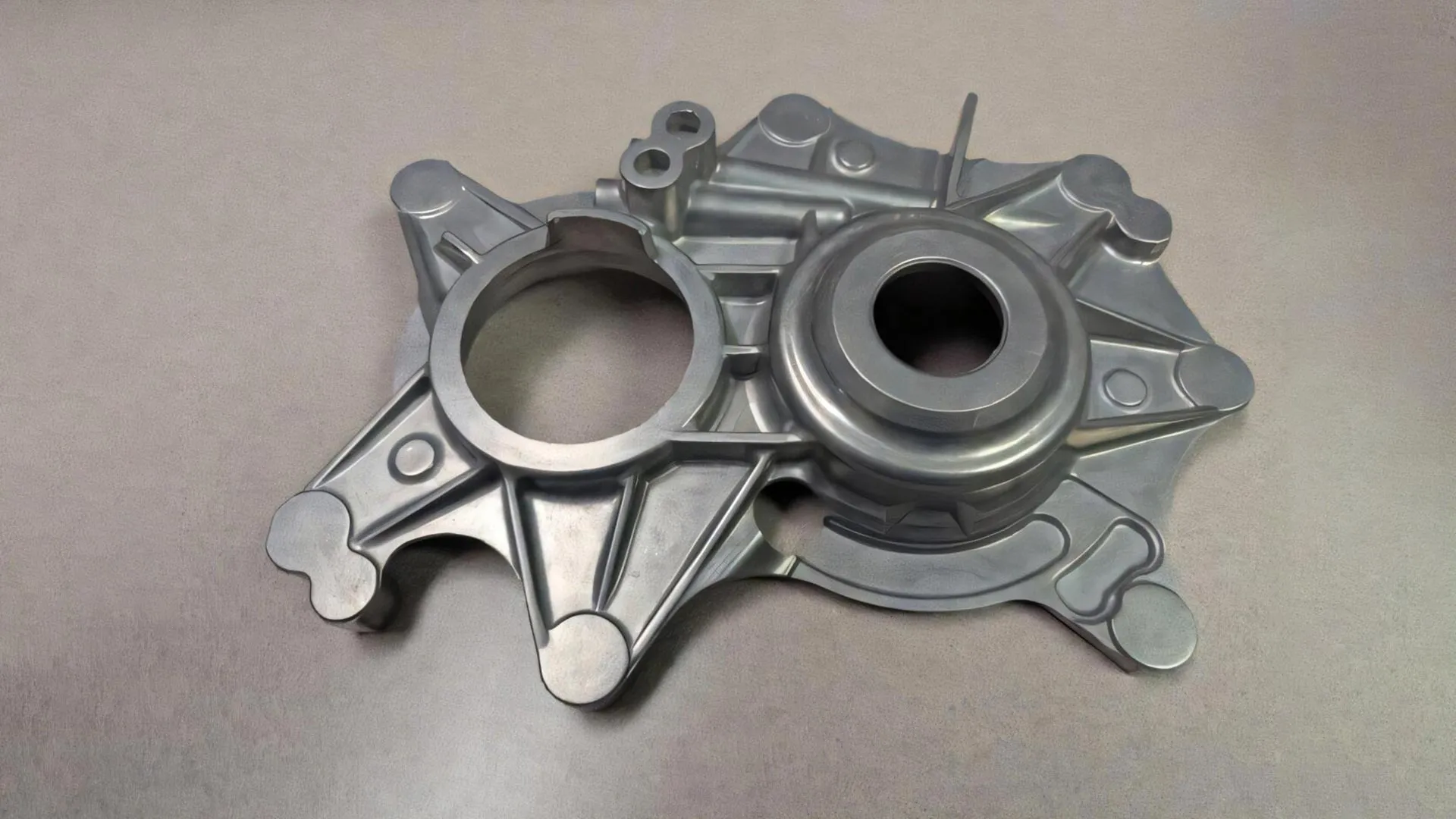
At the Michigan facility, the RidgeAlloy ingots were melted and processed using high-pressure die casting—a standard industrial technique for producing complex metal parts. The team successfully cast a medium-sized automotive component, proving that the alloy could flow into complex molds and solidify without the defects that typically plague high-impurity recycled metals.
"The part we chose was medium-sized and moderately complex," said Alex Plotkowski, ORNL group leader of Computational Coupled Physics. "The ultimate goal is to eventually cast larger parts, perhaps even automotive giga-castings, but this is the first step." The success of this pilot demonstrates that RidgeAlloy is not merely a laboratory curiosity but a commercially viable material ready for industrial scaling.
Economic and Environmental Implications of Domestic Recycling
The development of RidgeAlloy arrives at a critical juncture for U.S. industrial policy. Currently, the United States imports a significant portion of its primary aluminum, leaving the domestic automotive sector vulnerable to geopolitical instability and shipping disruptions. By tapping into the domestic "urban mine" of scrap vehicles, RidgeAlloy offers a path toward greater material independence.
From an environmental perspective, the benefits are even more pronounced. The production of primary aluminum through the Hall-Héroult process is notoriously energy-intensive, requiring massive amounts of electricity to extract aluminum from bauxite ore. In contrast, remelting existing scrap requires only a fraction of that energy. Amit Shyam, leader of ORNL’s Alloy Behavior and Design Group, emphasized that using remelted scrap instead of primary aluminum can result in a 95% reduction in the energy required to process a part. For automotive manufacturers under pressure to reduce their "Scope 3" carbon emissions—those generated within their supply chains—RidgeAlloy provides a ready-made solution for decarbonizing the vehicle production process.
Strategic Impact on the 2030 Supply Chain
As the 2030 deadline for the first major wave of aluminum-intensive vehicle scrappage approaches, RidgeAlloy is positioned to redefine the value of recycled metal. Historically, the unpredictability of scrap chemistry meant that recycled aluminum was sold at a steep discount compared to primary metal. RidgeAlloy changes this economic equation by providing a consistent, high-performance destination for that scrap.
Industry analysts suggest that if RidgeAlloy is adopted at scale, it could enable recycled structural aluminum castings at volumes equal to at least half of the current annual primary aluminum production in the United States. This would not only lower manufacturing costs by reducing the need for expensive primary ingots but also create a more robust market for domestic recyclers and shredders.
Furthermore, the technology’s impact is expected to ripple beyond the passenger vehicle market. The ORNL team has identified several "spillover" sectors where RidgeAlloy could be applied:
- Aerospace: Reducing the cost of non-critical structural components in aircraft.
- Agriculture and Heavy Equipment: Providing lightweight, corrosion-resistant parts for tractors and machinery.
- Marine Vehicles: Utilizing the alloy’s inherent corrosion resistance for jet skis and boat components.
- Power Generation: Implementing the material in mobile power units and renewable energy hardware.
Conclusion and Future Directions
The RidgeAlloy project was supported by the DOE’s Office of Energy Efficiency and Renewable Energy, specifically through the Vehicle Technologies Office Lightweight Metals Core Program. The multidisciplinary team—comprising Alex Plotkowski, Amit Shyam, Allen Haynes, Sunyong Kwon, Ying Yang, Sumit Bahl, Nick Richter, Severine Cambier, Alice Perrin, and Gerry Knapp—has demonstrated how national laboratories can bridge the gap between fundamental science and industrial application.
As the automotive industry continues its transition toward electrification and higher sustainability standards, the ability to close the loop on material lifecycles will become a competitive necessity. RidgeAlloy represents more than just a new metal; it is a blueprint for how advanced computing and neutron science can solve the looming "scrap crisis," turning a potential waste problem into a strategic domestic asset. The next phase of research will likely focus on "giga-casting" applications, seeking to produce entire vehicle underbodies from recycled RidgeAlloy, further cementing the role of circular metallurgy in the future of American manufacturing.