In a significant departure from the microscopic and often inaccessible world of quantum laboratory experiments, physicists at New York University have successfully engineered a new form of matter known as a time crystal using sound waves to levitate and manipulate macroscopic particles. This breakthrough, published recently in the journal Physical Review Letters, introduces a system that is not only visible to the naked eye but also demonstrates a peculiar defiance of classical mechanical expectations, specifically regarding the reciprocity of forces. By utilizing a compact, hand-held acoustic levitator, the research team—led by Professor David Grier—has provided a tangible platform for studying complex temporal symmetries, potentially bridging the gap between theoretical physics and practical applications in quantum computing and biological modeling.
The Evolution and Nature of Time Crystals
To understand the magnitude of the NYU discovery, one must first look at the relatively brief but dense history of time crystal research. The concept was first proposed in 2012 by Nobel laureate Frank Wilczek. In classical crystallography, a crystal is defined by its repetitive spatial structure; atoms or molecules arrange themselves in a pattern that repeats across three-dimensional space. Wilczek hypothesized the existence of a "temporal" analog: a system where the particles spontaneously break "time-translation symmetry." In simpler terms, while a normal system reaches a state of equilibrium and remains static, a time crystal continues to move or "tick" in a repeating cycle indefinitely, without consuming net energy, even in its lowest energy state.
Initially met with skepticism and mathematical challenges, the first experimental confirmations of time crystals occurred roughly five years later, in 2017. Two independent teams—one led by Christopher Monroe at the University of Maryland and another by Mikhail Lukin at Harvard University—used trapped ions and "color centers" in diamonds, respectively, to prove that these phases of matter could exist. However, these early versions were confined to the quantum realm, requiring extreme cold or atomic-scale manipulation. The NYU experiment changes this paradigm by bringing the phenomenon into the macroscopic world of "soft matter," using materials as mundane as styrofoam beads.
Engineering the Acoustic Levitator
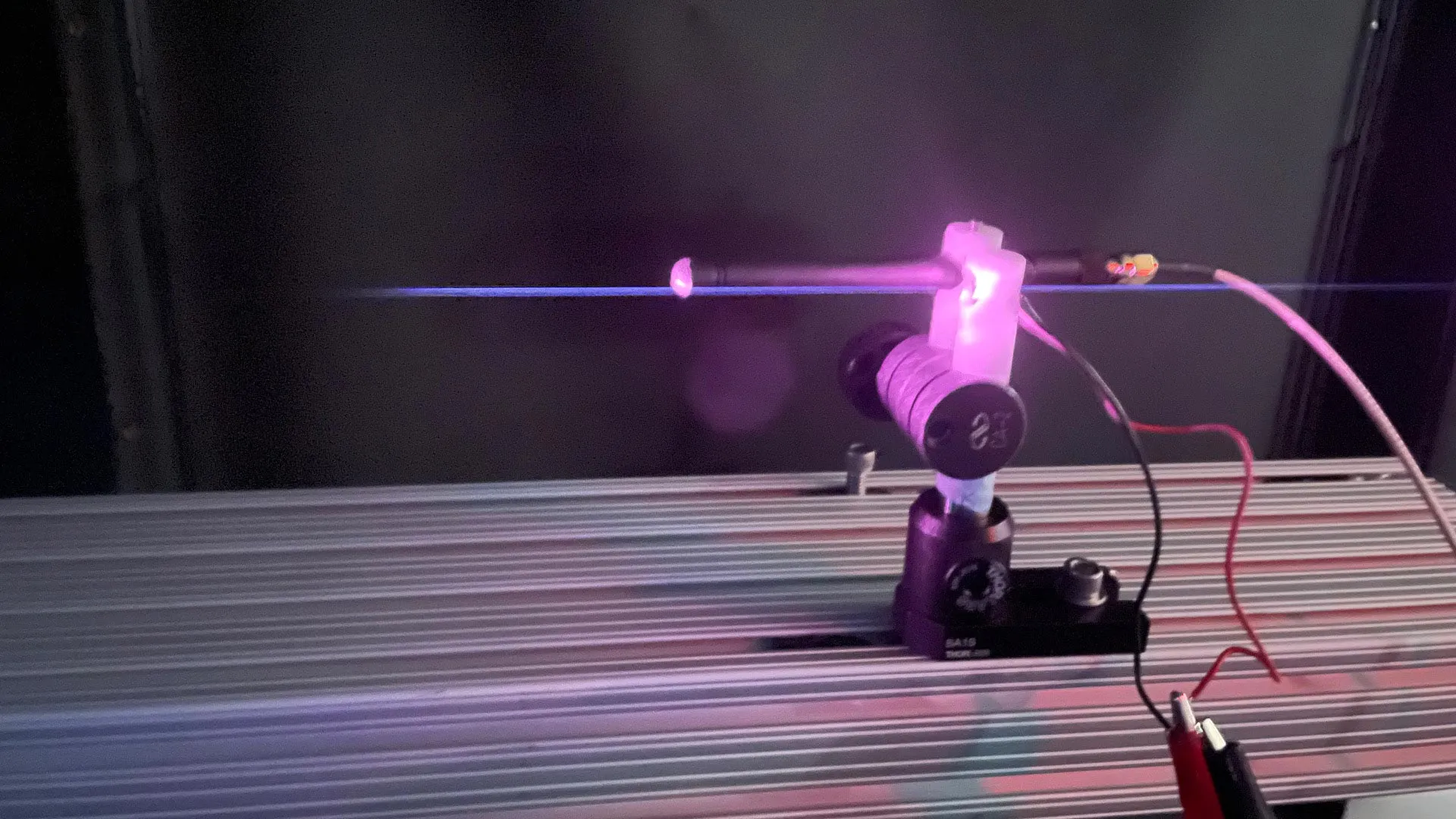
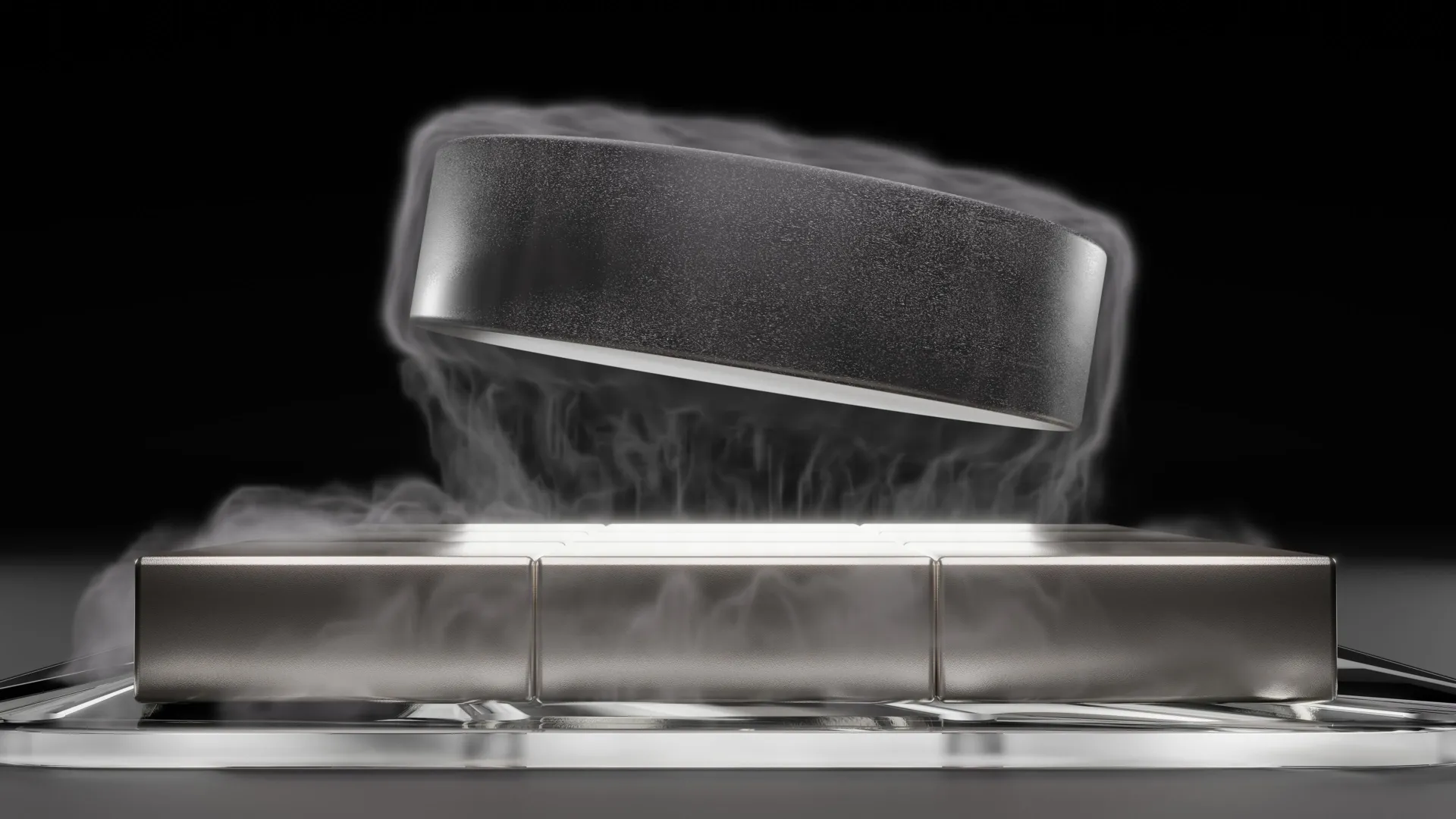
The NYU system is housed within a device approximately one foot tall, utilizing a technology known as acoustic levitation. This process relies on standing waves—stationary waves created by the interference of two waves traveling in opposite directions. At specific points called "nodes," the pressure of the sound waves is sufficient to counteract the force of gravity.
The team, which included graduate student Mia Morrell and undergraduate Leela Elliott, used small styrofoam beads as the "atoms" of their crystal. By placing these beads within the acoustic field, they were able to suspend them in mid-air. Unlike traditional crystals where atoms are held together by chemical bonds or electromagnetic forces, these beads interact through the scattering of sound waves. When sound hits a bead, it bounces off, creating a secondary wave that exerts a force on neighboring beads.
"Sound waves exert forces on particles—just like waves on the surface of a pond can exert forces on a floating leaf," explained Morrell. "We can levitate objects against gravity by immersing them in a sound field called a standing wave."
Breaking Newton’s Third Law: The Role of Nonreciprocity
The most scientifically provocative aspect of the NYU experiment is the observation of nonreciprocal interactions. In classical Newtonian physics, the Third Law of Motion states that for every action, there is an equal and opposite reaction. If Particle A exerts a force on Particle B, Particle B must exert an equivalent force back on Particle A.
In the NYU acoustic system, this symmetry is broken. The interactions between the styrofoam beads are governed by how they scatter the surrounding sound field. Because the beads are not identical—varying slightly in size and mass—the forces they exert on one another are uneven. A larger bead scatters more sound energy, thus exerting a more significant force on a smaller neighbor than the smaller neighbor can return.
"Think of two ferries of different sizes approaching a dock," Morrell noted. "Each one makes water waves that push the other one around—but to different degrees, depending on their size."
This imbalance creates a "nonreciprocal" force. Because the system is "driven" by the external energy of the sound waves (making it an "open" system rather than a closed, isolated one), it does not violate the fundamental laws of thermodynamics. However, it allows for the emergence of a time crystal phase where the particles begin to oscillate spontaneously. These oscillations occur at a steady, repeating frequency that is different from the frequency of the driving sound waves, a hallmark of time-translation symmetry breaking.
A Chronology of Time Crystal Milestones
The NYU research represents the latest chapter in a rapidly accelerating timeline of discovery:
- 2012: Frank Wilczek proposes the theoretical existence of time crystals, suggesting that matter could show periodic structures in time as well as space.
- 2015: Physicists Patrick Bruno and others argue against Wilczek’s original model, leading to a refined definition that requires an external "drive" to maintain the oscillation (Discrete Time Crystals).
- 2017: The first laboratory realizations are achieved using quantum systems (ion chains and nitrogen-vacancy centers in diamonds).
- 2019: Researchers begin exploring "dissipative" time crystals, which interact with their environment, moving closer to real-world conditions.
- 2021: Google, in collaboration with several universities, uses its Sycamore quantum processor to create a time crystal, demonstrating the phase’s stability within a quantum computing environment.
- 2024: The NYU team publishes their findings in Physical Review Letters, demonstrating a macroscopic, acoustic time crystal that operates at room temperature and is visible to the human eye.
Implications for Biology and Circadian Rhythms
Beyond the realm of pure physics, the NYU study offers profound insights into the biological sciences. The researchers suggest that the nonreciprocal interactions observed in their acoustic levitator mirror the complex biochemical cycles found in living organisms.
One of the most prominent examples is the circadian rhythm—the internal "clock" that regulates sleep, wakefulness, and metabolic processes in humans and other animals. These biological clocks are essentially oscillators that maintain a steady rhythm despite fluctuating environmental conditions. Many metabolic processes, such as the breakdown of glucose or the signaling between neurons, involve nonreciprocal steps where one chemical or cell triggers a response in another without a mirrored feedback loop.
By studying the "simple" model of styrofoam beads in a sound field, scientists can gain a better understanding of how complex, self-sustaining rhythms emerge in nature. This could lead to breakthroughs in chronobiology, potentially helping to treat sleep disorders or metabolic diseases by understanding the underlying physics of biological synchronization.
Technical Specifications and Data Summary
The NYU experiment stands out due to its accessibility and the clarity of its data. Key technical aspects include:
- Apparatus Scale: A handheld device, approximately 30 centimeters in height, utilizing ultrasonic transducers.
- Material: Expanded polystyrene (styrofoam) beads, chosen for their low density and high acoustic reflectivity.
- Interaction Medium: Air, through which ultrasonic waves (typically above 20 kHz) are propagated.
- Observation Method: High-speed videography and computer vision tracking to measure the precise displacement and frequency of the oscillating beads.
- Key Finding: The emergence of subharmonic oscillations, where the beads move at a fraction of the frequency of the acoustic drive, confirming the "time crystal" state.
Potential Technological Applications
While the NYU system is currently a tool for fundamental research, the implications for future technology are expansive.
Quantum Computing
One of the primary hurdles in quantum computing is "decoherence"—the tendency of quantum bits (qubits) to lose their information due to environmental interference. Because time crystals are inherently stable and repeat their patterns despite external noise, they are being investigated as a medium for "topological" quantum memory. A time crystal-based qubit could theoretically maintain its state for much longer periods than current technologies allow.
Advanced Data Storage
The ability of time crystals to maintain a "ticking" state without the constant input of corrective energy suggests a new way to store data. If the phase of a time crystal’s oscillation can be modulated to represent binary code, it could lead to high-density, low-power storage solutions that are resistant to the thermal fluctuations that plague traditional hard drives.
Sensing and Metrology
Because the oscillations in the NYU acoustic system are highly sensitive to the properties of the particles and the medium, similar setups could be used as ultra-precise sensors. They could detect minute changes in air pressure, temperature, or the presence of microscopic contaminants by monitoring shifts in the "ticking" frequency of the levitated particles.
Professional Perspectives and Industry Reaction
The physics community has reacted with cautious optimism to the NYU findings. Professor David Grier, the senior author of the paper and director of NYU’s Center for Soft Matter Research, emphasized the simplicity of the system as its greatest strength.
"Time crystals are fascinating not only because of the possibilities, but also because they seem so exotic and complicated," Grier stated. "Our system is remarkable because it’s incredibly simple."
External commentators have noted that while the NYU system is "classical" rather than "quantum," it provides a vital sandbox for testing theories of non-equilibrium thermodynamics. Dr. Robert Thompson, a researcher not involved in the study, noted that "bringing these exotic phases of matter out of the dilution refrigerator and onto a tabletop is a necessary step for the democratization of this science."
Conclusion: The Future of Soft Matter Physics
The work performed at New York University marks a transition for time crystal research from a theoretical curiosity of quantum mechanics to a tangible branch of soft matter physics. By demonstrating that time-translation symmetry breaking can be achieved using sound waves and simple materials, the NYU team has lowered the barrier to entry for studying these systems.
As the research moves forward, the team plans to explore more complex arrangements of beads to see if they can create "higher-dimensional" time crystals or systems that can perform basic logic gates. Supported by the National Science Foundation, this research underscores the importance of interdisciplinary study, linking the classical laws of motion with the emerging science of non-equilibrium systems and the deep mysteries of biological timing. The "ticking" of these styrofoam beads may well be the sound of the next generation of technological innovation.