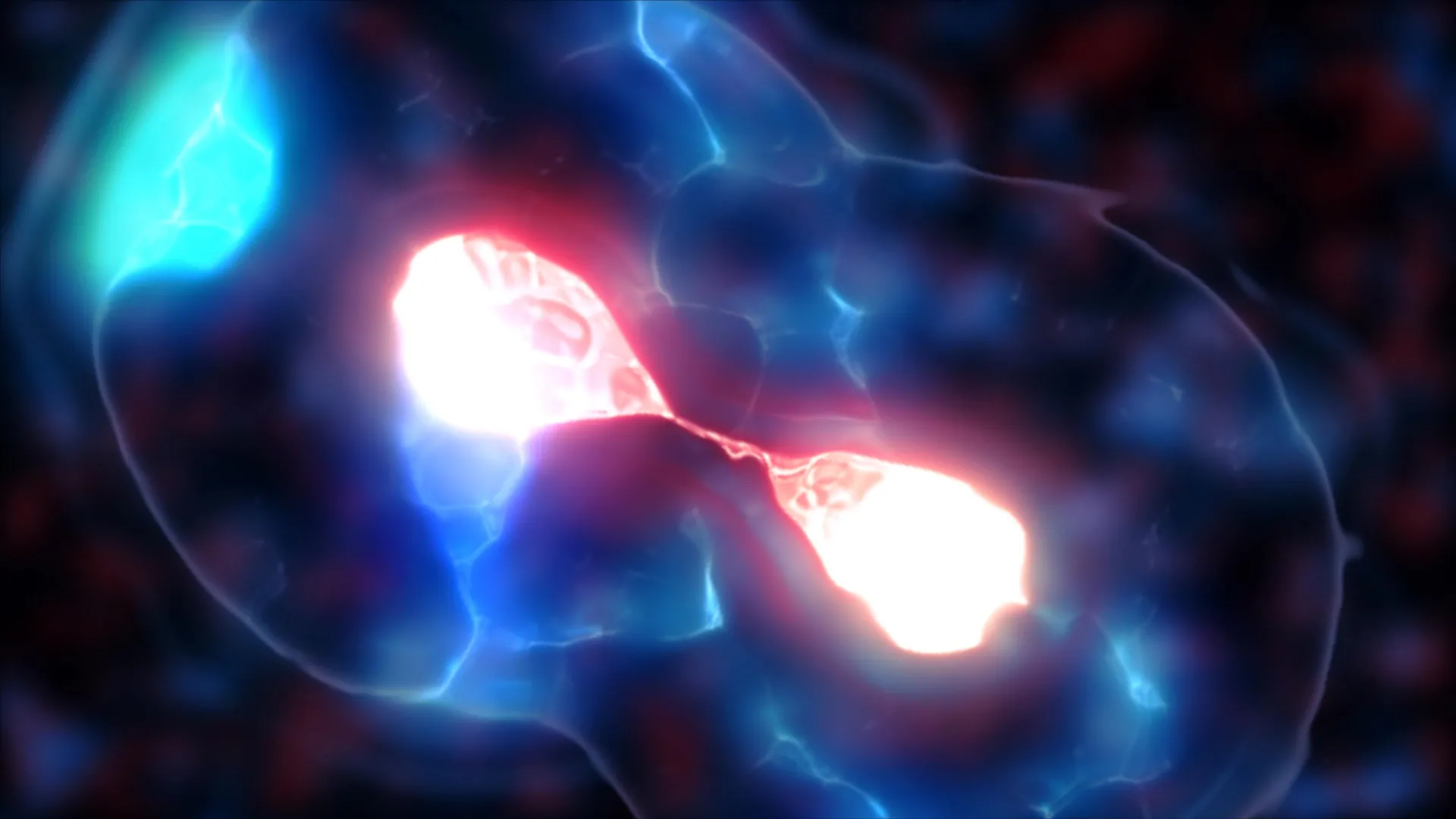
The fundamental machinery of life, cell division, relies on a critical but surprisingly diverse component: the centromere. These specialized regions of DNA are the linchpins ensuring that chromosomes are meticulously segregated into daughter cells, a process essential for all known forms of life. Yet, the architectural blueprints of centromeres exhibit a remarkable divergence. While some organisms sport vast tracts of repetitive DNA at their centromeres, others, like yeast, have evolved remarkably compact and precisely defined structures known as "point" centromeres. This stark contrast, coupled with the rapid evolutionary pace of centromeric DNA, has presented a persistent enigma to the scientific community for decades.
Now, a groundbreaking study led by Andrea Musacchio, Director at the Max Planck Institute of Molecular Physiology in Dortmund, in collaboration with Jef Boeke from the NYU Grossman School of Medicine, has illuminated the origins and evolutionary trajectory of these enigmatic yeast centromeres. The research team has identified what they term a "proto-point" centromere, an evolutionary intermediate that bridges the gap between the complex ancestral centromeres and the minimalist structures found in modern yeast. Astonishingly, these earlier forms appear to have incorporated fragments of parasitic DNA, a discovery that underscores one of the most dramatic instances of evolutionary adaptation at the DNA level.
The Centromere Paradox: A Universal Role, Diverse Forms
Centromeres are not merely passive DNA sequences; they are dynamic hubs that serve as attachment points for the kinetochore, a complex proteinaceous structure that orchestrates chromosome segregation during mitosis and meiosis. This intricate molecular machinery, through a process of tension and signaling, ensures that each new cell receives a complete and accurate set of chromosomes. Given their indispensable role in maintaining genomic integrity, centromeres are considered one of the most fundamental features of chromosomes across the biological spectrum.
However, the DNA sequences that constitute centromeres have proven to be exceptionally fluid. While the protein components of the kinetochore have remained remarkably conserved throughout evolutionary history, the underlying DNA at the centromere undergoes surprisingly rapid change. This perplexing phenomenon, where function remains stable while the genetic material evolves quickly, is known as the "centromere paradox." Yeast, with its exceptionally small and precisely defined centromeres, provides a compelling case study for this paradox. The recent findings from the Max Planck Institute and NYU offer a significant breakthrough, providing a mechanistic explanation for the evolution of these distinctive yeast centromeres and tracing their genetic lineage.
Tracing the Evolutionary Footprints: The Discovery of the "Proto-Point" Centromere
The research, spearheaded by first author Max Haase, delves into the intricate evolutionary history of brewer’s yeast (Saccharomyces cerevisiae) centromeres. "Our paper explains how a very important chromosome feature—the centromere—in brewer’s yeast came to be," Haase stated in a recent interview. "In yeast they are extremely small and precise—a striking oddity in the tree of life that has puzzled chromosome biologists for decades. In this work, we show a likely intermediate stage in their evolution and trace where the DNA for these special centromeres originally came from."
The team’s pivotal discovery lies in the identification of previously unrecognized centromeric sequences in related yeast species. These sequences exhibit characteristics that place them as transitional forms, occupying an evolutionary middle ground between the larger, repetitive centromeres found in some organisms and the minuscule point centromeres of brewer’s yeast. Crucially, the DNA composing these intermediate centromeres showed a distinct genetic relationship to retrotransposons, a class of mobile genetic elements often referred to as "jumping genes."
"We found previously unknown centromeres in related yeast species that look like halfway stages between large, repeat-rich centromeres and the tiny ones in brewer’s yeast," Haase elaborated. "The DNA at these centromeres is related to a class of ‘jumping genes’ (mobile pieces of DNA) called retrotransposons, suggesting that these elements provided the raw material that evolution reshaped into modern yeast centromeres. This gives a concrete genetic explanation for how yeast ended up with this unusual centromere type."
From Parasites to Pillars of Chromosomal Stability
This finding has profound implications for our understanding of genome evolution. Retrotransposons, which constitute a significant portion of many eukaryotic genomes, are generally considered parasitic DNA elements. They possess the ability to replicate themselves and insert copies into new locations within the genome. For decades, scientists have grappled with the question of how such potentially disruptive elements could be integrated into essential cellular structures. The Musacchio and Boeke study provides a compelling answer: these parasitic elements were not merely tolerated but were actively co-opted and repurposed by the cell.
"Yeast centromeres were the first centromeres whose functional DNA sequence was isolated and worked out in detail, beginning with work by Clarke and Carbon in the early 1980s, yet it has remained a mystery how such tiny, precisely defined centromeres could have evolved," Haase explained. "By showing how one kind of centromere can be rebuilt from another, our work addresses this long-standing question and shows how bits of ‘selfish’ or parasitic DNA can be tamed and turned into DNA that cells now rely on to organize their chromosomes. This provides a concrete example of how a core part of the chromosome can be completely restructured over evolution by repurposing DNA that once looked like genomic ‘junk’."
The implications of this discovery extend beyond yeast. It suggests a broader principle of genome evolution: that seemingly non-functional or parasitic DNA can serve as a reservoir of genetic material that can be recruited and adapted for essential cellular functions. This challenges the traditional view of genomes as solely composed of genes with direct functional roles, highlighting the dynamic and opportunistic nature of evolutionary processes.
A Timeline of Discovery and Future Directions
The journey to understanding yeast centromeres has been a long one, marked by significant milestones:
- Early 1980s: The functional DNA sequences of yeast centromeres were first identified and characterized by researchers like Clarke and Carbon, marking a pivotal moment in centromere research. This work established the existence of distinct DNA elements responsible for centromere function in yeast.
- Decades Following: The precise mechanisms by which these small, well-defined centromeres evolved from potentially larger, more complex ancestral forms remained a significant puzzle, contributing to the "centromere paradox."
- Recent Years: Advances in genomic sequencing technologies and comparative genomics have enabled researchers to explore centromeric DNA across a wider range of species, paving the way for comparative evolutionary studies.
- Present Study: The research by Musacchio, Boeke, and Haase identifies "proto-point" centromeres in related yeast species, providing a crucial evolutionary link and revealing the retrotransposon origins of yeast centromeric DNA.
The implications of this research are far-reaching. For the field of evolutionary biology, it offers a concrete example of how genomes can innovate by repurposing existing genetic material, particularly mobile elements. This has significant implications for understanding genome plasticity and the evolution of complex chromosomal structures.
Broader Impact and Implications for Genomic Research
The discovery that parasitic DNA can be co-opted to form essential chromosomal structures like centromeres has significant implications for our understanding of genome evolution and function. It suggests that the "junk DNA" of the past may, in fact, be the raw material for future functional innovation. This perspective is particularly relevant in an era where the non-coding regions of the genome are increasingly being recognized for their regulatory and structural roles.
The ability of cells to tame and integrate retrotransposons into essential functions like centromere formation speaks to the remarkable adaptability of biological systems. This process may have been instrumental in the evolution of chromosome organization in various organisms, not just yeast. Future research could explore whether similar mechanisms are at play in the evolution of centromeres in other species, particularly those with complex and repetitive centromeric regions.
Furthermore, this work has implications for our understanding of genomic instability and disease. The dynamic nature of centromeres and their potential origin from mobile elements could shed light on the genetic underpinnings of chromosomal abnormalities observed in various cancers and developmental disorders.
Next Steps: Unraveling Kinetochore-Centromere Interactions
The research team is not resting on its laurels. Their future research endeavors are focused on a critical unanswered question: how does the kinetochore, the protein machinery that binds to centromeres, accommodate such profound evolutionary changes in its DNA binding sites?
"Next, we want to understand how the kinetochore—the protein machinery that recognizes centromeres—can accommodate such dramatic changes in centromere DNA over evolutionary time," Haase stated. "As part of this, we are tackling the open question of how centromeres assemble the kinetochore. We are also looking for additional cases where transposons have been re-used to build chromosome structures like centromeres, to see how common this kind of genome innovation is."
This ongoing research promises to further illuminate the intricate interplay between DNA sequences and protein complexes that govern chromosome segregation, providing deeper insights into the fundamental processes that underpin life and the astonishing creativity of evolution. The discovery of the "proto-point" centromere represents a significant leap forward, transforming our view of centromere evolution from a perplexing mystery to a testament to the remarkable capacity of life to adapt and innovate, even from the most unexpected genetic sources.