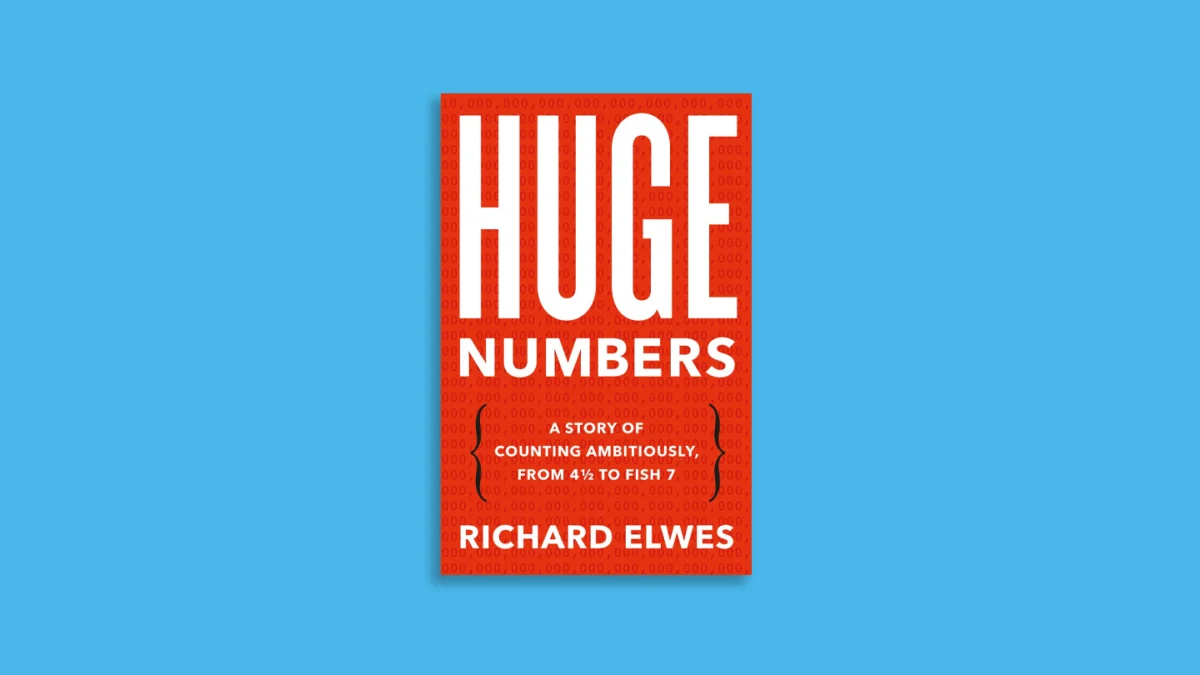
Mathematician Richard Elwes’s new book, "Huge Numbers," offers a profound and exhilarating journey into the realm of googology, the specialized field dedicated to the study and conceptualization of astronomically large numbers. This comprehensive exploration, published by Basic Books, challenges readers to expand their understanding of magnitude, revealing that even the most colossal figures commonly imagined, such as a trillion or a googolplex, are merely stepping stones on an infinite staircase of ever-increasing numerical value. Elwes meticulously chronicles how humanity’s capacity to comprehend and represent these immense quantities has evolved, driven by a persistent intellectual curiosity and the need to describe phenomena that transcend everyday experience.
From Innate Perception to Abstract Constructs: The Evolution of Number Sense
Elwes begins his ambitious survey not with gargantuan figures, but with the foundational building blocks of numerical understanding: the small quantities that humans can intuitively grasp. Our innate number sense, he explains, allows us to distinguish between very small sets, typically fewer than five items, without the need for conscious counting. This primal ability to perceive quantity, a crucial evolutionary advantage, becomes a springboard for understanding the development of more sophisticated numerical technologies. As quantities exceed this innate threshold, the act of counting emerges as a fundamental cognitive tool, enabling us to transcend our biological limitations.
The historical progression of numerical representation is a central theme. Elwes charts the development of language, symbolic notation, and ultimately, computational tools, each innovation empowering mathematicians to grapple with increasingly vast numbers. From early tally marks and Roman numerals to the elegant efficiency of positional notation and the development of algebraic expressions, each stage represents a significant leap in humanity’s ability to conceptualize and manipulate abstract quantities. This historical arc underscores a persistent human drive to push the boundaries of what can be conceived and expressed mathematically.
The Ascendancy of Exponential Growth and Beyond
The book delves into the practical and theoretical origins of truly enormous numbers, often arising from the phenomenon of exponential growth. Elwes highlights examples such as the substantial fine levied against Google by a Russian court in 2024, reportedly amounting to $2 x 1034. This figure, representing a 2 followed by 34 zeroes, illustrates how financial penalties can escalate to astronomical levels in the digital age. However, such figures, while impressive, are presented as relatively modest when compared to the numbers that emerge from more complex mathematical operations.
Elwes masterfully guides readers through sequences of numbers that grow at rates far exceeding standard exponential functions. These sequences often necessitate the invention of entirely new notational systems to even begin to represent them. The journey from simple powers to "towers of powers," where exponents themselves become subjects of exponentiation, marks a critical transition. For instance, a number like 1010,000,000,000, a ten with ten billion zeroes, can be concisely represented as a tower of three tens. Yet, as these towers grow taller and the base numbers become larger, even this system reaches its limitations.
Breaking the Notational Barrier: Knuth Arrows and Beyond
The limitations of conventional notation lead to the exploration of more advanced systems, such as Knuth’s up-arrow notation. This elegant system allows for the representation of incredibly large numbers through a series of stacked arrows, each signifying a different level of exponentiation. For example, 5↑↑4 represents a tower of four fives, each exponentiated to the power of the one below it. This notation, while powerful, also eventually encounters its own boundaries, necessitating further conceptual leaps.
Elwes then introduces the concept of "Knuth mountains," a further extension of this hierarchical notation, and beyond that, numbers so immense they are defined by complex mathematical functions and often bear the names of their discoverers or unique descriptive monikers. Figures like Goodstein numbers, Rayo’s number, busy beaver numbers, and Fish’s number 7 represent the extreme frontiers of googology. These numbers are often not directly computable in any practical sense but are defined by abstract mathematical properties, sometimes relating to the theoretical capabilities of hypothetical computing machines like Turing machines endowed with extraordinary powers.
Googology in the Cosmos and the Theoretical Realm
The book also explores the presence of large numbers in scientific contexts, particularly in cosmology. The sheer scale of the observable universe, in terms of its vastness and the immense timescales associated with its eventual heat death, necessitates the use of scientific notation. However, as Elwes demonstrates, even scientific notation with its base-10 exponents eventually proves insufficient for the most extreme theoretical constructs.
The implications of these immense numbers extend beyond theoretical mathematics. They touch upon the limits of computability, the nature of infinity, and the very boundaries of human comprehension. While the journey through increasingly abstract and mind-bogglingly large numbers can at times be challenging, Elwes’s narrative is underpinned by a deep appreciation for the ingenuity and persistence of mathematicians who have pushed these conceptual frontiers.
Analysis of Implications and Broader Impact
Richard Elwes’s "Huge Numbers" serves not merely as a compendium of large numerical values but as a testament to human intellectual ambition. The study of googology, while seemingly esoteric, reflects a fundamental drive to understand the universe and our place within it. The development of new notations and conceptual frameworks for dealing with immense numbers has historically spurred advancements in logic, computation, and our understanding of abstract systems.
The book’s exploration of how humanity has overcome innate cognitive limitations through the development of tools like language and notation offers a broader perspective on problem-solving and innovation. It suggests that confronting seemingly insurmountable challenges, whether mathematical, scientific, or societal, often requires a creative redefinition of our existing frameworks.
The "huge numbers" discussed, while abstract, have tangible implications. They inform theoretical physics, particularly in fields like cosmology and quantum mechanics, where phenomena occur across vast scales of space and time. Furthermore, the exploration of computability and the limits of algorithms, as exemplified by the busy beaver numbers, has direct relevance to computer science and artificial intelligence research.
A Rewarding Expedition for the Patient Reader
While Elwes occasionally embarks on tangents that may initially seem tangential, his methodical approach ensures that these diversions ultimately serve to enrich the reader’s understanding of the broader landscape of large numbers. The complexity of the later sections, where numbers become increasingly abstract and defined by intricate mathematical functions, demands a patient and attentive reader. However, the reward for this diligence is significant: a profoundly expanded perspective on the concept of magnitude and a newfound appreciation for the ingenuity of the mathematicians who have ventured into these uncharted numerical territories.
"Huge Numbers" ultimately offers a joyous exploration of how mathematical boundaries have been continuously redefined and overcome. It is a compelling narrative that celebrates the creative spirit and intrepid exploration of those who dare to quantify the immeasurable, revealing the grand and intricate tapestry woven by the study of the infinitely large.
This article is based on the book "Huge Numbers" by Richard Elwes, published by Basic Books. Science News is an affiliate of Bookshop.org and may earn a commission on purchases made through links in this article.