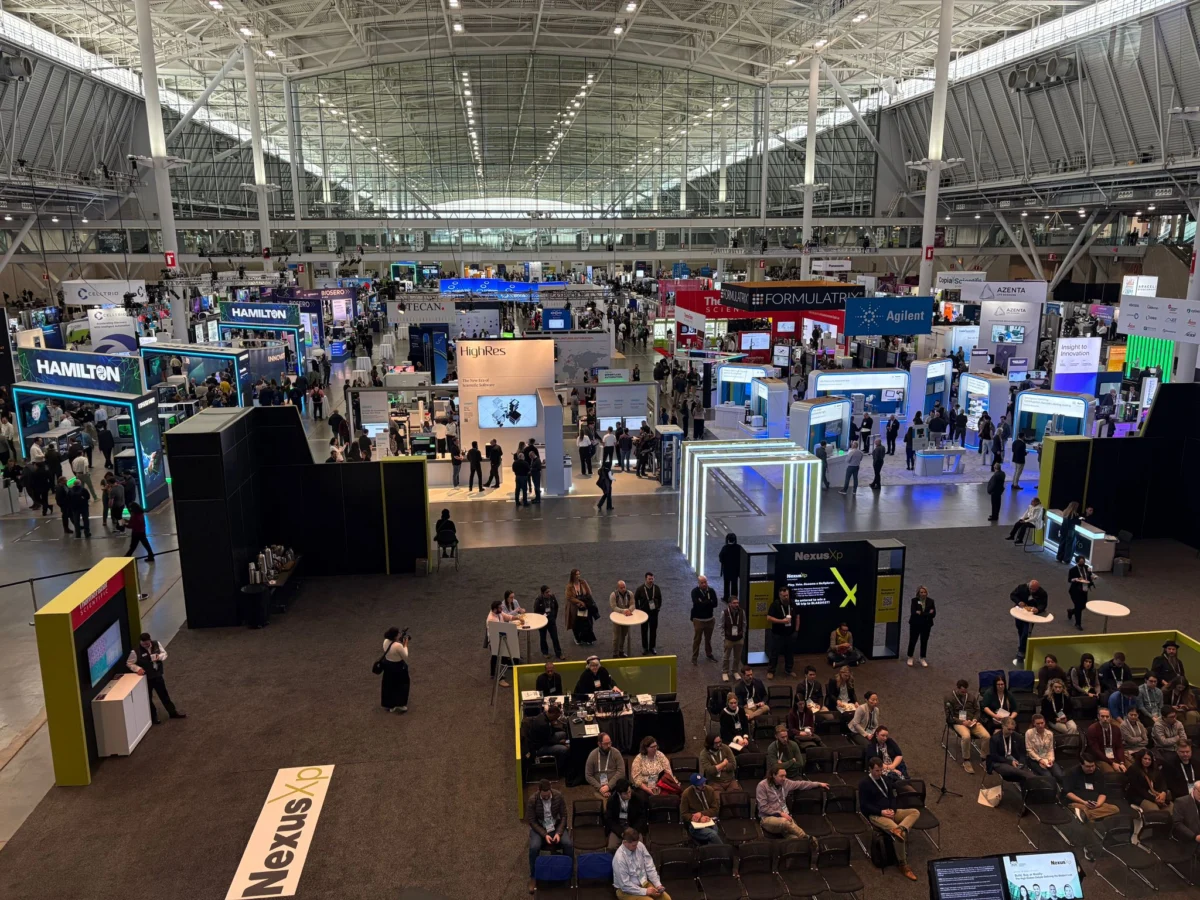
The annual SLAS (Society for Laboratory Automation and Screening) conference, held in Boston from February 7th to 11th, 2026, typically serves as a barometer for the evolving landscape of drug discovery and laboratory technology. While the event consistently features demonstrations of advanced liquid handlers and a robust schedule of poster sessions, this year’s exhibition floor resonated with an unmistakably different energy. The convergence of several pivotal developments signaled a profound shift: three distinct orchestration platforms launched within the same week, a significant number of new instruments debuted with API-first architectures, and just two days prior, on February 5th, a groundbreaking collaboration between OpenAI and Ginkgo Bioworks unveiled results from an autonomous lab run that executed over 36,000 experiments. These concurrent breakthroughs underscore a transformative period for scientific research, particularly for drug discovery teams evaluating their next strategic automation investments.
The New Frontier of Lab Automation: The "Lab OS Wars" Reign Supreme
At the core of the SLAS 2026 narrative was the palpable intensification of what industry analysts are terming the "lab OS wars." This refers to the fierce competition among an expanding cohort of companies vying to establish themselves as the foundational operating system layer that seamlessly connects laboratory instruments with advanced artificial intelligence (AI). The stakes are exceptionally high: establishing a universal "lab OS" promises to unlock unprecedented levels of automation, data integration, and intelligent experimentation, fundamentally altering how scientific research is conducted.
Historically, laboratory automation has progressed in stages, from individual robotic arms performing repetitive tasks to integrated workcells handling multi-step processes. However, these systems often operated in silos, constrained by proprietary software and complex integration challenges. The vision of a "closed-loop lab"—where experiments are designed, executed, analyzed, and iterated upon with minimal human intervention, guided by AI—was once largely confined to theoretical discussions and futuristic concepts. SLAS 2026 unequivocally demonstrated that this vision has transitioned from science fiction to a concrete vendor selection decision.
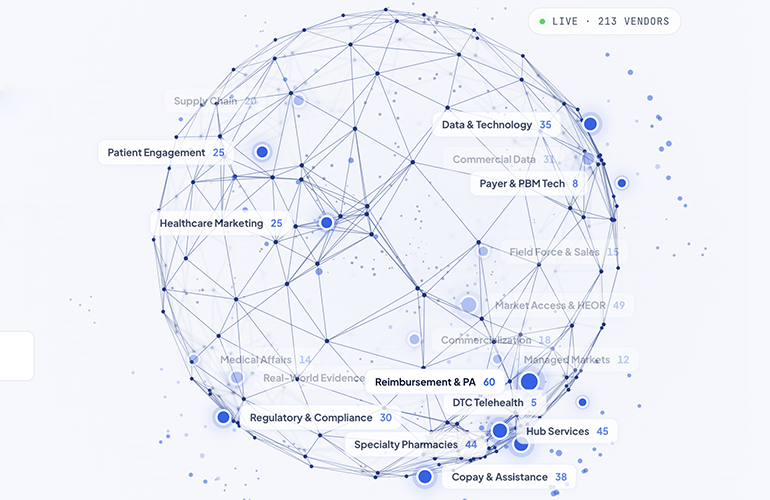
A comprehensive analysis presented at the conference mapped 15 companies actively competing across the orchestration, scheduling, and integration stack. Prominent players such as Biosero, Automata, Synthace, and UniteLabs are among those spearheading this charge. These platforms aim to provide the software infrastructure necessary to orchestrate complex scientific workflows, manage instrument scheduling, integrate disparate data streams, and ultimately enable AI models to directly control and learn from experimental outcomes. The intense competition in this sector is a clear indicator of the perceived market opportunity and the critical need for interoperable, intelligent lab environments. For drug discovery, where speed and efficiency are paramount, a unified lab OS promises to drastically reduce cycle times for experiments, improve data quality, and accelerate the identification of promising drug candidates.
AI Takes the Helm: The Dawn of Semi-Autonomous Science
Perhaps the most compelling evidence of AI’s burgeoning role in scientific discovery came in the form of real-world applications of semi-autonomous laboratories. These advancements demonstrate a shift from AI merely assisting scientists to actively designing, executing, and optimizing experiments.

The OpenAI-Ginkgo Bioworks Breakthrough: A New Paradigm for Protein Synthesis
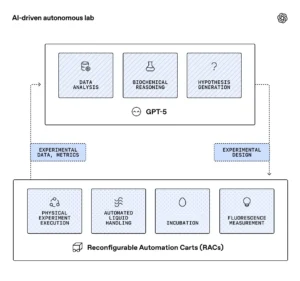
On February 5th, just days before the SLAS conference officially opened, OpenAI and Ginkgo Bioworks unveiled a landmark achievement: OpenAI’s GPT-5 autonomously ran 36,000 protein synthesis experiments within Ginkgo Bioworks’ state-of-the-art cloud lab. This extraordinary feat, detailed in a bioRxiv preprint timed with the conference, stands as the week’s most concrete proof point for AI-driven discovery. The AI system was tasked with designing, executing, analyzing, and iterating a cell-free protein synthesis campaign over six rounds. The results were astounding: a reduction in sfGFP (superfolder green fluorescent protein) production costs by approximately 40% compared to the prior state of the art, all achieved with minimal human intervention.
This collaboration highlights GPT-5’s sophisticated capabilities in understanding biological principles, generating experimental designs, interpreting complex data, and adapting strategies in real-time. Reshma Shetty, Ph.D., co-founder of Ginkgo Bioworks, emphasized the profound implications of this development during discussions at the event. She noted that this level of autonomous experimentation accelerates the pace of bioengineering to an unprecedented degree, promising to democratize access to advanced biological manufacturing and significantly reduce the cost barriers for producing therapeutic proteins, enzymes, and other biomolecules critical for drug discovery and industrial applications. The ability for an AI to independently conduct such a vast number of experiments and optimize a biological process represents a monumental leap towards fully automated, intelligent bio-factories, dramatically shortening the design-build-test-learn cycle.
Atinary’s Strategic Launch: A Self-Driving Lab in Boston
Further solidifying the trend towards autonomous research, the American-Swiss AI company Atinary chose the strategic moment of SLAS launch week, and the host city of Boston, to inaugurate its first physical self-driving lab. Moving beyond its established software offerings, Atinary’s new facility is purpose-built for autonomous optimization across a diverse range of research and development domains, including chemistry, materials science, and pharmaceutical R&D.
This move signifies a critical evolution: from providing AI tools to actively operating AI-controlled physical infrastructure. Atinary’s self-driving lab is designed to leverage AI and machine learning algorithms to explore vast experimental spaces, identify optimal conditions, and accelerate the discovery of new molecules, materials, and therapeutic compounds. The physical presence of such a lab in a major biotech hub like Boston is not merely symbolic; it provides a tangible demonstration of the practical application and scalability of autonomous research, offering researchers and industry partners a direct pathway to leverage these advanced capabilities without the upfront investment in establishing their own fully automated facilities.
Unveiling the Next Generation: Key Platform and Software Launches
The SLAS 2026 show floor was abuzz with a series of significant platform and software launches, each addressing critical bottlenecks in laboratory automation and data management. These innovations underscore the industry’s focus on enhancing usability, accelerating deployment, and integrating AI into daily lab operations.
Biosero’s GoSimple and Assistive AI: Bridging the Automation Gap
Biosero, a prominent automation subsidiary of the BICO Group, introduced its "GoSimple" pre-validated workcells. These standardized, pre-configured benchtop workcells are engineered to drastically cut deployment timelines for common screening workflows, addressing a long-standing pain point in lab automation: the complexity and time required to set up and validate new robotic systems. By offering ready-to-deploy solutions, Biosero aims to lower the barrier to entry for labs seeking to scale their automation efforts.

In a separate but equally significant announcement, Biosero integrated an AI assistant into its flagship Green Button Go scheduling software. This assistive AI targets the notorious "gap between ‘we bought the robot’ and ‘the robot actually runs.’" The AI assistant is designed to simplify the programming, optimization, and troubleshooting of complex automated workflows, making sophisticated automation accessible to a broader range of scientists who may not be automation experts. This move reflects a broader industry trend towards intelligent software that enhances user experience and maximizes the utility of hardware investments.
QIAGEN’s QIAsprint Connect: High-Throughput Benchtop Automation
QIAGEN, a global leader in sample and assay technologies, showcased its entry into high-throughput benchtop sample-prep automation with the QIAsprint Connect. This new system is capable of processing up to 192 samples per run, offering significant throughput for a compact benchtop footprint. A key feature of the QIAsprint Connect is its flexibility, supporting both QIAGEN-tested chemistries and fully customizable protocols. Crucially, the system ships with an API-first design, signaling QIAGEN’s commitment to interoperability and seamless integration within the broader lab automation ecosystem. This positions the QIAsprint Connect as a formidable competitor in the nucleic acid extraction space, challenging established players by offering high performance, adaptability, and modern connectivity. The API-first approach is vital in the era of lab operating systems, allowing for easier integration into comprehensive orchestration platforms.
Cenevo’s AI Agents: Streamlining Protocols and Workflow Automation
Cenevo, the company formed in mid-2025 through the rebranding of Titian Software and Labguru, made a significant splash by debuting two new AI agents. Backed by Battery Ventures, Cenevo’s AI agents address critical challenges in lab data management and workflow execution. The first agent is designed to convert traditional paper-based protocols into structured digital formats, a crucial step for improving data integrity and enabling automation. This innovation is particularly relevant for the compliance-heavy pharmaceutical segment, as it supports 21 CFR Part 11 requirements for electronic records and signatures.
The second AI agent focuses on automating event-driven lab workflows. By intelligently interpreting experimental parameters and results, this agent can trigger subsequent actions or adjustments in the workflow, moving towards a more adaptive and intelligent experimentation process. These agents promise to reduce manual errors, enhance reproducibility, and accelerate R&D cycles by bringing a new level of intelligence to protocol management and workflow execution. The integration of AI into these fundamental lab operations is essential for achieving the vision of truly autonomous and self-optimizing laboratories.
Hardware Evolution and Strategic Integrations
Beyond software platforms, SLAS 2026 also highlighted significant advancements in hardware and strategic partnerships that are shaping the future of integrated lab environments.
ABB GoFa Cobots: Industrial Robotics Meets the Lab Bench
ABB Robotics, a powerhouse in industrial automation, demonstrated its commitment to the life sciences sector by bringing its GoFa cobots (collaborative robots) directly to the lab bench. Through three live workcells, ABB showcased GoFa cobots performing real analytical tasks, including pipetting, weighing, titration, and UV-Vis spectroscopy, alongside instruments from leading vendors like Agilent and Mettler Toledo. The core proposition of ABB’s presentation was the seamless integration of industrial-grade robotics with multi-vendor interoperability, emphasizing a "no vendor lock-in" approach.

Cobots are designed to work safely alongside humans without safety caging, making them ideal for laboratory environments where flexibility and human-robot collaboration are increasingly desired. ABB’s demonstration underscored the growing trend of leveraging robust, reliable industrial robotics to automate complex, high-precision tasks in research labs, promising enhanced efficiency, reproducibility, and scalability without being tied to a single instrument manufacturer’s ecosystem. This open approach is a critical enabler for the "lab OS wars," as it provides the flexible hardware layer needed for diverse orchestration platforms.
Molecular Devices and Automata: A Powerful Partnership for End-to-End Connectivity
A significant partnership announced at SLAS 2026 was between Danaher-owned Molecular Devices, a leader in imaging and detection, and Automata, an emerging force in lab orchestration. This collaboration aims to create end-to-end connected workflows by integrating Molecular Devices’ extensive portfolio of instruments with Automata’s LINQ orchestration platform. This strategic alignment is particularly impactful given Danaher’s broader portfolio, which includes other major lab equipment brands like Beckman Coulter.
The partnership signifies a major instrument vendor’s commitment to an open, integrated ecosystem, acknowledging that future lab efficiency hinges on seamless data flow and instrument control. By connecting Molecular Devices’ instruments directly to Automata’s LINQ platform, researchers can anticipate more streamlined experimental design, execution, and data analysis, reducing manual intervention and improving the reliability of results across a diverse range of applications, from cell biology to drug screening.
Automata’s $45M Series C Funding: Validation and Strategic Investment
The week also saw Automata, the London-based lab automation company, successfully close a $45 million Series C funding round. The round was led by Dimension, with significant participation from Danaher Ventures as a strategic investor. This investment is not just a financial boost; it represents a powerful validation of Automata’s vision and its LINQ orchestration platform.
Danaher’s strategic involvement is particularly noteworthy. As a conglomerate owning key players like Beckman Coulter and Molecular Devices, Danaher’s investment signals a clear intent to leverage Automata’s LINQ platform as a potential cross-portfolio orchestration layer. This could lead to unprecedented levels of integration and interoperability across a vast array of laboratory instruments, accelerating the adoption of connected, intelligent labs across the Danaher ecosystem and beyond. The funding will enable Automata to scale its platform, expand its market reach, and further develop its AI-driven capabilities, solidifying its position in the competitive "lab OS wars."
The Shadow AI Phenomenon: A Wake-Up Call for Lab Informatics
Amidst the excitement of new technologies, a revealing survey by Sapio Sciences unveiled a significant challenge facing the scientific community: the widespread use of "shadow AI." The survey, conducted among 150 scientists at SLAS 2026, found that nearly half (45%) were resorting to unauthorized AI tools—public AI models accessed via personal accounts—because their official institutional platforms were failing to keep pace with their needs.
This phenomenon highlights a critical disconnect between the rapidly evolving capabilities of AI and the often-slower adoption rates within regulated scientific environments. Scientists reported that more than half of their existing Electronic Lab Notebooks (ELNs) were too complex and slowed them down, derisively referring to them as "glorified filing cabinets." Furthermore, a staggering 65% reported having to repeat experiments because earlier results were too difficult to find or access.
The implications of shadow AI are multifaceted. While scientists are clearly eager to harness AI’s power for enhanced productivity and insight, the use of unauthorized tools poses significant risks regarding data security, intellectual property, compliance (especially in highly regulated sectors like pharmaceuticals, where 21 CFR Part 11 is paramount), and the overall reproducibility of scientific research. The demand-side signal is unequivocal: scientists are actively circumventing their official IT stacks to get work done, underscoring an urgent need for organizations to implement robust, user-friendly, and compliant AI tools that meet the demands of modern scientific inquiry. Failure to do so risks not only compromising data integrity but also hindering innovation as scientists struggle with outdated or inadequate internal systems.
Sustainability Ascends to Center Stage
Beyond the technological marvels, SLAS 2026 also marked a significant step forward for sustainability in scientific research. PulpFixin, a company known for its compostable AutoRacks—automation-compatible alternatives to traditional plasticware—was named the official sustainability sponsor for both SLAS 2026 and the upcoming SLAS Europe event in Vienna.
This sponsorship highlights a growing industry-wide recognition of the environmental impact of laboratory operations, particularly the vast quantities of plastic waste generated. PulpFixin’s success in developing practical, eco-friendly alternatives demonstrates that sustainability no longer needs to be a trade-off for performance or automation compatibility.
Furthermore, CEO Chad Jenkins of PulpFixin was appointed to chair the newly formed SLAS Sustainability in Science Topical Interest Group, co-sponsored with My Green Lab. This initiative signals a strategic shift, moving lab sustainability from niche poster sessions to a central show-floor priority and a key area of collaborative industry focus. The commitment to fostering sustainable practices within the scientific community reflects broader global efforts towards environmental, social, and governance (ESG) responsibility.
Broader Implications for Drug Discovery and Beyond
The developments at SLAS 2026 paint a vivid picture of a scientific landscape on the cusp of radical transformation. For drug discovery teams, the implications are profound. The rise of orchestration platforms and API-first instruments promises to create hyper-efficient, integrated laboratories where experiments can be designed, executed, and analyzed with unprecedented speed and precision. This translates directly into accelerated R&D cycles, reduced costs, and a higher probability of identifying viable drug candidates faster. The ability to conduct thousands of experiments autonomously, as demonstrated by OpenAI and Ginkgo, could revolutionize lead optimization and preclinical development, compressing timelines that currently span years into mere months.
The human element in this evolving ecosystem will also undergo significant change. Scientists’ roles will shift from manual execution and data wrangling to higher-level experimental design, data interpretation, and strategic decision-making, leveraging AI as a powerful cognitive and operational partner. This necessitates an evolution in scientific education and training, focusing on data science, AI literacy, and systems thinking.
For the lab automation industry, the intensifying "lab OS wars" will likely lead to further innovation, but also potential consolidation as leading platforms emerge. Interoperability and open standards will become increasingly critical to avoid vendor lock-in and foster a truly integrated research environment. The urgent demand for compliant internal AI tools, driven by the "shadow AI" phenomenon, will spur significant investment in secure, enterprise-grade AI solutions tailored for scientific workflows.
Ultimately, SLAS 2026 marked a pivotal moment, signaling the definitive arrival of "Lab 4.0" – an era characterized by intelligent automation, pervasive AI integration, and a relentless drive towards more efficient, reproducible, and sustainable scientific discovery. The seeds planted in Boston promise to blossom into a future where the pace of scientific innovation is dramatically accelerated, ultimately benefiting human health and technological advancement.