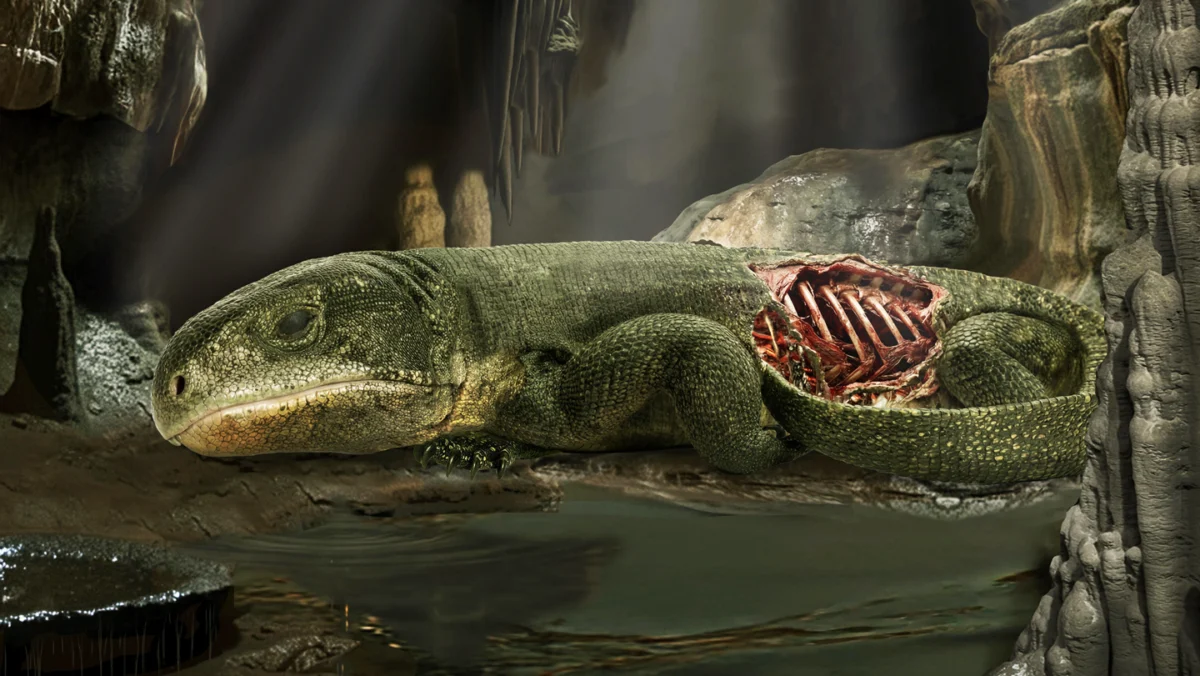
Remarkable fossil discoveries are shedding new light on the respiratory mechanics of ancient reptiles, with recent analyses of exceptionally preserved specimens indicating that some early terrestrial vertebrates utilized their rib cages and associated cartilage for actively pumping air into their lungs. This finding challenges previous assumptions about reptilian breathing mechanisms and suggests a more complex evolutionary trajectory for lung ventilation in vertebrates. The research, focused on a mummified lizard-like reptile named Captorhinus that perished approximately 289 million years ago during the Permian period, offers an unprecedented glimpse into the soft tissues that facilitated respiration millions of years before the advent of many modern reptilian lineages.
Unearthing the Secrets of Permian Respiration
The exceptionally well-preserved remains of Captorhinus, unearthed from a cave environment, have provided scientists with a unique opportunity to study not just skeletal structures but also the soft tissues that rarely fossilize. These ancient specimens, mummified by the unique geological conditions within the cave—likely a combination of oil and mineral-rich groundwater—have retained delicate structures such as skin, cartilage, and even protein remnants. It is within these preserved soft tissues that the key to understanding Captorhinus‘ breathing system lies.
Dr. Aris Koutsoukos, a paleontologist at the University of Texas at Austin and lead author of the study published in Nature Ecology & Evolution, highlighted the significance of these findings. "These fossils are astonishingly well-preserved," Dr. Koutsoukos stated in a press release. "They allow us to go beyond the skeleton and examine the muscles and cartilage that were directly involved in breathing. What we’ve found suggests a more active, rib-cage-driven method of ventilation than previously thought for many early reptiles."
The study focused on the thoracic region of the Captorhinus specimens. By meticulously examining the preserved cartilage and muscle attachments around the rib cage, researchers were able to reconstruct the biomechanics of how these animals might have inhaled and exhaled. The evidence points towards a system where the ribs, likely assisted by specialized muscles and connective tissues, could expand and contract the thoracic cavity. This expansion would create negative pressure, drawing air into the lungs, while contraction would expel it. This mechanism is akin to the costal ventilation seen in some modern reptiles, but its presence in such an early and diverse lineage has significant evolutionary implications.
A Glimpse into the Permian Ecosystem
The Permian period, spanning from approximately 299 to 252 million years ago, was a pivotal era in Earth’s history. It was a time of significant diversification of terrestrial life, with the emergence and proliferation of amniotes—vertebrates that lay their eggs on land or retain them within the mother. Reptiles, amphibians, and the early ancestors of mammals and birds all trace their lineages back to this period. The Permian was also characterized by vast continental landmasses, fluctuating climates, and a series of dramatic extinction events, culminating in the devastating end-Permian extinction, the largest mass extinction in Earth’s history.
Captorhinus, a small, herbivorous reptile, was a common inhabitant of the Permian terrestrial ecosystems, particularly in what is now North America. Its relatively simple body plan and successful adaptation to a land-based lifestyle made it a representative species of its time. Understanding how such animals breathed is crucial for reconstructing their ecological roles, their metabolic rates, and their ability to thrive in the diverse environments of the Permian.
The cave where the Captorhinus specimens were found likely offered a stable, anoxic environment that was conducive to mummification. The absence of oxygen would have inhibited the activity of decomposers, allowing for the preservation of soft tissues over millions of years. The mineral-rich groundwater would have permeated the tissues, hardening them and preventing their decay. This serendipitous geological process has provided paleontologists with an invaluable window into the past.
The Mechanics of Breathing: Beyond the Skeleton
Traditionally, the study of ancient animal respiration has relied heavily on skeletal evidence. The shape and articulation of ribs, the presence of a diaphragm (which is absent in most reptiles but present in mammals), and the structure of the vertebral column can offer clues. However, these skeletal features alone can be ambiguous. The discovery of soft tissue preservation in Captorhinus allows for a more direct and detailed understanding of the musculature and connective tissues involved in lung ventilation.
The researchers identified evidence of robust cartilaginous structures connecting the ribs to the sternum and possibly to neighboring vertebrae. These cartilaginous elements would have provided flexibility and leverage, allowing the rib cage to expand and contract effectively. Furthermore, the preservation of muscle fibers, albeit in a degraded state, provided insights into the likely arrangement and action of muscles responsible for thoracic movement.
The study suggests that Captorhinus likely employed a form of "hepatic piston" breathing, a mechanism common in many modern reptiles where the liver acts as a piston, assisted by abdominal muscles, to change the volume of the body cavity. However, the new findings indicate that the rib cage played a more active and significant role in this process than previously understood for this particular lineage. The expansive and contractile nature of the rib cage, facilitated by specialized cartilage and musculature, would have provided a more forceful and controlled method of breathing.
A Timeline of Discovery and Interpretation
The fossils of Captorhinus have been known for decades, but their exceptional preservation in these specific cave sites has only recently come to light through systematic paleontological surveys. The initial discovery of these mummified specimens would have been remarkable in itself. However, the application of advanced imaging techniques and detailed histological analysis in recent years has unlocked the secrets held within their preserved tissues.
Circa 289 Million Years Ago: A Captorhinus individual dies in a cave environment. The unique conditions within the cave, including the presence of oil and mineralized groundwater, begin the process of mummification.
Millions of Years of Fossilization: The remains are buried and preserved within the cave deposits, with soft tissues remaining largely intact.
Recent Paleontological Expeditions: Modern scientific expeditions to the cave sites lead to the careful excavation and recovery of these exceptionally preserved specimens.
Advanced Analytical Techniques: Researchers employ high-resolution CT scanning, electron microscopy, and comparative anatomical studies to analyze the fossilized soft tissues, particularly the cartilage and muscle remnants.
Publication of Findings: The results of the study, detailing the respiratory mechanics of Captorhinus, are published in a leading scientific journal, contributing significant new data to our understanding of vertebrate evolution.
Supporting Data and Comparative Anatomy
The findings from Captorhinus can be compared with the respiratory mechanisms of extant reptiles and other amniotes. Modern lizards and snakes, for instance, primarily rely on rib cage movements for ventilation, often utilizing a "hepatic piston" mechanism. Crocodilians, on the other hand, have evolved a diaphragm-like structure (the diaphragmaticus muscle) that aids in lung ventilation. Birds have a highly specialized respiratory system involving air sacs that ensures a continuous flow of oxygenated air. Mammals, of course, possess a muscular diaphragm that is the primary driver of respiration.
The discovery that an early reptile like Captorhinus possessed a sophisticated rib-cage-driven breathing system suggests that this mechanism was either ancestral to many amniotes or evolved independently in different lineages. This challenges the notion of a more primitive, less efficient respiratory system in early reptiles. The ability to actively pump air into the lungs would have been advantageous for sustained activity, foraging, and escaping predators, contributing to the success of these animals in diverse terrestrial environments.
The study also provides quantitative data on the dimensions and likely flexibility of the cartilaginous structures. While specific measurements of muscle force are impossible to ascertain from fossilized tissue, the inferred structure and arrangement of muscles suggest a capacity for generating significant pressure changes within the thoracic cavity.
Official Responses and Scientific Community Reaction
While specific official responses from governmental or regulatory bodies are not directly applicable to this paleontological discovery, the scientific community has reacted with considerable interest and enthusiasm. Dr. Emily Carter, a vertebrate paleontologist not involved in the study, commented, "This is a groundbreaking discovery. The preservation is truly remarkable, and the insights into the respiratory mechanics of such an ancient reptile are invaluable. It forces us to re-evaluate our models of how early terrestrial vertebrates functioned."
The publication in a high-impact journal like Nature Ecology & Evolution signifies the broad acceptance and significance of the findings within the scientific community. It is expected to spur further research into similar exceptionally preserved fossils and encourage more detailed investigations into the evolution of respiratory systems across the vertebrate tree of life.
Broader Impact and Implications
The implications of this research extend beyond a single fossil species. Understanding the respiratory capabilities of early reptiles like Captorhinus provides crucial context for:
- Metabolic Rate Reconstruction: Efficient breathing is directly linked to oxygen supply, which in turn influences an animal’s metabolic rate. More efficient respiration suggests potentially higher metabolic rates than previously assumed for some early reptiles, impacting our understanding of their activity levels and ecological interactions.
- Evolutionary Biology: The findings contribute to the ongoing debate about the evolutionary pathways of various physiological systems in vertebrates. They suggest that complex respiratory mechanisms may have evolved earlier than previously thought, or that different strategies were employed by different lineages.
- Paleoenvironmental Reconstruction: The ability of Captorhinus to breathe efficiently would have influenced its habitat selection and its ability to exploit various ecological niches within the Permian landscape.
- Paleo-biomechanics: The study offers a tangible example of how biomechanical principles can be applied to ancient organisms, using fossil evidence to reconstruct functional anatomy.
The continued study of exceptionally preserved fossils like these Captorhinus specimens promises to unlock further secrets about the evolution of life on Earth, offering a deeper appreciation for the intricate adaptations that allowed ancient creatures to thrive and diversify. The ability to breathe effectively was undoubtedly a cornerstone of this success, and these ancient reptiles, with their surprisingly sophisticated rib cage mechanisms, were clearly masters of their domain.