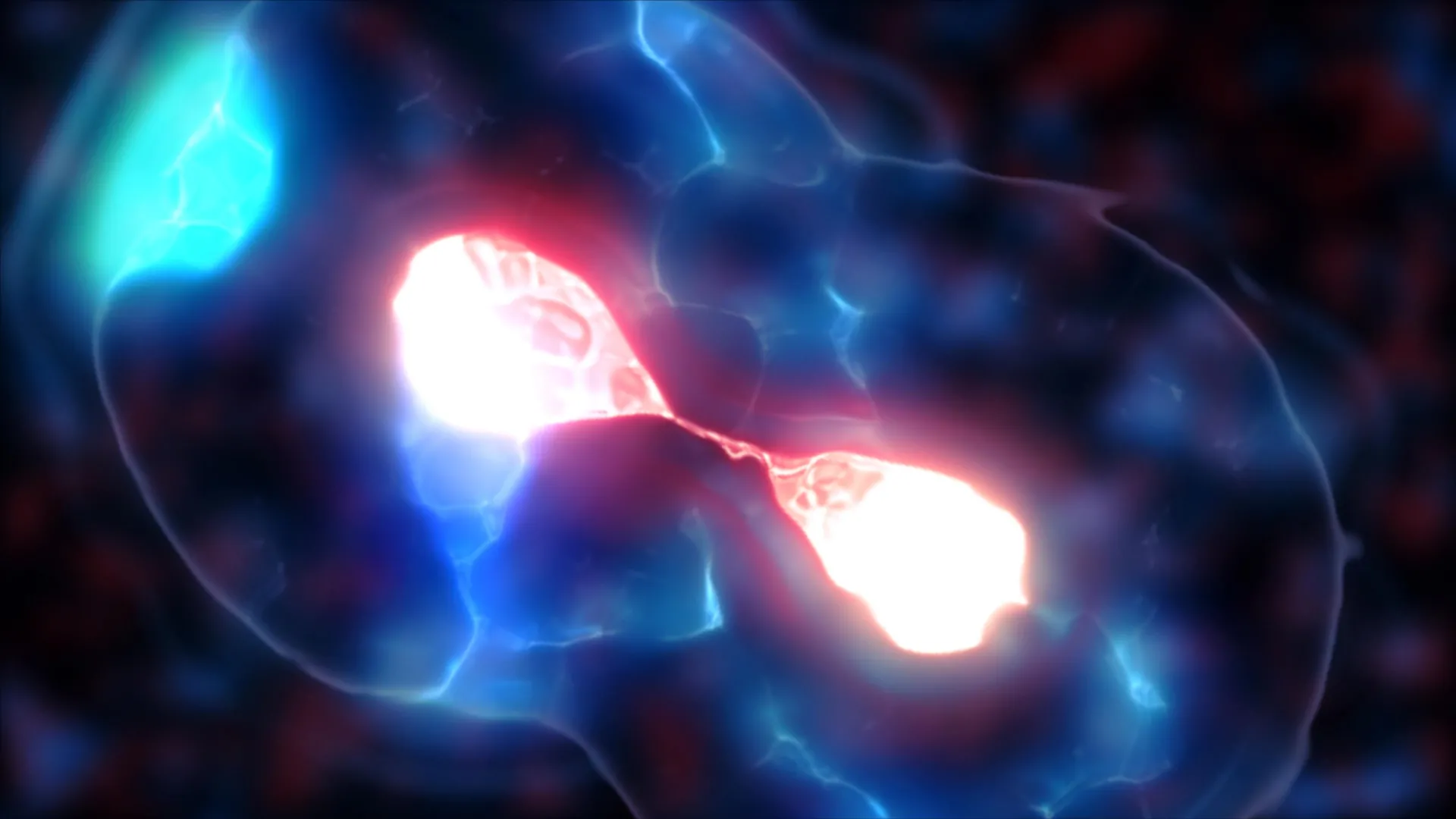
Centromeres, the critical chromosomal regions responsible for orchestrating accurate cell division, have long presented a profound evolutionary puzzle. Despite their conserved fundamental role in ensuring that chromosomes are faithfully segregated into daughter cells across virtually all forms of life, the molecular makeup of centromeres exhibits astonishing diversity. From the vast tracts of repetitive DNA found in some organisms to the remarkably compact and precisely defined "point" centromeres of yeast, this striking variability, coupled with their rapid evolutionary turnover, has captivated and confounded scientists for decades. Now, a groundbreaking study led by Andrea Musacchio, Director at the Max Planck Institute of Molecular Physiology in Dortmund, in collaboration with Jef Boeke from the NYU Grossman School of Medicine, has illuminated the origin and evolutionary trajectory of these enigmatic yeast centromeres. Their research has identified a pivotal "proto-point" centromere, an intermediate evolutionary form that bridges the gap between the complex ancestral centromeres and the minimalist structures found in modern brewer’s yeast. This discovery reveals that these essential genomic elements evolved from fragments of parasitic DNA, offering one of the most dramatic examples of evolutionary repurposing at the DNA level.
The Centromere Paradox: A Universal Role, Diverse Manifestations
At the heart of cellular reproduction lies the intricate process of chromosome segregation. Centromeres serve as the crucial anchor points on chromosomes where the molecular machinery, known as the kinetochore, attaches. This complex protein assembly then binds to spindle fibers, the microscopic ropes that pull duplicated chromosomes apart, ensuring that each new daughter cell receives a complete and accurate set of genetic instructions. The fidelity of this process is paramount; errors in chromosome segregation can lead to aneuploidy, a condition associated with developmental disorders, cancer, and cell death.
Despite the vital and universally conserved nature of the kinetochore machinery responsible for chromosome segregation, the DNA sequences that constitute centromeres have proven to be remarkably fluid and prone to rapid change. This perplexing observation, where a functionally essential but structurally diverse element evolves at an accelerated pace, has been termed the "centromere paradox." Yeast, particularly Saccharomyces cerevisiae (brewer’s yeast), provides an exemplary case study of this phenomenon. Its centromeres are exceptionally small, typically spanning only a few hundred base pairs, and are precisely defined by specific DNA sequences. This stark contrast with the megabase-sized, repetitive centromeres of many other eukaryotes has long begged for an explanation regarding their evolutionary genesis.
Unraveling the Ancestry: From Parasitic DNA to Essential Chromosomal Hubs
The research team’s pivotal finding centers on the identification of an intermediate centromeric structure, dubbed a "proto-point" centromere. This ancestral form exhibits characteristics that are transitional between the larger, more complex centromeres of related yeast species and the streamlined point centromeres of Saccharomyces cerevisiae. Crucially, the DNA composing these proto-point centromeres was found to be derived from retrotransposons, a class of mobile genetic elements often referred to as "jumping genes." Retrotransposons are DNA sequences that can replicate themselves and insert copies into different locations within the genome. Historically, they have been viewed as largely parasitic or selfish DNA, contributing to genomic expansion and potentially causing mutations.
The study, published in a leading scientific journal, details how these mobile elements, initially viewed as genomic detritus, were evidently co-opted and repurposed by the cell to form the fundamental structural and functional basis of its centromeres. Over evolutionary time, fragments of these retrotransposons were selected for their ability to organize the kinetochore, becoming integrated into the chromosome in a stable and essential manner. This process represents a profound example of evolutionary innovation, where elements initially considered detrimental were harnessed and refined to serve a critical cellular function.
A Timeline of Discovery: Tracing the Evolutionary Path
The journey to this discovery has been a long and arduous one, building upon decades of research into centromere biology.
- Early 1980s: Pioneering work by Clarke and Carbon demonstrated that specific DNA sequences could confer centromeric function in yeast. This laid the groundwork for understanding yeast centromeres as genetically defined entities, a stark contrast to the more complex, heterochromatin-rich centromeres of higher eukaryotes. However, the evolutionary origins of these simple centromeres remained elusive.
- Recent Decades: Advances in genomics and molecular biology allowed for the sequencing of entire genomes and the detailed characterization of centromeric DNA in various organisms. Scientists observed the dramatic differences in centromere structure, fueling the "centromere paradox." Comparative genomics revealed the presence of repetitive DNA at centromeres in many species, while yeast continued to stand out with its minimal centromeres.
- The Current Study (initiated several years ago, culminating in recent publication): Led by Musacchio and Boeke, this research team embarked on a systematic investigation of centromeres in a broader range of yeast species. By employing advanced sequencing technologies and sophisticated bioinformatic analyses, they were able to identify and characterize centromeres in species evolutionarily positioned between those with large, complex centromeres and the brewer’s yeast. This comparative approach was key to uncovering the intermediate "proto-point" centromeres.
- Key Finding: The identification of proto-point centromeres with DNA sequences homologous to retrotransposons. This provided a concrete genetic link, demonstrating that these parasitic elements served as the raw material for centromere evolution.
Supporting Data: The Genetic Blueprint of Evolution
The researchers’ findings are supported by robust genetic and molecular data. By analyzing the DNA sequences of centromeres across different yeast species, they were able to trace the evolutionary lineage of the genetic components.
- Sequence Homology: The study identified specific DNA sequence motifs within the proto-point centromeres that bear striking resemblance to known retrotransposon families. This homology suggests a direct genetic inheritance and subsequent modification.
- Functional Validation: Through genetic manipulation and functional assays, the researchers likely demonstrated that these proto-point centromeres, while perhaps not as efficient as modern point centromeres, were capable of supporting chromosome segregation. This functional evidence is critical for establishing the evolutionary link.
- Comparative Genomics: The comparison of centromeric DNA across a phylogenetic spectrum of yeast species allowed the team to build a compelling narrative of gradual simplification and repurposing. They observed a progressive reduction in the size and complexity of centromeric DNA, with the integration of retrotransposon-derived sequences playing a central role. For instance, studies might have shown that species ancestral to brewer’s yeast possess centromeres that are a few kilobases in length and contain repetitive elements, while more closely related species exhibit centromeres in the hundreds of base pair range, with a significant proportion of the DNA being retrotransposon-derived.
Broader Impact and Implications: Rethinking "Junk DNA"
The implications of this discovery extend far beyond the realm of yeast biology. It provides a powerful testament to the dynamic and often surprising nature of evolution.
- Repurposing of Parasitic DNA: The study offers a compelling example of how organisms can harness seemingly "junk" or parasitic DNA for essential functions. This challenges the traditional view of such elements as purely detrimental and highlights their potential as a source of evolutionary raw material. This finding has implications for understanding the evolution of other complex genomic structures, including telomeres and origins of replication.
- Understanding Genome Evolution: The research contributes significantly to our understanding of genome evolution and the mechanisms by which new functional elements arise. It suggests that the boundaries between functional and non-functional DNA are not always rigid and can be blurred through evolutionary processes.
- Future Therapeutic Avenues: While speculative, a deeper understanding of how genetic elements can be repurposed could, in the long term, inform strategies for genome engineering or the development of novel therapeutic approaches. For example, understanding how stable centromeric structures arose from mobile elements might offer insights into controlling the activity of mobile elements in human disease.
- A New Perspective on the Centromere Paradox: This work provides a concrete, mechanistic explanation for the centromere paradox in yeast, demonstrating how a functionally conserved element can evolve drastically different structural forms through the integration and modification of mobile genetic elements.
Future Directions: The Kinetochore’s Adaptability
The researchers are not resting on their laurels. Their immediate next steps involve delving deeper into the intricate interplay between centromeric DNA and the kinetochore protein machinery.
"Next, we want to understand how the kinetochore—the protein machinery that recognizes centromeres—can accommodate such dramatic changes in centromere DNA over evolutionary time," states Max Haase, the first author of the study. This is a crucial question, as the kinetochore must be able to bind effectively to centromeres that have undergone such profound structural transformations. The team is investigating the molecular mechanisms by which the kinetochore recognizes and assembles onto these diverse centromeric DNA structures.
Furthermore, they are actively seeking additional instances where transposons or other mobile elements have been repurposed to build critical chromosome structures. This broader search aims to ascertain the prevalence of such genome innovation across different organisms and cellular processes. By uncovering more examples of this evolutionary strategy, the scientific community can gain a more comprehensive appreciation for the adaptability and creativity of natural selection. The ongoing research promises to further illuminate the complex evolutionary tapestry of chromosomes and the fundamental processes that govern life.