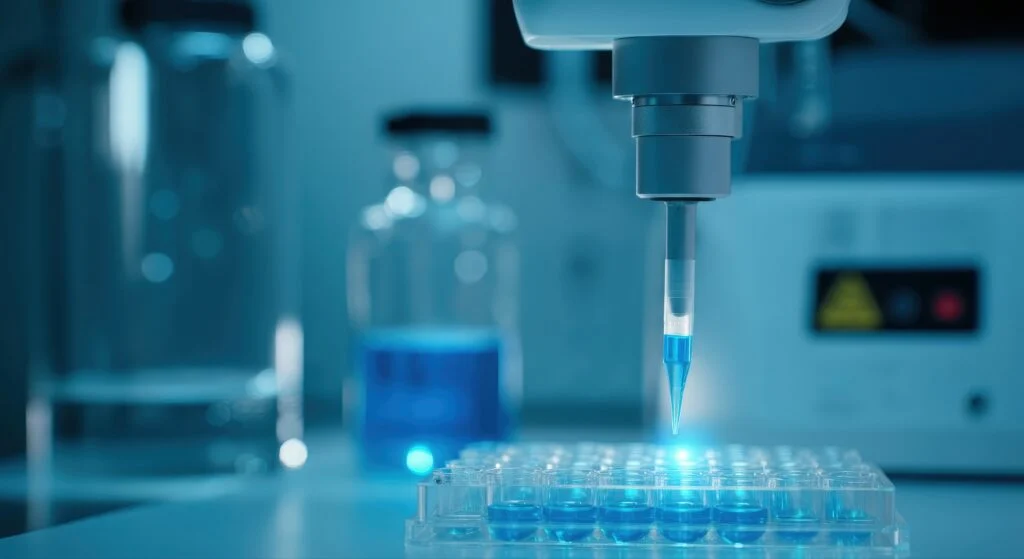
In a significant advancement poised to reshape the landscape of pharmaceutical development, a collaborative team from ETH Zürich and the Karolinska Institutet has engineered a novel cross-linking MALDI mass spectrometry (MS) workflow. This groundbreaking assay represents a paradigm shift in drug screening, capable of simultaneously capturing both the functional response of a potential therapeutic and its specific target binding within a single, streamlined process. This integrated approach directly addresses a critical information deficit that has historically plagued drug discovery, contributing substantially to the high attrition rates of promising drug candidates in clinical trials.
The Enduring Challenge of Drug Discovery: A High-Stakes Environment
The journey from drug concept to approved medicine is notoriously arduous, expensive, and fraught with failure. Estimates suggest that bringing a new drug to market can cost upwards of $2-3 billion and take 10 to 15 years. A primary contributor to this inefficiency is the high failure rate of drug candidates during clinical development. According to extensive analyses, between 40% and 50% of clinical failures are attributable to a lack of efficacy, meaning the drug simply does not work as intended in human trials, despite showing promise in preclinical stages. This staggering statistic underscores a fundamental flaw in traditional drug screening methodologies, which have long relied on a bifurcated approach.
Conventionally, drug screening assays are categorized into two distinct types: functional assays and binding assays. Functional assays are designed to assess the biological effect of a compound—for instance, whether it activates or inhibits an enzyme, alters cellular processes, or improves cell viability. While these assays confirm that a drug "works," they often fail to elucidate the precise mechanism of action or identify the specific molecular target responsible for the observed effect. A compound might exhibit a desired functional outcome through off-target interactions or complex cellular pathways, making its true mechanism opaque.
Conversely, binding assays focus on determining whether a drug physically interacts with its intended molecular target and with what affinity. Techniques like surface plasmon resonance (SPR), isothermal titration calorimetry (ITC), or fluorescence polarization can quantify the strength of these interactions. However, binding assays alone cannot predict the functional consequence of that interaction. A compound might bind strongly to a target but have no functional effect (a silent binder), or it might act as an antagonist when an agonist is desired, or vice-versa. The critical disconnect between knowing that a drug binds and knowing what that binding does creates a significant "information gap."
This gap is particularly pronounced and problematic when targeting protein-protein interactions (PPIs). PPIs are crucial in virtually all biological processes and are implicated in a vast array of diseases, including cancer, neurodegenerative disorders, and infectious diseases. However, developing drugs that modulate PPIs is exceptionally challenging. Unlike enzyme active sites or receptor binding pockets, PPI interfaces are often large, flat, dynamic, and lack well-defined "druggable" hot spots. This inherent complexity makes it difficult to design compounds that bind specifically and effectively, and even harder to determine if that binding translates into a desired therapeutic outcome. The lack of integrated functional and binding data for PPIs significantly compounds the risk of selecting ineffective drug candidates for costly clinical progression.
A Unified Approach: The Genesis of Cross-linking MALDI-MS
The innovation from the ETH Zürich and Karolinska Institutet team directly addresses this long-standing dichotomy by integrating both functional and binding insights into a single analytical workflow. The core of their breakthrough lies in enhancing the capabilities of matrix-assisted laser desorption/ionization mass spectrometry (MALDI-MS).
MALDI-MS is a powerful analytical technique widely employed in various fields, including proteomics, metabolomics, and polymer analysis. It works by co-crystallizing a sample with a matrix material, then irradiating the mixture with a laser. The matrix absorbs the laser energy, transferring it to the analyte molecules, which are then desorbed and ionized. These ions are subsequently accelerated into a mass analyzer, where their mass-to-charge ratio is measured, providing precise information about their molecular weight. In drug discovery, conventional MALDI-MS has been instrumental for applications such as enzyme activity assays, identifying reaction products, and quality control of biomolecules due to its high sensitivity, speed, and ability to analyze large biomolecules.
However, a critical limitation of traditional MALDI-MS, particularly when studying protein complexes, is its inability to reliably detect intact non-covalently bound protein-protein complexes. The intense laser ionization process, while excellent for volatilizing and ionizing individual molecules, often provides sufficient energy to disrupt the relatively weak, non-covalent forces (such as hydrogen bonds, van der Waals forces, and electrostatic interactions) that hold protein complexes together. Consequently, when researchers attempt to analyze a protein complex, they often detect only the individual constituent proteins, losing crucial information about their interaction state.
The ETH Zürich team circumvented this limitation by introducing a chemical cross-linking step prior to MALDI-MS analysis. This elegant solution involves adding an N-hydroxysuccinimide (NHS)-ester reagent to the protein-drug mixture. NHS-ester reagents are highly reactive toward primary amine groups, typically found on lysine residues and the N-termini of proteins. When two proteins are in close proximity, indicating a binding event, the NHS-ester can form covalent bonds between available amine groups on their surfaces. This chemical "lock" effectively transforms a transient, non-covalent interaction into a stable, covalently linked complex.
Once the proteins are covalently cross-linked, the complex becomes robust enough to withstand the energetic laser ionization process of MALDI-MS. When analyzed by the mass spectrometer, the covalently linked complex presents as a single, higher-molecular-weight species (the sum of the individual protein masses plus the mass of the cross-linker, minus the mass of the leaving groups). The detection of this distinct, higher-mass peak directly confirms the binding event. Crucially, by performing this cross-linking in the context of a functional assay setup – where the target proteins are mixed with drug candidates under conditions relevant to their biological activity – the observed binding is captured within a functionally relevant framework. This provides the "double output" of both direct evidence of target binding (via the detected complex mass) and its correlation with the functional context of the assay (e.g., in the presence of a substrate or an allosteric modulator).
A Concrete Demonstration: Targeting SARS-CoV-2 and ACE2
To validate their innovative workflow, the research team applied it to a highly relevant and clinically significant biological system: the interaction between the SARS-CoV-2 spike protein’s receptor-binding domain (RBD) and the human angiotensin-converting enzyme 2 (ACE2). This interaction is the critical initial step for SARS-CoV-2 viral entry into human cells, making it a prime target for antiviral drug development.
The researchers screened a panel of 17 FDA-approved drug candidates, evaluating their ability to modulate the SARS-CoV-2 RBD-ACE2 interaction. This choice of FDA-approved drugs was strategic, allowing the team to test the assay’s predictive power against compounds with known pharmacological profiles, albeit for different indications.
The cross-linking MALDI-MS assay revealed critical differentiations between compounds that might appear similar through conventional, less informative screening methods. A striking example involved two compounds: amentoflavone and dalbavancin. Both are existing drugs, but their interactions with the RBD-ACE2 complex showed vastly different characteristics under the new assay.
The assay demonstrated that dalbavancin binds to ACE2 with approximately a 10-fold stronger affinity compared to amentoflavone. More importantly, dalbavancin exhibited preferential, on-target engagement, indicating a specific interaction with ACE2 that was likely to be functionally relevant. In contrast, amentoflavone showed weaker and notably less specific binding. This lack of specificity is a common red flag in drug discovery, often indicating a higher likelihood of off-target effects and reduced therapeutic efficacy.
To definitively correlate these binding characteristics with functional outcomes, the researchers conducted a cell-based antiviral assay. This experiment involved SARS-CoV-2-infected human cells, allowing for a direct assessment of the compounds’ ability to protect cells from viral damage. The results unequivocally confirmed the predictions made by the cross-linking MALDI-MS workflow. Dalbavancin significantly improved cell viability in SARS-CoV-2-infected cells, demonstrating a clear antiviral benefit attributable to its strong and specific ACE2 binding. Conversely, amentoflavone showed no discernible benefit in terms of cell viability and, at higher concentrations, even exhibited mild cellular toxicity.
This direct correlation between the integrated binding and functional data from the MALDI-MS assay and the subsequent cell-based validation highlights the assay’s power. It illustrates how a deeper understanding of drug-target interactions, beyond mere presence or absence of binding, can accurately predict downstream biological efficacy and toxicity, thereby averting the costly pursuit of non-viable drug candidates.
Broader Implications for the Future of Drug Discovery
The implications of this integrated cross-linking MALDI-MS workflow extend far beyond antiviral research. The richer, more comprehensive data provided by this method holds the potential to revolutionize several aspects of drug discovery and development:
-
Smarter Candidate Selection and Reduced Attrition: By providing a clearer picture of both how a drug binds and what effect that binding has, researchers can make more informed decisions earlier in the pipeline. Compounds exhibiting weak, non-specific binding or those whose binding does not translate into a desired functional outcome can be deselected promptly. This early identification of problematic candidates can save enormous amounts of time, resources, and capital that would otherwise be invested in compounds destined for clinical failure. This directly addresses the 40-50% clinical failure rate due to efficacy.
-
Unlocking Challenging Targets: The ability to stabilize and detect protein-protein complexes makes this platform particularly valuable for targeting PPIs, which are notoriously difficult to drug. It can help identify small molecules or biologics that modulate these critical interactions, opening new avenues for treating diseases where PPIs are central to pathogenesis, such as various cancers, autoimmune diseases, and neurodegenerative conditions.
-
Beyond Inhibitors: Identifying Novel Modulators: The platform’s utility is not limited to identifying inhibitors or antagonists. It can also be employed to discover molecular stabilizers—compounds that bind to a protein or complex and enhance its stability, preventing degradation or misfolding. This is crucial for diseases caused by protein instability or aggregation. Furthermore, it can identify allosteric activators, which bind to a site distinct from the active site but modulate the protein’s activity, offering a more nuanced way to fine-tune biological processes. These types of modulators are often challenging to detect with traditional, single-faceted assays.
-
Enhanced Understanding of Drug Mechanism: The integrated data provides a more holistic understanding of a drug’s mechanism of action. This deeper mechanistic insight is invaluable for optimizing lead compounds, predicting potential side effects, and guiding medicinal chemistry efforts.
-
Accelerated Preclinical Development: By streamlining the characterization of drug candidates, the workflow can significantly accelerate the preclinical development phase, potentially shaving years off the overall drug development timeline.
Acknowledged Limitations and Future Outlook
While this proof-of-concept is undeniably exciting and transformative, the researchers have candidly acknowledged certain limitations and outlined areas for future development:
-
Semi-Quantitative Binding Parameters: The current method provides semi-quantitative binding parameters. While it excels at relative comparisons (e.g., dalbavancin binds 10-fold stronger than amentoflavone), absolute binding affinities may still be underestimated. This is partly due to the inherent nature of MALDI, where even with cross-linking, some degree of laser-induced dissociation can occur, potentially affecting the precise quantification of complex abundance. Therefore, for gold-standard absolute affinity measurements, complementary techniques like SPR or ITC may still be required in later stages.
-
Technical Requirements: The chemical cross-linking step requires specific reaction conditions. Notably, the NHS-ester reagent reacts with primary amines, meaning the assay must be performed in amine-free buffers. This imposes constraints on buffer selection and sample preparation, which can be a practical consideration in certain high-throughput screening environments.
-
Strategic Placement in the Workflow: Given its current characteristics, the authors envision this cross-linking MALDI-MS workflow as optimally positioned for post-primary screening. This means it is best utilized after an initial, often high-throughput, screening campaign has narrowed down a large library of compounds to a smaller, more manageable pool of "hits." At this stage, the integrated functional and binding data becomes invaluable for deeper characterization and prioritization of lead candidates, making it a powerful "secondary" or "tertiary" screening tool rather than a primary high-throughput screen itself.
-
Need for Further Validation: As a proof-of-concept, the method has been successfully demonstrated on the SARS-CoV-2 RBD-ACE2 interaction. However, further extensive validation across a wider range of protein-protein interaction targets and diverse protein systems is essential to fully establish its generalizability and robustness across the broad spectrum of drug discovery challenges.
Despite these current limitations, the integrated cross-linking MALDI-MS workflow developed by the ETH Zürich and Karolinska Institutet team represents a monumental leap forward in addressing the complexities of drug discovery. By bridging the critical information gap between a drug’s binding characteristics and its functional consequences, this innovative platform promises to empower researchers with unprecedented insights, ultimately leading to more effective, safer, and faster development of life-saving therapeutics. The scientific community will undoubtedly watch with keen interest as this technology is further refined and applied to unravel the intricacies of disease and accelerate the delivery of next-generation medicines.