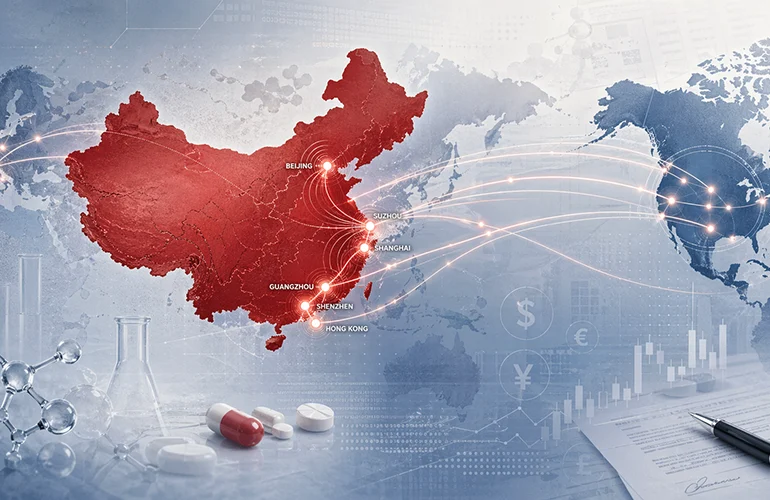
Over the past 16 months, Chinese-domiciled biotechnology companies have emerged as formidable forces in the global pharmaceutical landscape, featuring prominently in a significant proportion of major licensing and acquisition deals. Out of 26 top-tier transactions observed during this period, Chinese biotechs were involved in six, collectively representing nearly one-third of the total headline value, which amounted to an impressive $53 billion. This surge underscores a transformative shift in the global drug development paradigm, with Western pharmaceutical giants increasingly turning to innovative Chinese firms for pipeline assets and research capabilities.
The Ascent of Chinese Biopharma: A Paradigm Shift in Global Drug Development
China’s biopharmaceutical sector has undergone a profound evolution over the last decade, transitioning from a market primarily focused on generics and incremental innovations to a hub for cutting-edge drug discovery. This rapid ascent is propelled by a confluence of factors, including robust government support, substantial domestic and international investment, a burgeoning pool of highly skilled scientific talent, and an expedited regulatory environment for novel therapies. Initiatives like "Healthy China 2030" and "Made in China 2025" have earmarked biopharma as a strategic industry, fostering an ecosystem ripe for innovation. Universities and research institutions have scaled up, producing a new generation of scientists, many of whom have returned from advanced studies abroad, bringing global expertise and entrepreneurial drive.
Furthermore, the Chinese market itself presents a massive opportunity, with a large and diverse patient population providing unique advantages for clinical trials and market access. This domestic demand, coupled with a strategic imperative for Chinese companies to expand globally, has driven a focus on developing first-in-class and best-in-class assets. The competitive intensity within China has also fostered an "innovate or die" mentality, pushing companies to achieve higher R&D velocity and cost-efficiency compared to traditional industry norms. This dynamic environment has cultivated a fertile ground for novel drug modalities and therapeutic breakthroughs, catching the attention of established multinational pharmaceutical corporations seeking to refresh and diversify their pipelines.
A Chronology of High-Value Cross-Border Collaborations
The recent flurry of deals highlights a clear trend of Western pharmaceutical leaders actively seeking out Chinese innovation across a spectrum of therapeutic areas. The transactions, spanning from late 2024 into early 2026, showcase both the breadth of Chinese biopharma capabilities and the strategic intent of global players.
-
December 2024: Merck and Hansoh Pharma – A Landmark in Obesity Treatment
The trend gained significant momentum when Merck, a global pharmaceutical powerhouse, inked an exclusive global license agreement with Jiangsu Province-headquartered Hansoh Pharma. This groundbreaking deal, valued at up to $2 billion, centered on HS-10535, Hansoh’s investigational oral obesity candidate. This collaboration underscored the increasing importance of novel metabolic disease treatments and signaled Merck’s confidence in Hansoh’s R&D prowess in a highly competitive therapeutic area. The partnership provides Merck with a promising asset to compete in the burgeoning obesity market, while Hansoh gains substantial financial backing and global development expertise. -
March 2025: Merck’s Second Dive into Chinese Innovation with Hengrui Pharma
Just months later, Merck reinforced its commitment to Chinese innovation by returning for another major asset. In March 2025, the company entered into a separate licensing agreement with Jiangsu Hengrui Pharmaceuticals Co., Ltd. for HRS-5346, an investigational oral lipoprotein(a) inhibitor designed for cardiovascular disease. This deal, also valued at up to $2 billion, further diversified Merck’s pipeline with a potentially impactful treatment for a critical and widespread health condition. The back-to-back deals from Merck highlighted a proactive strategy to leverage China’s rapidly advancing drug discovery capabilities. -
June 2025: AstraZeneca’s AI-Powered Partnership with CSPC Pharmaceutical Group
AstraZeneca, another major European pharmaceutical firm, demonstrated an early embrace of Chinese technological innovation. In June 2025, the company announced an extensive AI-led chronic-disease research pact with Hebei Province-based CSPC Pharmaceutical Group. This collaboration, potentially worth up to $5.3 billion, focused on leveraging artificial intelligence and advanced computational methods to accelerate the discovery and development of new treatments for chronic diseases. This deal not only showcased the value of Chinese R&D but also highlighted the growing integration of AI in drug discovery, with Chinese firms proving to be strong partners in this cutting-edge field. -
July 2025: Pfizer’s Strategic Investment in 3SBio’s Oncology Candidate
The momentum continued into the summer of 2025, with Pfizer, a U.S. pharmaceutical giant, securing licensing rights for 3SBio’s cancer candidate, SSGJ-707. The agreement included an upfront payment of $1.25 billion, with potential milestone payments reaching up to $4.8 billion, complemented by a planned $100 million equity investment in 3SBio. This substantial commitment from Pfizer underscored the global recognition of Chinese advancements in oncology, a therapeutic area where innovation is paramount. The equity investment further solidified the strategic alignment between the two companies, indicating a deeper partnership beyond a typical licensing agreement. -
January 2026: AbbVie Enters the Fray with RemeGen for Solid Tumors
As the new year began, AbbVie joined the ranks of Western firms tapping into Chinese biopharma expertise. In January 2026, AbbVie announced an exclusive licensing agreement with RemeGen for RC148, a novel bispecific antibody targeting advanced solid tumors. This high-value deal, potentially worth up to $5.6 billion, positions RC148 as a promising candidate in the competitive oncology space, especially for difficult-to-treat solid tumors. The collaboration highlighted RemeGen’s innovative platform for developing complex biological therapies and AbbVie’s strategy to bolster its oncology portfolio with differentiated assets. -
February 2026: AstraZeneca Deepens Partnership with CSPC for Metabolic Diseases
Just a month after the AbbVie-RemeGen deal, AstraZeneca reiterated its confidence in CSPC by expanding their collaboration. This time, the focus shifted to obesity and weight-related drug candidates, with a new deal valued at an staggering $18.5 billion, including an upfront payment of $1.2 billion. This follow-up agreement with CSPC, building on their earlier AI-led research pact, demonstrated the depth of trust and mutual benefit found in these cross-border partnerships. It also underscored the immense market potential seen in metabolic disease treatments, a field where Chinese research is making significant strides. -
Early March 2026: Sanofi Secures Blood Cancer Drug from Sino Biopharm Unit
In early March, Sanofi, a prominent French pharmaceutical company, entered into a licensing agreement with Chia Tai Tianqing, a unit of Sino Biopharm, for rovadicitinib. This deal, valued at up to $1.53 billion, targeted a blood cancer drug, further diversifying the therapeutic areas attracting international interest in Chinese assets. The agreement signifies Sanofi’s commitment to expanding its hematology portfolio and recognizing the innovative capabilities within Chinese subsidiaries.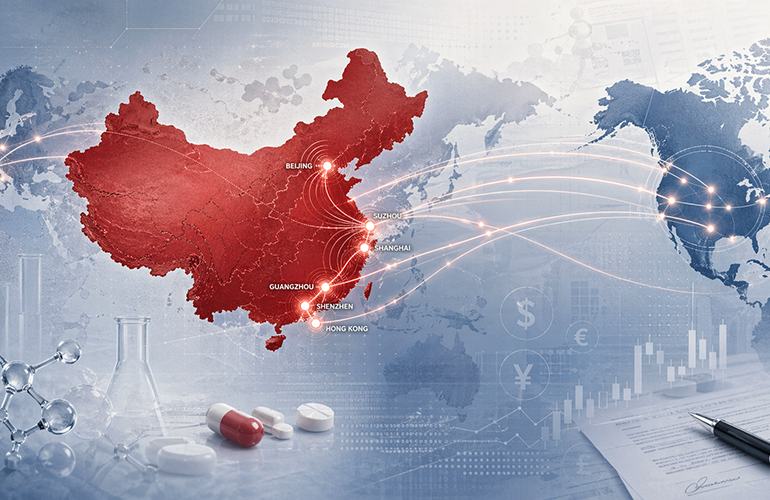
-
Late March 2026: Eli Lilly Expands AI-Driven R&D with Insilico Medicine
Rounding out the busy first quarter of 2026, Eli Lilly significantly expanded its existing work with Insilico Medicine. Though Hong Kong-listed, Insilico Medicine maintains a strong presence with its Cambridge, Massachusetts headquarters, embodying a unique hybrid model bridging East and West innovation. The new licensing and research pact, valued at up to $2.75 billion, deepened their collaboration in AI-driven drug discovery, emphasizing the role of advanced computational platforms in accelerating the identification and development of novel therapeutic candidates. This partnership illustrates the increasing reliance on AI and machine learning, areas where Chinese-affiliated companies are rapidly gaining expertise.
Statistical Evidence and Market Insights
The individual deals are part of a broader, data-supported trend. According to Citeline’s Pharmaprojects database, 2025 marked a historic milestone: more new drugs made their market debut in China than anywhere else in the world, surpassing the United States for the first time on this critical metric. This achievement is a testament to China’s accelerated R&D pipeline and increasingly efficient regulatory approval processes.
The geographic distribution of these major deals further illustrates the global interest. Roughly half of the deals involving Chinese biotechs were with firms of U.S. origin, predominantly structured as mergers and acquisitions (M&A). Just under 30% involved direct licensing agreements with Chinese-headquartered firms, while the remaining transactions were mixed deals involving European companies. This diverse engagement underscores the multifaceted nature of collaborations, ranging from outright acquisitions to strategic licensing partnerships that allow Western firms to access specific novel assets without full integration.
Expert Commentary and Industry Reactions
Industry experts are keenly observing this paradigm shift. Fangning Zhang, a partner at McKinsey, articulated this sentiment to Citeline sister publication Scrip, stating that China now "combines next-generation modality leadership and R&D velocity that runs faster and at lower cost than industry norms." Zhang further characterized Asia as "biopharma’s emerging epicenter," a powerful statement reflecting the region’s burgeoning influence.
The financial sector echoes this optimism. Tom Barsha, head of Asia Pacific M&A at BofA Securities, predicts a sustained surge, forecasting that the total value of China’s licensing-out deals will double again over the next 18 to 24 months. This projection signals not just a temporary spike but a fundamental and enduring shift in global biopharma investment and partnership strategies. Western pharmaceutical companies, facing patent cliffs, increasing R&D costs, and a constant need for pipeline innovation, are actively seeking out these opportunities. The ability of Chinese biotechs to deliver novel drug candidates with speed and cost-efficiency makes them highly attractive partners, offering a crucial avenue for pipeline diversification and market expansion.
Implications for the Global Pharmaceutical Landscape
The rise of Chinese biopharma has profound implications for the global pharmaceutical landscape, signaling a rebalancing of power and innovation.
- Shift in R&D Leadership: The data from Pharmaprojects suggests that China is no longer merely a manufacturing hub but a significant driver of novel drug discovery. This challenges the long-standing dominance of Western nations in pharmaceutical innovation and could lead to a more geographically diverse distribution of R&D leadership.
- Accelerated Drug Development: China’s "R&D velocity" means that drug candidates are progressing through development faster, potentially bringing new therapies to patients more quickly globally. This increased pace could spur greater competition and efficiency across the industry.
- Pipeline Diversification for Western Pharma: For multinational pharmaceutical companies, partnering with Chinese biotechs offers a strategic pathway to access a diverse range of novel assets, especially in challenging therapeutic areas like oncology, metabolic diseases, and immunology. This helps them replenish pipelines, mitigate risks, and maintain competitive edge.
- Increased Investment Flows: The success of these high-value deals will undoubtedly attract further venture capital and private equity investment into Chinese biotechs, fueling more innovation and strengthening the ecosystem. This could lead to a virtuous cycle of growth and discovery.
- Evolving Business Models: The trend points to an evolution in how global pharma operates. Licensing-out models, where Chinese firms develop assets to a certain stage and then license them globally, are becoming increasingly common. This allows Chinese companies to monetize their innovation while benefiting from the global reach and development expertise of larger partners.
Challenges and Considerations
While the outlook is largely positive, challenges remain. Issues such as intellectual property protection, navigating complex international regulatory frameworks, and geopolitical considerations can influence the long-term trajectory of these partnerships. Integrating different corporate cultures and ensuring seamless collaboration across vast distances also requires careful management. However, the sheer volume and value of the recent deals suggest that the strategic benefits currently outweigh these potential hurdles.
Conclusion
The past 16 months have unequivocally demonstrated China’s emergence as a pivotal player in global biopharmaceutical innovation. With Chinese-domiciled biotechs securing a substantial share of major pharma deals and contributing significantly to their total value, the industry is witnessing a fundamental reordering of its landscape. Driven by a dynamic R&D ecosystem, strategic investments, and a relentless pursuit of novel therapies, China is not just participating in global drug development; it is increasingly shaping its future. The continued willingness of pharmaceutical titans like Merck, Pfizer, AstraZeneca, AbbVie, Sanofi, and Eli Lilly to invest billions in Chinese assets solidifies this trend, cementing Asia’s status as the new epicenter of biopharma innovation for years to come.