An international team of scientists has uncovered a surprising molecular strategy used by a rare group of land plants. The finding could one day help researchers redesign important crops such as wheat and rice so they convert sunlight into food far more efficiently.
A Fundamental Bottleneck in Photosynthesis Identified
At the heart of global food production lies a critical biological process: photosynthesis. This intricate dance of light energy, water, and carbon dioxide sustains nearly all life on Earth. However, a fundamental limitation within this process has long constrained the potential yields of agricultural staples like wheat, rice, and maize. The enzyme responsible for the crucial step of carbon fixation, known as Rubisco (ribulose-1,5-bisphosphate carboxylase/oxygenase), is notoriously inefficient. Despite its paramount importance, Rubisco is slow and prone to a detrimental side reaction with oxygen, a phenomenon known as photorespiration. This inefficiency translates directly into wasted energy for the plant and a significant cap on how much biomass it can produce, ultimately impacting global food security.
For decades, plant scientists have sought ways to enhance Rubisco’s performance, drawing inspiration from organisms that have evolved more sophisticated carbon-capturing mechanisms. Algae, for instance, have developed specialized cellular compartments called pyrenoids, which concentrate carbon dioxide around Rubisco, thereby boosting its efficiency and minimizing its interaction with oxygen. The ambition to replicate this carbon-concentrating mechanism in land plants, particularly in our major food crops, has been a long-standing goal. However, the genetic and molecular complexity of transferring these algal systems has presented a formidable barrier, hindering progress for years.
Hornworts Emerge as Unexpected Allies in Agricultural Research
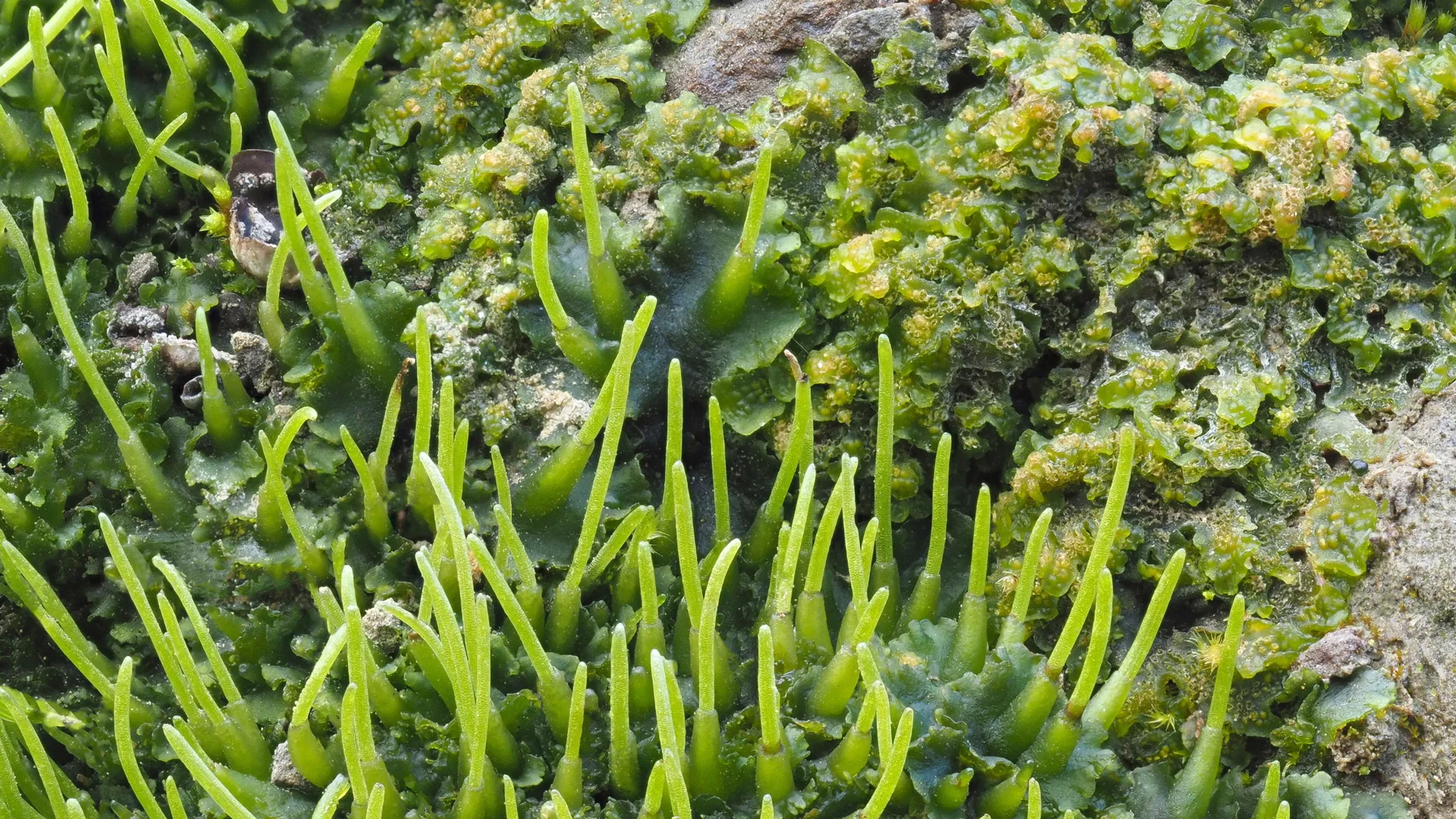
The breakthrough in understanding and potentially overcoming Rubisco’s limitations has come from an unlikely source: hornworts. These ancient, non-vascular plants, often overlooked in mainstream botany, represent the only known group of land plants to naturally possess carbon-concentrating compartments functionally analogous to the pyrenoids found in algae. Recognizing hornworts’ closer evolutionary relationship to crop plants compared to algae, an international research collaboration, spearheaded by scientists from the Boyce Thompson Institute (BTI), Cornell University, and the University of Edinburgh, turned their attention to these unassuming flora.
This research, published in the prestigious journal Science, sought to unravel the molecular architecture of these carbon-concentrating structures in hornworts, with the hope of identifying transferable genetic components. The investigation, however, yielded a discovery that defied initial expectations and offered a novel paradigm for enhancing photosynthesis.
A Radical Evolutionary Solution: Modifying Rubisco Itself
"We initially assumed that hornworts, like algae, would employ a separate protein machinery to gather Rubisco and concentrate CO2," explained Tanner Robison, a graduate student at BTI and a co-first author of the study. "Our expectation was to find a distinct ‘Rubisco-binding’ protein. Instead, we were astonished to discover that hornworts have ingeniously evolved to modify Rubisco itself to achieve this clustering effect."
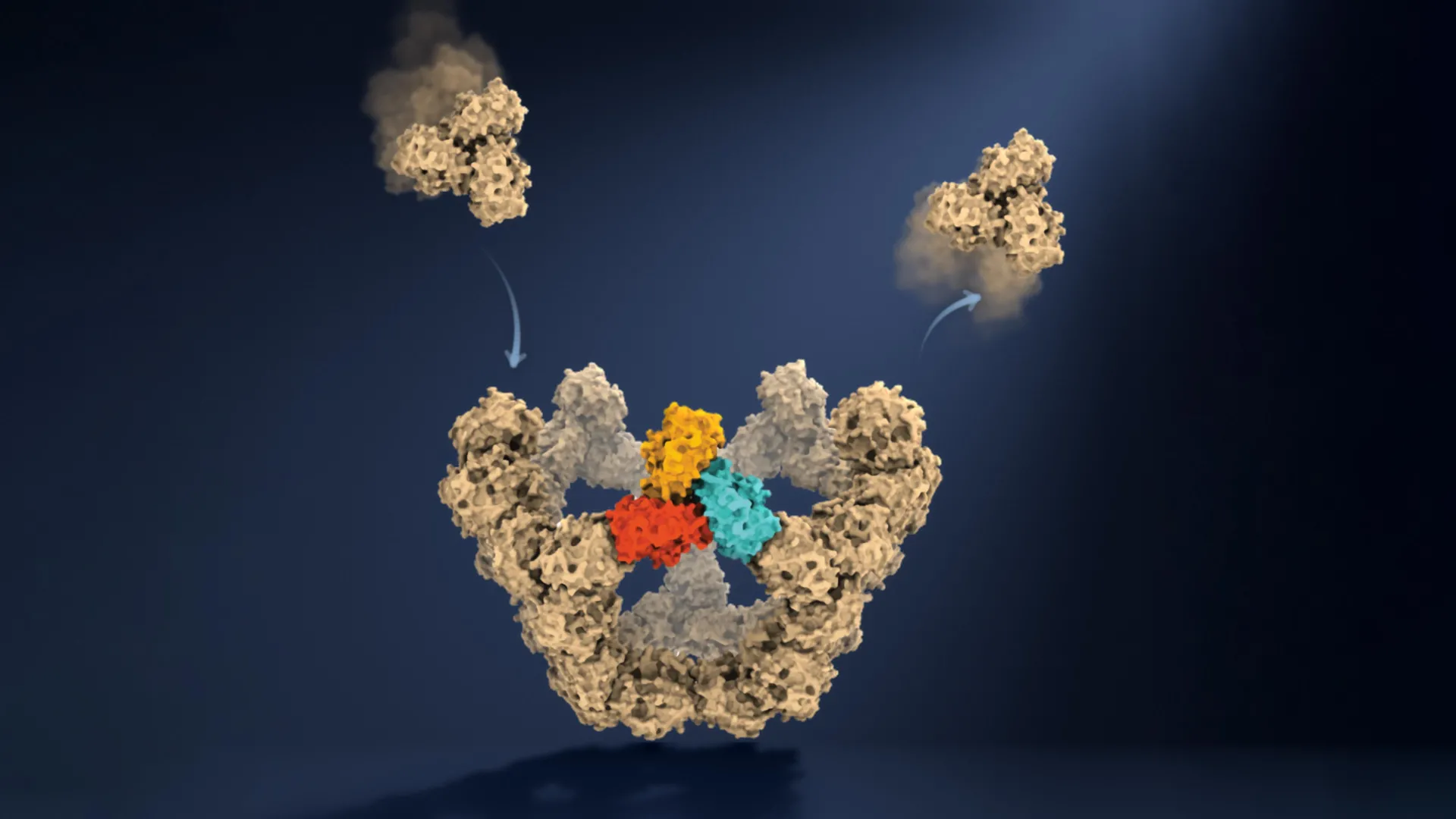
This groundbreaking revelation centers on a unique protein component within hornworts, which the researchers have termed "RbcS-STAR." Rubisco is a complex enzyme assembled from two types of protein subunits: large subunits and small subunits. In hornworts, a specific variant of the small subunit contains an additional, hitherto unrecognized, protein segment known as the STAR region.
The "Molecular Velcro" Mechanism: RbcS-STAR and Rubisco Clustering
The STAR region, it turns out, functions as a potent "molecular velcro." This extra tail on the small Rubisco subunit possesses the remarkable ability to promote self-assembly, causing multiple Rubisco molecules to aggregate and form dense, clustered structures within the plant cell. This clustering effectively creates localized high concentrations of carbon dioxide around the enzyme, thereby significantly enhancing its efficiency.
To validate the universality of this mechanism, the research team conducted a series of critical experiments. First, they introduced the RbcS-STAR component into a hornwort species that does not naturally exhibit these carbon-concentrating structures. The results were striking: Rubisco, which was previously dispersed throughout the cell, began to aggregate into distinct compartments, mirroring the structures found in their naturally equipped relatives.
Broad Applicability Demonstrated in Model Plant Systems
The significance of this discovery was further amplified when the scientists tested the RbcS-STAR component in Arabidopsis thaliana, a widely utilized model organism in plant biology research. Upon introducing the RbcS-STAR gene into Arabidopsis, the enzyme again exhibited a pronounced tendency to cluster within the chloroplasts, the cellular powerhouses where photosynthesis occurs.
"The most compelling aspect of this finding is its broad applicability," stated Alistair McCormick, a professor at the University of Edinburgh and co-leader of the research. "We even observed the clustering effect when we attached just the STAR tail to Arabidopsis‘s native Rubisco subunits, without the rest of the RbcS-STAR protein. This strongly indicates that the STAR region is the primary driver of this self-assembly. It’s a remarkably modular tool that appears capable of functioning across diverse plant lineages."
Implications for Future Crop Improvement and Food Security
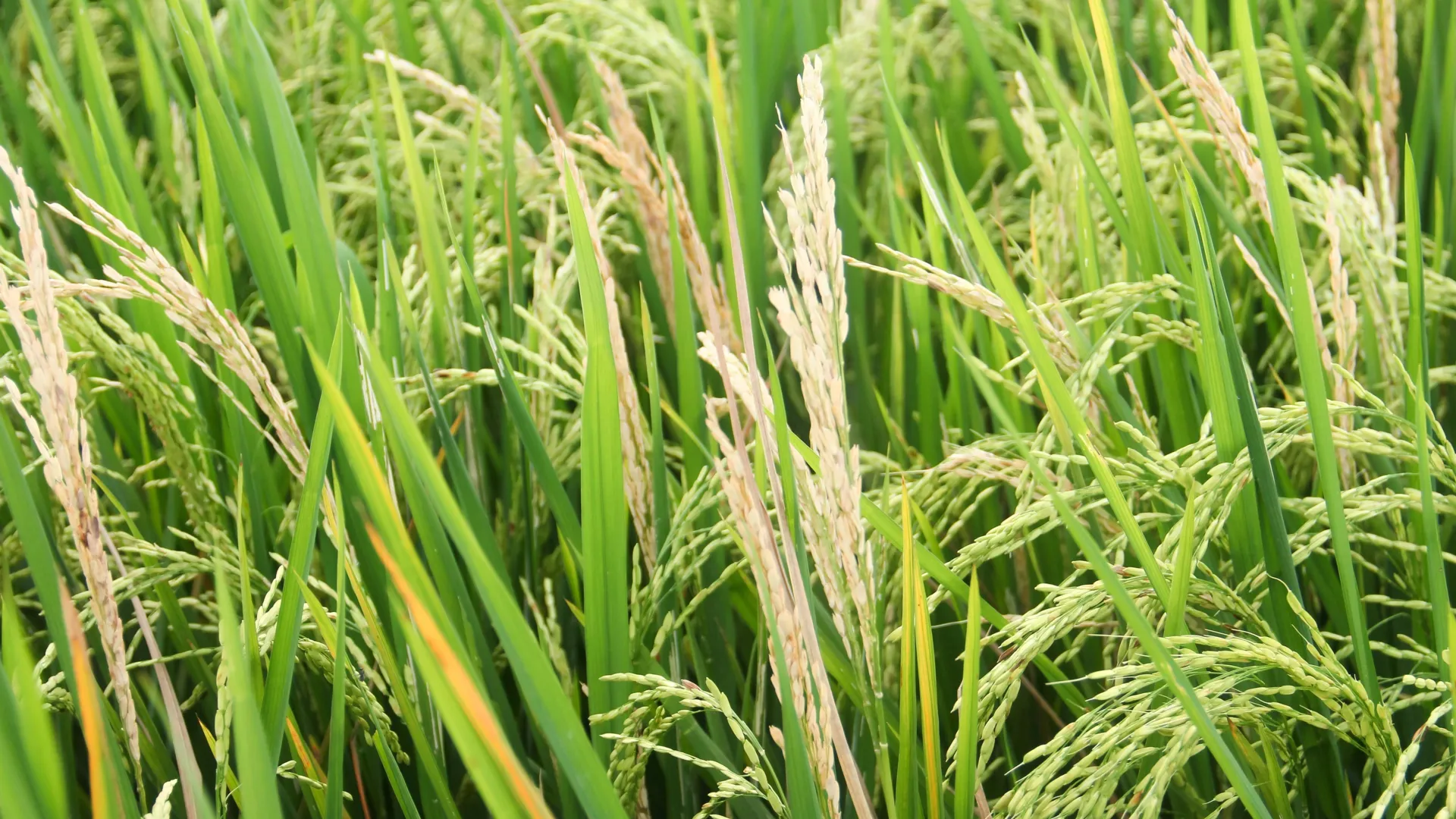
The identification of RbcS-STAR and its "molecular velcro" function opens a promising new avenue for agricultural biotechnology. The fact that this mechanism can be induced in different plant species suggests that it might be possible to engineer this trait into major food crops like wheat, rice, and maize. By introducing the RbcS-STAR component, scientists could potentially trigger the formation of Rubisco clusters, leading to more efficient carbon fixation and, consequently, higher crop yields.
The implications for global food security are substantial. With a rapidly growing world population and the increasing pressures of climate change on agricultural systems, enhancing crop productivity is paramount. Even modest improvements in photosynthetic efficiency could translate into significant increases in food production, helping to feed more people and reduce the environmental footprint of agriculture.
Addressing the Next Frontier: Carbon Dioxide Delivery
While the discovery of RbcS-STAR is a monumental step forward, the researchers acknowledge that it represents one piece of a larger puzzle. "We have essentially built a Rubisco ‘house’," explained Laura Gunn, an assistant professor at Cornell University and co-leader of the research. "However, this house will not be truly efficient unless we also ensure a robust system for delivering carbon dioxide to it. Think of it as needing to update the HVAC system in that house."
The next phase of research will focus on understanding and potentially engineering the mechanisms that efficiently supply carbon dioxide to these newly formed Rubisco clusters. This may involve further genetic modifications to optimize the transport of CO2 into the chloroplasts and ensure it reaches the clustered enzyme effectively.
A Testament to Nature’s Ingenuity and Scientific Collaboration
This groundbreaking research underscores the profound insights that can be gleaned from studying the diversity of life on Earth. "Nature has already explored and tested elegant solutions to biological challenges over millions of years," commented Fay-Wei Li, Associate Professor at BTI and a senior author on the study. "Our role as scientists is to meticulously observe, understand, and then adapt these natural innovations for the benefit of humanity, particularly in the crops that form the bedrock of our global food supply."
The study’s collaborative nature, involving researchers from multiple institutions and disciplines, highlights the power of international scientific partnerships in tackling complex global challenges. The four early-career scientists who made equal contributions to the paper – Tanner A. Robison, Yuwei Mao, Zhen Guo Oh, and Warren S.L. Ang – played pivotal roles in this extensive investigation. Their dedication and collaborative spirit, alongside the leadership of Gunn, McCormick, and Li, have paved the way for a potentially transformative era in crop improvement and sustainable food production.
Broader Impact and the Road Ahead
The successful identification and demonstration of the RbcS-STAR mechanism represent a significant scientific achievement with far-reaching implications beyond immediate agricultural applications. It provides a powerful new tool for fundamental plant science research, allowing scientists to better understand the intricate regulation of photosynthesis and enzyme localization within plant cells.
The potential for a modest increase in photosynthetic efficiency across staple crops could have profound economic and social consequences. Higher yields can lead to greater farmer profitability, reduced land use for agriculture, and a more stable global food market. Furthermore, plants that are more efficient at capturing carbon dioxide could play a role in mitigating climate change by increasing carbon sequestration.
The research team’s commitment to addressing the remaining challenges, particularly CO2 delivery, suggests that the realization of these benefits may still be some years away. However, the fundamental discovery of a naturally occurring, transferable mechanism for Rubisco clustering offers a tangible and exciting pathway toward engineering crops that are more productive, resilient, and sustainable for the future. This work serves as a powerful reminder of the ongoing importance of fundamental biological research and the potential for unexpected discoveries in even the most ancient and humble forms of plant life to shape our future.