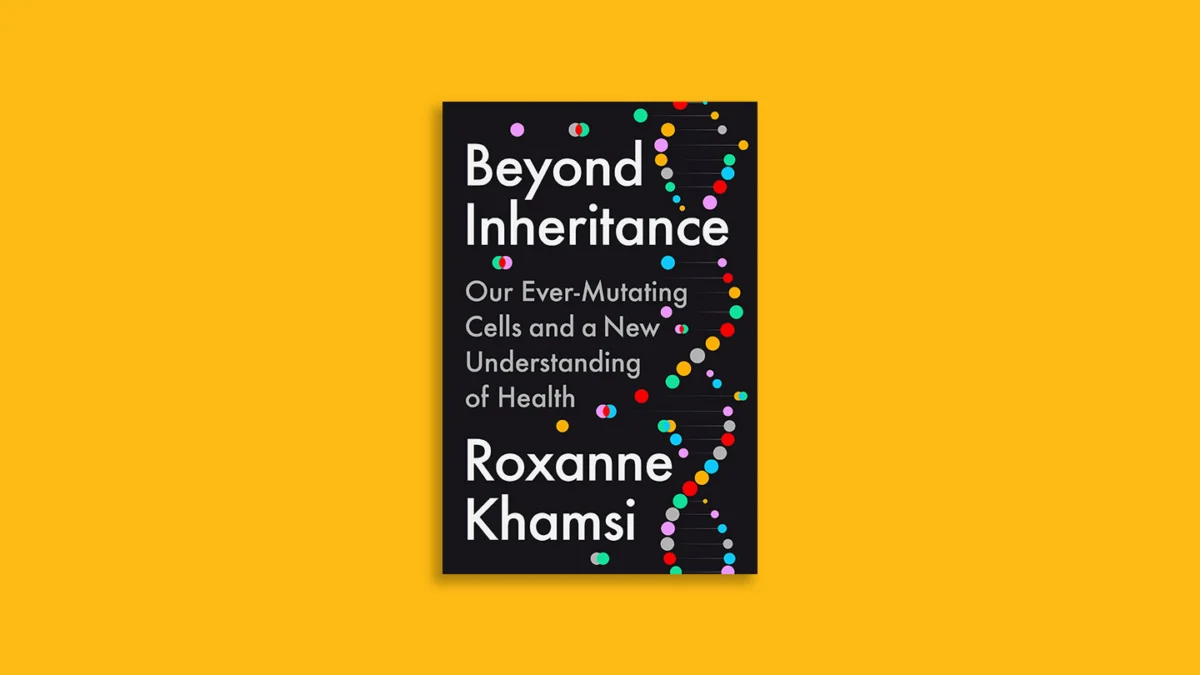
Science writer Roxanne Khamsi’s latest book, Beyond Inheritance, published by Riverhead Books at $30.00, challenges the conventional understanding of human genetics by illuminating the profound and often overlooked role of somatic mutations – those that occur in non-reproductive cells – throughout an individual’s lifespan. Moving beyond the inherited blueprint passed down from parents, Khamsi argues that our genetic destinies are dynamically shaped by the constant accumulation of genetic changes within our own cells, influencing everything from our health and susceptibility to disease to the very process of aging.
The prevailing narrative surrounding genetic mutations often focuses on their inheritance, linking them to observable traits or the transmission of inherited disorders. This perspective, while significant, paints an incomplete picture. Khamsi’s work meticulously details how the estimated 30 to 40 trillion cells that constitute the human body are not monolithic entities acting in perfect concert but are, in essence, individual universes, each possessing its own DNA that undergoes continuous alteration over time. These alterations, or mutations, can range from inconsequential to profoundly impactful, capable of either exacerbating health problems or, remarkably, offering pathways to correction and healing.
The Dynamic Nature of the Human Genome
For decades, the scientific community and the public alike have largely viewed the genome as a relatively static entity, with the primary source of genetic variation being the genetic material inherited from our biological parents. This inherited DNA forms the foundation of our genetic makeup, dictating a wide array of characteristics and predispositions. However, recent advancements in genomics and molecular biology have unveiled a far more complex and fluid reality. Our bodies are not simply passive recipients of their genetic inheritance; they are active participants in a continuous process of genetic evolution at the cellular level.
Somatic mutations arise spontaneously due to various factors, including errors during DNA replication, exposure to environmental mutagens like UV radiation and certain chemicals, and the natural wear and tear of cellular processes. Unlike germline mutations, which are present in sperm and egg cells and can be passed on to offspring, somatic mutations occur in the body’s cells after conception. While many somatic mutations are benign and may have no discernible effect, others can have significant consequences.
The cumulative effect of these somatic mutations over an individual’s lifetime contributes to a phenomenon known as mosaicism, where different cells within the same individual can possess distinct genetic profiles. This cellular heterogeneity is a fundamental aspect of human biology, playing a crucial role in development, aging, and disease. Khamsi’s book effectively translates complex scientific research into an accessible narrative, demystifying concepts like tumor suppressor genes and cellular competition for readers who may not have a background in genetics. Her engaging writing style makes these intricate biological processes understandable and relevant.
From Threat to Hope: The Dual Nature of Mutations
The common association of mutations with dire health outcomes, particularly cancer, is undeniable. Malignant tumors are, in essence, the result of uncontrolled cell growth driven by accumulating somatic mutations that disrupt normal cellular regulation. Conditions like early-onset dementia and certain genetic disorders that cause severe physical ailments are also frequently linked to genetic alterations. However, Khamsi’s research, drawing on a wealth of contemporary scientific literature, presents a nuanced perspective that extends beyond these negative associations.
The book highlights that the same mechanisms that can lead to disease can also be harnessed for therapeutic benefit. Khamsi underscores the potential for beneficial mutations to arise within our own bodies, offering novel avenues for healing and disease management. This optimistic outlook is supported by emerging research in regenerative medicine and gene therapy.
One compelling example cited in the book is the genetic disorder tyrosinemia. This condition, often fatal in infants without a liver transplant, is characterized by the buildup of a common protein building block in the liver and other organs. Khamsi points to instances where clusters of affected cells have spontaneously mutated back to a healthy state, effectively reversing the disease process. This observation offers a tantalizing glimpse into the possibility of therapeutically inducing or encouraging such beneficial mutations in the future to combat genetic diseases. This paradigm shift, from viewing mutations solely as agents of destruction to recognizing their potential as healers, represents a significant evolution in our understanding of human biology.
The Lifespan and the Accumulation of Genetic Changes
Beyond disease, Khamsi explores the intricate relationship between accumulated somatic mutations and the aging process. The gradual accumulation of genetic damage over time is widely considered a primary driver of cellular senescence and organismal aging. As cells age, they accumulate DNA damage, telomere shortening, and epigenetic alterations, all of which contribute to functional decline and increased susceptibility to age-related diseases.
Companies are actively exploring strategies to combat aging by targeting and eliminating senescent, highly mutated cells. However, Khamsi raises a critical question regarding the ethical and practical implications of such interventions. The precision required to selectively eliminate harmful cells without inadvertently damaging healthy ones is a significant scientific challenge. Moreover, the long-term consequences of interfering with natural cellular processes, even those associated with aging, warrant careful consideration.
The book emphasizes that mutation is an inherent and inevitable aspect of life. Our cells are in a constant state of flux, evolving and adapting. The critical task for scientific inquiry and medical intervention, Khamsi suggests, is to develop a sophisticated understanding of these cellular changes, discerning between those that are detrimental, benign, or even beneficial, before attempting to intervene.
Implications for Future Medical Interventions
Beyond Inheritance serves as a crucial call for a more holistic and dynamic view of genetics in medicine. The implications of understanding somatic mutations are far-reaching, potentially revolutionizing approaches to disease prevention, diagnosis, and treatment.
Personalized Medicine: The recognition that individuals possess unique somatic mutation profiles opens the door to highly personalized medical interventions. Instead of relying on broad diagnostic categories, future treatments could be tailored to an individual’s specific cellular genetic landscape. This could lead to more effective therapies with fewer side effects.
Cancer Therapy: For cancer treatment, understanding the specific mutations driving tumor growth in an individual patient is already a cornerstone of precision oncology. Khamsi’s work suggests that future therapies might not only target existing mutations but also aim to restore normal cellular function by promoting beneficial mutations or correcting detrimental ones.
Regenerative Medicine: The concept of beneficial mutations has direct relevance to regenerative medicine. If scientists can identify and harness the genetic mechanisms that drive cellular repair and regeneration, they could develop novel strategies for tissue engineering and the treatment of degenerative diseases.
Aging Research: The ongoing quest to understand and potentially mitigate aging could be profoundly influenced by Khamsi’s insights. Rather than solely focusing on external interventions, future research might explore ways to support the body’s intrinsic cellular repair mechanisms and manage the accumulation of somatic mutations.
A New Perspective on Genetic Destiny
Khamsi’s central thesis—that our genetic destinies are not rigidly defined by what we inherit—is a powerful one. It shifts the focus from a deterministic view of genetics to one that acknowledges agency and the potential for internal cellular processes to shape our health trajectory. This perspective is particularly relevant in an era where gene editing technologies like CRISPR are becoming increasingly sophisticated, raising profound questions about our ability to intentionally alter our genetic makeup.
The book concludes with a forward-looking perspective, emphasizing that science is only beginning to grasp the full extent of our cells’ dynamism. Khamsi advocates for a balanced approach: welcoming helpful mutations, accepting harmless ones as an intrinsic part of our biological identity, and approaching interventions with caution and a deep understanding of the complex cellular ecosystem.
"Rather than seek to put an end to all mutations full stop, we should welcome the helpful ones and accept the harmless ones as a part of who we are," Khamsi writes. "Our bodies are brimming with genetic possibilities with the power to shape our future." This sentiment underscores the profound potential that lies within our own biology, urging a deeper appreciation for the intricate and ever-evolving genetic landscape that defines us.
Beyond Inheritance is more than just a scientific exposition; it is an invitation to reconsider our fundamental understanding of life itself, encouraging a more nuanced and hopeful perspective on the intricate dance of genes within the human body. The book’s accessibility, coupled with its groundbreaking scientific content, positions it as a significant contribution to public understanding of genetics and its profound impact on human health and longevity.