

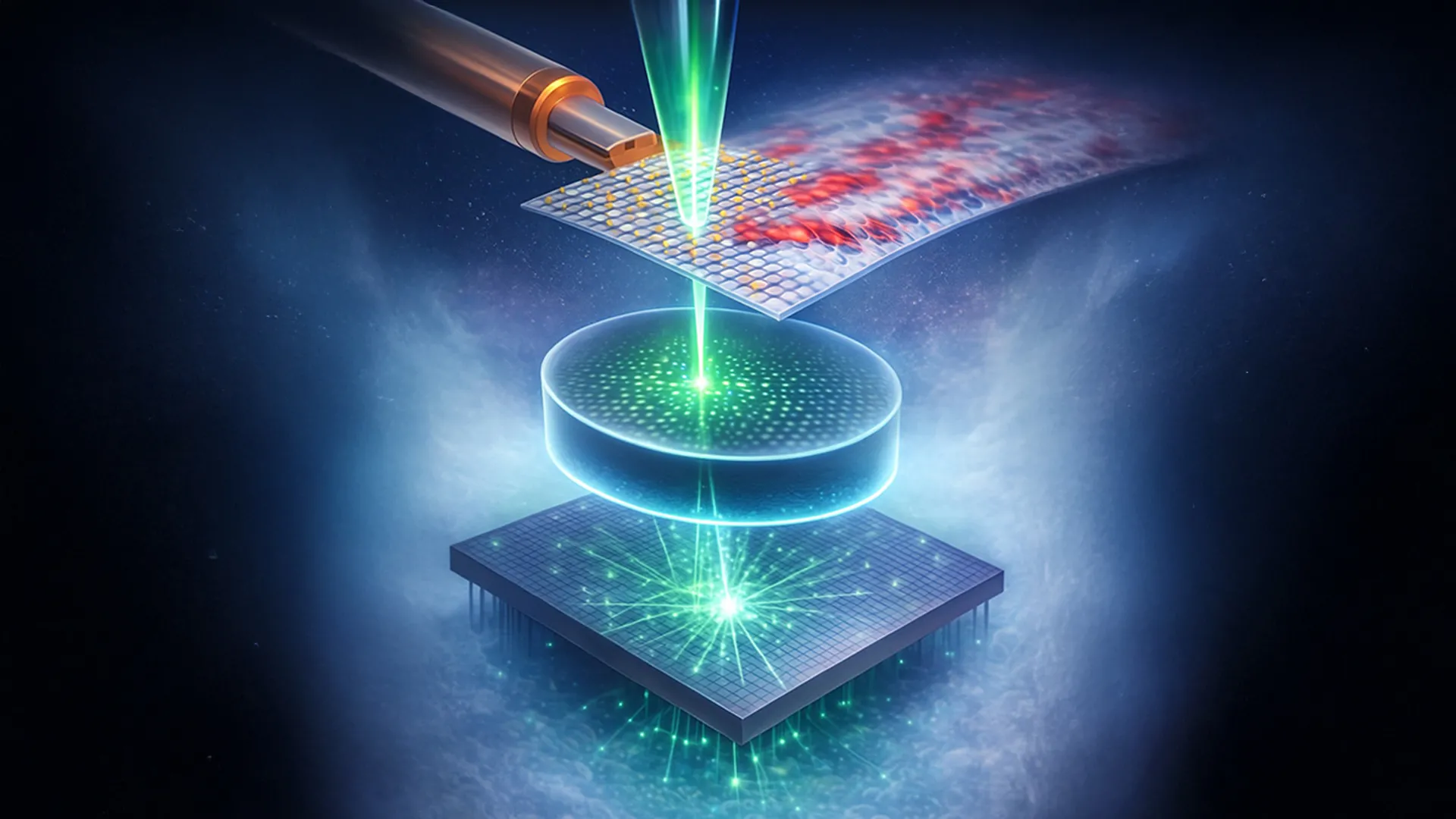
In a landmark advancement for the field of condensed matter physics, a collaborative research initiative led by the Korea Advanced Institute of Science and Technology (KAIST) has achieved the first direct visualization of how electronic order evolves and fluctuates within quantum materials. The study, spearheaded by Professor Yongsoo Yang of the KAIST Department of Physics, alongside Professors SungBin Lee, Heejun Yang, and Yeongkwan Kim, and in partnership with researchers from Stanford University, provides an unprecedented look at the spatial coherence of charge density waves (CDWs). By utilizing state-of-the-art cryogenic electron microscopy, the team has successfully mapped the strength and distribution of these waves at the nanoscale, resolving a long-standing mystery regarding how electronic patterns form, persist, and eventually dissolve during thermal phase transitions.
The Mystery of Electronic Order in Quantum Materials
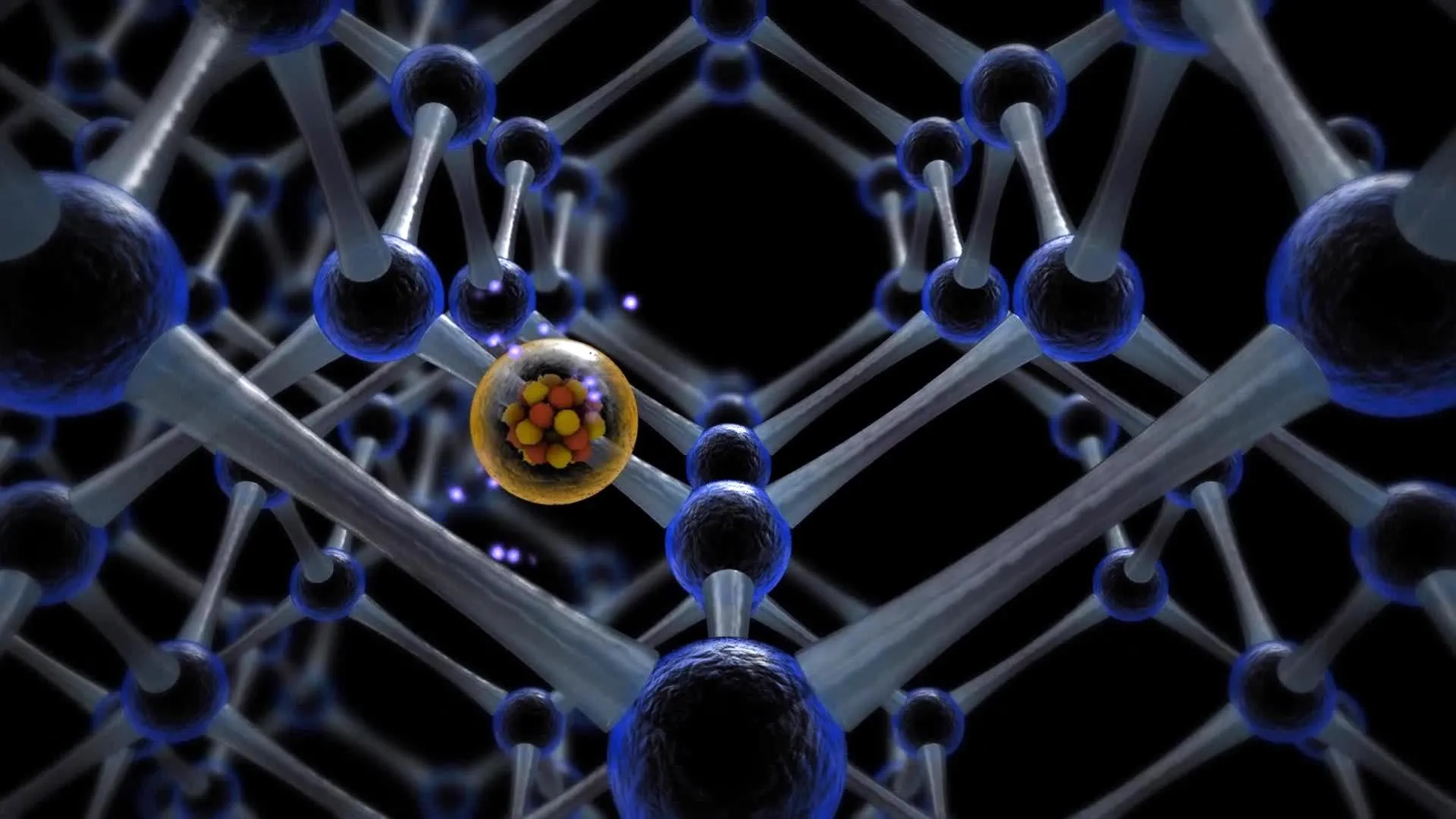
Quantum materials are defined by the complex, collective behavior of their electrons, which often leads to exotic states of matter such as high-temperature superconductivity or topological insulation. One of the most significant phenomena within these materials is the charge density wave (CDW). A CDW occurs when electrons, which usually move independently, spontaneously organize into a static, repeating pattern—essentially a "frozen" wave of charge—as the material is cooled below a specific transition temperature.
For decades, the scientific community has relied on indirect methods to study these waves. Bulk techniques, such as X-ray or neutron diffraction, provide an average view of the material’s structure but lack the spatial resolution to see local variations. Conversely, scanning tunneling microscopy (STM) can image surface electrons with high precision but cannot easily probe the interior "bulk" of the material or track the evolution of order across a wide temperature range in a dynamic environment. The KAIST team’s breakthrough addresses this gap by providing a direct, real-space visualization of the CDW amplitude inside the material, revealing that electronic order is far more "patchy" and sensitive to its environment than previously theorized.
Technological Innovation: The Marriage of 4D-STEM and Cryogenic Cooling
The cornerstone of this research is the application of four-dimensional scanning transmission electron microscopy (4D-STEM) combined with a liquid-helium cooling system. Traditional STEM involves scanning a focused electron beam across a sample to create an image. In 4D-STEM, however, a full two-dimensional diffraction pattern is recorded at every single pixel point (the 2D scan), resulting in a massive four-dimensional dataset.
To capture the delicate CDW states, the researchers had to operate at extreme temperatures. By cooling the microscope to approximately -253°C (20 Kelvin) using liquid helium, they were able to stabilize the quantum states of the electrons. The precision of this setup allowed the team to resolve structures as small as one hundred-thousandth the width of a human hair. This level of resolution is necessary because the fluctuations in electronic order often occur over distances of just a few nanometers.
The 4D-STEM data allowed the researchers to extract the "amplitude" of the CDW at every point in the sample. By analyzing the intensity and position of the diffraction spots—known as Bragg disks—they could reconstruct a map showing exactly where the electronic order was strong, where it was weak, and where it was nonexistent.
Visualizing the "Patchwork" of Electronic Order
The resulting images provided a striking visual departure from the traditional "uniform" model of phase transitions. In classical physics, a phase transition—like water freezing into ice—is often treated as a relatively sudden and homogenous event. However, the KAIST team observed that in the quantum realm, the transition is characterized by extreme spatial heterogeneity.
The researchers compared the formation of the CDW to watching a lake freeze. Instead of a solid sheet of ice forming simultaneously across the surface, the electronic order appeared as scattered, isolated "islands" or patches. Even as the temperature was lowered, some regions exhibited clear, robust periodic patterns while neighboring regions remained in a disordered, metallic state. This "patchy" behavior suggests that the local environment within the crystal lattice—the physical framework of the atoms—exerts a dominant influence on whether or not the electrons can successfully organize.
The Impact of Minute Lattice Strain
One of the study’s most critical findings involves the relationship between electronic order and lattice strain. Using the high-precision data from the 4D-STEM, the team mapped tiny distortions in the crystal lattice—variations in the distances between atoms that are far too small to be detected by conventional optical or structural probes.
The data revealed a direct correlation: regions with even microscopic amounts of strain showed a significantly weakened CDW amplitude. This suggests that the electronic "wave" is incredibly fragile. Subtle mechanical stresses within the material act as barriers, preventing the electrons from synchronizing their patterns. This discovery provides direct experimental evidence for "straintronics," a field of study focused on controlling the electronic properties of materials by precisely engineering mechanical strain. By understanding how strain suppresses CDW order, scientists may eventually be able to "tune" quantum materials to achieve desired states, such as superconductivity, at higher temperatures.
Redefining the Phase Transition: Persistence Above Critical Temperatures
The research also challenged the traditional understanding of the "transition temperature." Typically, it is assumed that once a material is heated above its critical temperature, all long-range electronic order vanishes. However, the KAIST team’s nanoscale maps showed that small, isolated pockets of CDW order persist even well above the expected transition point.
This phenomenon indicates that the breakdown of electronic order is not a simple "on-off" switch but a gradual loss of spatial coherence. While the "long-range" order (the connection between distant patches) disappears, "local" order remains trapped in certain areas, likely stabilized by local crystal features or impurities. This insight is vital for understanding "fluctuating" phases in superconductors, where researchers have long suspected that remnants of electronic order play a role in the material’s behavior even when they are not explicitly visible through bulk measurements.
Chronology of the Breakthrough
The path to these findings involved several years of instrument development and data analysis:
- Instrumental Integration: The team began by integrating a high-stability liquid-helium cooling stage into a double Cs-corrected Titan cubed electron microscope at the KAIST Analysis Center for Research Advancement (KARA).
- Data Acquisition: Using transition metal dichalcogenides (a class of materials known for exhibiting CDWs), the researchers performed 4D-STEM scans across a gradient of temperatures, moving from deep cryogenic levels to above the transition point.
- Algorithmic Development: The co-first authors—Seokjo Hong, Jaewhan Oh, and Jemin Park—developed specialized data-processing pipelines to handle the terabytes of diffraction data, allowing them to isolate the CDW signal from the background lattice signal.
- Correlation Analysis: The team performed the first direct measurement of spatial correlations in CDW amplitude, statistically proving how the "coherence length" of the electronic order changes with temperature.
- Peer Review and Publication: The findings were rigorously reviewed and published in Physical Review Letters, a premier journal in the field of physics.
Official Responses and Implications
Dr. Yongsoo Yang, the lead author, highlighted the shift in methodology this study represents. "Until now, the spatial coherence of charge density waves was largely inferred indirectly through mathematical models or bulk diffraction patterns," Yang stated. "Our approach allows us to directly visualize how electronic order varies across space and temperature, and to identify the factors—such as local strain—that stabilize or suppress it."
The broader scientific community views this as a major step toward "quantum microscopy." By being able to see the local variations that dictate global properties, researchers can move away from theoretical "averages" and toward a precise, engineering-based understanding of quantum matter.
The implications for technology are significant. Understanding the spatial evolution of electronic order is a prerequisite for developing next-generation quantum sensors and energy-efficient electronics. If electronic patterns like CDWs can be manipulated via local strain or temperature gradients, it opens the door to "phase-change" memory devices that operate at the quantum level, potentially offering speeds and efficiencies far beyond current silicon-based technology.
Funding and Collaborative Support
This ambitious project was supported by several high-level grants from the National Research Foundation of Korea (NRF), funded by the Ministry of Science and ICT (MSIT). Specific support programs included the Individual Basic Research Program, the Basic Research Laboratory Program, and the Nanomaterial Technology Development Program. Additionally, the work was supported by the KAIST Singularity Professor Program, which provides long-term funding for high-risk, high-reward scientific inquiries.
The researchers also acknowledged the critical role of the staff at the KAIST Analysis Center for Research Advancement (KARA), whose expertise in electron microscopy was essential for maintaining the extreme environmental conditions required for the experiment.
As the scientific community continues to explore the "zoo" of quantum materials, the techniques established by the KAIST team are expected to become a new standard. The ability to visualize the invisible—the subtle, patchy, and fluctuating patterns of electrons—marks a new era in the quest to master the quantum world.













Leave a Reply