

The landscape of web application deployment for Python, particularly within the burgeoning fields of Artificial Intelligence and Machine Learning, has long presented a complex array of challenges for developers. However, a significant advancement is now poised to simplify this process dramatically with the introduction of FastAPI Cloud. This platform emerges as a dedicated, managed service designed to transform the often-arduous task of deploying FastAPI applications into a swift, intuitive, and highly efficient experience. Its arrival signals a notable shift towards democratizing cloud deployment for the Python ecosystem, promising to enhance developer productivity and accelerate innovation.
FastAPI, a modern, fast (high-performance) web framework for building APIs with Python 3.7+, based on standard Python type hints, has rapidly ascended in popularity since its inception. Its appeal stems from a potent combination of factors: exceptional speed, facilitated by its asynchronous capabilities (built on Starlette for the web parts and Pydantic for data validation); inherent simplicity due to automatic API documentation (Swagger UI and ReDoc); and a developer-friendly design that leverages Python’s native type hinting for robust code. This framework has become a cornerstone for developers crafting high-performance web services, particularly those integrating with AI models, machine learning APIs, and data science workloads, where efficient data handling and rapid execution are paramount. The ability to define schemas with Pydantic and get automatic validation and serialization is a game-changer for data-intensive applications.
Despite FastAPI’s prowess in application development, the journey from local development to a live, scalable cloud environment has traditionally involved navigating a labyrinth of infrastructure concerns. Developers typically contend with selecting appropriate WSGI/ASGI servers like Uvicorn, configuring Docker containers for consistent environments, setting up CI/CD pipelines for automated deployments, managing virtual machines or serverless functions, and ensuring robust monitoring and logging. Each of these steps, while essential, adds layers of complexity and time, diverting valuable developer resources from core application logic.
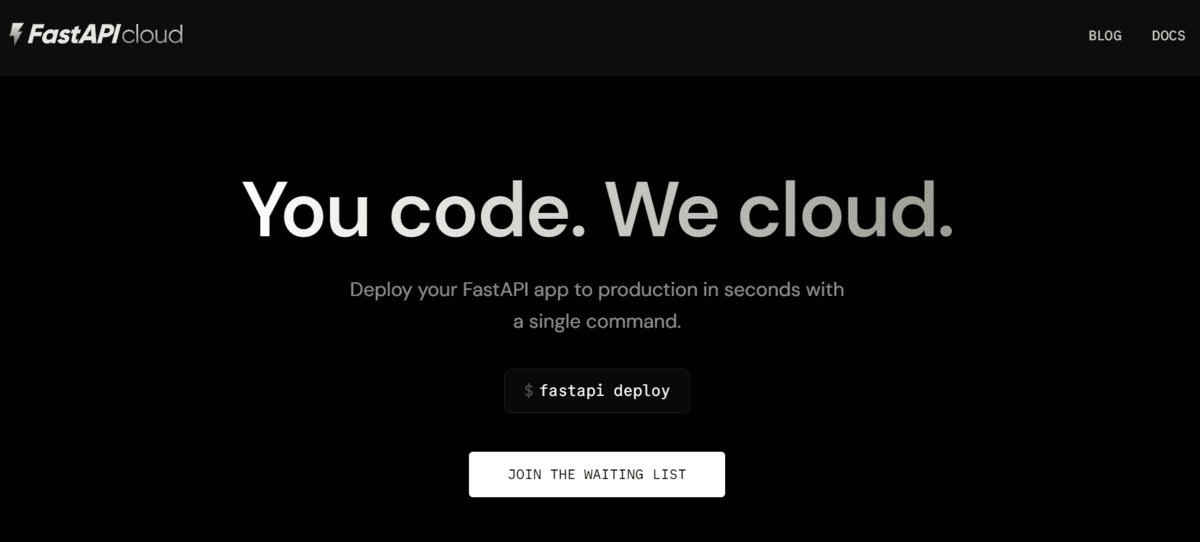
FastAPI Cloud directly addresses these deployment bottlenecks. The platform aims to provide a streamlined, managed hosting solution that abstracts away much of the underlying infrastructure complexity. By offering a command-line interface (CLI) that facilitates deployment in mere seconds, FastAPI Cloud promises to deliver an experience akin to modern managed platforms like Vercel or Supabase, which are celebrated for their developer-centric workflows and minimal configuration requirements. This shift represents a significant leap forward, moving beyond merely serving APIs to encompassing a broader, more integrated ecosystem for building and deploying complete web applications.
The Evolution of Python Deployment and FastAPI Cloud’s Role
The Python ecosystem has seen a continuous evolution in deployment strategies. Initially, simple WSGI servers and manual server configurations were common. The rise of Docker revolutionized containerization, offering reproducible environments, but still required significant configuration expertise. Subsequently, platform-as-a-service (PaaS) providers emerged, offering varying degrees of abstraction. However, a specialized platform tailored specifically for FastAPI, acknowledging its unique asynchronous nature and type-hinting benefits, represents a refined approach. FastAPI Cloud, still in its initial rollout phase via a waitlist, is strategically positioned to fill this niche, offering a purpose-built environment that optimizes the deployment lifecycle for FastAPI applications.
The platform’s design philosophy appears to prioritize speed, ease of use, and a frictionless developer experience. The emphasis on a CLI-driven deployment process underscores this commitment, enabling developers to push their applications to the cloud with minimal commands and configuration overhead. This approach not only reduces the learning curve associated with cloud deployments but also significantly shortens the development-to-production cycle, a critical advantage in fast-paced development environments.
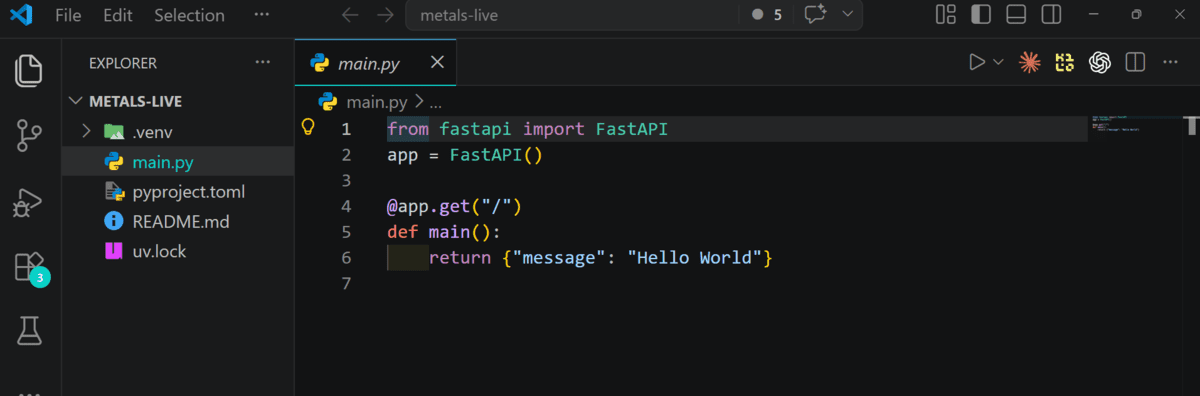
Building and Deploying a Real-World Example: A Live Metals Dashboard
To illustrate the capabilities and simplified workflow offered by FastAPI Cloud, consider a practical application: a live metals dashboard. This example showcases how a FastAPI application can fetch real-time data from external APIs, process it, and present it through a simple yet dynamic web interface. The application would fetch current gold and silver prices from a public API, return this data in a structured JSON format, and display it in a browser, automatically refreshing at regular intervals.
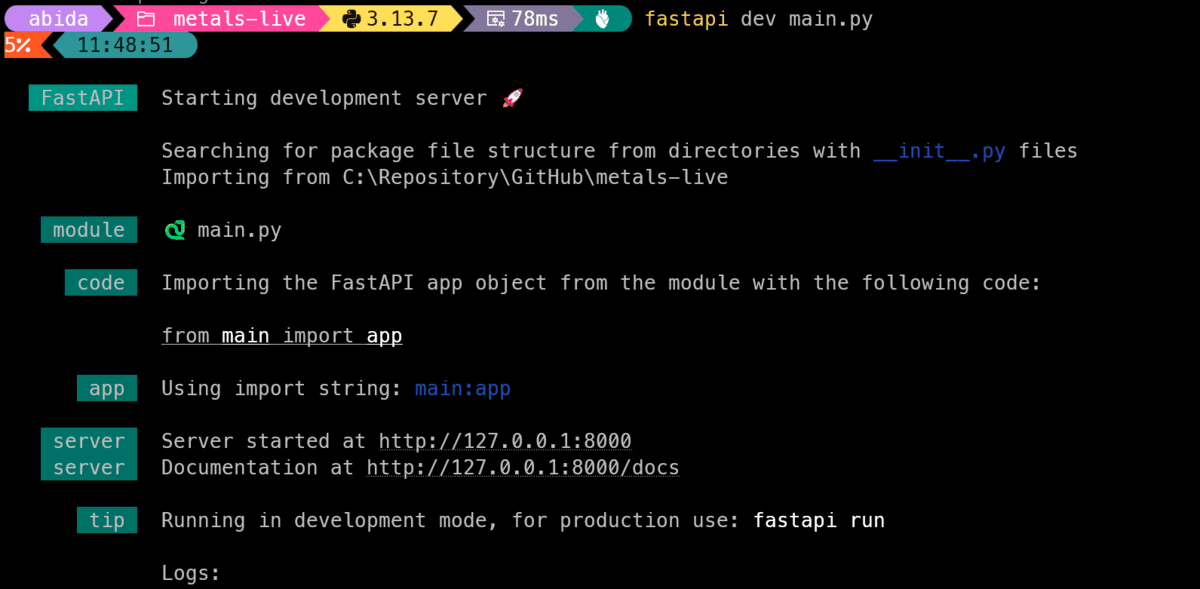
The traditional setup for such an application would involve several manual steps:
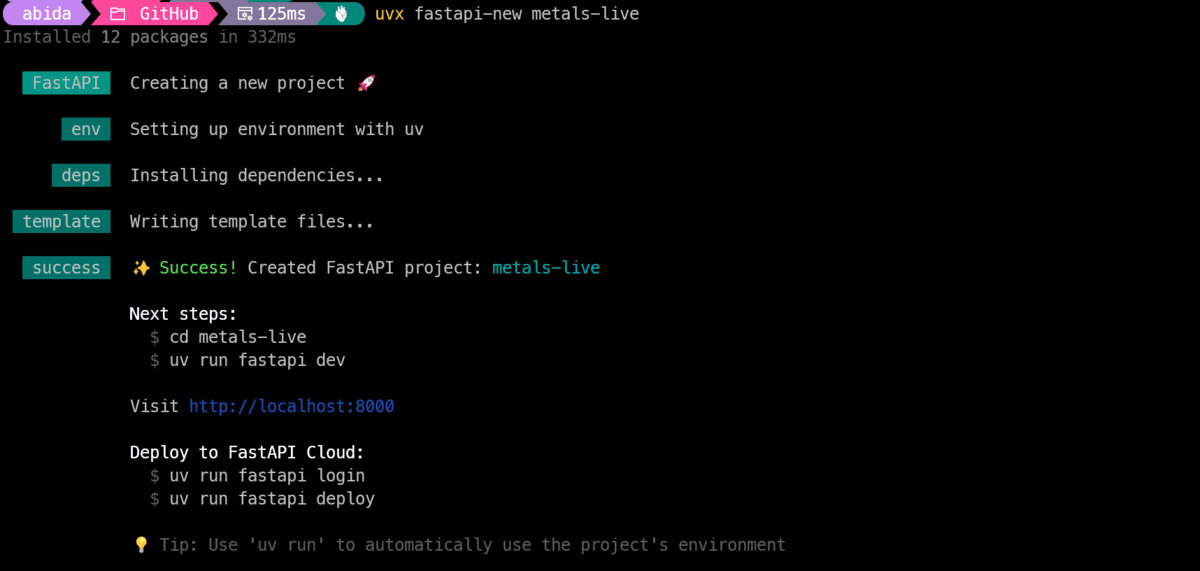
- Project Scaffolding: Initializing a new FastAPI project using tools like
uvx fastapi-new. - Environment Management: Setting up and activating a virtual environment to manage project dependencies in isolation.
- Dependency Installation: Installing necessary libraries, such as
httpxfor making asynchronous HTTP requests to external APIs, and ensuring all standard FastAPI extras are present for smooth operation. - Application Logic Development: Writing the core Python code to define API endpoints, handle data fetching (e.g., from
https://api.gold-api.com), implement error handling, and render HTML responses for the user interface. The use ofasync deffunctions andhttpx.AsyncClientis crucial here for non-blocking I/O, allowing the application to handle multiple requests concurrently without performance degradation. TheHTMLResponsedirectly embeds the frontend logic, including basic styling and JavaScript for client-side data fetching and auto-refresh. - Local Testing: Thoroughly testing the application locally using FastAPI’s built-in development server (e.g.,
uvicorn main:app --reload). This step is vital to ensure all endpoints function correctly, data is fetched and displayed as expected, and the UI behaves responsively. Verifying both the API endpoint (e.g.,/api/prices) and the main dashboard (/) locally provides confidence before moving to cloud deployment.
The Simplified Deployment Journey with FastAPI Cloud
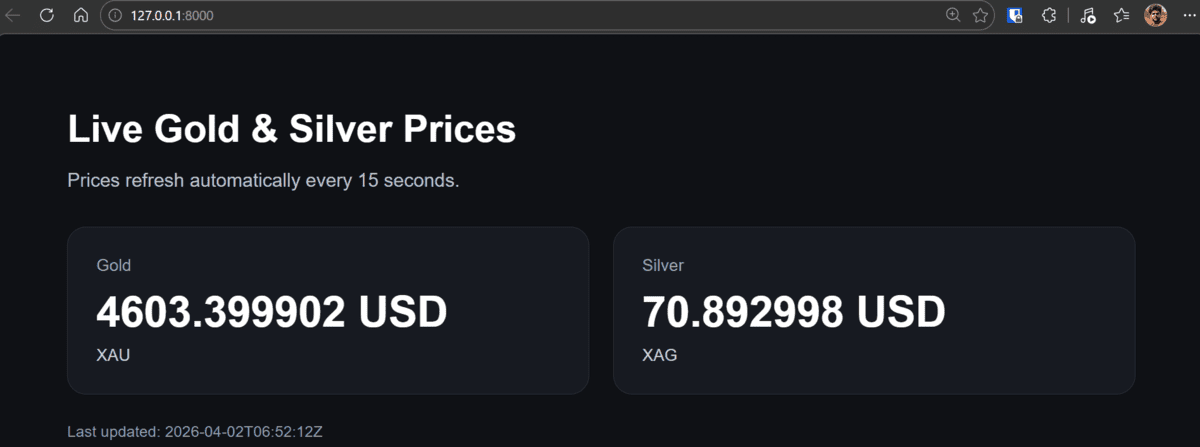
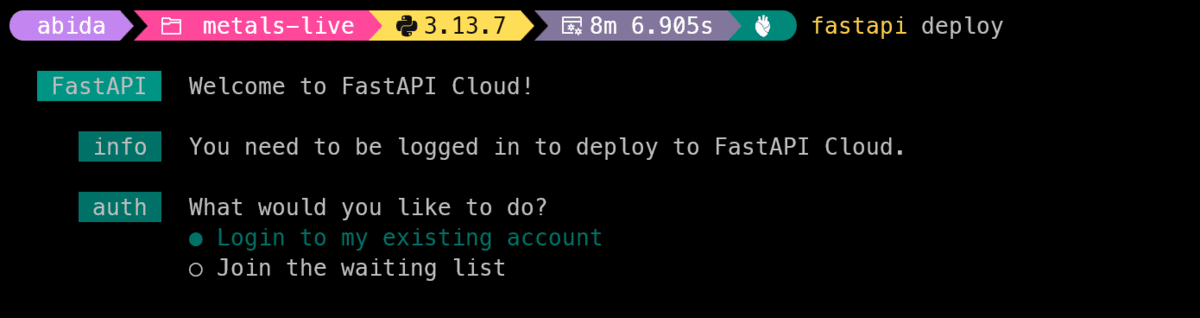
Once the application is fully functional and validated locally, the deployment process to FastAPI Cloud distinguishes itself through its remarkable simplicity. Instead of intricate cloud provider configurations, Dockerfile creations, or Kubernetes YAML files, the core deployment command is streamlined: fastapicloud deploy.
This single command initiates an intelligent, guided deployment workflow:
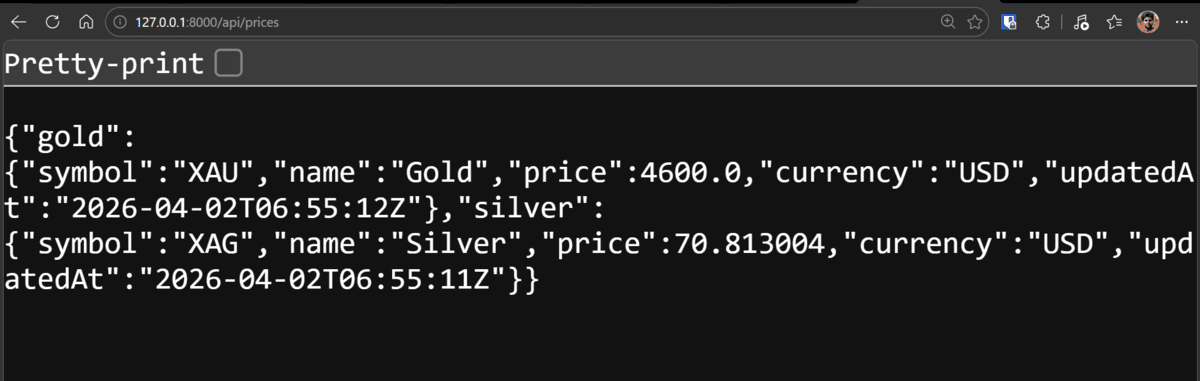
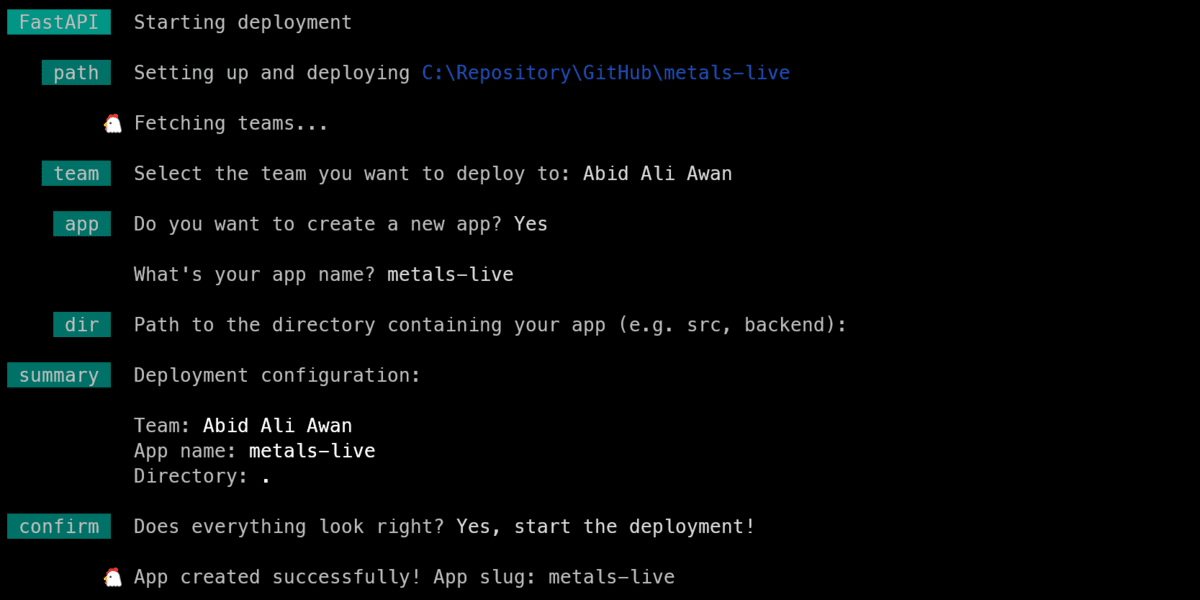
- Account Connection and Onboarding: The CLI guides the user through connecting their FastAPI Cloud account, prompting for essential details like team and application names. This initial setup is designed to be user-friendly, minimizing friction.
- Automated Build Process: FastAPI Cloud’s infrastructure automatically detects the project structure, installs dependencies based on the project’s
pyproject.toml(or similar), and builds the application environment. This includes setting up the appropriate ASGI server (like Uvicorn) and ensuring all necessary runtime components are in place. The platform handles the containerization and orchestration implicitly, abstracting these complex details from the developer. - Deployment to Live URL: Upon successful build, the application is deployed to a live, publicly accessible URL, typically under the
fastapicloud.devdomain (e.g.,https://metals-live.fastapicloud.dev/). This rapid provisioning of a live endpoint significantly accelerates the transition from development to production. - Interactive API Documentation: A standout feature is the automatic provision of interactive API documentation (Swagger UI/ReDoc) at a dedicated
/docsendpoint (e.g.,https://metals-live.fastapicloud.dev/docs). This allows developers and consumers of the API to explore, understand, and test endpoints directly from the browser, without requiring additional tools like Postman or Insomnia. This is a direct inheritance from FastAPI’s native capabilities, seamlessly integrated into the cloud platform.
Post-Deployment Monitoring and Management
Beyond deployment, FastAPI Cloud extends its managed services to include critical operational aspects. The platform’s dashboard provides comprehensive tools for monitoring application health and debugging. Developers can access real-time application logs, which are indispensable for identifying runtime errors, tracking API requests, and diagnosing performance issues. This integrated monitoring capability is crucial for maintaining the stability and reliability of deployed applications, offering insights that are often cumbersome to gather and analyze in self-managed environments.
Furthermore, the platform’s vision encompasses a broader ecosystem of integrations, hinting at future capabilities that could include database connections, caching layers, authentication services, and more. This positions FastAPI Cloud not merely as a deployment tool but as a comprehensive managed platform, drawing parallels with the rich integration ecosystems offered by platforms like Supabase for backend services or Vercel for frontend deployments, both of which excel in providing a cohesive development and deployment experience.
Implications for the Python and AI/ML Ecosystem
The emergence of FastAPI Cloud holds significant implications for the Python development community, particularly for those engaged in AI and machine learning projects:
- Accelerated AI/ML Deployment: Given FastAPI’s strong adoption in AI/ML for serving models and creating inference APIs, FastAPI Cloud can drastically reduce the time and effort required to get machine learning models into production. Data scientists and ML engineers, often more focused on model development than infrastructure, can now deploy their work with unprecedented ease.
- Enhanced Developer Productivity: By automating and simplifying deployment, developers can allocate more time and resources to writing core application logic, iterating on features, and innovating. This reduction in operational overhead translates directly into higher productivity.
- Lower Barrier to Entry: The platform lowers the technical barrier for Python developers to deploy scalable cloud applications. Individuals or small teams without extensive DevOps expertise can now leverage cloud infrastructure effectively.
- Competitive Landscape: FastAPI Cloud enters a competitive market of PaaS providers. Its specialization in FastAPI gives it a unique selling proposition, potentially attracting a dedicated segment of the developer community and challenging more generalized cloud offerings by providing an optimized experience.
- Future of Python Web Development: This trend towards specialized, managed platforms for specific frameworks (like Vercel for Next.js, Netlify for JAMstack) indicates a maturing ecosystem. FastAPI Cloud could become a pivotal component in the future standard workflow for Python web application development, fostering a more robust and integrated developer experience.
In conclusion, FastAPI Cloud represents a pivotal development in the journey of Python web application deployment. By addressing the long-standing complexities of taking a FastAPI application from local development to a live, scalable cloud environment, it empowers developers with a straightforward, efficient, and managed solution. The platform’s initial offerings, including rapid CLI-based deployment, automated builds, public URLs, interactive API documentation, and integrated monitoring, lay a strong foundation for what promises to be a transformative tool for the Python and AI/ML communities. As it rolls out to a wider audience, FastAPI Cloud is poised to redefine expectations for ease of deployment, allowing developers to focus more on building innovative applications and less on managing intricate infrastructure.














Leave a Reply