

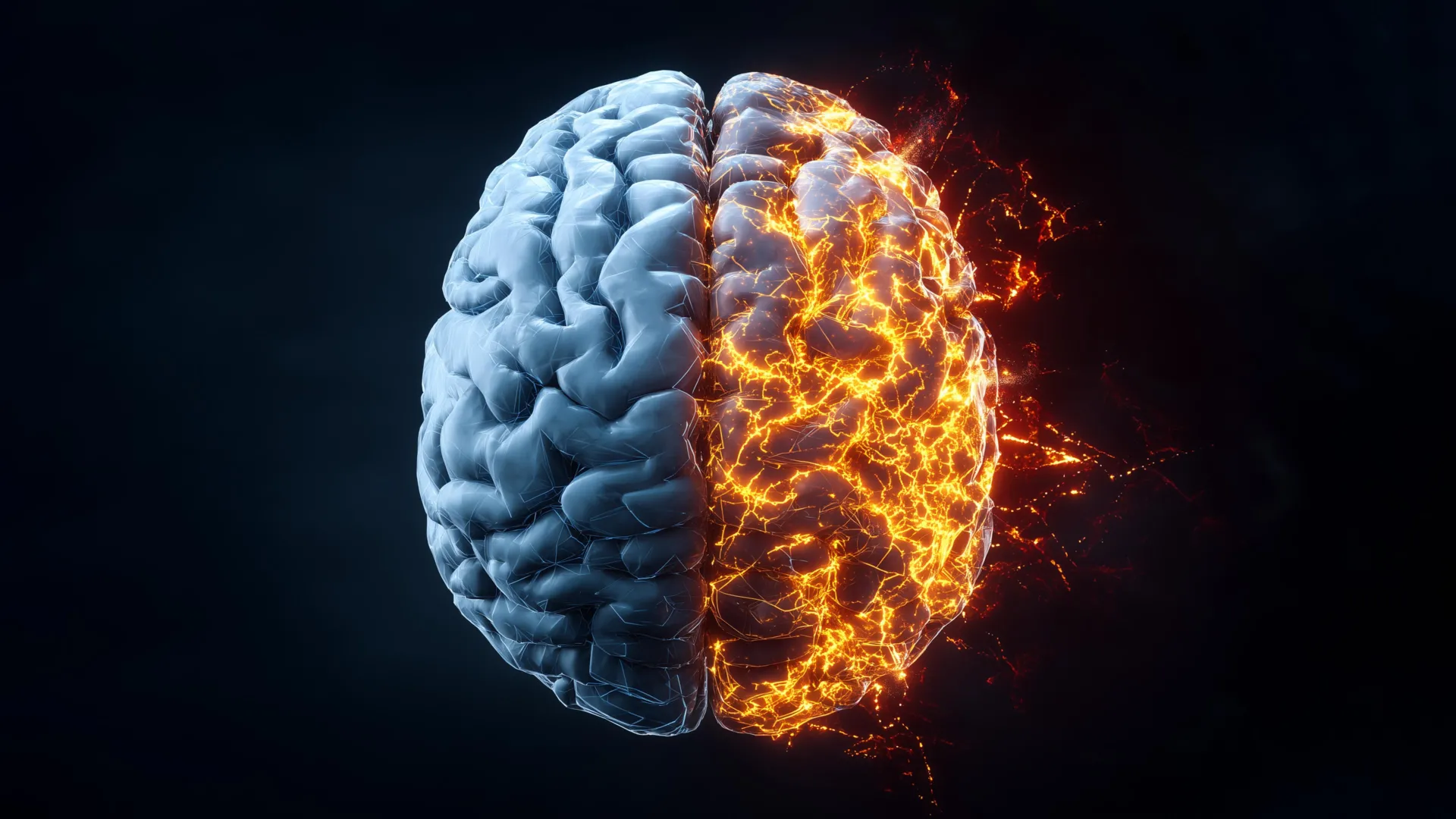
In a significant advancement for neurodegenerative research, a team of scientists at Oregon State University (OSU) has successfully mapped the real-time chemical interactions that drive the progression of Alzheimer’s disease. Led by Marilyn Rampersad Mackiewicz, an associate professor of chemistry in the OSU College of Science, the research provides an unprecedented look at how specific metal ions trigger the aggregation of amyloid-beta proteins—the microscopic "clumps" that disrupt brain function. This discovery, published in the journal ACS Omega, offers a new roadmap for the development of targeted therapies that could potentially halt or even reverse the cognitive decline associated with the world’s most common form of dementia.
The study utilized a specialized, high-resolution measurement technique that allowed researchers to observe molecular changes as they occurred, second by second. By shifting the focus from the end-state of protein clumping to the active process of formation, the OSU team has addressed a critical gap in Alzheimer’s pathology. The findings highlight not only the destructive role of unbalanced metal levels in the brain but also the potential of selective molecules known as chelators to intervene in this process with surgical precision.
The Molecular Drivers of Neurodegeneration
Alzheimer’s disease is characterized by the accumulation of amyloid-beta proteins, which aggregate into plaques that block communication pathways between neurons. These disruptions eventually lead to cell death, resulting in the memory loss and cognitive impairment that define the condition. While the presence of these plaques has been known for decades, the exact mechanisms that cause proteins to transform from healthy, soluble states into toxic clusters have remained elusive.
Central to this transformation is the role of metal ions. In a healthy brain, metals such as copper, zinc, and iron are essential for neurological health, aiding in everything from neurotransmitter synthesis to cellular metabolism. However, when the homeostatic balance of these metals is disrupted, they can act as catalysts for protein aggregation. Copper, in particular, has been identified as a primary culprit in the misfolding of amyloid-beta.
"Too many of some metal ions, like copper, can interact with amyloid-beta proteins in ways that lead to protein aggregation," explained Dr. Mackiewicz. She noted that while previous experiments have effectively documented the presence of these aggregates after they have formed, the OSU study is unique in its ability to monitor the "live" interactions. By quantifying these interactions in real time, the team can now measure exactly how different molecules interrupt or reverse the clumping process, providing a level of detail that was previously unattainable.
Real-Time Monitoring and the Power of Selective Chelation
The cornerstone of the OSU research involved testing the efficacy of chelators—molecules designed to bind tightly to metal ions. The term "chelator" is derived from the Greek word "chele," meaning claw, reflecting the molecule’s ability to "grab" and neutralize metal ions.
During the study, the research team compared two distinct types of chelators to see how they influenced amyloid-beta clumping. The first was a broad-spectrum chelator that captured metal ions effectively but lacked specificity. While it could remove copper from the environment, it also bound to other essential metals indiscriminately, a trait that often leads to side effects in clinical settings.
The second chelator demonstrated a high degree of selectivity, specifically targeting copper ions. The OSU team observed that this targeted approach was significantly more effective at preventing the formation of amyloid-beta aggregates. More importantly, the real-time data showed that the selective chelator could actually "unform" existing clusters, suggesting that with the right chemical targeting, some aspects of Alzheimer’s-related brain damage might be reversible.
This distinction is vital for drug design. Many previous attempts at Alzheimer’s treatments have failed in clinical trials because they were either too blunt in their approach or based on an incomplete understanding of the aggregation timeline. The ability to see "how it works, and when" allows researchers to refine drug candidates to act at the most opportune moments of the disease’s progression.
A Chronology of Alzheimer’s Research and the Path to OSU’s Discovery
The journey to this discovery is situated within a century-long effort to understand dementia. The timeline of Alzheimer’s research highlights why the OSU team’s real-time observation is such a pivotal shift:
- 1906: Dr. Alois Alzheimer first describes "a peculiar severe disease process of the cerebral cortex" in a patient, identifying the plaques and tangles that would become the disease’s hallmarks.
- 1984: Scientists identify amyloid-beta as the primary component of the plaques found in the brains of Alzheimer’s patients, leading to the "Amyloid Cascade Hypothesis."
- 1990s-2000s: Research begins to focus on the role of oxidative stress and metal toxicity, noting that high concentrations of copper and zinc are often found within amyloid plaques.
- 2010s: Multiple high-profile clinical trials for drugs designed to clear plaques from the brain end in failure. Researchers begin to realize that simply removing the end-product (plaques) may not be enough if the underlying chemical process of aggregation is not addressed.
- 2023-2024: The Oregon State University study introduces real-time, second-by-second measurement techniques, moving the field from observational pathology to dynamic chemical analysis.
Supporting Data and the Global Health Context
The urgency of this research is underscored by the staggering statistics surrounding Alzheimer’s disease. According to the Centers for Disease Control and Prevention (CDC) and the Alzheimer’s Association, more than 6.7 million Americans are currently living with the disease. By 2050, this number is projected to rise to nearly 13 million as the "baby boomer" generation ages.
Alzheimer’s is currently the sixth-leading cause of death among adults aged 65 and older in the United States. Beyond the human toll, the economic impact is immense; the total national cost of caring for people with Alzheimer’s and other dementias is estimated at $345 billion annually, a figure expected to exceed $1 trillion by mid-century.
The OSU study provides a glimmer of hope in a field that has seen many setbacks. By providing a "roadmap" for creating more effective therapies, the research addresses the primary reason many potential treatments fail: a lack of understanding regarding the early-stage chemical interactions. The data gathered by Mackiewicz’s team suggests that therapeutic intervention is most effective when it targets specific metal-protein interactions before the aggregates become insoluble and permanent.
The Role of Undergraduate Research and Collaborative Science
A notable aspect of the OSU study is its heavy reliance on undergraduate researchers, showcasing the university’s commitment to integrating education with high-level scientific inquiry. The project received critical support from the SURE Science Program (Summer Undergraduate Research Experience) and was bolstered by donations from Julie and William Reiersgaard.
The student team included Alyssa Schroeder from Oregon State University, as well as Eleanor Adams, Dane Frost, Erica Lopez, and Jennie Giacomini from Portland State University. These students were involved in the hands-on application of the specialized measurement techniques, contributing to a study that reached the pages of a major scientific journal.
"This project highlights the vital role that young scientists play in tackling some of our most complex medical challenges," Mackiewicz said. The involvement of students from multiple institutions also reflects a collaborative spirit that is increasingly necessary in the multidisciplinary field of neuroscience.
Future Implications and Fact-Based Analysis
While the OSU findings represent a breakthrough, Dr. Mackiewicz is careful to note that clinical treatments based on this work remain years away. The next phase of the research will involve transitioning from isolated chemical environments to more complex biological systems. This includes testing the selective chelators in cellular models and, eventually, preclinical animal models to ensure safety and efficacy within a living organism.
The implications of this work extend beyond Alzheimer’s. The "real-time" methodology developed at OSU could theoretically be applied to other "misfolding" diseases, such as Parkinson’s or Huntington’s disease, where protein aggregation also plays a central role.
Furthermore, the study challenges some long-held assumptions in the pharmaceutical industry. By demonstrating that some widely used chemical approaches do not behave as expected when confronted with the dynamic environment of protein clumping, the OSU team is forcing a re-evaluation of how "anti-amyloid" drugs are screened.
Conclusion: A New Direction for Therapy
The research conducted at Oregon State University marks a transition in Alzheimer’s science from "what" is happening to "how" and "when" it happens. By identifying the specific role of copper ions in real-time and proving that selective chelation can reverse protein clumping, Mackiewicz and her team have provided a new set of tools for the global scientific community.
As the global population ages and the prevalence of Alzheimer’s continues to grow, the need for targeted, effective, and perhaps even reversible treatments has never been greater. The OSU study does not claim to have found a cure, but it has provided something equally valuable: a clearer vision of the enemy at a molecular level and a precision-guided strategy to fight it. For millions of families affected by the "long goodbye" of dementia, such discoveries offer a tangible sense of progress in the search for a way to preserve the human mind.



















Leave a Reply