

New research suggests that the evolutionary drive behind the significant size difference between male and female primates, a phenomenon known as sexual dimorphism, may be less about direct combat and more about the persistent, albeit often unseen, threat of rival groups. For decades, the prevailing scientific explanation for why male primates are frequently much larger than females has centered on intense competition among males vying for access to reproductive opportunities. This theory posits that larger, stronger males win more fights, secure more mates, and thus pass on their genes, leading to an evolutionary arms race in size. However, a recent study challenges this long-held assumption, proposing that the mere presence of competing male groups, even without frequent physical confrontations, could be a powerful selective pressure favoring larger male primates.
This evolving understanding of primate evolution has significant implications for how we interpret social structures, mating strategies, and the very definition of "competition" in the animal kingdom. It suggests a more nuanced view where the psychological and strategic aspects of social dynamics, rather than solely brute force, play a crucial role in shaping physical traits.
The Traditional View: Competition and Combat
Historically, the disproportionate size of males in many primate species has been attributed to inter-male competition. This is particularly evident in species where males live in groups and compete aggressively for dominance and mating rights. The classic Darwinian perspective emphasizes sexual selection, where traits that enhance an individual’s success in mating are favored. In this context, larger body size in males is often linked to increased strength, greater ability to intimidate rivals, and enhanced success in physical altercations. These fights can range from brief skirmishes to prolonged, violent contests for control of a group or access to females.
Examples abound across the primate order. Gorillas, for instance, exhibit extreme sexual dimorphism, with males (silverbacks) being significantly larger and more robust than females. This is often explained by the need for silverbacks to defend their harems from rival males. Similarly, in many monkey species, males engage in ritualized displays of aggression and actual fights to establish and maintain social hierarchies, which directly correlate with their mating success. The assumption has always been that the intensity and frequency of these fights directly drive the evolution of larger male bodies.
A New Hypothesis: The Shadow of the Rival Group
The recent research, however, introduces a compelling alternative. It posits that the potential for conflict, rather than its actual occurrence, might be the primary driver of male gigantism. This "latent threat" hypothesis suggests that even if direct fights are infrequent, the constant presence of rival male groups can create an environment where larger males are consistently favored.
Imagine a scenario where two primate groups, each with a population of males, share overlapping territories or are in close proximity. The dominant males of one group might not engage in daily battles with the males of the other. However, the possibility of territorial disputes, raids for resources, or attempts to poach females always looms. In such a scenario, a larger male would be perceived as a greater deterrent by rival groups. The mere visual presence of a larger, more imposing male might be enough to discourage scouts from the rival group from encroaching on territory or attempting to abduct females. This acts as a form of "passive defense" or "deterrence signaling."
From an evolutionary standpoint, individuals with these deterrent traits would be more successful. Their groups would likely experience fewer disruptions, less loss of resources, and a more stable reproductive environment. Consequently, genes associated with larger body size would be more likely to be passed on, even if the males themselves rarely engaged in direct physical combat. This concept is analogous to military deterrence, where the strength of one nation’s arsenal discourages attacks from potential adversaries, regardless of whether those weapons are ever fired.
Supporting Data and Evolutionary Mechanisms
While the study details are not fully elaborated in the provided text, the core of this hypothesis rests on observational data and established evolutionary principles. Researchers would likely examine factors such as:
- Group Size and Proximity: The frequency and proximity of neighboring groups. If rival groups are consistently close and their territories overlap, the pressure for deterrence would be higher.
- Resource Competition: The intensity of competition for food, water, and shelter. Scarce resources often lead to increased territorial disputes.
- Female Choice (Indirect): While not direct combat, the ability of males to protect females from external threats, even by simply appearing formidable, could indirectly influence female preferences or at least their willingness to remain within a group defended by larger males.
- Hormonal and Genetic Factors: The underlying biological mechanisms that promote larger male growth, such as testosterone levels and genes related to bone and muscle development, would be subject to these selective pressures.
The proposed mechanism involves a feedback loop. The presence of rival groups creates a selective pressure for larger males. As males become larger, they become more effective deterrents, which in turn might lead to greater territorial stability and potentially even encourage the formation of larger, more consolidated groups for mutual defense.
Implications for Primate Social Dynamics
This revised understanding has profound implications for how we view primate social structures and the evolution of their physical characteristics:
- Rethinking Aggression: It shifts the focus from overt aggression to the strategic management of threats. The ability to project power and deter without necessarily engaging in costly conflicts becomes a key survival trait.
- Territoriality and Group Cohesion: The latent threat hypothesis could explain why some primate species are highly territorial and why group cohesion is paramount for survival. A larger, more imposing male might contribute to a stronger sense of security within the group.
- Conservation Efforts: Understanding the subtle pressures that shape primate evolution can inform conservation strategies. Protecting not just individual animals but also the ecological and social dynamics of their environments, including the presence and behavior of neighboring groups, becomes crucial.
A Look at Snub-Nosed Monkeys
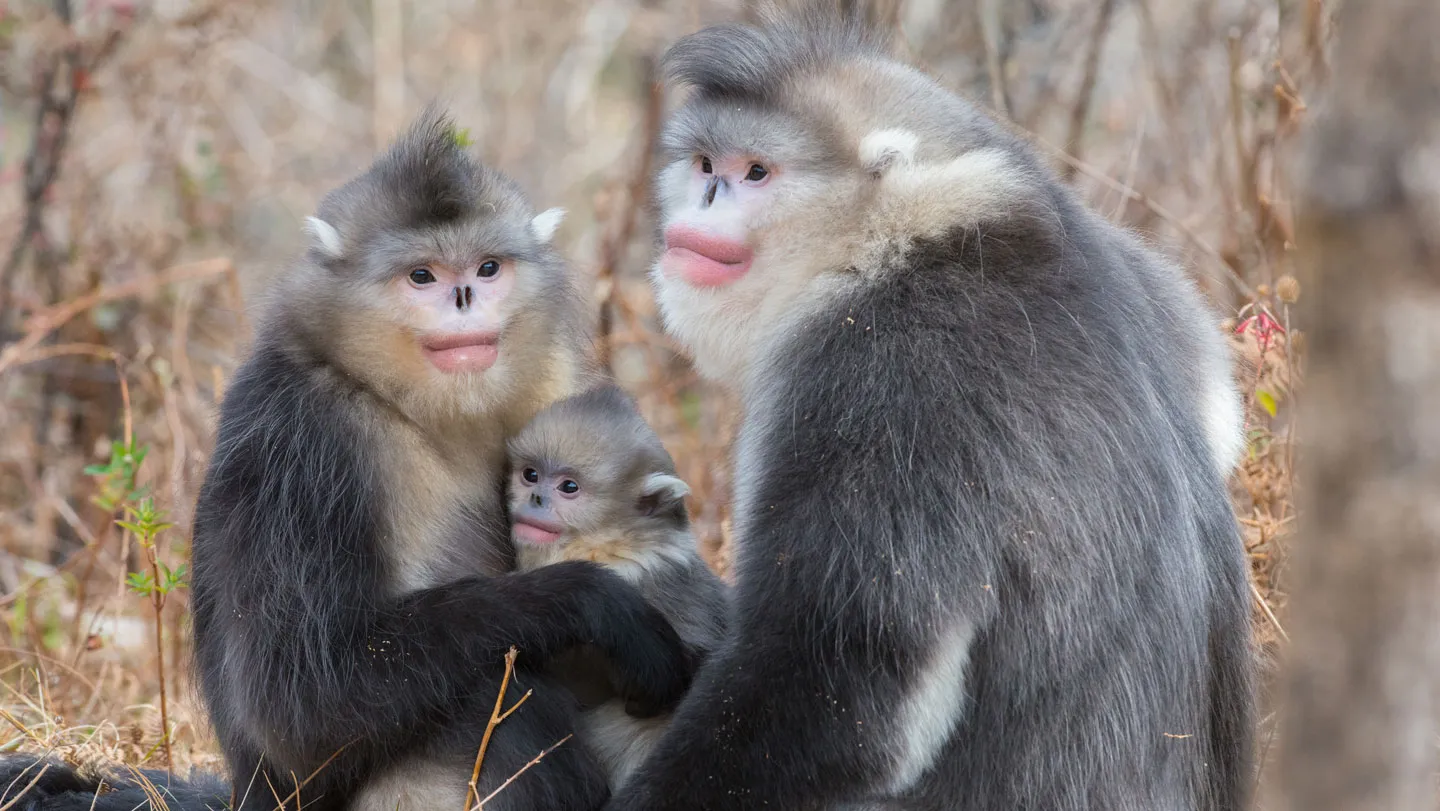
The accompanying image of snub-nosed monkeys provides a tangible example of significant sexual dimorphism. Male black-and-white snub-nosed monkeys (Rhinopithecus bieti) are indeed considerably larger than females. While specific research on this species’ inter-group dynamics and the role of latent threats in their sexual dimorphism is needed, they serve as a compelling visual representation of the phenomenon under discussion. Such species, often living in complex social structures and facing environmental challenges, are prime candidates for studying these evolutionary pressures.
For instance, if these snub-nosed monkey groups frequently encounter rival groups, and if resources are contested, the hypothesis suggests that the observed size difference might be largely driven by the need for males to act as a formidable deterrent. This could mean that even if direct fights between males of different groups are rare, the constant awareness of these potential adversaries shapes the evolutionary trajectory of male body size.
Future Research Directions
This new hypothesis opens avenues for future research. Scientists may now focus on:
- Comparative Studies: Comparing species with varying degrees of inter-group interaction and territorial overlap to see if there is a correlation with the degree of sexual dimorphism.
- Behavioral Observations: Detailed, long-term observational studies to quantify the frequency and nature of inter-group encounters, as well as the role of male size in deterrence displays.
- Experimental Manipulations (Ethical Considerations Permitting): While direct manipulation of animal populations is ethically complex, carefully designed observational studies mimicking aspects of perceived threats could provide valuable insights.
- Genomic Analysis: Investigating the genetic basis of male body size in relation to genes that might be involved in threat assessment or social signaling.
The evolutionary journey of primate sexual dimorphism is a complex tapestry woven from numerous threads. While direct combat has long been considered the dominant factor, this new perspective highlights the subtle yet powerful influence of perceived threats and strategic deterrence. As research continues, our understanding of what drives the remarkable diversity of life on Earth, particularly within our closest relatives, will undoubtedly deepen. The "game of monkey mean, monkey grew" may be far more strategic and less about brute force than previously imagined.

















Leave a Reply