

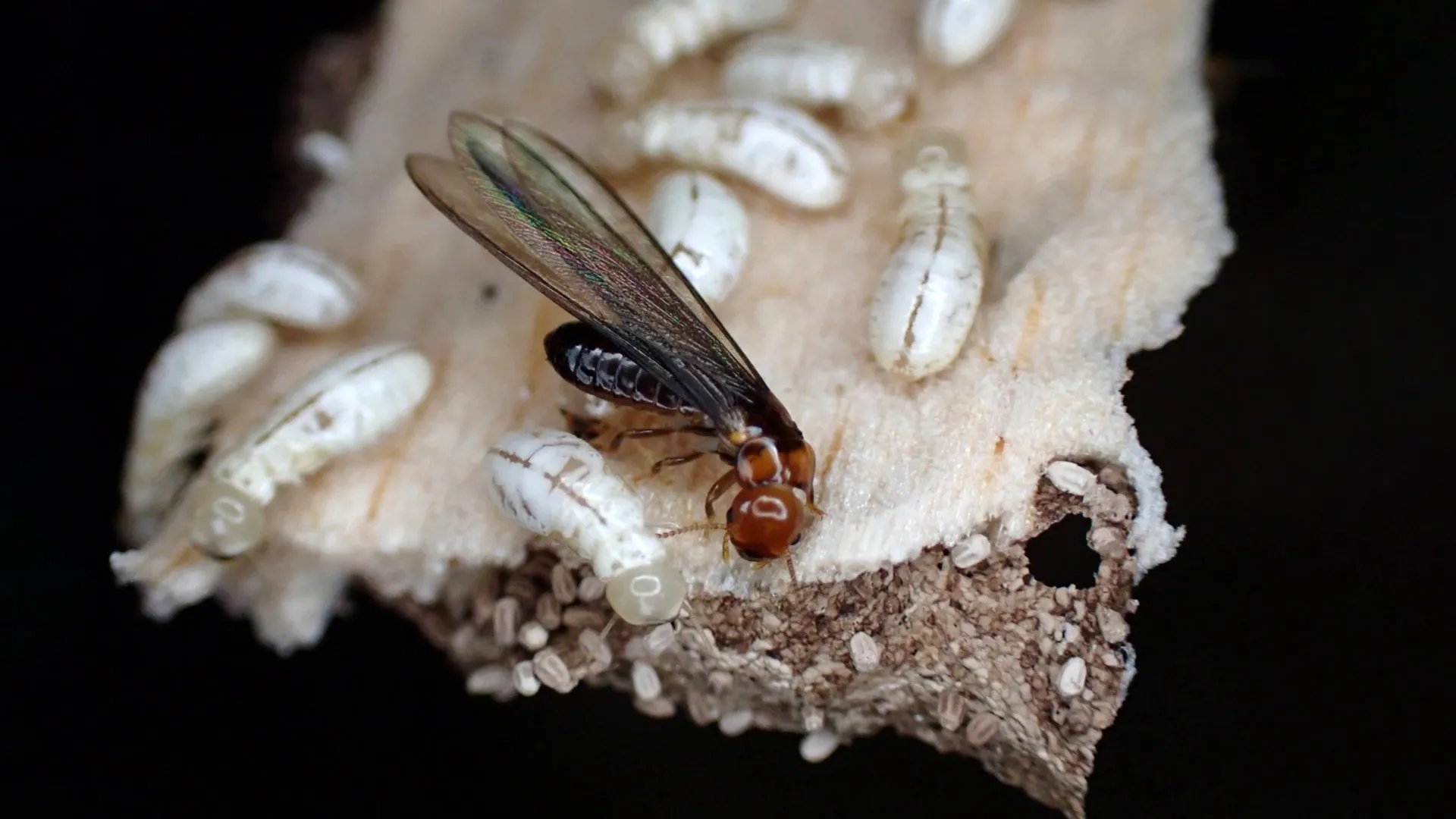
Researchers at the University of California, Riverside, have unveiled a promising new strategy for combating drywood termite infestations, a pervasive and often destructive pest. The innovative method centers on bistrifluron, a chemical compound that effectively halts the growth of these elusive insects by preventing the formation of their exoskeletons. This breakthrough, detailed in the esteemed Journal of Economic Entomology, offers a significantly more environmentally sound and targeted alternative to many traditional termite control methods, with laboratory trials demonstrating a remarkable 95% colony eradication rate without the inherent mammalian toxicity concerns associated with conventional treatments.
The Vulnerability of the Exoskeleton: A Key to Drywood Termite Control
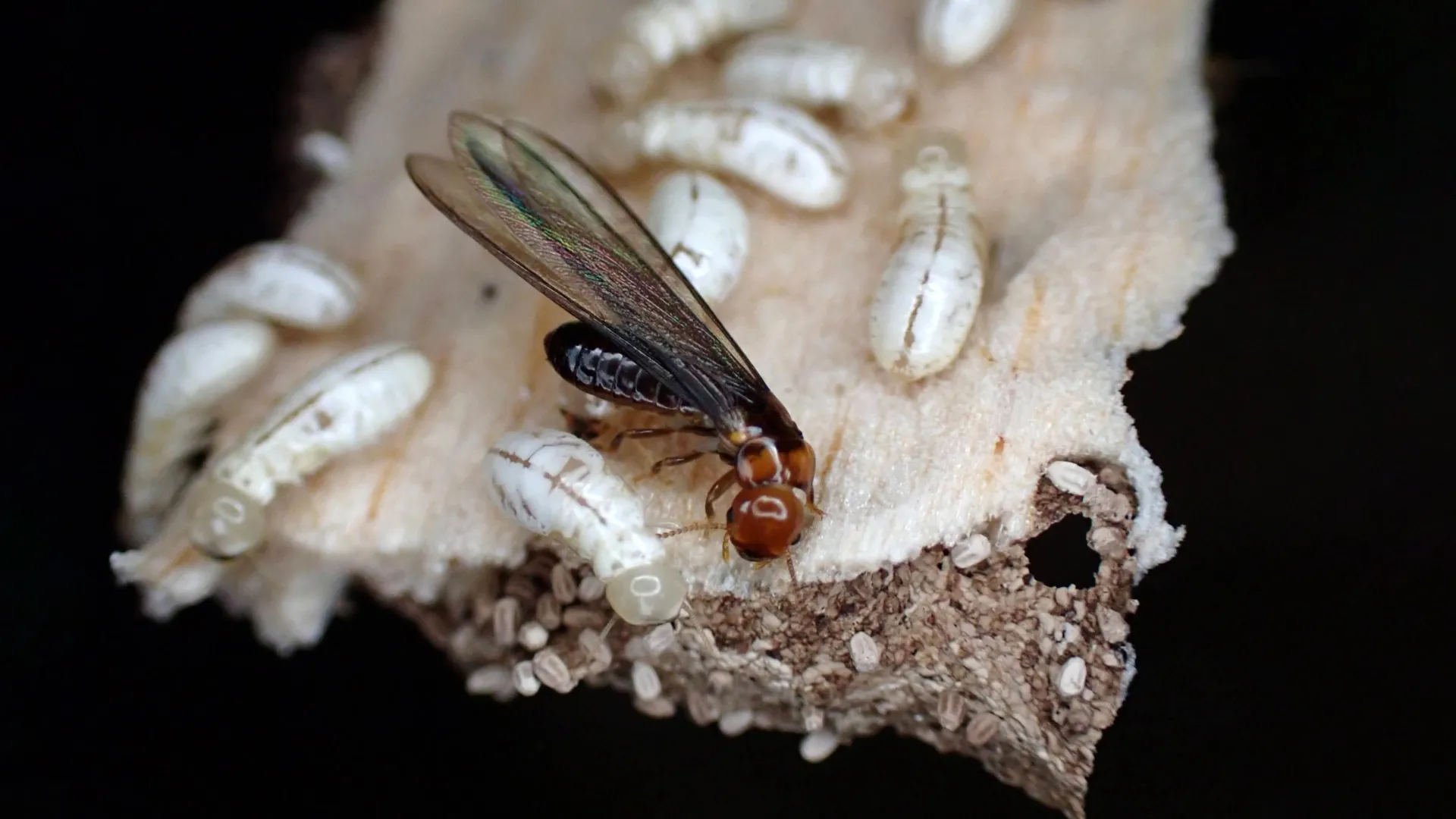
Drywood termites, notorious for their ability to remain undetected within wooden structures, pose a significant challenge to homeowners. Their hidden lifestyle, characterized by quiet consumption and colony expansion within walls and furniture, means that damage is often extensive by the time an infestation is discovered. However, this clandestine existence hinges on a critical biological imperative: molting. The process by which termites shed their old exoskeletons to accommodate growth is a fundamental yet vulnerable stage in their life cycle. It is precisely this vulnerability that the UC Riverside team has masterfully exploited.
The research highlights bistrifluron’s unique mechanism of action. Unlike broad-spectrum insecticides that broadly poison insects, bistrifluron operates with remarkable specificity. It interferes with the synthesis of chitin, the primary structural component of insect exoskeletons. For termites, this tough, protective outer shell is indispensable. It provides structural support, acts as a barrier against environmental hazards, and serves as an anchor for their musculature. To grow, termites must repeatedly shed their rigid exoskeletons and construct new ones. Western drywood termites, for instance, undergo this molting process approximately seven times throughout their lifespan. Bistrifluron effectively sabotages this essential developmental stage.
"This chemical is more environmentally friendly than ones traditionally used for drywood termite infestations," stated Nicholas Poulos, the paper’s corresponding author and a doctoral student in UCR’s Department of Entomology. "It’s specific to insects and can’t harm humans." This specificity is rooted in fundamental biological differences. While humans possess an internal skeletal system, insects rely on their external exoskeleton. The chemical’s targeted nature ensures that it interferes with a process unique to arthropods, minimizing risks to non-target organisms, including mammals.
A Timeline of Discovery and Development
The journey toward this innovative termite control method has been a process of scientific inquiry and refinement. While the Journal of Economic Entomology publication details recent findings, the research builds upon a foundation of understanding insect biology and the development of novel chemical agents. The testing against the western drywood termite (Incisitermes minor) involved a comparative analysis of three chitin synthesis inhibitors, with bistrifluron emerging as the most potent and rapid-acting at the tested concentrations.
In laboratory settings, the efficacy of bistrifluron was rigorously assessed. In "no-choice" tests, where termites were exclusively exposed to treated wood, bistrifluron achieved an impressive 99% mortality rate over a 60-day period. Even in "choice" tests, where termites had access to both treated and untreated wood, a 0.1% concentration of bistrifluron resulted in a significant 96% mortality rate over the same timeframe. These results underscore the chemical’s potent effectiveness even when termites have the option to avoid the treated material.
The Self-Disseminating Power of Bistrifluron
A particularly significant aspect of this research is the inherent ability of bistrifluron to spread throughout a termite colony. Termites are social insects with complex interaction patterns, including the sharing of food. When termites consumed wood treated with bistrifluron, they effectively became carriers of the insecticide. Through social feeding behaviors, the chemical was transferred to other members of the colony, including those that had not directly encountered the treated wood.
Transfer tests revealed the profound implications of this social dissemination. In experiments where only 5% of the termites were initially exposed to the treated material, the entire group achieved 100% mortality within 90 days. This indicates a powerful domino effect, where a localized application can lead to the systematic eradication of an entire colony. The study further reported that food material, and thus the bistrifluron, moved from exposed "donor" termites to unexposed "recipient" termites within a critical 24 to 48-hour window.
This finding aligns with concurrent research from UC Riverside that has illuminated the intricate social behaviors of western drywood termites, particularly their reliance on proctodeal trophallaxis – a form of mouth-to-anus feeding. While these hidden social behaviors contribute to the difficulty in detecting infestations, they also prove to be a crucial factor in the efficacy of treatments like bistrifluron, allowing the active ingredient to permeate the colony’s social network.
"It’s been successfully used on subterranean termites, which are also important structural pests," noted Dong-Hwan Choe, a UCR entomology professor and senior author on the paper. "But native western drywood termites are also important, especially in California." The widespread presence of western drywood termites, native to regions including northern Mexico and California, makes this research particularly relevant to a significant portion of the United States and beyond.
A Slower, Yet More Effective Collapse: The Advantages of a Targeted Approach
The impact of bistrifluron on a termite colony is not instantaneous. Researchers observed that exposed termites initially exhibited reduced activity and a diminished appetite. Over time, the chemical’s interference with molting led to the insects’ eventual demise. While the full collapse of a colony may take approximately two months, this slower progression is a trade-off for substantial advantages over conventional methods.
The primary benefit lies in its significantly lower toxicity profile. Traditional termite treatments, such as fumigation, often involve the use of volatile and potentially hazardous chemicals that require homeowners to vacate their residences for extended periods, necessitating the removal or sealing of food and personal belongings. This process is not only disruptive and stressful but also carries inherent health risks. Bistrifluron, by contrast, offers a more localized and contained treatment, potentially eliminating the need for whole-house tenting.
"We believe this method of spot treatment can kill a larger colony and spread more easily than current termite control methods," Choe explained. "You don’t have to apply too much to get a very good result. The chitin synthesis inhibitors show promise as localized treatment for drywood termites." The potential for localized application means that treatment can be precisely targeted to infested areas, reducing the overall amount of chemical introduced into the environment and into the home.
Furthermore, unlike some conventional treatments that offer only immediate protection, bistrifluron may possess residual activity within the treated wood. This could provide a sustained defense against future infestations, offering homeowners long-term peace of mind. "Low-impact strategies like this one will become an attractive option in many cases. Furthermore, the chemical may stay active in the wood for some time, potentially providing protection from future infestations," Choe added.
Enhancing Efficacy: The Role of Chemical Lures
In a parallel line of research, the UC Riverside team has explored another ingenious method to amplify the effectiveness of termite control: the strategic use of olfactory cues. Building on prior investigations into the attractant properties of certain natural compounds, the lab has studied pinene, a volatile organic compound commonly found in coniferous trees. For western drywood termites, pinene acts as a powerful signal, indicating the presence of a potential food source.
By incorporating pinene into insecticide-treated wood, researchers have observed a dramatic enhancement in treatment efficacy. Termites, drawn by the scent of pinene, are more likely to investigate and consume the treated material. A 2025 patent application from UCR details the application of pinenes to augment localized insecticide injections against western drywood termites. This research indicates that the inclusion of pinene not only accelerates termite mortality but also significantly increases the overall success rate of the treatment compared to using the insecticide alone.
"We saw significant differences in the death rates using insecticide alone versus the insecticide plus pinene," Choe stated. "Without pinene, we got about 70% mortality. When we added it in, it was over 95%." This synergistic approach suggests that pinene can act as a potent lure, guiding termites directly to the bait and maximizing the impact of even localized treatments. The patent application also proposes that pinene could enable wider spacing between injection points, thereby reducing the time, labor, and quantity of insecticide required for effective treatment.
Towards Practical Application: Overcoming Real-World Challenges
While the laboratory results are highly encouraging, the researchers are actively working to translate these findings into practical, real-world applications. The bistrifluron study, for instance, utilized acetone as a solvent for the chemical. While effective for experimental purposes, acetone’s flammability and strong odor present challenges for widespread domestic use.
"We are working to make it more feasible for practical application in real life scenarios," Poulos commented, indicating the ongoing efforts to develop safer and more user-friendly formulations. The successful implementation of this technology hinges on addressing these practical considerations to ensure its accessibility and widespread adoption by pest control professionals and homeowners alike.
Broader Implications: A Changing Climate and Evolving Threats
The urgency of developing effective and sustainable termite control methods is underscored by the increasing global prevalence of invasive species and the potential impacts of climate change. Western drywood termites, originally native to a specific geographic region, have been inadvertently transported to numerous other locations worldwide, including Hawaii, New York, Florida, Canada, China, Japan, Korea, and Australia. The movement of lumber and wood products serves as a primary vector for this global spread.
Compounding this issue is the projected impact of climate change. Shifting temperature patterns and altered precipitation regimes may expand the suitable habitats for these termites, allowing them to colonize areas that were previously too cool or inhospitable. This expansion poses a growing threat to wooden structures in new regions, necessitating proactive and innovative pest management strategies.
"As we move lumber around the world, the termites are constantly transported to new locations. If they find the climate there acceptable, the problem will spread," Choe warned. "In areas where these termites are common, it’s just a matter of time before homes are infested, so this study is a good initial step toward alternative strategies for controlling them." The development of targeted, low-impact treatments like bistrifluron represents a crucial step in mitigating the economic and structural damage caused by these persistent pests, offering a more sustainable and environmentally responsible future for pest management.












Leave a Reply