Photosynthetic bacteria, particularly cyanobacteria, are the unsung heroes of Earth’s evolutionary journey, fundamentally altering our planet and paving the way for the complex life that thrives today. Their groundbreaking innovation, oxygenic photosynthesis, is credited with the Great Oxygenation Event approximately 2.5 billion years ago, transforming Earth’s atmosphere from one rich in carbon dioxide and methane to one dominated by oxygen. This monumental shift not only reshaped the planet’s geology and climate but also created the conditions necessary for the emergence and diversification of aerobic life, including all animal life. Even now, these resilient microorganisms continue to be cornerstones of global ecosystems, contributing significantly to biomass and playing critical roles in the planet’s carbon and nitrogen cycles. Their remarkable adaptability allows them to flourish in an astonishing array of environments, from the searing heat of geothermal springs to the frigid landscapes of the Arctic, and even on the surfaces of urban structures.
Within this vital group, the multicellular cyanobacterium Anabaena sp. PCC 7120, often referred to simply as Anabaena, has served as a crucial model organism for scientific inquiry for over three decades. Its intricate cellular organization and genetic makeup have provided a window into the evolution of multicellularity in bacteria. Now, researchers at the Institute of Science and Technology Austria (ISTA), in collaboration with international partners, have unearthed a surprising and profound evolutionary narrative concerning Anabaena‘s internal machinery. A biological system once thought to be exclusively dedicated to the intricate task of segregating DNA during cell division has undergone a remarkable transformation, evolving into a sophisticated structural element that dictates the very shape of cyanobacterial cells. This groundbreaking discovery, published in the esteemed scientific journal Science, offers invaluable insights into the dynamic nature of protein systems over geological timescales and sheds new light on the evolutionary pathways that led to the development of multicellular life in these ecologically indispensable bacteria.
The Great Oxygenation Event: A Cyanobacterial Revolution
The significance of cyanobacteria cannot be overstated. Their evolutionary innovation, the ability to split water molecules to release electrons for photosynthesis, thereby producing oxygen as a byproduct, was a true game-changer for the nascent Earth. Prior to this development, the Earth’s atmosphere was largely anoxic, supporting only anaerobic life forms. The gradual accumulation of oxygen, beginning around 2.5 billion years ago, initiated a cascade of environmental and biological changes. This period, known as the Great Oxygenation Event (GOE), led to the formation of vast iron oxide deposits in the oceans and fundamentally altered atmospheric chemistry. More importantly, it created an energetic advantage for organisms that could utilize oxygen for respiration, a far more efficient energy-producing process than anaerobic metabolism. This evolutionary pressure ultimately paved the way for the development of more complex eukaryotic cells and, subsequently, multicellular organisms.
“Cyanobacteria are essentially pioneers of oxygenic photosynthesis,” states Benjamin Springstein, a postdoctoral researcher in the Loose group at ISTA. “They are responsible for the Great Oxygenation Event about 2.5 billion years ago, when oxygen accumulated in the atmosphere and made aerobic life possible. Without them, it’s safe to say that none of us would be here today.”
An Ancient System Reimagined: From DNA Segregation to Cell Shaping
The recent work by Springstein and his colleagues challenges long-held assumptions about a specific genetic system found in bacteria. This system, known as the ParMR system, has traditionally been associated with the accurate segregation of genetic material, particularly plasmids, which are small, extrachromosomal DNA molecules that can confer advantageous traits to bacteria. Plasmids are crucial for bacterial adaptation and evolution, as they can be readily exchanged between individuals, allowing for the rapid dissemination of genes for antibiotic resistance, metabolic capabilities, or virulence factors. The ParMR system typically comprises two key proteins: ParM, an actin-like filament-forming protein that acts as a molecular motor, and ParR, a DNA-binding protein that serves as a recognition site for ParM. Together, they ensure that plasmids are reliably distributed to daughter cells during cell division, preventing the loss of these important genetic elements.
However, the research team’s investigations into Anabaena revealed a startling divergence from this established paradigm. They discovered that in Anabaena, and likely in other multicellular cyanobacteria, the ParMR system has undergone a profound evolutionary repurposing. Instead of its canonical role in DNA segregation, the system has been integrated into the cell’s structural framework, acting akin to a cytoskeleton, a network of protein filaments and tubules that provides mechanical support, maintains cell shape, and enables cell movement.
Unraveling the Mystery: The ParMR System’s Unexpected Evolution
Springstein’s journey into this discovery began during the COVID-19 pandemic, a period of enforced laboratory downtime that led him to delve deeper into the existing scientific literature on Anabaena. "I made a serendipitous observation," he recalls. He noticed that the ParMR system, encoded within the chromosomal DNA of Anabaena, was unusually placed. Traditionally, such segregation systems were found on plasmids. This anomalous chromosomal localization prompted him to hypothesize that the system might have adapted to handle the segregation of the bacterium’s main chromosomes, rather than plasmids.
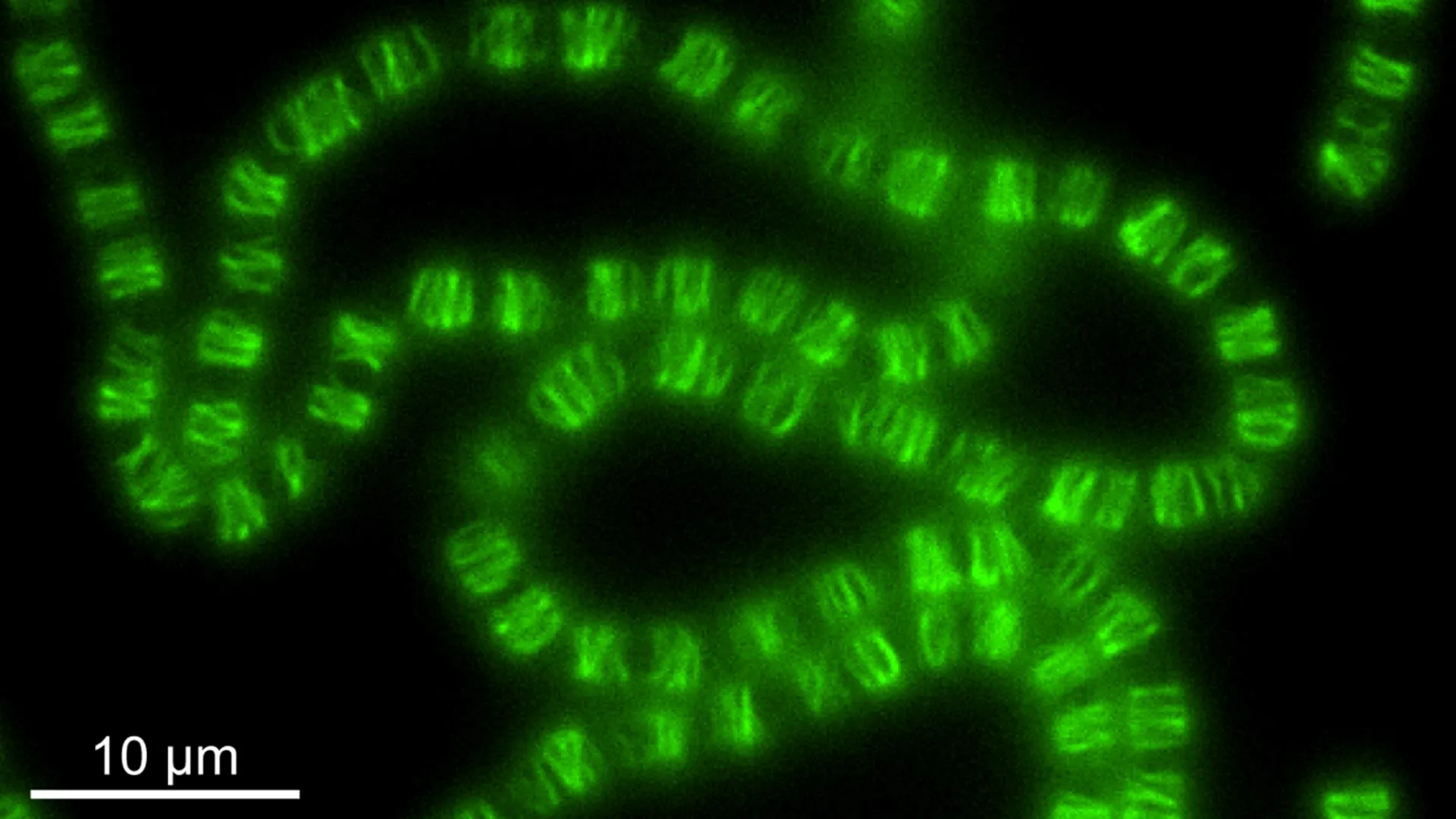
Upon joining ISTA as an IST-Bridge Fellow, Springstein embarked on a series of experiments to test this hypothesis. The results, however, pointed towards an even more radical evolutionary shift. He found that ParR in Anabaena no longer binds to DNA. Instead, it exhibits a strong affinity for lipid membranes, particularly the inner cell membrane. Concurrently, ParM did not form structures within the cytoplasm to move DNA. Instead, it assembled into filament networks that lie just beneath the inner membrane, creating a protein polymer layer reminiscent of a cell cortex. This arrangement suggested that the system was not involved in actively pulling chromosomes apart within the cell’s interior, but rather in organizing the cell’s periphery.
"Rather than acting like a typical DNA segregation system that forms spindle-like structures in the cell interior, this system operates at the membrane level and appears to organize cell structure," Springstein explains.
A Cellular Skeleton Emerges: Dynamic Filaments Under the Membrane
To gain a deeper understanding of this newly identified structural role, the researchers meticulously recreated the CorMR system (a new designation for the repurposed system) outside of living cells using purified protein components. These in vitro reconstitution experiments provided crucial insights into the dynamic behavior of the ParM filaments. The scientists observed that these filaments exhibit "dynamic instability," a characteristic phenomenon where they undergo cycles of rapid growth and subsequent collapse. This behavior is remarkably similar to that of microtubules, a key component of the cytoskeleton in eukaryotic cells, hinting at convergent evolution of structural organization mechanisms.
Further investigation, conducted in collaboration with ISTA Professor Florian Schur and his PhD student Manjunath Javoor, utilized cryo-electron microscopy (cryo-EM). This powerful technique allows for the visualization of molecular structures at near-atomic resolution. Through cryo-EM analysis, the team elucidated the precise architecture of these protein filaments. They discovered that, unlike the polar filaments formed by similar systems in other bacterial contexts, where growth and shrinkage occur predominantly at one end, the filaments in Anabaena are bipolar. This means they can extend and retract from both ends simultaneously, contributing to their dynamic nature and potentially their ability to exert forces on the cell membrane.
Loss of Function Reveals a New Purpose: The Criticality of Cell Shape
The definitive proof of the system’s structural role emerged when the researchers engineered Anabaena cells to lack the CorMR system. The consequences were striking and immediate. "Cells lacking the system lost their normal rectangular-like cell shape and instead became round and swollen," Springstein reports. These morphological aberrations are highly indicative of compromised cellular integrity and a failure to maintain the characteristic shape that is crucial for the organism’s survival and function. In many bacteria, disruptions to genes responsible for cytoskeletal elements lead to similar changes in cell morphology, underscoring the importance of these structural components.
This dramatic alteration in cell shape upon genetic ablation of the CorMR system provided compelling evidence that its primary function had indeed shifted from DNA segregation to the maintenance and determination of cell structure. Given its new operational context and role, the research team has proposed renaming the system "CorMR," an acronym reflecting its function in forming a cellular cortex.
Tracing the Evolutionary Trajectory: From Plasmid to Cytoskeleton
The evolution of multicellularity in cyanobacteria is a complex process that occurred gradually over vast stretches of time, with single-celled ancestors progressively acquiring more sophisticated cellular organization. To understand how the CorMR system transformed from a DNA management tool to a structural element, the team collaborated with Daniela Megrian from the Institut Pasteur in Montevideo, Uruguay, who conducted extensive bioinformatic analyses.
These analyses suggest that the repurposing of the ParMR system was not a singular, abrupt event but rather a stepwise evolutionary process. The likely sequence of changes involved several key transitions:
- Genomic Relocation: The system first moved from its traditional location on plasmids to the bacterial chromosome. This integration onto the main genetic blueprint of the cell would have allowed for its more stable inheritance and regulation alongside essential cellular processes.
- Protein Modifications: The protein components of the system, ParM and ParR, likely underwent structural and functional modifications. These changes would have altered their binding affinities and polymerization properties, preparing them for a new role.
- Membrane Association: The development of the ability for ParR to bind to cellular membranes was a critical step. This enabled the system to anchor itself to the cell’s boundary, setting the stage for its involvement in shaping the cell.
- Regulatory Integration: The system became integrated into existing cellular regulatory networks, possibly coming under the control of additional protein systems that fine-tuned its activity and ensured its coordinated function with other cellular processes.
Together, these evolutionary steps effectively transformed an ancient DNA segregation mechanism into a sophisticated cellular scaffolding system. This remarkable example highlights the remarkable plasticity of biological systems and the power of natural selection to adapt and repurpose existing molecular machinery for entirely new functions, a testament to evolution’s ingenuity.
Broader Implications: Understanding Complexity and Adaptation
The discovery of the CorMR system’s dual evolutionary history has significant implications for our understanding of fundamental biological processes. Firstly, it provides a concrete example of how protein systems, initially evolved for one purpose, can be co-opted and modified to serve entirely different functions. This principle of evolutionary exaptation, where a trait evolved for one purpose is later co-opted for a new function, is a recurring theme in evolutionary biology.
Secondly, the findings shed light on the evolutionary pressures that may have driven the development of multicellularity in cyanobacteria. The ability to maintain a stable and characteristic cell shape is crucial for the coordinated function of cells within a multicellular organism. The CorMR system, by providing a robust cytoskeletal framework, could have played a vital role in enabling the formation and maintenance of filamentous structures in Anabaena, facilitating the transition from unicellular to multicellular existence. This research contributes to the ongoing effort to decipher the complex evolutionary pathways that led to the emergence of life’s diverse forms.
The study also underscores the importance of studying model organisms like Anabaena. Its long history of scientific investigation, coupled with recent technological advancements in genomics, microscopy, and molecular biology, has allowed researchers to uncover deep evolutionary secrets hidden within its genetic code and cellular architecture. The insights gained from this research may also have broader implications for synthetic biology and biotechnology, potentially offering new avenues for engineering cellular structures and functionalities in other organisms. The ability to understand and manipulate the fundamental building blocks of life, as demonstrated by the repurposing of the CorMR system, opens up exciting possibilities for future scientific and technological advancements.