Ancient Apex Predator Unearthed: Triassic "Galahad" Rewrites Early Crocodile Evolution in Britain
A groundbreaking paleontological discovery in Gloucester, United Kingdom, has unveiled a previously unknown species of crocodylomorph that roamed the Earth approximately 215 million years ago during the Late Triassic period. This remarkable find challenges long-held assumptions about the early evolution of the crocodile lineage, revealing a creature distinctly adapted for a terrestrial, predatory lifestyle characterized by surprising speed and agility. Unlike its aquatic descendants, this ancient reptile was a swift hunter of the land, offering invaluable insights into the diverse ecosystems that thrived just before the devastating Triassic-Jurassic mass extinction event.
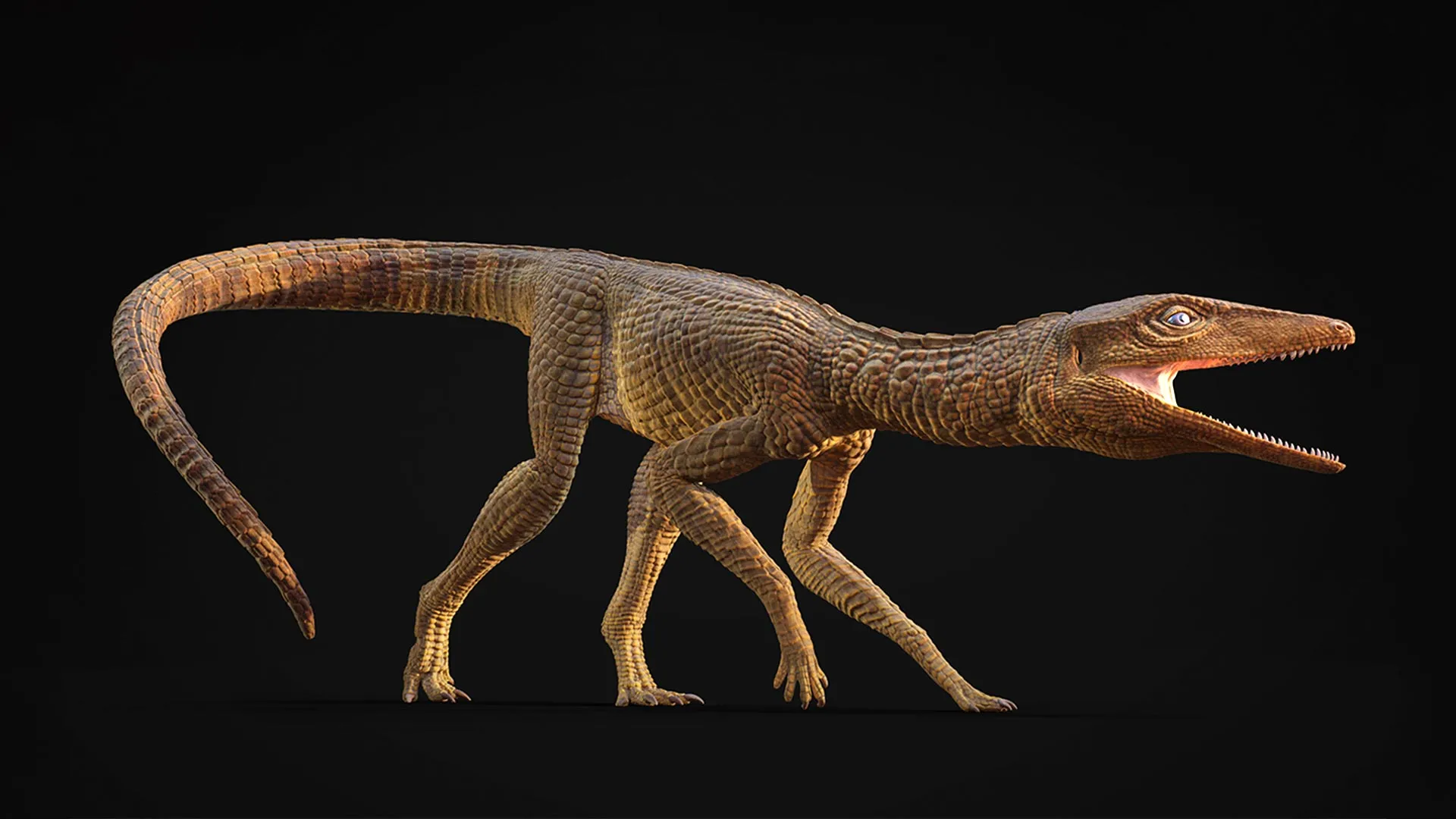
The newly identified species, formally described in the esteemed journal The Anatomical Record, has been given the evocative scientific name Garthochampsa galahadi. This nomenclature is a thoughtful tribute, blending mythological resonance with a personal dedication. The first part, "Garthochampsa," is derived from the Welsh word "Garth," meaning enclosure or court, alluding to the secluded, cave-like fissure deposits where the fossils were discovered. The latter part, "champsa," is a common suffix in crocodylomorph nomenclature, derived from the Greek word for crocodile. The specific epithet, "galahadi," honors Sir Galahad, the Arthurian knight renowned for his upright character and noble bearing. This choice reflects the animal’s distinctly upright posture, a key characteristic distinguishing it from more sprawling ancient reptiles. Furthermore, the name serves as a profound personal acknowledgement to David Rhys Jones, a former physics teacher at Ysgol Uwchradd Aberteifi in Cardigan, Wales, who significantly inspired Ewan Bodenham, the lead author of the study and a PhD student at the Natural History Museum London and UCL.
"We named it after my secondary school physics teacher," stated Ewan Bodenham in a recent interview, his voice conveying a palpable sense of gratitude. "Mr. Jones was just such a good teacher, not only in being able to explain things well, but you could tell that he was genuinely interested in the sciences. I think that really inspired me. He also didn’t let me settle. He was very good at challenging people and helping students be the best they can be. Above all, he’s a very funny, genuine, nice guy." This personal connection underscores the profound impact educators can have on scientific discovery and career trajectories.
Unearthing the Past: Fossil Discoveries in Ancient Fissure Deposits
The fossilized remains of Garthochampsa galahadi were meticulously recovered from fissure deposits situated on both sides of the Bristol Channel, spanning across southern Wales and southwest England. These geological formations are particularly significant for paleontological research. They represent ancient underground cavities or cracks in the bedrock that acted as natural traps. Animals that perished on the surface, or their remains, were likely washed into these subterranean fissures by water erosion or other natural processes. Over vast stretches of geological time, these remains were gradually buried by accumulating sediment, preserving them in a remarkably intact state.
These fissure deposits have proven to be rich repositories of Late Triassic fauna. Among the previously identified inhabitants of these ancient environments was Terrestrisuchus, another early member of the Crocodylomorpha group, which encompasses modern crocodiles and their extinct relatives. Similar to the newly discovered species, Terrestrisuchus possessed long, slender legs, indicating a predominantly terrestrial existence, a stark contrast to the semi-aquatic or fully aquatic lifestyles of most extant crocodilians. The presence of multiple distinct terrestrial crocodylomorphs in these deposits suggests a more diverse evolutionary trajectory for this ancient group than was previously understood.
Anatomical Prowess: Distinguishing a New Species
The scientific endeavor to identify Garthochampsa galahadi as a distinct species involved a rigorous and detailed comparative anatomical analysis. Ewan Bodenham’s PhD research focuses on unraveling the complex evolutionary relationships within early crocodylomorphs. This specific specimen, initially found within the fissure deposits, required meticulous examination to determine its taxonomic status.
"My PhD project is looking at the evolutionary relationships of these early crocodiles," Ewan explained. "So we conducted a detailed anatomical description of this specimen, making comparisons to other early crocodiles to determine if it was another specimen of Terrestrisuchus or if it was something new."
The research team meticulously cataloged and analyzed a suite of skeletal features, paying close attention to aspects such as skull morphology, vertebral structure, limb proportions, and pelvic girdle characteristics. Through this painstaking process, they identified thirteen key anatomical differences that clearly distinguished the Gloucester specimen from known individuals of Terrestrisuchus and other contemporary crocodylomorphs. These distinct characteristics were deemed significant enough by the scientific community to warrant the classification of a completely new species. The presence of these differences suggests that while both Garthochampsa galahadi and Terrestrisuchus were land-dwelling crocodylomorphs, they occupied distinct ecological niches or evolved along separate evolutionary pathways.
Ecological Insights: Life on the Brink of Extinction
The discovery of Garthochampsa galahadi provides a crucial piece of the puzzle in understanding the complex ecosystems that existed in southwestern Britain during the Late Triassic, a period immediately preceding the Triassic-Jurassic mass extinction event. This catastrophic extinction, one of the most severe in Earth’s history, is believed to have been triggered by massive volcanic activity, leading to widespread climate disruption, including significant global warming and ocean acidification.
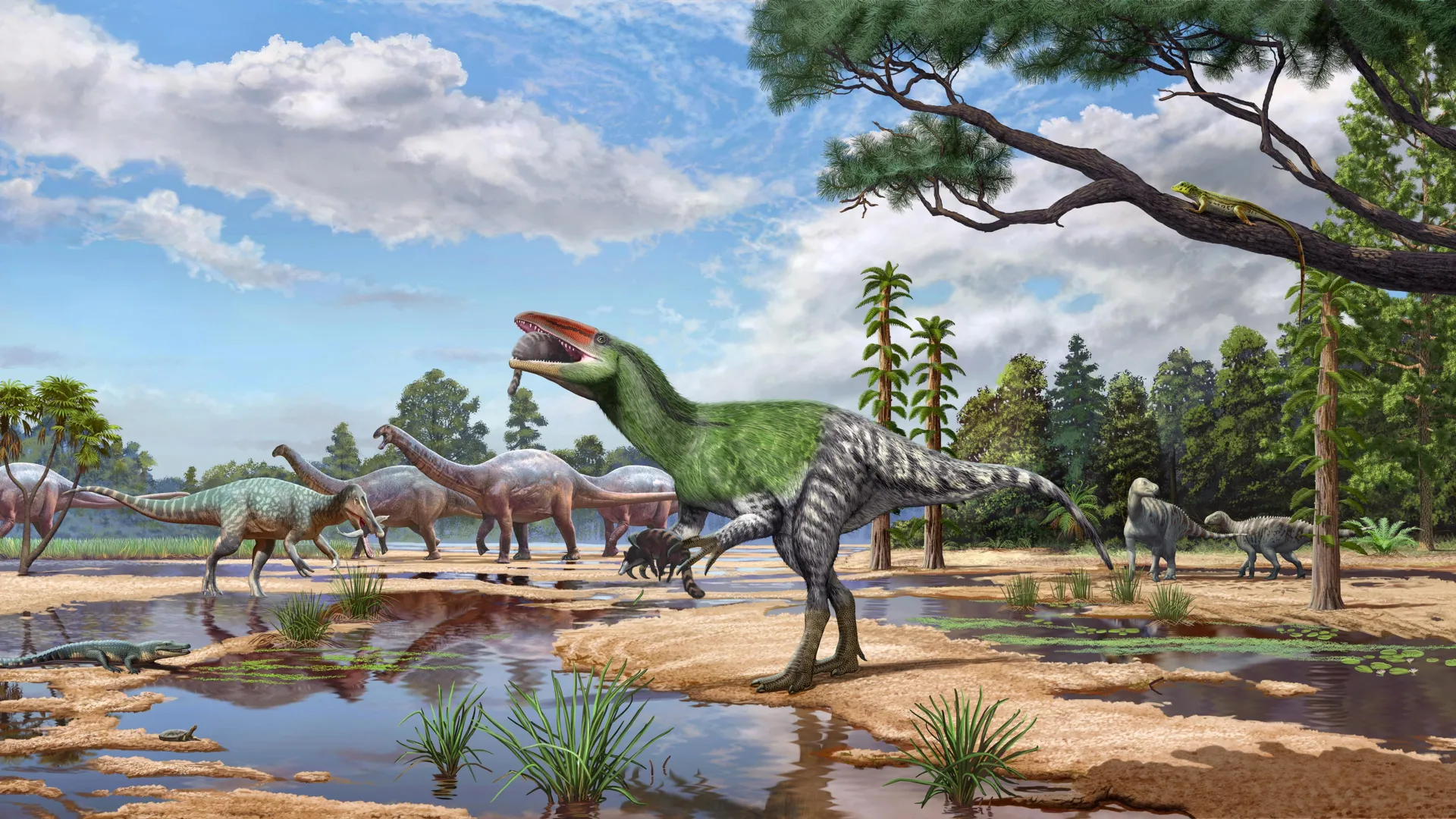
The region where the fossils were found, approximately 215 million years ago, was characterized by an elevated landscape. This contrasted with the surrounding areas, which were likely hot, dry plains. This topographical variation would have created diverse microhabitats, supporting a range of flora and fauna. Garthochampsa galahadi, with its adaptations for speed and terrestrial hunting, would have likely been a formidable predator in this environment, preying on smaller reptiles, amphibians, and early mammals that shared its habitat. Its presence adds to the growing inventory of species known from this pivotal period, allowing scientists to reconstruct more accurate food webs and ecological interactions.
By studying the diversity of life that existed just before this major extinction, paleontologists can gain invaluable insights into the resilience and adaptability of life in the face of profound environmental upheaval. Understanding which species thrived, which struggled, and how they responded to the changing conditions can inform our understanding of extinction dynamics and the potential for life to recover and diversify following such cataclysmic events. The study of Garthochampsa galahadi‘s adaptations and ecological role offers a window into the survival strategies employed by ancient life forms on the precipice of a global crisis.
Chronology of Discovery and Research
The precise timeline of the discovery and subsequent research can be pieced together through the publication details and inferred from the nature of the study:
- Late Triassic Period (Approximately 215 Million Years Ago): Garthochampsa galahadi lived and died in the region of what is now Gloucester, UK. Its remains were eventually washed into fissure deposits.
- Geological Time: Over millions of years, the fissure deposits accumulated sediment, preserving the fossilized remains.
- Paleontological Excavations (Likely over several decades): Fossil hunters and paleontologists have been exploring fissure deposits in Wales and Southwest England for many years, uncovering a wealth of Late Triassic fauna, including specimens of Terrestrisuchus.
- Discovery of the Key Specimen: At some point, the specific fossil specimen that would become Garthochampsa galahadi was recovered from these fissure deposits. The exact date of its excavation is not specified in the provided text, but it would have preceded the detailed research.
- Ewan Bodenham’s PhD Research (Ongoing or recently concluded): The lead author, Ewan Bodenham, began his doctoral research at the Natural History Museum London and UCL, focusing on early crocodylomorph evolution.
- Detailed Anatomical Analysis: Bodenham and his colleagues conducted an in-depth examination of the newly discovered specimen, comparing its features to existing fossil records, particularly Terrestrisuchus.
- Identification of Distinct Species: The researchers identified thirteen unique anatomical differences, leading to the conclusion that the specimen represented a new species.
- Formal Description and Publication: The findings were meticulously documented and submitted for peer review. The species was formally described in the scientific paper titled ‘A second species of non-crocodyliform crocodylomorph from the Late Triassic fissure deposits of southwestern UK: implications for locomotory ecological diversity in Saltoposuchidae’, published in The Anatomical Record. The publication date signifies the official announcement of the discovery to the scientific community.
Broader Implications for Paleontological Understanding
The discovery of Garthochampsa galahadi has several significant implications for the field of paleontology and our understanding of early reptilian evolution.
- Diversification of Early Crocodylomorphs: It demonstrates that the crocodylomorph lineage was more diverse in terms of ecological specialization during the Triassic than previously appreciated. The existence of multiple distinct, terrestrial forms suggests a significant adaptive radiation within this group, with different lineages exploiting various terrestrial niches.
- Locomotory Adaptations: The emphasis on long, slender legs and a lightweight frame in both Garthochampsa galahadi and Terrestrisuchus highlights a trend towards cursorial (running) adaptations within some early crocodylomorphs. This contrasts sharply with the more robust, sprawling builds of other contemporary archosaurs. Understanding these different locomotory strategies provides insights into predator-prey dynamics and niche partitioning in Triassic ecosystems.
- Biogeography of Triassic Reptiles: The recovery of this new species from fissure deposits in southwestern UK reinforces the importance of these geological formations as windows into Late Triassic life in Europe. It adds to a growing body of evidence suggesting that this region was a significant center of reptilian diversity during this period.
- Evolutionary Pressures: The co-existence of multiple terrestrial crocodylomorphs might indicate specific evolutionary pressures or opportunities that favored these adaptations. Further research into the specific diets, habitats, and competitive interactions of these species could shed light on these factors.
Future Research Directions
The discovery of Garthochampsa galahadi opens avenues for future research. Scientists will likely seek to:
- Uncover More Specimens: Continued exploration of Late Triassic fissure deposits in the UK and potentially other regions could yield additional fossils of Garthochampsa galahadi or related species, providing more complete skeletal information and a clearer picture of its anatomy and variation.
- Phylogenetic Analysis: Further detailed comparative analyses with a wider range of fossil and extant crocodylomorphs will help to refine the phylogenetic position of Garthochampsa galahadi within the broader crocodylomorph family tree.
- Paleoecological Reconstruction: Integrating the ecological role of Garthochampsa galahadi into more comprehensive models of Late Triassic ecosystems will enhance our understanding of food webs, predator-prey relationships, and the overall structure of these ancient environments.
- Investigating the "Why": Understanding the specific environmental or competitive pressures that drove the evolution of terrestrial, fast-moving crocodylomorphs like Garthochampsa galahadi remains a key area for future investigation.
In conclusion, the unearthing of Garthochampsa galahadi is a significant paleontological achievement. It not only adds a fascinating new creature to the fossil record but also compels a re-evaluation of the evolutionary trajectory of early crocodylomorphs, underscoring the remarkable diversity and adaptability of life during the pivotal Late Triassic period, just before the dramatic reshaping of the planet’s biosphere by mass extinction. The personal touch in its naming serves as a poignant reminder of the human element and the crucial role of dedicated educators in inspiring the next generation of scientific explorers.