For generations, the prevailing scientific consensus held that dinosaur fossils were essentially geological curiosities – mineralized remains where any semblance of original biological material had long since succumbed to the relentless march of time and the transformative processes of fossilization. This bedrock assumption, deeply ingrained in paleontological thought, has dictated how scientists have interpreted ancient life for decades. However, a groundbreaking study, centered on a remarkably well-preserved Edmontosaurus fossil, is now fundamentally challenging this deeply entrenched paradigm, potentially ushering in a new era of understanding prehistoric life.
This extraordinary research, spearheaded by a team from the University of Liverpool, has unearthed compelling evidence suggesting that traces of original organic molecules, most notably collagen, persist within dinosaur bones dating back an astonishing 66 million years. This discovery provides robust support for a controversial hypothesis that has ignited passionate debate and divided the paleontological community for over three decades. The implications are profound, suggesting that fossils may hold far more than just mineralized blueprints of ancient creatures.
A Landmark Discovery in the Hell Creek Formation
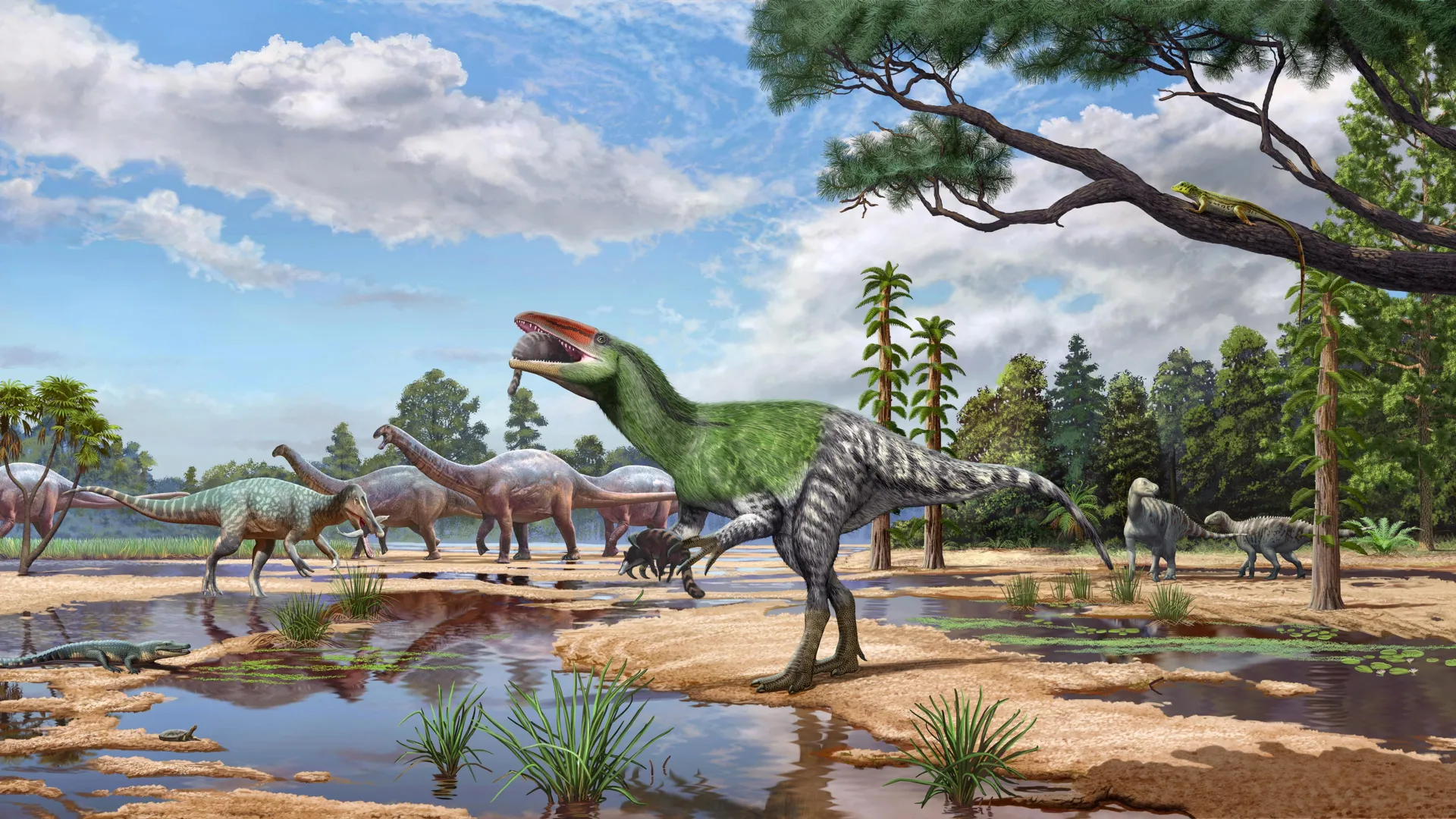
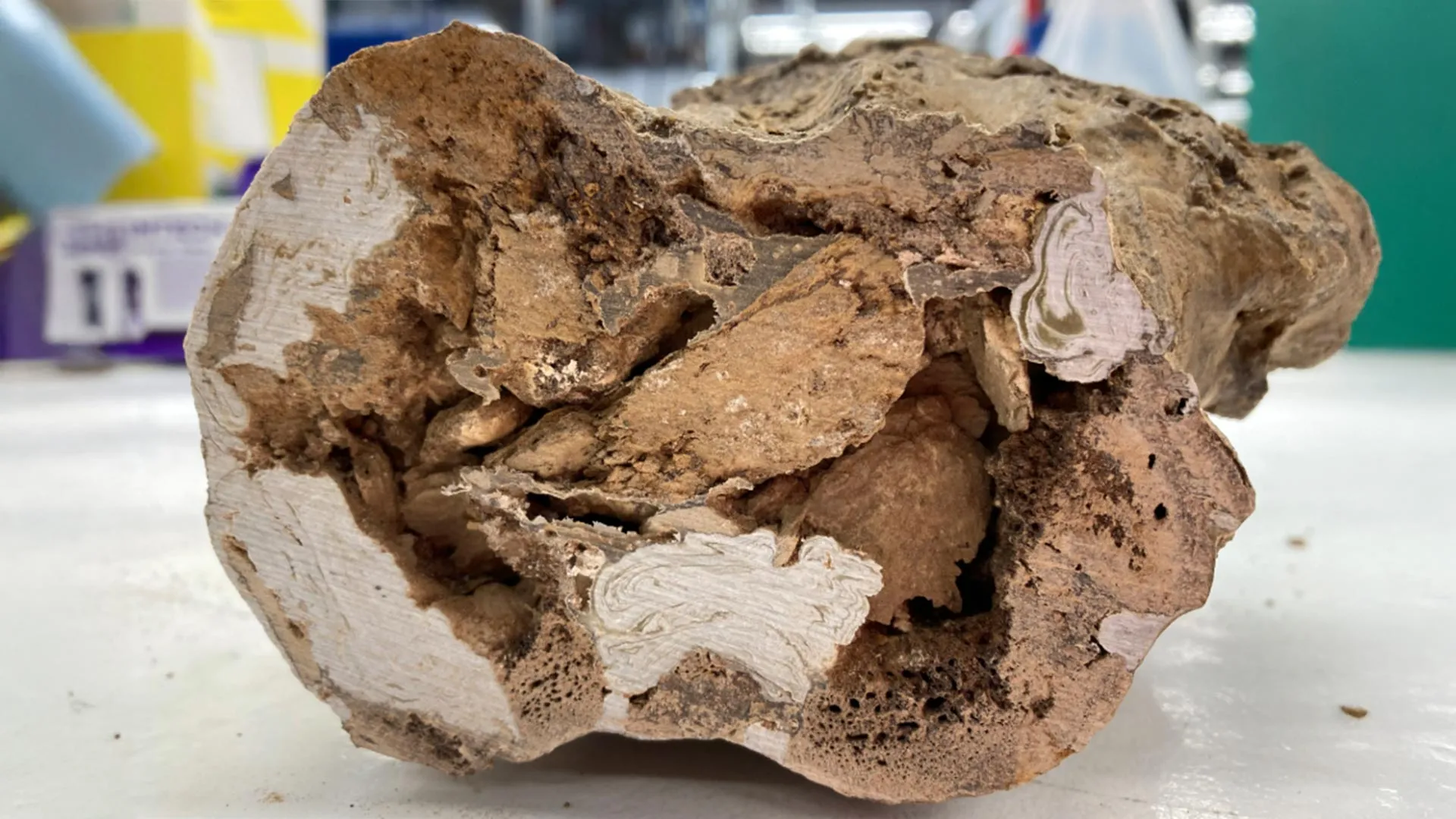
The focal point of this revolutionary study is a substantial Edmontosaurus sacrum, a critical component of the dinosaur’s hip region, weighing approximately 22 kilograms. This specimen was meticulously recovered from South Dakota’s renowned Hell Creek Formation, a geological treasure trove that has yielded an abundance of Late Cretaceous fossils, including the iconic Tyrannosaurus rex. The Edmontosaurus itself was a large, herbivorous dinosaur, characterized by its distinctive duck-like bill, and it shared its ecosystem with apex predators like T. rex during the twilight years of the Cretaceous Period.
Employing a sophisticated arsenal of advanced laboratory techniques, including cutting-edge protein sequencing and multiple forms of mass spectrometry, the research team meticulously analyzed the fossilized bone. Their painstaking efforts yielded a remarkable discovery: the identification of collagen remnants embedded deep within the fossil’s structure. Collagen, the most abundant structural protein in vertebrate bone tissue, is notoriously difficult to dismiss as modern contamination when found in such an ancient context. Its presence, therefore, carries significant weight.
Further bolstering the findings, researchers from the University of California, Los Angeles (UCLA) independently identified hydroxyproline, a specific amino acid intricately linked to collagen within bone. This crucial amino acid confirmation served as an independent verification, reinforcing the team’s assertion that degraded collagen fragments were indeed genuinely present within the fossil, not a result of external infiltration.
Professor Steve Taylor, the esteemed chair of the Mass Spectrometry Research Group at the University of Liverpool’s Department of Electrical Engineering & Electronics and a lead author on the study, articulated the significance of their findings. "This research shows beyond doubt that organic biomolecules, such as proteins like collagen, appear to be present in some fossils," he stated. Professor Taylor emphasized the far-reaching implications of their work, directly refuting the long-held hypothesis that any organic molecules detected in fossils must be attributed to contamination.
Decades of Debate: The Soft Tissue Controversy
The assertion that dinosaur fossils could preserve not just hard tissues but also remnants of soft tissues and proteins has been a highly contentious issue within paleontology since the early 2000s. For years, a significant segment of the scientific community remained skeptical, arguing that any reported organic materials were more likely to be modern contaminants, perhaps from bacteria or environmental infiltration, rather than authentic biological remnants of the dinosaurs themselves.
One of the most pivotal moments in this ongoing debate occurred in 2005, when paleontologist Mary Schweitzer and her colleagues published their groundbreaking findings concerning soft tissue structures discovered within a Tyrannosaurus rex fossil. This discovery sent ripples through the scientific world, igniting further research and, inevitably, more debate. Subsequent studies, building on Schweitzer’s work, reported the identification of possible collagen and structures resembling blood vessels in additional dinosaur specimens, including hadrosaurs, a group to which the Edmontosaurus belongs.
The current Edmontosaurus analysis distinguishes itself through its rigorous, multi-pronged approach. By employing a battery of independent testing methods on the very same fossil specimen, the research team aimed to systematically eliminate the possibility of contamination. The integration of microscopy, detailed chemical analysis, and precise protein sequencing provided a comprehensive and robust dataset, significantly strengthening the case for the endogenous origin of the detected molecules. The meticulous methodology employed in this study, published in the prestigious journal Analytical Chemistry in 2025 under the title "Evidence for Endogenous Collagen in Edmontosaurus Fossil Bone," represents a significant leap forward in resolving this long-standing paleontological dispute.
Unlocking New Avenues of Paleontological Research
The ramifications of this discovery extend far beyond settling a scientific debate; they promise to revolutionize the field of paleontology. If proteins, particularly robust molecules like collagen, can indeed survive for tens of millions of years within fossilized bone, it opens up an entirely new frontier for studying extinct animals.
The ability to analyze these molecular remnants could provide unprecedented insights into the evolutionary relationships between dinosaur species, potentially revealing connections that are not readily apparent from skeletal morphology alone. Imagine deciphering intricate phylogenetic trees based on subtle molecular variations, offering a level of detail previously unimaginable. Furthermore, these biomolecular traces could shed light on crucial aspects of dinosaur biology, such as their growth patterns, aging processes, physiological functions, and even the prevalence of diseases that afflicted them.
Professor Taylor highlighted the potential for re-examining previously collected fossil samples. He suggested that microscopic images captured decades ago, using techniques like cross-polarized light microscopy, might contain overlooked evidence of preserved collagen in ancient bones. "These images may reveal intact patches of bone collagen, potentially offering a ready-made trove of fossil candidates for further protein analysis," Taylor explained. "This could unlock new insights into dinosaurs, for example revealing connections between dinosaur species that remain unknown." This prospect of rediscovering hidden biological information within existing collections underscores the transformative potential of this research.
The Enduring Mystery of Molecular Preservation
This remarkable discovery inevitably raises a profound scientific question: how have these organic molecules managed to endure for such immense geological timescales? Proteins are inherently fragile and are known to degrade over time, especially when subjected to the geological pressures and chemical environments present over millions of years. Yet, certain fossils appear to have acted as remarkable incubators, preserving microscopic biological structures under specific, albeit not fully understood, conditions.
Current scientific inquiry is increasingly focusing on the potential role of mineral interactions within fossilized bone. Researchers hypothesize that the chemical environment and the specific mineral matrices that form during fossilization may create a protective shield, effectively sequestering and preserving fragments of collagen from complete decomposition. Recent studies investigating fossil biomolecules suggest that particular burial environments, characterized by specific geochemical conditions, and the intricate microstructures of bone itself, may collectively contribute to creating stable environments that significantly slow down the rate of chemical breakdown.
The Edmontosaurus, in particular, has a historical reputation for exceptional preservation. Over the last century, several Edmontosaurus specimens have been unearthed that retain incredibly detailed skin impressions and other soft tissue features, earning them the evocative moniker of "dinosaur mummies." These extraordinary finds have consistently pushed the boundaries of what scientists believed was possible in terms of fossil preservation.
More recent paleontology research has continued to uncover surprisingly detailed soft tissue preservation in Edmontosaurus specimens, including compelling evidence of fleshy structures and meticulously preserved skin anatomy. These ongoing discoveries, coupled with the present research on collagen, are fundamentally reshaping how scientists perceive and interpret fossils. Rather than viewing them solely as inert, mineralized replicas of ancient life, researchers are increasingly coming to understand some fossils as extraordinary molecular time capsules, still holding tangible traces of prehistoric biology millions of years after the creatures themselves ceased to exist. This paradigm shift promises to invigorate paleontological research, leading to discoveries that were once considered the realm of science fiction.