Researchers have identified a potent genetic mechanism that may illuminate the astonishing speed at which some species evolve, particularly within the diverse cichlid fish populations of East Africa’s Lake Malawi. These evolutionary powerhouses, known as chromosomal inversions or "flipped" DNA segments, appear to act as potent accelerators, enabling fish to adapt swiftly to novel environments and even diverge into entirely new species. This discovery, published in the prestigious journal Science, offers a compelling answer to one of biology’s most enduring questions: how Earth became populated by such a staggering array of life forms.
The extraordinary biodiversity of Lake Malawi’s cichlids serves as a prime case study for rapid evolution. Within the confines of this single, ancient lake, over 800 distinct species have emerged from a common ancestor in a timeframe considerably shorter than the evolutionary divergence between humans and chimpanzees. This phenomenon is particularly remarkable given that all this diversification occurred within the same aquatic ecosystem. Cichlids in this lake exhibit a breathtaking array of specializations, with some evolving into apex predators, others adapting to meticulously sift algae from rocky substrates, yet others specializing in the consumption of plankton, and a significant number honing their skills in extracting nutrients from the lakebed’s sandy bottom. Each species has carved out a unique ecological niche, coexisting side-by-side despite their close genetic kinship.
Understanding the genetic underpinnings of such rapid adaptive radiation has long been a central pursuit for evolutionary biologists. A collaborative effort between scientists from the University of Cambridge and the University of Antwerp set out to unravel this mystery, focusing on the genetic architecture that facilitates such swift evolutionary change. Their meticulous analysis of over 1,300 cichlid fish genomes has yielded groundbreaking insights into the role of chromosomal inversions.
The Discovery of "Flipped" DNA Segments and Their Functional Significance
The research team embarked on an extensive genomic investigation, scrutinizing the DNA of a substantial cohort of cichlid fish to identify genetic features that could account for their accelerated evolutionary trajectory. The pivotal discovery was the prevalence of large-scale DNA rearrangements, specifically chromosomal inversions, within the genomes of certain cichlid species.
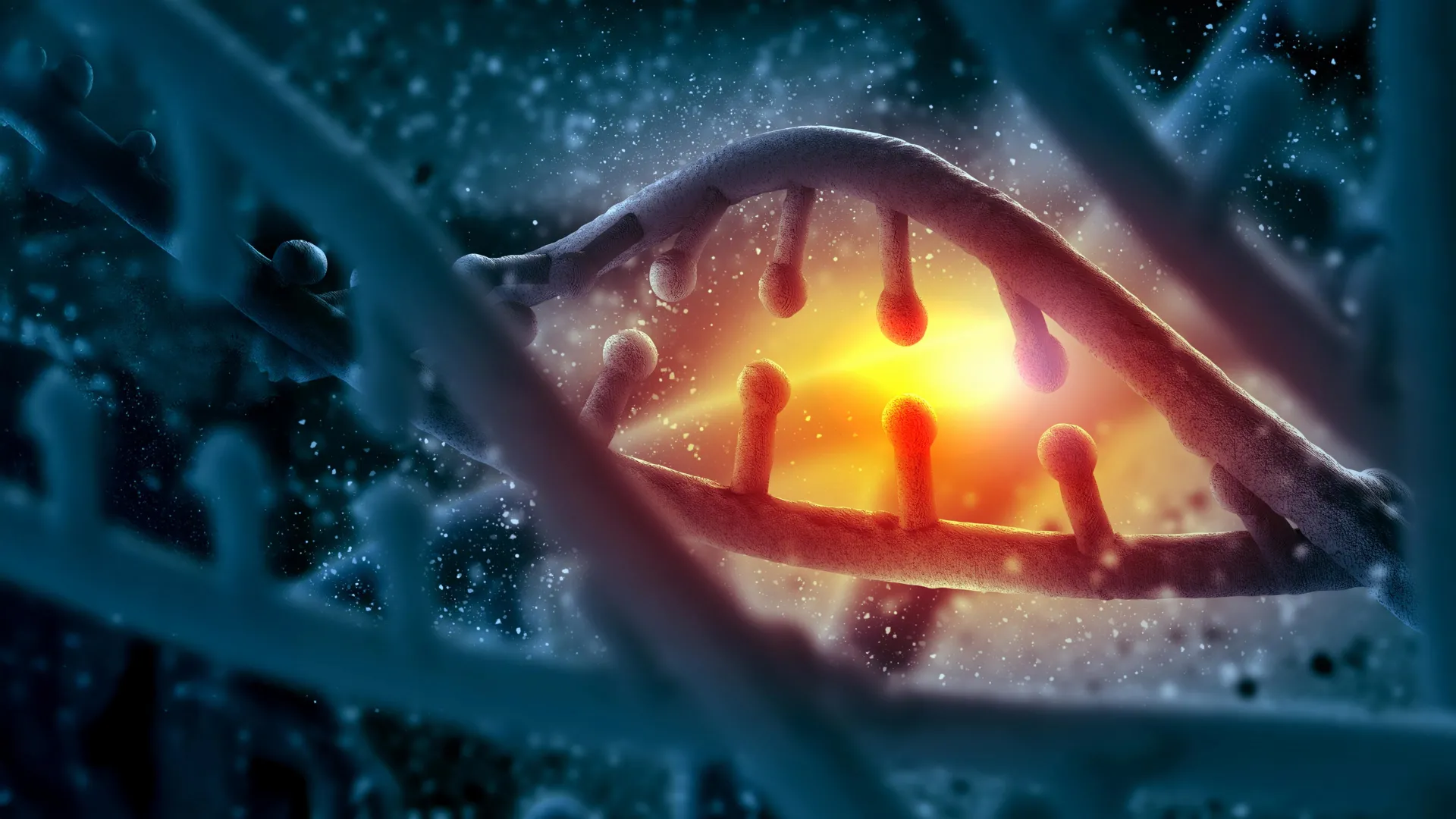
"We discovered that, in some species, large chunks of DNA on five chromosomes are flipped — a type of mutation called a chromosomal inversion," stated senior author Hennes Svardal from the University of Antwerp. A chromosomal inversion occurs when a segment of a chromosome breaks in two places, flips end-to-end, and reattaches. While often viewed as a simple mutation, the functional consequences of these inversions are profound, particularly in the context of reproduction and adaptation.
Under normal circumstances, sexual reproduction involves a process called recombination, where genetic material from both parents is shuffled and exchanged. This shuffling is essential for generating genetic variation but can also disrupt beneficial gene combinations that have arisen through natural selection. However, within the inverted regions of chromosomes, recombination is significantly suppressed. This suppression has a crucial effect: it effectively locks together groups of genes, ensuring they are inherited as a cohesive unit from one generation to the next. This mechanism preserves advantageous combinations of traits, acting as a powerful buffer against disruptive genetic mixing and thereby accelerating the rate of adaptive evolution.
Moritz Blumer, the first author of the study from Cambridge’s Department of Genetics, likened this phenomenon to an evolutionary toolkit: "It’s sort of like a toolbox where all the most useful tools are stuck together, preserving winning genetic combinations that help fish adapt to different environments." These tightly linked clusters of genes are often termed "supergenes."
"Supergenes" as Drivers of Species Differentiation and Adaptation
In cichlid fish, these supergenes, facilitated by chromosomal inversions, play a disproportionately significant role in shaping interspecies differences. Even when different cichlid species retain the capacity to interbreed, the inversions impose a genetic barrier, limiting the extent to which their DNA can mix. This limitation is crucial for maintaining distinct phenotypic traits that are vital for survival and reproductive success in their specific ecological niches.
This mechanism is particularly important in environments where species overlap and habitats are not clearly demarcated by physical barriers, such as the open, sandy regions of Lake Malawi. In these areas, subtle genetic differences, preserved by inversions, can become the primary drivers of reproductive isolation and speciation.
The genes located within these supergenes often govern traits that are fundamental to an organism’s survival and reproductive fitness. These include genes influencing sensory perception, such as vision and hearing, as well as behavioral patterns. For instance, cichlids that inhabit the deep zones of the lake, descending as deep as 200 meters, face vastly different environmental pressures compared to their shallow-water counterparts. These pressures include reduced light penetration, increased hydrostatic pressure, and distinct food availability. The supergenes in deep-dwelling cichlids help to maintain the specific genetic adaptations necessary to thrive under these extreme conditions, ensuring the integrity of traits like specialized vision for low-light environments or physiological adaptations to high pressure.
The transfer of these inversions between species can also accelerate evolutionary processes. "When different cichlid species interbred, entire inversions can be passed between them — bringing along key survival traits, like adaptations to specific environments, speeding up the process of evolution," explained Blumer. This interspecies gene flow, mediated by inversions, can rapidly introduce beneficial adaptations into a population, bypassing the slower process of accumulating individual beneficial mutations.
Broader Implications for Understanding Evolution and Biodiversity
The significance of chromosomal inversions extends beyond their role in preserving beneficial traits. They can also influence fundamental biological processes, such as sex determination. In many species, specific chromosomal regions are responsible for dictating an individual’s sex. When these regions are involved in inversions, they can become linked to other genes, influencing the inheritance patterns of both sex and other adaptive traits. This linkage can further contribute to reproductive isolation and the formation of new species.
The researchers emphasize that chromosomal inversions are not unique to cichlid fish. "While our study focused on cichlids, chromosomal inversions aren’t unique to them," commented co-senior author Professor Richard Durbin from Cambridge’s Department of Genetics. "They’re also found in many other animals — including humans — and are increasingly seen as a key factor in evolution and biodiversity." The presence of inversions in a wide range of taxa suggests they are a fundamental mechanism driving evolutionary innovation across the tree of life.
The implications of this research are far-reaching. By identifying the role of chromosomal inversions as evolutionary accelerators, scientists are gaining crucial insights into the mechanisms that generate the immense biodiversity observed on Earth. This discovery provides a tangible explanation for how populations can adapt and diverge at remarkable speeds, particularly under specific environmental conditions that favor the preservation of advantageous gene combinations.
The research team believes their findings will contribute significantly to resolving long-standing questions about the drivers of rapid speciation. "We have been studying the process of speciation for a long time," said Svardal. "Now, by understanding how these supergenes evolve and spread, we’re getting closer to answering one of science’s big questions: how life on Earth becomes so rich and varied."
Supporting Data and Context
The study’s findings are supported by extensive genomic data. The analysis of over 1,300 cichlid genomes allowed researchers to identify specific chromosomal regions that were consistently inverted across certain species. The researchers employed advanced bioinformatic tools to compare these genomic sequences, pinpointing the exact locations and extents of these inversions. Statistical analyses were used to confirm the significance of these inversions in differentiating species and their association with specific adaptive traits.
The geological history of Lake Malawi, estimated to be between one and two million years old, provides a critical temporal backdrop for this rapid diversification. This relatively young age, coupled with the lake’s stable environmental conditions and abundant ecological opportunities, has created a unique evolutionary laboratory. The sustained periods of isolation and the absence of significant geological disruptions have allowed cichlid populations to explore diverse adaptive pathways, with chromosomal inversions playing a crucial role in consolidating these adaptations.
The discovery of supergenes and their association with chromosomal inversions offers a more nuanced understanding of speciation compared to simpler models that rely solely on the accumulation of individual gene mutations. This research highlights the importance of considering larger-scale genomic rearrangements in evolutionary processes.
Potential Reactions and Broader Impact
The findings are expected to be met with considerable interest from the broader scientific community. Evolutionary biologists specializing in speciation, genomics, and molecular evolution are likely to view this as a significant advancement. Conservation biologists may also find value in this research, as understanding the genetic mechanisms of adaptation can inform strategies for protecting vulnerable species in rapidly changing environments.
The implications for understanding human evolution are also noteworthy. While the study focused on fish, the presence of inversions in human genomes suggests they may have played a role in our own evolutionary history. Further research could explore whether similar mechanisms have contributed to human adaptation and diversification.
In conclusion, the identification of chromosomal inversions as evolutionary accelerators in cichlid fish represents a major breakthrough in our understanding of speciation. This research not only sheds light on the remarkable biodiversity of Lake Malawi but also provides a fundamental insight into the genetic architecture that underpins the astonishing variety of life on Earth. The concept of "supergenes" locked in by inversions offers a powerful new framework for studying how evolution proceeds at an accelerated pace, answering age-old questions about the generation of biological diversity.