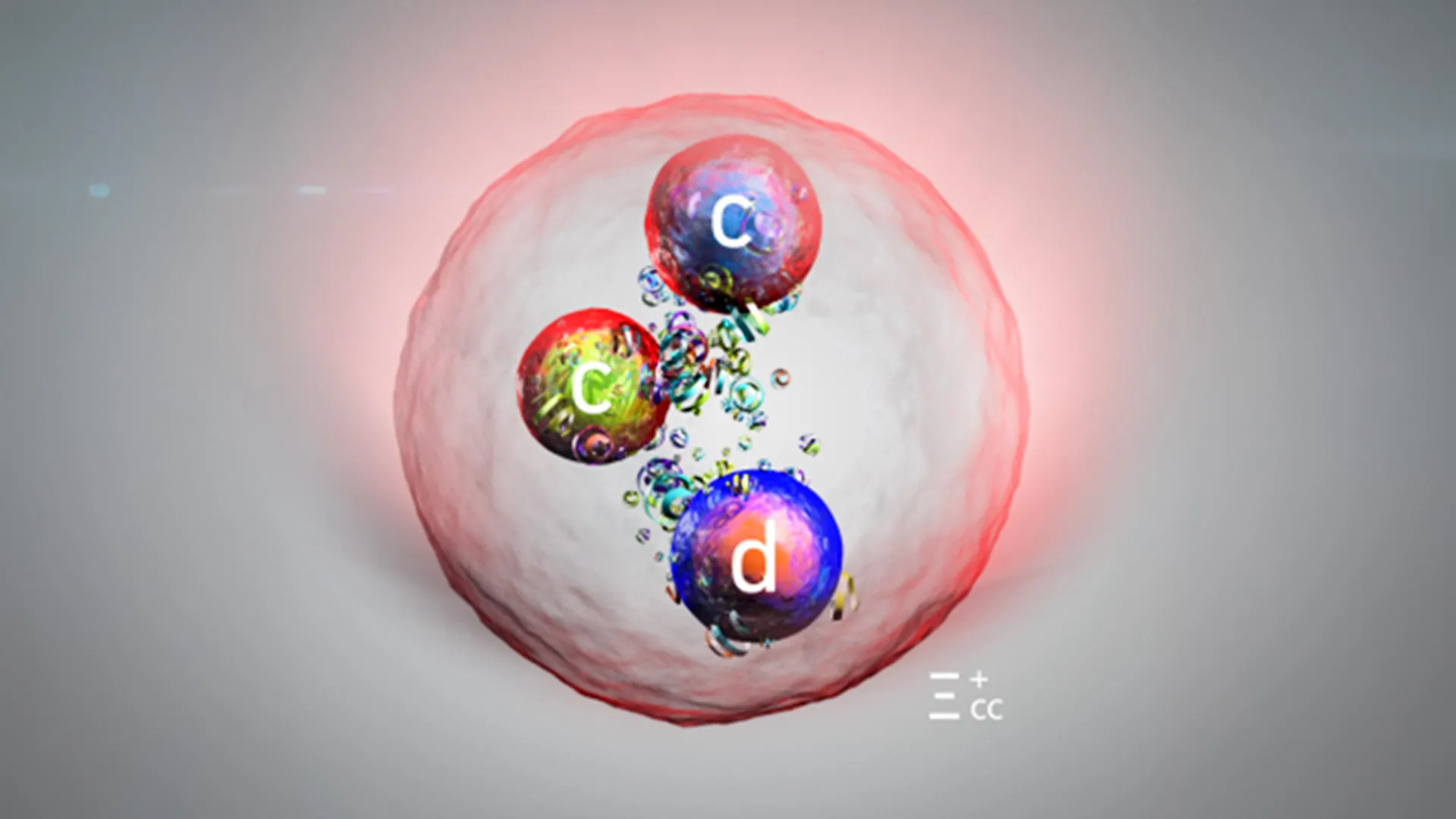
The international scientific community has reached a significant milestone in the field of high-energy physics with the discovery of a new subatomic particle, the $Xi_cc^+$ (Xi-cc-plus), at the European Organization for Nuclear Research (CERN). Researchers from The University of Manchester, working within the Large Hadron Collider beauty (LHCb) collaboration, played a pivotal role in the identification of this particle, which provides fresh insights into the fundamental forces that govern the structure of matter. This discovery, announced at the Rencontres de Moriond Electroweak conference, represents the first new particle identified using the recently upgraded LHCb detector, marking a successful start to a new era of data collection at the world’s most powerful particle accelerator.
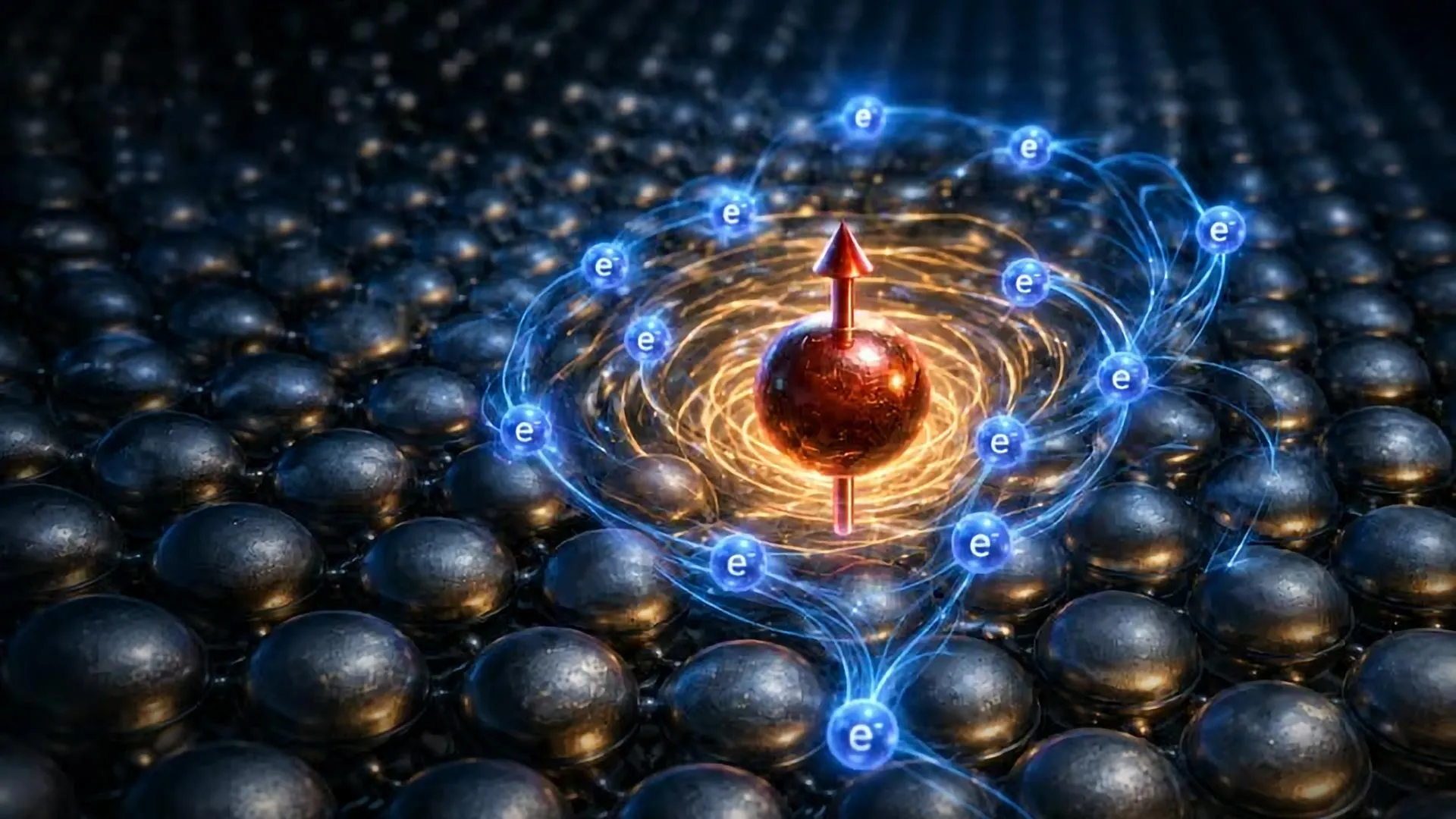
The $Xicc^+$ is a member of the baryon family, the same class of particles as the protons and neutrons that form the nuclei of atoms. However, unlike the common proton, which is composed of two "up" quarks and one "down" quark, the $Xicc^+$ is significantly heavier and more exotic. It is comprised of two "charm" quarks and one "down" quark. Because charm quarks are much more massive than up quarks, the $Xi_cc^+$ serves as a "heavy" relative to the proton, offering a unique laboratory for testing the theories of Quantum Chromodynamics (QCD)—the branch of physics that describes the strong interaction, or the force that glues quarks together.
A Century of Physics Leadership at Manchester
The discovery of the $Xi_cc^+$ is not merely an isolated achievement but the latest chapter in a century-long legacy of nuclear and particle physics research at The University of Manchester. The university’s connection to subatomic discovery dates back to the early 20th century when Ernest Rutherford, often regarded as the father of nuclear physics, conducted his ground-breaking research in Manchester. Between 1917 and 1919, Rutherford and his colleagues identified the proton, fundamentally changing the human understanding of the atom.
In the decades that followed, Manchester scientists continued to push the boundaries of the known universe. In the 1950s, researchers at the university were the first to identify a member of the $Xi$ (Xi) particle family, which are baryons containing at least one "strange" quark. The identification of the $Xi_cc^+$ in 2024 builds directly upon this historical foundation, utilizing 21st-century technology to explore the same fundamental questions Rutherford asked over a hundred years ago in a basement laboratory.
Professor Chris Parkes, the current head of the Department of Physics and Astronomy at The University of Manchester, emphasized the continuity of this research. Parkes, who led the international LHCb collaboration during the critical installation and early operational phases of the upgraded detector, noted that the same spirit of "curiosity-driven research" that fueled Rutherford’s gold-foil experiment continues to drive the thousands of scientists currently working at CERN.
The Technical Achievement of the LHCb Upgrade
The identification of the $Xi_cc^+$ was made possible by a massive international technological undertaking: the upgrade of the LHCb detector. The LHCb is one of the four major experiments at the Large Hadron Collider, specifically designed to study particles containing "beauty" (bottom) and "charm" quarks. The recent upgrade involved a collaboration of more than 1,000 researchers from 20 countries, with the United Kingdom providing the largest national contribution.
Manchester’s role in this upgrade was foundational. The university’s LHCb team was responsible for the design and construction of essential components of the tracking system, specifically the silicon pixel detector modules. These modules were meticulously assembled in the University’s Schuster Building before being transported to CERN in Switzerland.
The silicon pixel detector acts as the "eyes" of the experiment. Located just millimeters away from the proton-proton collision point, these detectors must withstand intense radiation while tracking the trajectories of thousands of particles with micron-level precision. Dr. Stefano De Capua, who led the production of these modules at Manchester, described the technology as a sophisticated, high-speed camera. The system captures "photographs" of particle collisions at a staggering rate of 40 million times per second. This high frame rate is necessary to filter through the billions of collisions occurring within the LHC to find the rare signals associated with particles like the $Xi_cc^+$.
Data Analysis and Particle Identification
The discovery of the $Xicc^+$ resulted from the analysis of proton-proton collision data recorded in 2024. During these high-energy collisions, the kinetic energy of the protons is converted into mass, creating a shower of short-lived particles. The $Xicc^+$ is an unstable particle that exists only for a fraction of a second before decaying into more stable, lighter particles.
Researchers identified the $Xi_cc^+$ by looking for its specific decay signature: $Lambda_c^+ K^- pi^+$. By measuring the energy and momentum of these three "daughter" particles, physicists can reconstruct the mass of the parent particle. The LHCb team observed a clear signal of approximately 915 events at a mass of 3619.97 MeV/c².
This measurement is particularly significant because it aligns with theoretical predictions based on the previously discovered $Xicc^++$ (Xi-cc-plus-plus). The $Xicc^++$ contains two charm quarks and an "up" quark, making it the "isospin partner" of the $Xicc^+$. In the world of subatomic physics, particles that differ only by the substitution of an up quark for a down quark should have very similar masses. The discovery of the $Xicc^+$ at the predicted mass provides strong confirmation of current models of quark interaction.
Resolving a Two-Decade Scientific Mystery
The successful identification of the $Xicc^+$ by the LHCb collaboration also brings clarity to a long-standing controversy in the physics community. For over 20 years, the existence and mass of this specific particle have been subjects of debate. In 2002, the SELEX experiment at Fermilab in the United States claimed to have observed the $Xicc^+$, but at a mass that was significantly different from what theoretical models suggested.
Subsequent experiments, including earlier runs of the LHC, were unable to replicate the SELEX results, leading to a period of uncertainty. The new data from the upgraded LHCb detector, however, provides a high-precision measurement that does not match the 2002 SELEX claim but does align perfectly with theoretical expectations and its partner particle, the $Xi_cc^++$. By providing a definitive measurement with a high degree of statistical significance, the LHCb team has effectively resolved a two-decade-old mystery, reinforcing the reliability of the Standard Model of particle physics.
Theoretical Implications and the Strong Force
Beyond the mere cataloging of a new particle, the discovery of the $Xi_cc^+$ has profound implications for our understanding of the strong force. The strong force is what binds quarks together to form baryons, but the math involved in calculating these interactions is notoriously difficult.
In a standard proton (up-up-down), the quarks are all relatively light and move at speeds close to the speed of light. In the $Xicc^+$, however, the two charm quarks are much heavier. This creates a system that physicists describe as being similar to a "helium atom" of quarks. In a helium atom, two heavy electrons orbit a nucleus; in the $Xicc^+$, the two heavy charm quarks act as a central core, with the light down quark orbiting around them. This unique configuration allows theorists to use different mathematical approximations to test the limits of Quantum Chromodynamics. By comparing the observed mass and decay properties of the $Xi_cc^+$ to theoretical predictions, scientists can refine the "lattice QCD" calculations used to simulate the behavior of matter at its most fundamental level.
The Future: High-Luminosity LHC and Upgrade 2
The discovery of the $Xicc^+$ is just the beginning of the journey for the upgraded LHCb detector. As the Large Hadron Collider continues its current run, the volume of data will increase, allowing for even more precise measurements of the $Xicc^+$’s lifetime and decay properties.
Furthermore, plans are already underway for the next stage of the project. The University of Manchester is set to play a leading role in "LHCb Upgrade 2," scheduled for the end of the decade. This next phase will coincide with the High-Luminosity LHC (HL-LHC) initiative, which aims to increase the "luminosity" (the number of collisions) of the accelerator by a factor of ten.
The increased data flow from the HL-LHC will allow researchers to explore rare particle decays that are currently beyond reach. This could lead to the discovery of "New Physics"—phenomena that cannot be explained by the current Standard Model, such as the nature of dark matter or the reason for the matter-antimatter asymmetry in the universe.
Conclusion
The identification of the $Xi_cc^+$ subatomic particle stands as a testament to the power of international collaboration and the enduring legacy of British scientific inquiry. Through the leadership of The University of Manchester and the support of the UK’s Science and Technology Facilities Council (STFC), the LHCb experiment has successfully transitioned into its most sensitive phase yet.
As the data from CERN continues to flow, the $Xi_cc^+$ will serve as a vital benchmark for our understanding of the strong force. More than a century after Rutherford first glimpsed the interior of the atom in a Manchester laboratory, his successors continue to peel back the layers of reality, one quark at a time. The discovery of this heavy, proton-like particle confirms that while the Standard Model remains robust, the universe still holds many complexities waiting to be decoded by the next generation of detectors and physicists.