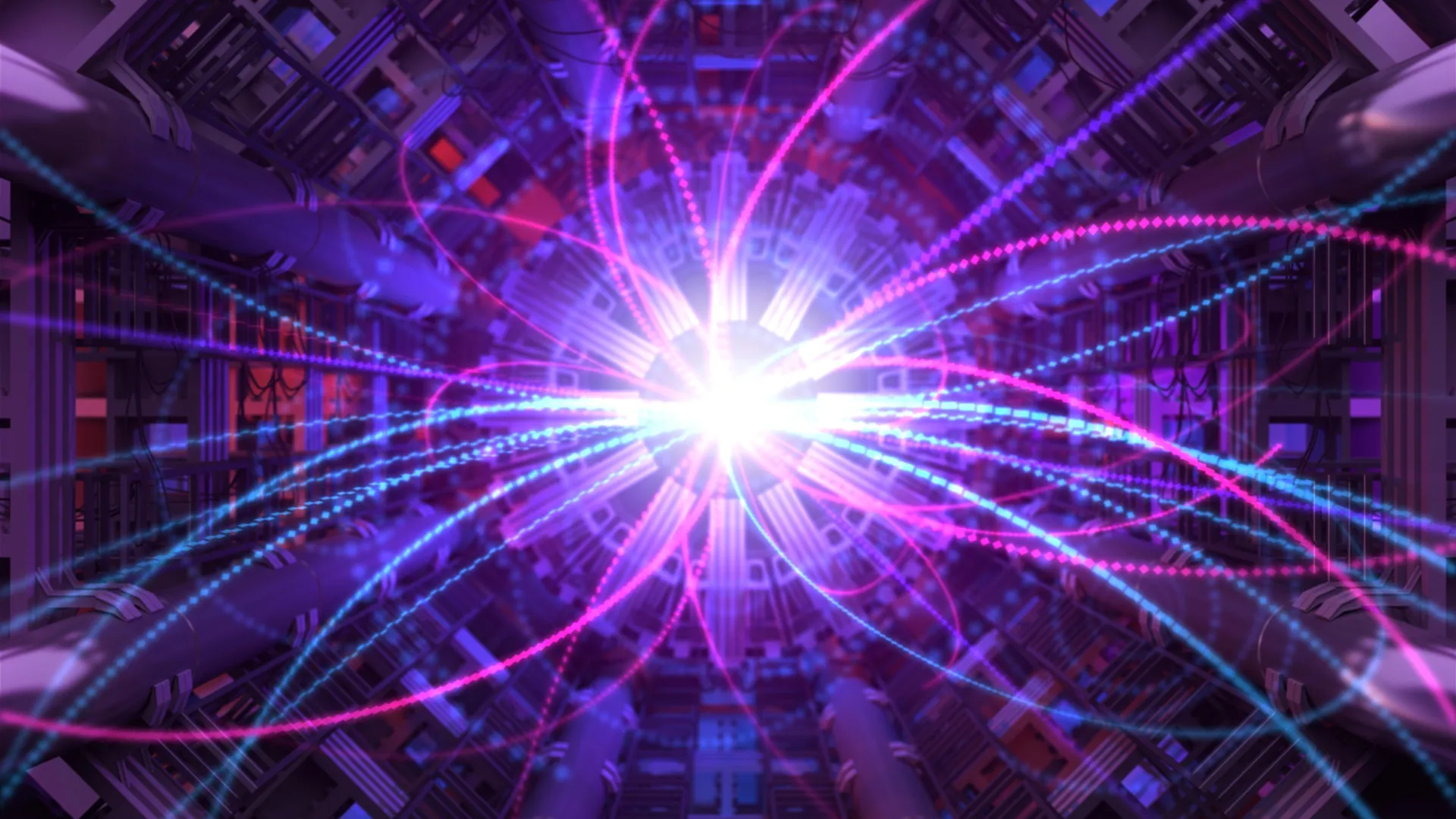
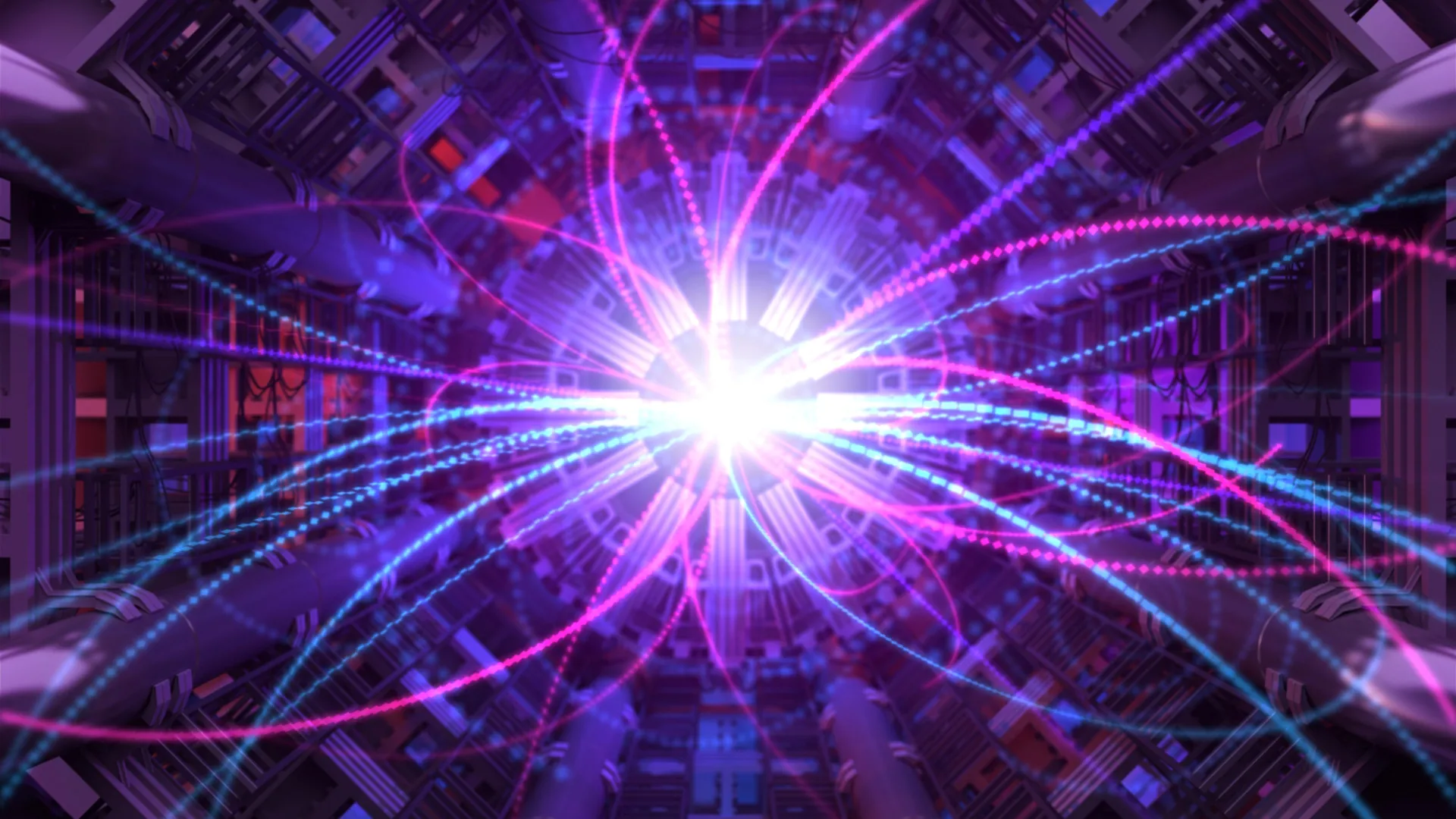
Recent findings from ongoing research at the Large Hadron Collider (LHC) at CERN in Geneva suggest that the scientific community may be approaching a historic threshold in the understanding of the physical universe. For over half a century, the Standard Model of particle physics has served as the definitive framework for describing how the most basic building blocks of matter interact under the influence of fundamental forces. However, new data emerging from the LHCb experiment—one of the four major detectors situated along the LHC’s 27-kilometer subterranean ring—indicates that specific sub-atomic particles are behaving in a manner that contradicts the predictions of this long-standing theory. If these results are confirmed through further testing and peer review, they could signal the beginning of a paradigm shift, necessitating a fundamental rewrite of modern physics to account for undiscovered particles or forces.
The Standard Model: A Legacy Under Scrutiny
To appreciate the significance of the recent findings, one must understand the role of the Standard Model in modern science. Developed in the latter half of the 20th century, the Standard Model is an elegant mathematical framework that incorporates the principles of quantum mechanics and Albert Einstein’s special theory of relativity. It categorizes all known fundamental particles—those that cannot be divided into smaller units—and describes how they are governed by four fundamental forces: electromagnetism, the strong nuclear force, the weak nuclear force, and gravity.
While the Standard Model has successfully predicted the existence of various particles, including the Higgs boson discovered at CERN in 2012, physicists have long acknowledged that it is an incomplete "theory of everything." Most notably, the model fails to incorporate gravity as described by general relativity and offers no explanation for dark matter—the invisible substance that constitutes approximately 25% of the universe’s mass-energy content. Furthermore, it does not account for dark energy or the prevalence of matter over antimatter in the early universe. Because of these gaps, the primary mission of the LHC has been to find "cracks" in the Standard Model—experimental results that deviate from theoretical expectations—thereby providing a roadmap toward a more comprehensive theory.
The Discovery: Anomalies in B Meson Decay
The latest tension in the Standard Model arises from the study of B mesons, which are short-lived sub-atomic particles composed of a quark and an antiquark. Specifically, researchers at the LHCb experiment have been monitoring a process known as "decay," in which a B meson transforms into other, more stable particles. The focus of the current study is a specific and highly rare transformation known as an "electroweak penguin decay."
In this process, a B meson decays into a kaon, a pion, and two muons. The term "penguin" refers to the specific shape of the Feynman diagram—a visual representation used by physicists to calculate the probability of particle interactions—which, with a degree of imagination, resembles the flightless bird. This decay is of particular interest because it involves a "beauty quark" transforming into a "strange quark," a transition that is extremely rare under the Standard Model. Statistically, only one in every million B mesons is expected to decay in this specific manner.
By analyzing approximately 650 billion B meson decays recorded between 2011 and 2018, the LHCb team measured the angles and energies at which the resulting particles were produced. The data revealed that the frequency and characteristics of these decays do not align with the values predicted by the Standard Model. This discrepancy suggests that an unknown influence—perhaps a heavy, undiscovered particle—is interfering with the decay process.
Statistical Significance and the Search for "Five Sigma"
The results, which have been accepted for publication in the prestigious journal Physical Review Letters, show a statistical tension of four standard deviations, commonly referred to as "4-sigma." In the context of particle physics, this means there is only a 1-in-16,000 chance that the observed anomaly is a result of a random fluctuation in the data rather than a genuine physical phenomenon.
While a 4-sigma result is considered highly significant and "compelling evidence" in many scientific disciplines, particle physics adheres to a more rigorous "gold standard" known as "5-sigma." A 5-sigma result represents five standard deviations, translating to a 1-in-1.7 million chance of a fluke. Only when this threshold is met can researchers officially claim a "discovery." Therefore, while the current findings have generated substantial excitement, the CERN team remains cautious, acknowledging that more data is required to move from evidence to a definitive claim.
Corroborating Data from the CMS Experiment
The case for new physics is bolstered by independent observations from another LHC experiment: the Compact Muon Solenoid (CMS). Earlier in 2025, the CMS collaboration published its own findings regarding similar decay processes. While the CMS data is currently less precise than the LHCb results, the two sets of data show a remarkable degree of alignment.
The fact that two independent detectors, using different technologies and analysis techniques, are observing the same deviation from the Standard Model reduces the likelihood of experimental error. This convergence of evidence has led many in the scientific community to believe that the anomalies are not merely artifacts of the equipment but are instead reflections of a deeper, yet-to-be-understood reality of nature.
Chronology of the LHCb Experiment and Data Collection
The journey toward these results has been decades in the making. The timeline of the LHCb experiment highlights the patience and precision required in high-energy physics:
- 1994: The LHCb experiment is officially conceived, with the goal of exploring CP violation and rare decays of "beauty" (B) quarks.
- 2008: The Large Hadron Collider is powered on for the first time.
- 2011–2018: The LHCb detector records data during Run 1 and Run 2 of the LHC, capturing the 650 billion B meson decays that form the basis of the current study.
- 2019–2022: The LHC undergoes a major shutdown (Long Shutdown 2) for upgrades to its luminosity and detectors.
- Early 2025: The CMS experiment publishes results that corroborate the LHCb’s observations of B meson anomalies.
- Present: LHCb findings are accepted for publication in Physical Review Letters, showing a 4-sigma deviation.
Theoretical Implications: Leptoquarks and New Forces
If the Standard Model is indeed failing to explain these B meson decays, what could be responsible? Physicists are currently exploring several theoretical models that could account for the data. One of the most prominent theories involves the existence of "leptoquarks."
Leptoquarks are hypothetical particles that would bridge the gap between two different classes of matter: leptons (such as electrons and muons) and quarks (the constituents of protons and neutrons). In the Standard Model, these two families are distinct. However, many "Grand Unified Theories" suggest that at high energies, these particles might interact through leptoquarks. The presence of such particles could exert a measurable influence on rare decays like the electroweak penguin, explaining why the LHCb is seeing more or fewer decays than expected.
Other theories suggest the existence of heavier versions of known particles, such as a "Z-prime" boson, which would act as a carrier for a previously undiscovered fifth fundamental force. These models are now being refined using the constraints provided by the new LHCb data, allowing theorists to narrow down where these new particles might be hiding.
The "Charming Penguin" Challenge
Despite the optimism, the scientific community must contend with significant theoretical hurdles. The most prominent of these is the "charming penguin" problem. This refers to a set of processes within the Standard Model involving "charm quarks" that can mimic the signals of new physics.
Predicting the exact contribution of charming penguins is notoriously difficult due to the complexities of quantum chromodynamics (the theory of the strong force). Some critics argue that the observed anomalies might not be signs of new particles, but rather the result of physicists underestimating the influence of these charming penguins within the existing Standard Model. However, recent calculations and a combination of experimental data suggest that these effects are likely not large enough to account for the full 4-sigma discrepancy.
Future Outlook: The 2030s and Beyond
The quest for a definitive answer is already underway. Since the conclusion of the data collection period in 2018, the LHCb experiment has already recorded three times the amount of data used in the current study. Analyzing this new dataset will be the immediate priority for researchers, as it may provide the additional statistical weight needed to reach the 5-sigma threshold.
Looking further ahead, the 2030s will see the implementation of the High-Luminosity LHC (HL-LHC) upgrades. This project aims to increase the collider’s luminosity (the number of particle collisions) by a factor of ten, allowing the LHCb to accumulate a dataset 15 times larger than what is currently available.
If the 4-sigma tension persists or grows with more data, it will necessitate the construction of even larger facilities. Plans are already being discussed for next-generation colliders in the 2070s that would be capable of reaching energy levels far beyond the LHC’s current capacity. Such machines would be able to directly create and observe the heavy particles that are currently only being hinted at through indirect observations of B meson decays.
The current findings at CERN represent a pivotal moment in the history of physics. While the Standard Model has been a remarkably resilient and successful theory, the mounting evidence of its limitations suggests that we are on the cusp of a new era of discovery. Whether the culprit is a leptoquark, a new fundamental force, or a more exotic phenomenon, the cracks appearing in the Standard Model are providing the first glimpses of a deeper level of reality that has remained hidden for decades. As the LHC continues to probe the sub-atomic world, the coming years may finally unlock the secrets of the remaining 95% of the universe that our current theories cannot explain.