Scientists have uncovered compelling evidence that the evolutionary process has, for more than 120 million years, relied upon a remarkably consistent genetic blueprint to generate specific traits, challenging the long-held notion that evolution is an entirely random and unpredictable force. This groundbreaking discovery, stemming from an international research effort focused on the intricate world of butterflies and moths in South American rainforests, suggests that life on Earth may follow more discernible and recurring pathways than previously understood.
The Persistent Power of Genetic Re-Use in Mimicry
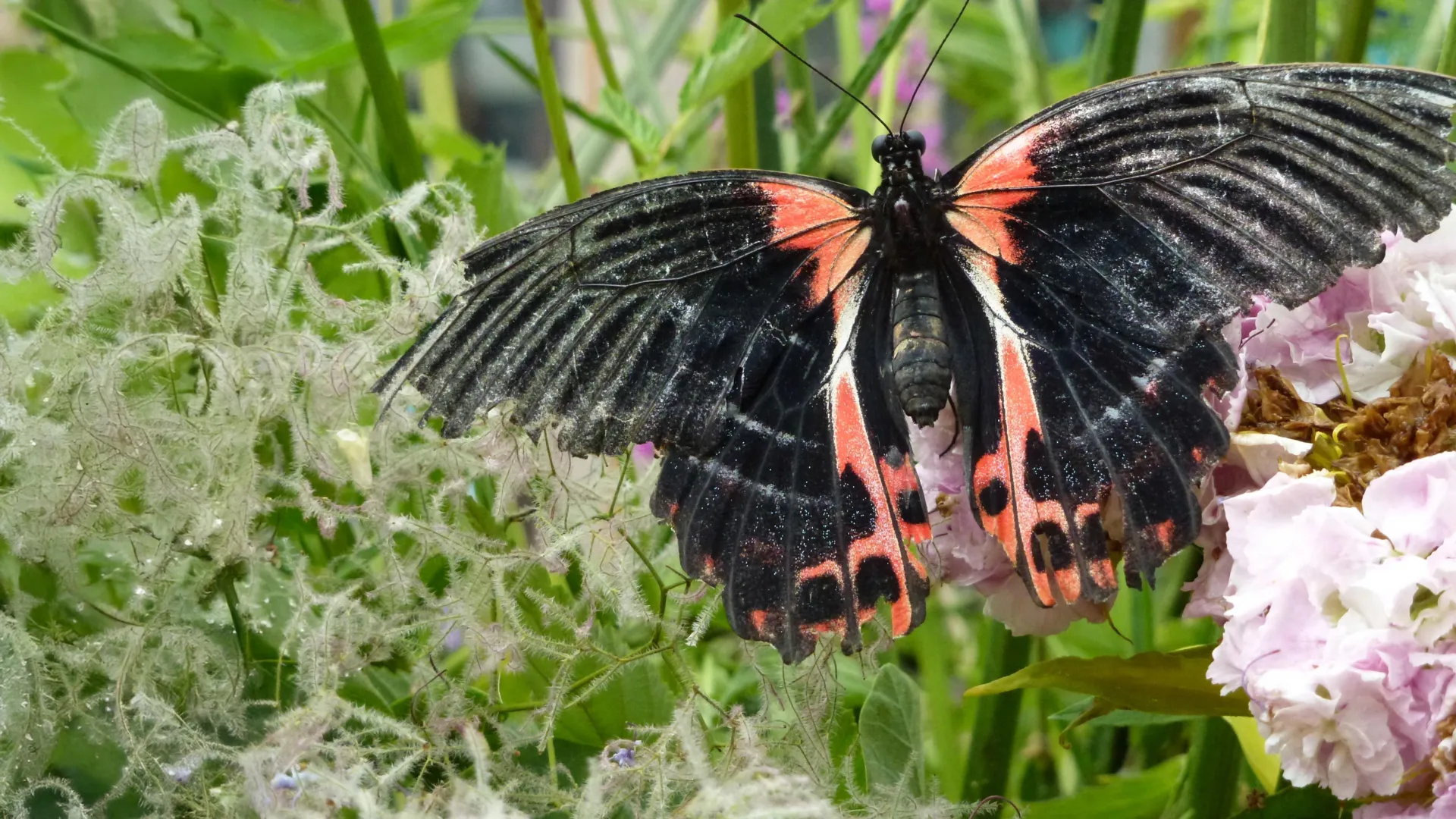
The research, spearheaded by teams from the University of York and the Wellcome Sanger Institute, delved into the fascinating phenomenon of mimicry, a survival strategy where distantly related species evolve to resemble each other. Specifically, the scientists examined the striking similarities in wing color patterns observed across numerous butterfly and moth species. These shared patterns are not merely aesthetic; they serve as potent warning signals to potential predators, indicating that the prey is toxic or distasteful. This shared visual language is a powerful testament to the selective pressures driving adaptation.
While the evolutionary distances between these species are significant, the researchers were astonished to find that a consistent genetic toolkit was repeatedly employed to produce these virtually identical warning colorations. The study focused on seven distantly related butterfly lineages and a single species of day-flying moth, all exhibiting comparable aposematic (warning) patterns. The investigation aimed to pinpoint the genetic underpinnings of this convergent evolution.
The core of the discovery lies in the identification of two specific genes, ivory and optix. These genes, despite the vast evolutionary separation of the studied species, were found to be the primary drivers behind the development of these shared warning colors. This finding is particularly significant because it indicates that evolution has not necessarily invented entirely new genetic mechanisms but rather has re-purposed and modified existing ones.
The Nuances of Genetic Regulation: Evolution’s "Switches"
Crucially, the research revealed that evolution’s influence was not exerted by altering the fundamental sequences of the ivory and optix genes themselves. Instead, the modifications occurred within the regulatory elements – often metaphorically described as genetic "switches." These regulatory regions dictate the precise timing and location of gene activation, thereby controlling the expression of the genes and ultimately shaping the resulting physical traits.
In the case of the butterflies, the study observed that these genetic switches were modified in remarkably similar ways across different species. This suggests a common evolutionary trajectory, where the same regulatory changes were favored repeatedly to achieve the desired warning patterns.
However, the moth species presented a surprising twist. While it also utilized the ivory and optix genes, its mechanism for regulating these genes involved a process known as inversion. An inversion is a significant rearrangement of DNA, where a large segment of a chromosome is flipped end-to-end. The researchers discovered that the specific inversion mechanism employed by the moth bore a striking resemblance to a strategy previously identified in one of the butterfly species. This parallel in the genetic machinery, despite the divergence in evolutionary history, underscores the remarkable predictability that can emerge in the evolutionary process.
A Glimpse into Evolutionary Predictability: The Dinosaur Era Connection
Professor Kanchon Dasmahapatra from the University of York’s Department of Biology, a lead author on the study, emphasized the rarity of such detailed genetic investigations into convergent evolution. "Convergent evolution, where many unrelated species independently evolve the same trait, is common across the tree of life," he stated. "But we rarely have the opportunity to investigate the genetic basis of this phenomenon."
He further elaborated on the implications of their findings: "Investigating seven butterfly lineages and a day-flying moth, we show that evolution can be surprisingly predictable, and that butterflies and moths have been using the exact same genetic tricks repeatedly to achieve similar color patterns since the age of the dinosaurs." This statement anchors the discovery within a deep evolutionary timeline, highlighting the ancient origins of these genetic strategies. The "age of the dinosaurs" refers to the Mesozoic Era, a period that began approximately 252 million years ago and concluded about 66 million years ago, firmly placing the origins of this genetic "cheat sheet" in a time long before the diversification of many modern insect groups.
The findings, meticulously detailed and published in the prestigious journal PLoS Biology, offer a compelling counterpoint to the idea that evolution is solely a product of random chance. Instead, the research suggests that evolutionary pathways can be recurrent, with nature tending to favor established genetic routes when faced with similar selective pressures.
The Evolutionary Advantage of Shared Warning Colors
The persistence of these specific warning color patterns is deeply rooted in their ecological function. Professor Joana Meier from the Wellcome Sanger Institute provided crucial context regarding the adaptive advantage of mimicry. "These distantly related butterflies and the moth are all toxic and distasteful to birds trying to eat them," she explained. "They look very much alike because if birds have already learned that a specific color pattern means ‘do not eat, we are toxic,’ it is beneficial for other species to display the same warning colors."
This shared visual signal creates a collective defense. Once a predator learns to associate a particular pattern with an unpleasant or dangerous experience, it will avoid any creature displaying that same pattern, regardless of its specific species. This collective learning by predators benefits all species that share the warning coloration, even those that are not toxic themselves but mimic those that are (Batesian mimicry), as well as those that are genuinely unpalatable (Müllerian mimicry).
Professor Meier further elucidated the genetic basis for this widespread adoption: "Here, we show that these warning colors are particularly ideal as it seems quite easy to evolve these same color patterns due to the highly conserved genetic basis over 120 million years." The discovery of a conserved genetic foundation for these patterns, stable over such an immense timescale, explains why they are so prevalent and why evolution has repeatedly returned to these specific genetic solutions.
Implications for Predicting Future Adaptations
The ramifications of this research extend far beyond understanding the evolutionary history of butterflies and moths. The understanding that evolution often operates by re-utilizing and modifying existing genetic pathways has significant implications for our ability to predict future evolutionary trajectories. In an era of rapid environmental change, driven by climate shifts and human activity, anticipating how species will adapt is becoming increasingly critical for conservation efforts and ecological management.
If nature demonstrates a propensity to reuse successful genetic solutions, then scientists may be able to develop more accurate models for forecasting evolutionary responses to novel environmental conditions. For instance, if a particular environmental stressor previously led to the evolution of a specific trait through a known genetic mechanism, future instances of similar stress might be predicted to elicit comparable adaptations. This could allow for proactive interventions to protect vulnerable species or ecosystems.
The research suggests a move away from viewing evolution as a chaotic, entirely stochastic process towards a more nuanced understanding that incorporates recurring themes and preferred genetic "strategies." This paradigm shift could revolutionize fields ranging from evolutionary biology and conservation genetics to even the design of biomimetic technologies. The "cheat sheet" of evolution, it appears, is not only ancient but also remarkably efficient and, to a degree, predictable.
A Deeper Look at the Evolutionary Timeline and Genetic Mechanisms
To fully appreciate the significance of this discovery, it is important to consider the timeline involved. The estimated 120 million-year timeframe suggests that these genetic mechanisms were in play during the Cretaceous period, a time when dinosaurs still roamed the Earth and flowering plants were undergoing significant diversification. The early evolution of Lepidoptera (butterflies and moths) also falls within this broad period. This ancient lineage has evidently harnessed the ivory and optix genes, along with their regulatory elements, for complex trait development for an extraordinary duration.
The concept of gene regulation being a key target for evolutionary change is not new, but this study provides a powerful, multi-species example. The identification of specific regulatory elements – enhancers, silencers, and promoters – that control gene expression provides a concrete mechanism for how subtle genetic changes can lead to significant phenotypic differences. The inversion in the moth’s DNA, for instance, represents a substantial genomic alteration that likely repositioned regulatory elements relative to the ivory and optix genes, thereby altering their expression patterns. This highlights the complex interplay between genomic structure and functional adaptation.
Broader Scientific Context and Future Research
This research aligns with a growing body of work in evolutionary biology that emphasizes the role of genetic toolkit reuse and developmental constraints in shaping evolutionary outcomes. Studies on other organisms have also revealed recurring genetic patterns in the evolution of complex traits. For example, the evolution of limb development in vertebrates has shown remarkable conservation of developmental pathways across diverse species.
The findings from the University of York and the Wellcome Sanger Institute provide a specific and compelling case study that can inform future research across a wider range of taxa and traits. Scientists may now look for similar patterns of gene reuse and regulatory evolution in other instances of convergent evolution, such as the development of camouflage, specialized feeding structures, or reproductive strategies.
Further research could explore the specific molecular mechanisms by which these regulatory elements interact with transcription factors to fine-tune gene expression in different species. Investigating the environmental factors that might have driven the initial selection for these particular warning color patterns and their underlying genetic basis could also provide deeper insights. Moreover, expanding the study to include a broader diversity of Lepidopteran species, as well as other insect orders exhibiting mimicry, would further solidify the universality of these evolutionary principles.
The discovery that evolution can leverage a "cheat sheet" of genetic instructions for over 120 million years is a profound revelation. It suggests that the grand tapestry of life, while appearing infinitely diverse, may be woven with recurring threads of genetic innovation and adaptation, making the evolutionary journey of life on Earth perhaps less a random wander than a series of predictable, albeit ingenious, detours.