

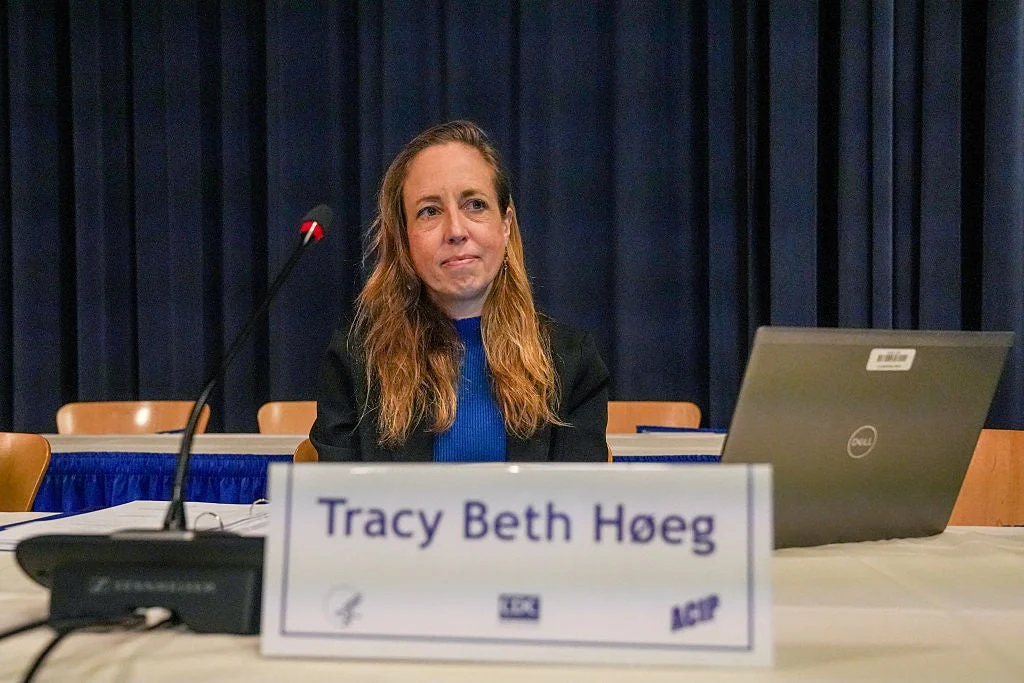
The leadership landscape within the U.S. Department of Health and Human Services (HHS) is undergoing a significant and turbulent transformation, marked by the abrupt departures of several high-ranking officials. This period of upheaval, particularly at the Food and Drug Administration (FDA), has intensified in the run-up to the midterm elections, with political strategists reportedly aiming to solidify voter support by addressing internal controversies and perceived policy misalignments. The latest development involves the reported dismissal of Tracy Beth Hoeg, who served as the acting lead for the FDA’s Center for Drug Evaluation and Research (CDER), a role she held for a mere six months. This departure further exacerbates a growing void in senior management, following a string of other notable exits.
Hoeg, whose professional background includes expertise as a sports physician and epidemiologist, confirmed to The New York Times that she was terminated from her position after refusing to resign. She indicated a lack of clarity regarding the origin and specific instigators of the decision. Her tenure at CDER marked the fifth change in leadership at this critical drug evaluation center since the beginning of what is described as U.S. President Donald Trump’s second term, approximately 15 months prior to this report. This rapid turnover at the helm of CDER raises questions about institutional stability and the continuity of drug approval processes.
During her brief but impactful tenure, Hoeg was involved in significant policy shifts. Notably, she played a key role in advocating for changes to the routine childhood immunization schedule. This initiative saw a collaborative vote between the FDA and the Centers for Disease Control and Prevention (CDC) to reduce the number of recommended vaccines administered at birth from 18 to 11. However, this policy adjustment faced immediate scrutiny and was subsequently placed on hold by a federal judge, underscoring the contentious nature of vaccine policy and its review. The judicial intervention highlights the complex interplay between regulatory agencies, public health recommendations, and legal oversight.
Hoeg’s exit from CDER follows closely on the heels of another high-profile resignation: that of FDA Commissioner Marty Makary. Makary stepped down from his leadership post shortly after reports surfaced of President Trump approving his ousting. This decision was reportedly linked to disputes surrounding the approval of fruit-flavored e-cigarettes, a matter that has drawn considerable attention and sparked debate about regulatory oversight of the tobacco industry and its impact on public health, particularly among younger demographics. Following Makary’s departure, Kyle Diamantas, who previously led the FDA’s food division, was appointed as the acting commissioner, bringing his experience from a related but distinct regulatory domain to the top leadership position.
The instability at the FDA is further compounded by other recent departures and dismissals. Katherine Szarama, who had recently taken on the role of acting head of vaccines, was also reportedly fired just days into her tenure, as reported by The Guardian. Additionally, Jim Traficant, the former chief of staff at the FDA, has also been ousted. These successive changes at the highest levels of the agency contribute to an atmosphere of heightened instability. The FDA has recently grappled with other challenges, including reports of mass layoffs and accusations of its operations becoming politicized, further complicating its mission to safeguard public health through rigorous regulation and oversight.
This wave of leadership changes within the FDA is occurring against the backdrop of a broader shake-up within the U.S. Department of Health and Human Services (HHS). Sources suggest that some Republican strategists are expressing concern that the controversial efforts of Robert F. Kennedy Jr. to challenge and potentially overturn long-standing U.S. vaccine policies could alienate key voting blocs as the midterm elections draw nearer. The political implications of vaccine policy have become increasingly pronounced, with debates over mandates, efficacy, and safety resonating deeply within various segments of the electorate.
In an effort to mitigate these perceived political risks and to reassure a broader base of voters, Chris Klomp, identified as a close associate of Kennedy Jr. and the director of Medicare, is reportedly spearheading an initiative to remove controversial appointees across the HHS. The objective is to replace these individuals with figures perceived as more traditional and less polarizing, thereby aiming to project an image of stability and adherence to established public health doctrines. This strategic realignment within HHS suggests a proactive approach by the administration to manage public perception and shore up support ahead of critical electoral contests.
The rapid turnover at the FDA, particularly concerning positions related to drug and vaccine evaluation, raises significant questions about the long-term implications for public health policy and regulatory efficacy. The Center for Drug Evaluation and Research (CDER) is responsible for ensuring that new drugs are safe and effective before they can be approved for public use. Its leadership plays a crucial role in setting priorities, guiding scientific review processes, and managing the complex workflow of drug approvals. Frequent changes at the top can disrupt continuity in policy implementation, potentially slow down decision-making, and impact staff morale.
Similarly, the leadership of the FDA’s vaccine division is critical for overseeing the safety and efficacy of vaccines, a cornerstone of public health. The dismissal of Katherine Szarama shortly after her appointment suggests a potential disconnect or unresolved issues within the agency’s vaccine oversight functions. The Centers for Disease Control and Prevention (CDC), working in conjunction with the FDA, develops and recommends vaccination schedules for various age groups. Any instability or perceived politicization at these agencies can erode public trust in vaccination programs, which are vital for preventing infectious diseases and maintaining herd immunity.
The context of these leadership shifts also warrants examination. The period since President Trump’s second term began has seen a notable pattern of flux within federal health agencies. This has been attributed, in part, to the administration’s approach to regulatory bodies and its engagement with scientific and public health consensus. The FDA, as a primary gatekeeper for pharmaceuticals and medical devices, is a high-stakes environment where scientific rigor must intersect with political considerations, especially during periods of electoral campaigning.
The mention of disputes over fruit-flavored e-cigarettes, which contributed to Commissioner Makary’s departure, underscores the regulatory challenges posed by evolving consumer products and their potential public health impacts. The FDA has been under pressure to address the rise of vaping, particularly among adolescents, and the approval or restriction of flavored products has been a focal point of this debate. The administration’s stance on such issues can have far-reaching consequences for public health initiatives and the industries they regulate.
Furthermore, the broader context of accusations of politicization within the FDA, as cited in the original report, is a serious concern. Regulatory agencies are expected to operate independently of political influence to ensure that their decisions are based on scientific evidence and public health needs, rather than partisan agendas. When these agencies are perceived as being swayed by political considerations, it can undermine their credibility and the public’s confidence in their ability to protect health and safety.
The alleged efforts to remove "controversial appointees" across HHS, driven by concerns about alienating voters, points to a strategic effort to manage the administration’s public image. The involvement of figures like Chris Klomp, described as a close associate of RFK Jr., suggests a potential influence from individuals who may hold dissenting views on established public health policies, particularly concerning vaccines. This dynamic raises questions about whether policy decisions will continue to be guided by established scientific consensus or if they will be subject to political expediency aimed at appeasing specific voter segments.
The implications of this ongoing leadership churn at the FDA and HHS are multifaceted. Firstly, it could lead to a loss of institutional knowledge and expertise as experienced officials depart. Secondly, it might create an environment of uncertainty and apprehension among remaining staff, potentially affecting their ability to perform their duties effectively. Thirdly, it could impact the efficiency and timeliness of critical regulatory processes, such as the review and approval of new drugs and medical devices, which are essential for public health and the pharmaceutical industry’s innovation pipeline.
The events described also highlight the growing politicization of public health issues in the United States. Issues that were once primarily the domain of scientific and medical experts are increasingly becoming battlegrounds for political discourse and electoral strategy. This trend can have detrimental effects on public health outcomes, as evidence-based policies may be sidelined in favor of politically expedient decisions. The approaching midterm elections appear to be a significant factor driving these recent personnel changes, suggesting a focus on immediate political gains over long-term institutional stability and public health integrity. The coming months will likely reveal the extent to which these leadership shifts impact the FDA’s operational effectiveness and its ability to fulfill its crucial mandate of protecting and promoting the health of the American people.


















Leave a Reply