

For decades, the quest for life beyond Earth has been a monumental undertaking, largely defined by the intricate challenge of identifying the right molecular fingerprints on distant planets and moons. Scientists have meticulously scanned the cosmos for specific compounds – the building blocks of life as we know it – hoping to find a telltale sign of biological activity. However, a groundbreaking new study published in the prestigious journal Nature Astronomy suggests a paradigm shift in this search, proposing that the answer may not lie solely in the molecules themselves, but in the hidden patterns that connect them. This innovative research indicates that life, beyond its chemical output, imprints an "organizational principle" on its environment, a principle detectable through statistical analysis.
A New Lens on Astrobiology: Beyond Molecular Signatures
The traditional approach to astrobiology has centered on identifying biosignatures – molecules or combinations of molecules that are produced by living organisms and are unlikely to be formed through nonbiological processes. Amino acids, the fundamental components of proteins, and fatty acids, crucial for cell membranes, have long been prime targets. Yet, a significant hurdle exists: these very molecules can also be synthesized through abiotic, or non-living, chemical reactions. Evidence of amino acids has been found in meteorites, and laboratory experiments mimicking early Earth or extraterrestrial environments have successfully generated them, underscoring the difficulty of definitively proving life based on their mere presence.
"Astrobiology is fundamentally a forensic science," explains Gideon Yoffe, a postdoctoral researcher at the Weizmann Institute of Science in Israel and the study’s lead author. "We’re trying to infer processes from incomplete clues, often with very limited data collected by missions that are extraordinarily expensive and infrequent." This sentiment highlights the immense pressure and inherent uncertainty involved in interpreting data from deep space exploration.
The Breakthrough: Borrowing from Ecology to Decode Chemistry
The research team, a collaboration of scientists from the University of California, Riverside, and the Weizmann Institute of Science, has ingeniously adapted a statistical methodology widely used in the field of ecology. Ecologists employ concepts like "richness" (the number of different species in an area) and "evenness" (how uniformly those species are distributed) to quantify biodiversity. By applying this same statistical logic to chemical data, the researchers have discovered that living systems exhibit distinct organizational patterns in their molecular composition compared to nonbiological chemical processes.
Fabian Klenner, an assistant professor of planetary sciences at UC Riverside and a co-author of the study, elaborates on this novel perspective: "We’re showing that life does not only produce molecules. Life also produces an organizational principle that we can see by applying statistics." This suggests that life leaves a statistical imprint, a signature of its organization, that is independent of the specific molecules involved.
Unveiling the Statistical Signature of Life
The core of the discovery lies in the differential distribution and variety of molecules. The study found that amino acids present in biological systems tend to be both more varied and more evenly distributed than those formed through nonbiological processes. Conversely, fatty acids showed an opposite trend: nonliving chemical processes tended to produce more even distributions of fatty acids compared to biological ones. This divergence in statistical patterns between biological and abiotic sources is the key to their proposed new method.
What makes this research particularly significant is its potential to be applied using existing and upcoming space mission data. The researchers assert that this is the first study to demonstrate that this underlying signature of life can be detected through statistical analysis alone, without requiring specialized new instruments. This could dramatically enhance the interpretability of the vast amounts of organic chemistry data already being collected by missions exploring Mars, the icy moons of Jupiter and Saturn like Europa and Enceladus, and other celestial bodies.
A Timeline of Discovery: From Ecological Concepts to Cosmic Clues
The genesis of this research can be traced back to Gideon Yoffe’s doctoral studies in statistics and data science. It was during this period that he encountered diversity metrics, a powerful tool for uncovering patterns within complex datasets, including those related to historical human cultures. Recognizing the potential for this framework to be applied to other scientific domains, Yoffe and his colleagues turned their attention to astrobiology.
Over a period of rigorous investigation, the team compiled and analyzed approximately 100 existing datasets. These datasets encompassed a wide range of organic matter, including samples from microbes, soils, fossils, meteorites, asteroids, and carefully synthesized laboratory samples designed to mimic abiotic conditions. The consistent observation across these diverse sources was the presence of distinct organizational patterns in biological materials that reliably separated them from nonliving chemistry.
Unexpected Robustness: Even Degraded Fossils Hold Clues
One of the most surprising and compelling findings of the study was the robustness of the statistical method, even when applied to highly degraded samples. The researchers found that they could reliably distinguish between biological and abiotic samples using this statistical lens. Furthermore, the analysis revealed a continuum in biological materials, ranging from well-preserved to heavily altered.
"That was genuinely surprising," Klenner admitted. "The method captured not only the distinction between life and nonlife, but also degrees of preservation and alteration." This implies that even ancient life, or evidence of life that has undergone significant geological or chemical transformation, might still retain detectable statistical signatures.
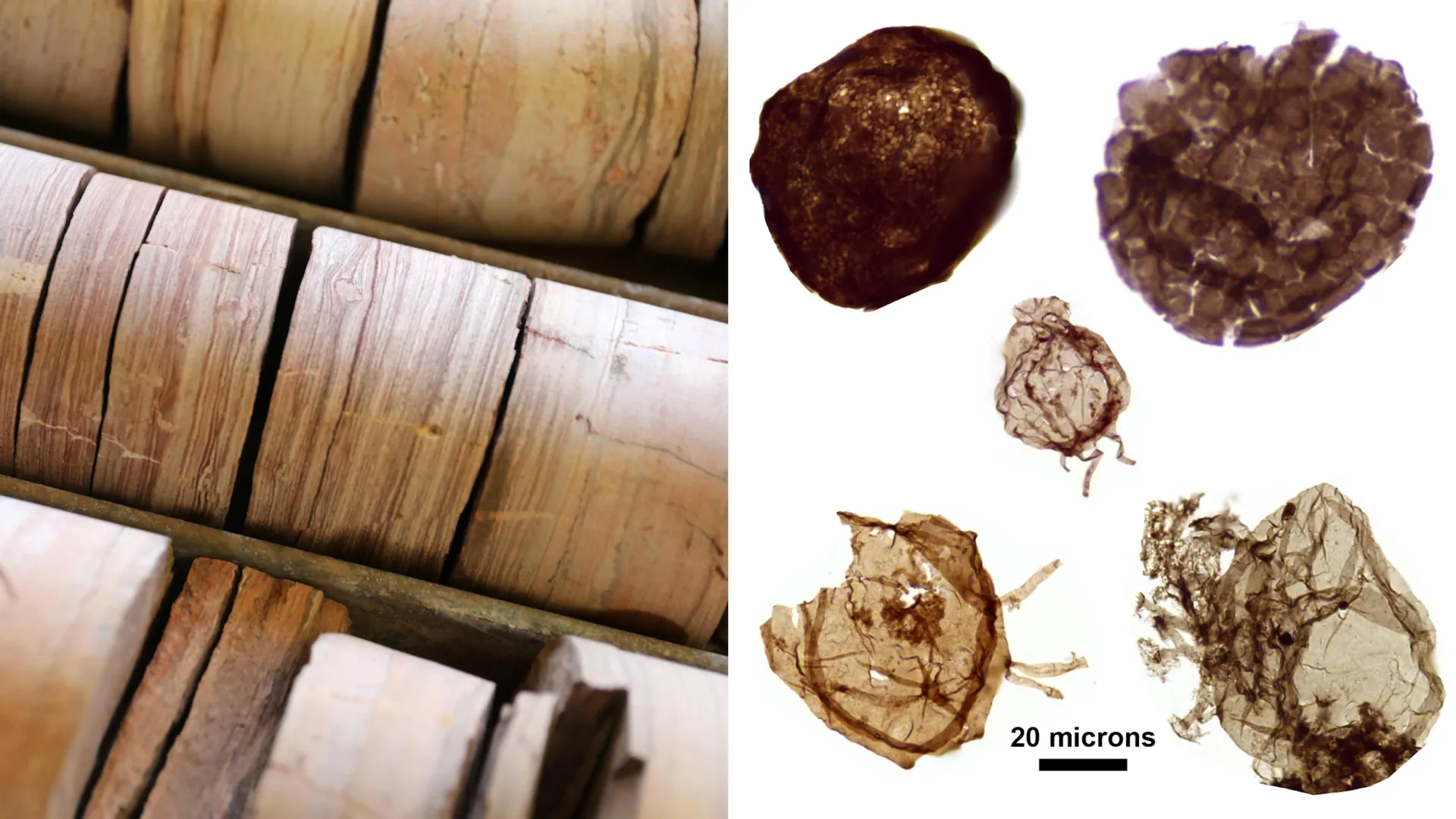
A particularly striking example involved fossilized dinosaur eggshells. Despite their ancient age and significant degradation, these fossil samples still exhibited detectable statistical patterns that were linked to ancient biological activity. This suggests that the organizational principles imprinted by life can persist over geological timescales, offering a potential avenue for discovering evidence of past life on planets like Mars, where extensive fossil records are anticipated.
Implications for Future Exploration: Enhancing the Search for Extraterrestrial Life
The rapid advancements in planetary exploration are generating an unprecedented volume of data on the organic chemistry of other worlds. Missions are diligently collecting measurements from Mars, the subsurface oceans of Europa and Enceladus, and other promising locations. However, the interpretation of these complex chemical signals remains a significant bottleneck. This new statistical approach offers a powerful new tool to augment existing analytical capabilities.
The researchers emphasize that this method is not a silver bullet, nor is it intended to be the sole determinant of extraterrestrial life. "Any future claim of having found life would require multiple independent lines of evidence, interpreted within the geological and chemical context of a planetary environment," Klenner cautioned. This statement underscores the scientific community’s commitment to rigorous verification and the need for corroborating evidence.
However, the team is optimistic about the potential contribution of their work. "Our approach is one more way to assess whether life may have been there," Klenner stated. "And if different techniques all point in the same direction, then that becomes very powerful." This multi-faceted approach, combining molecular detection with statistical pattern analysis, could significantly increase the confidence with which scientists can declare the discovery of life beyond Earth.
Broader Impact and Future Directions
The implications of this research extend beyond the immediate search for extant life. It also opens new avenues for understanding the origins of life on Earth and the potential for life to have arisen on other planets. By providing a more nuanced way to interpret chemical data, this statistical framework could help differentiate between biosignatures and abiotic mimics more effectively, refining our understanding of the conditions under which life can emerge and persist.
The scientific community’s reaction to this research, while still nascent, is one of cautious optimism and excitement. Experts in astrobiology and planetary science are likely to scrutinize the findings, seeking to replicate the results and explore its applicability to various extraterrestrial environments. The potential to glean more definitive insights from existing and future mission data represents a significant leap forward in the perennial human endeavor to answer the question: "Are we alone?"
The success of this statistical approach hinges on its ability to be integrated with other analytical techniques. Future research will likely focus on refining the statistical models, expanding the datasets used for training and validation, and exploring its application to a wider range of potential biosignatures. The ultimate goal is to equip future space missions with a more sophisticated toolkit, one that can not only detect the chemical ingredients of life but also recognize the subtle, yet profound, organizational patterns that life leaves behind. This paradigm shift, from looking for "what" life is made of to understanding "how" life organizes, promises to revolutionize our search for life in the cosmos.
















Leave a Reply